A well-prepared company budget is one of the most valuable tools for managing business finances. It helps business owners understand where money comes from, where it goes, and how much they can afford to invest in future growth. Whether you run a small business, manage a startup, or oversee the finances of an established company, a clear budget makes financial decisions easier and more informed.
Without a reliable budgeting process, businesses may struggle with unexpected expenses, cash flow shortages, or overspending. However, with a practical company budget, you can set realistic financial goals, monitor performance, and prepare for changing market conditions. This guide explains how to create a company budget, what to include, and how to use a budget template to manage your business more effectively.
What Is a Company Budget?
A company budget is a financial plan that estimates a business’s income and expenses over a specific period. Companies commonly prepare budgets monthly, quarterly, or annually. The plan outlines expected revenue, operating costs, payroll, investments, and other financial commitments.
In addition, a business budget provides a benchmark for measuring actual financial performance against planned results. Managers can identify differences, investigate unexpected costs, and adjust spending before small problems become larger financial challenges.
For example, a retail company may estimate monthly sales of $50,000 and operating expenses of $35,000. If actual expenses rise to $42,000, the budget helps management recognize the change and investigate its cause.
A company budget is not simply a spreadsheet filled with numbers. Instead, it is a financial roadmap that connects daily spending decisions with long-term business objectives.
Why Is a Company Budget Important?
Effective budgeting supports financial stability and helps companies make better decisions. It also encourages accountability because teams understand their spending limits and financial responsibilities.
1. Improves Cash Flow Management
Cash flow is essential for keeping a business operating smoothly. A budget helps you estimate when customers will pay invoices and when the company must pay suppliers, employees, rent, and other bills.
As a result, you can identify potential cash shortages early and arrange appropriate solutions. These may include reducing discretionary spending, following up on overdue invoices, or adjusting payment schedules.
2. Controls Business Expenses
Without spending guidelines, small expenses can gradually reduce profitability. A company budget establishes reasonable limits for different departments and expense categories.
Furthermore, comparing actual expenses with planned amounts helps managers spot unnecessary subscriptions, rising supplier costs, and inefficient processes.
3. Supports Strategic Planning
Businesses need financial resources to launch products, hire employees, expand operations, or enter new markets. A detailed budget shows whether these plans are financially realistic.
Therefore, management can prioritize projects that support business goals while avoiding commitments that place excessive pressure on available funds.
4. Measures Business Performance
A budget gives business owners a clear reference point for evaluating results. By reviewing revenue, expenses, and profit regularly, they can determine whether the company is meeting its financial targets.
When results differ from expectations, managers can take corrective action and update future forecasts.
What Should a Company Budget Include?
A complete company budget should reflect the way your business earns money and pays its bills. Although the details vary by industry, most business budgets include the following components.
Revenue and Income Projections
Start by estimating how much money the company expects to earn during the budget period. Consider every major revenue source, including product sales, service fees, subscriptions, and recurring contracts.
Use historical sales data, current orders, seasonal trends, and realistic growth assumptions. Avoid relying on overly optimistic projections because inflated revenue estimates can lead to excessive spending.
Fixed Expenses
Fixed expenses generally remain stable over a specific period. Examples include:
- Office rent and property payments.
- Insurance premiums.
- Software subscriptions and business licenses.
- Permanent employee salaries.
- Loan payments and other regular contractual obligations.
Although these expenses may not change frequently, review them regularly to identify opportunities for savings.
Variable Expenses
Variable expenses change with business activity. For example, a manufacturing company may spend more on raw materials when production increases. A retail business may experience higher shipping costs during peak sales periods.
Common variable costs include inventory, packaging, sales commissions, delivery fees, production materials, and transaction charges. Estimate these costs according to expected sales or production levels.
Payroll and Employee Costs
Employee-related expenses can represent a significant portion of a company’s budget. Include wages, salaries, employer payroll taxes, benefits, recruitment costs, training, and planned new hires where applicable.
Accurate payroll forecasting helps ensure that staffing plans remain consistent with the company’s financial capacity.
Emergency Funds and Capital Investments
Unexpected repairs, equipment failures, and sudden market changes can affect business finances. For this reason, consider maintaining an appropriate contingency reserve based on your company’s risks and available cash.
Also, budget for major investments such as machinery, computers, office improvements, or new technology. Separate capital expenditures from routine operating expenses when appropriate for your accounting method.
How to Create a Company Budget Step by Step
Creating a useful budget does not require complicated financial software. A spreadsheet or printable company budget template can provide a practical starting point.
Step 1: Review Historical Financial Data
First, collect financial statements, sales reports, payroll records, invoices, and expense reports from previous periods. These records help you understand existing spending patterns and identify seasonal changes.
If your company is new, use market research, supplier quotations, expected customer demand, and realistic operating assumptions instead.
Step 2: Estimate Expected Revenue
Next, forecast revenue for the upcoming month, quarter, or year. Consider current contracts, sales pipelines, customer retention, pricing changes, and market conditions.
For greater accuracy, prepare conservative, expected, and optimistic scenarios. This approach helps you understand how different sales outcomes could affect your financial position.
Step 3: List and Categorize Expenses
Record all expected costs and organize them into clear categories. Separate fixed expenses from variable costs, and distinguish everyday operating expenses from major investments.
Where possible, assign costs to the departments or projects responsible for them. This makes it easier to track spending and improve accountability.
Step 4: Calculate Your Budget Balance
Subtract planned expenses from expected revenue to estimate the budgeted operating surplus or deficit. For a simple starting calculation, use this formula:
Budgeted Balance = Expected Revenue − Expected Expenses
For example, if your company expects revenue of $80,000 and expenses of $60,000, the projected balance is $20,000 before considering any additional items not included in those figures.
Remember that profit and cash flow are not identical. A company can report a profit while experiencing a cash shortage because customers have not yet paid their invoices.
Step 5: Set Spending Limits and Financial Goals
Once you understand your projected balance, establish spending limits for each department. Set priorities based on business needs, expected returns, and financial risks.
For instance, you might allocate additional funding to customer acquisition while reducing unnecessary administrative costs. Ensure that every major allocation supports a clear business objective.
Step 6: Monitor and Update the Budget
A budget should evolve as business conditions change. Review actual results against your plan every month, or more frequently if your business experiences rapid changes in sales or costs.
Investigate significant differences, update forecasts when assumptions change, and document decisions. Regular reviews keep your financial plan relevant and actionable.
How to Use a Company Budget Template
A company budget template simplifies the budgeting process by organizing important financial information into a consistent format. Instead of building a spreadsheet from scratch, you can start with predefined sections for income, expenses, totals, and financial notes.
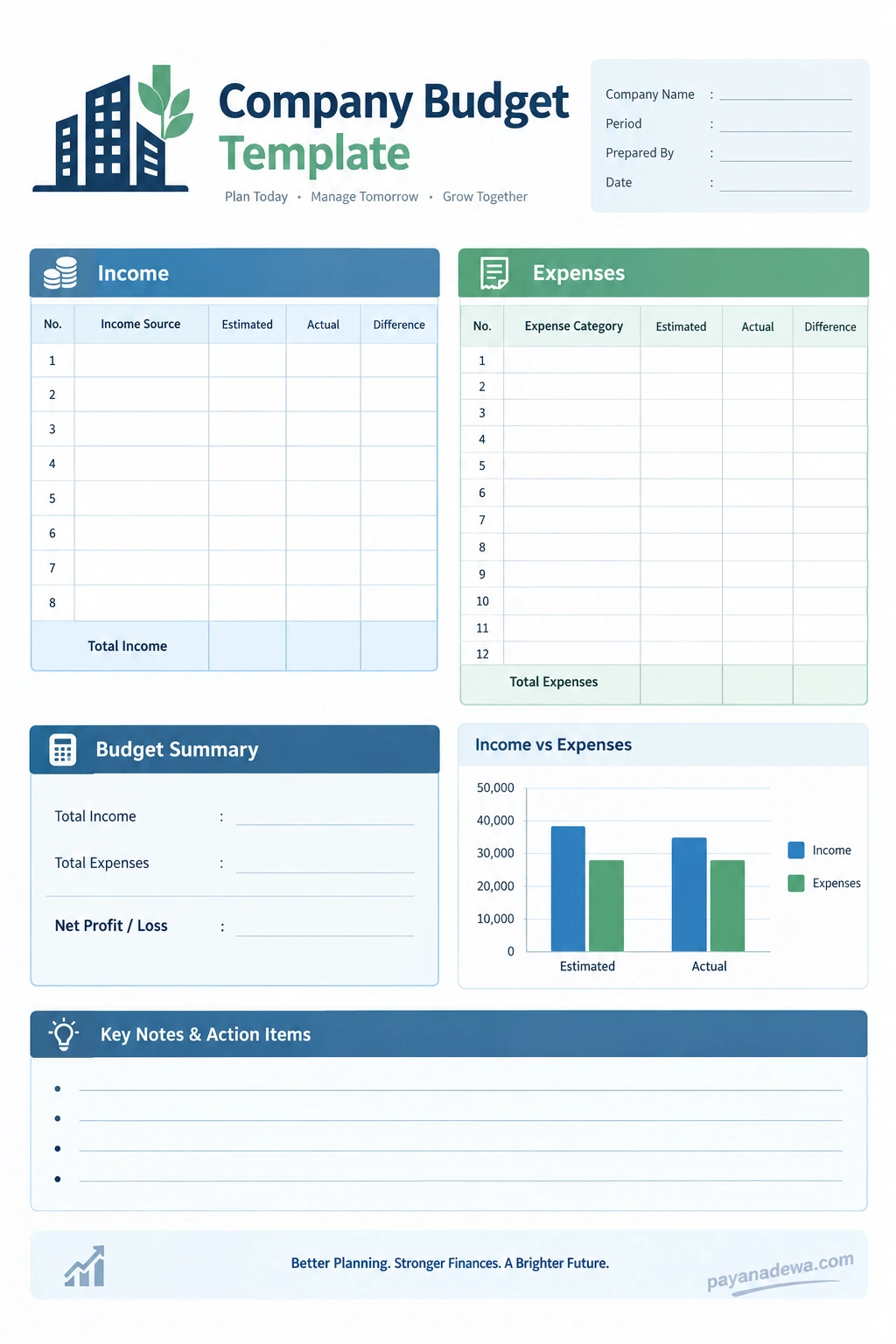
To use the template effectively, follow these steps:
- Enter company details: Add the business name, reporting period, preparation date, and responsible person.
- Record income: List each revenue source and enter estimated and actual amounts.
- Track expenses: Categorize operating costs and record planned and actual spending.
- Calculate totals: Add income and expenses, then calculate the resulting balance.
- Review differences: Identify categories where actual results differ from the original plan.
- Write action items: Record cost-saving opportunities, upcoming payments, and decisions that require follow-up.
For digital budgeting, you can recreate the template in spreadsheet software and add formulas to calculate totals automatically. A printable version is useful for planning meetings, handwritten notes, or quick financial reviews.
Practical Tips for Better Company Budgeting
Even a well-designed budget needs a consistent management process. The following practices can improve accuracy and make financial planning more effective.
- Use realistic assumptions. Base forecasts on available evidence rather than wishful thinking.
- Involve department managers. Ask team leaders to estimate their operational needs and explain significant changes.
- Keep personal and business finances separate. Clear records make company spending easier to monitor.
- Plan for uncertainty. Consider alternative scenarios and maintain an appropriate cash reserve.
- Use consistent categories. Standardized expense labels make comparisons more reliable.
- Review supplier contracts. Compare prices and terms to identify potential savings without sacrificing quality.
- Automate calculations where possible. Spreadsheet formulas can reduce manual errors and speed up reporting.
- Document budget changes. Record why important adjustments were made and who approved them.
Most importantly, make budgeting a shared business routine. When employees and managers understand financial priorities, they can make more responsible spending decisions throughout the year.
Common Company Budgeting Mistakes to Avoid
Several budgeting mistakes can weaken even a detailed financial plan. Recognizing them early helps you maintain better financial control.
Underestimating Expenses
Some businesses overlook maintenance, transaction fees, taxes, insurance renewals, or seasonal labor. Consequently, actual costs may exceed the budget. Review previous records and confirm upcoming obligations before finalizing your plan.
Overestimating Revenue
Unrealistic sales forecasts can encourage spending that the business cannot support. Use evidence-based assumptions and prepare alternative scenarios when demand is uncertain.
Ignoring Cash Flow
A budget that focuses only on profit may overlook the timing of incoming and outgoing payments. Prepare a separate cash flow forecast when necessary, especially if customers pay late or expenses fall due before revenue arrives.
Creating a Budget but Never Reviewing It
A budget loses value when it becomes an outdated document. Schedule regular reviews, investigate important variances, and revise forecasts whenever significant changes occur.
Conclusion
A company budget provides a practical foundation for financial planning, expense control, and sustainable business growth. By forecasting revenue, categorizing costs, setting spending limits, and reviewing actual results, businesses can make better decisions and prepare for uncertainty.
Start with a simple company budget template, use reliable financial data, and review your numbers consistently. As your business grows, you can add more detailed forecasts, department budgets, and cash flow projections. With a clear budgeting process, your company can manage resources more confidently and work toward its long-term financial goals.