A monthly budget is one of the most effective tools for taking control of your personal finances. It helps you understand how much money you earn, where your money goes, and how much you can save each month. With a clear plan, you can make smarter spending decisions and work toward your financial goals with greater confidence.
You do not need a high income or advanced financial knowledge to create a useful budget. You only need an accurate picture of your income, regular expenses, everyday spending, and savings priorities. A simple monthly budget can help you avoid unnecessary purchases, prepare for unexpected costs, and reduce financial stress.
Whether you are managing household bills, planning for a major purchase, or trying to build an emergency fund, a monthly budget gives every dollar a purpose. The key is to create a realistic plan that fits your lifestyle and review it regularly.
In this guide, you will learn how to create a monthly budget, organize your expenses, set achievable savings goals, and use a printable budget template to simplify your financial planning.
What Is a Monthly Budget?
A monthly budget is a financial plan that outlines your expected income and expenses over one month. It helps you decide how to allocate your money before you spend it, rather than wondering where your money went at the end of the month.
A typical budget includes your income, fixed expenses, variable expenses, savings contributions, debt payments, and remaining balance. Comparing these categories helps you identify spending patterns and make adjustments when necessary.
Why Is a Monthly Budget Important?
A well-organized budget provides a clearer understanding of your financial situation. Instead of making decisions based on guesswork, you can use actual numbers to determine what you can afford.
- Control spending: Set limits for shopping, entertainment, dining, and other everyday purchases.
- Increase savings: Reserve money for emergencies, future purchases, and long-term goals.
- Manage debt: Plan regular payments and identify opportunities to pay down outstanding balances.
- Reduce financial stress: Prepare for upcoming bills and avoid unnecessary surprises.
- Track progress: Compare your monthly results with your financial goals.
Most importantly, a monthly budget helps you make intentional choices. You can enjoy your money today while preparing for the expenses and opportunities that may arise tomorrow.
How to Create a Monthly Budget Step by Step
Creating a monthly budget does not have to be complicated. Start with a few basic categories and add more details as you become comfortable with the process.
1. Calculate Your Total Monthly Income
Begin by calculating how much money you expect to receive during the month. Include your regular salary, freelance earnings, business income, and other reliable sources of income.
If your income changes from month to month, use a conservative estimate based on your recent earnings. This approach can help you avoid committing money you may not receive.
For budgeting purposes, focus on the amount you actually receive after taxes and other payroll deductions. This figure gives you a more accurate picture of the money available for spending and saving.
2. List Your Fixed Monthly Expenses
Fixed expenses are payments that generally remain the same each month. These costs are often easier to predict, making them a useful starting point for your budget.
Common fixed expenses include:
- Rent or mortgage payments.
- Insurance premiums.
- Loan and debt payments.
- Internet and phone subscriptions.
- School fees or recurring childcare costs.
- Memberships and other regular subscriptions.
Record each payment, its amount, and its due date. Knowing when bills are due can help you manage your cash flow and avoid late payment fees.
3. Estimate Your Variable Expenses
Variable expenses change depending on your habits, needs, and circumstances. Although some of these costs are essential, you usually have more control over how much you spend in certain categories.
Examples include groceries, transportation, electricity, dining out, entertainment, clothing, and personal care. Review your recent bank statements or receipts to estimate realistic amounts for each category.
Do not make your spending limits so restrictive that they become difficult to maintain. A practical budget leaves room for normal life while helping you identify areas where you can save.
4. Set a Monthly Savings Target
Savings should be part of your budget rather than something you consider only when money remains. Choose a target that fits your income, essential expenses, and current financial responsibilities.
You might save for an emergency fund, education, a holiday, a home deposit, or retirement. If you are starting from zero, even a small, consistent contribution can help you build a positive habit.
Consider transferring your planned savings into a separate account shortly after receiving your income. This simple routine makes it easier to protect your savings from everyday spending.
5. Calculate Your Remaining Balance
Once you have listed your income, expenses, and planned savings, calculate your remaining balance. Subtract your total planned spending and savings contributions from your available monthly income.
A positive balance means some money remains available for additional savings, future expenses, or flexible spending. A negative balance means your plan requires adjustments before the month begins.
If your expenses exceed your income, start by reviewing nonessential spending. You may also need to change savings targets temporarily, renegotiate certain bills, or explore ways to increase your income.
How to Use a Monthly Budget Template
A monthly budget template makes financial planning easier by organizing important information in one place. You can use a printable worksheet, spreadsheet, or budgeting application, depending on your preferences.
Organize Your Budget Into Clear Categories
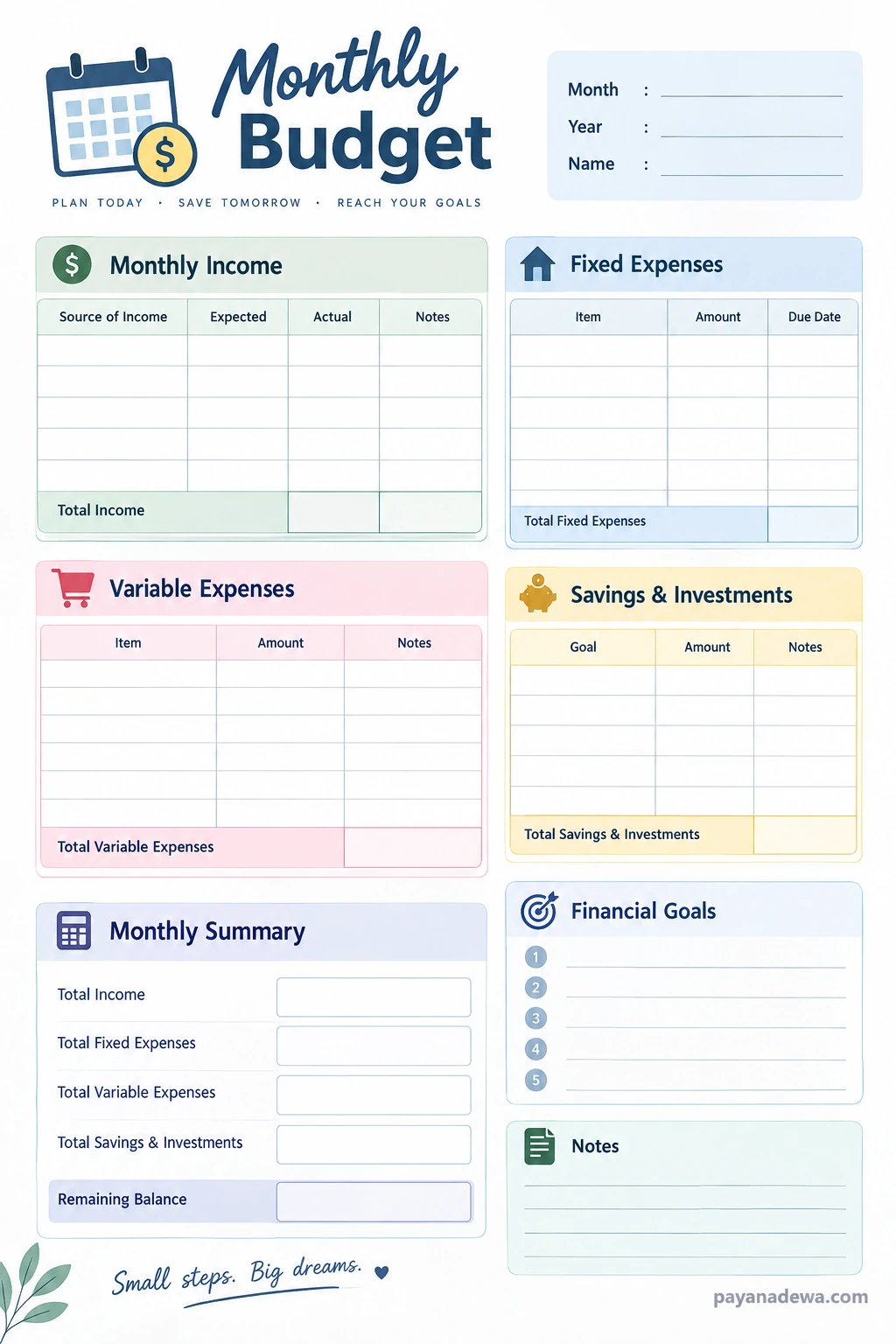
The printable monthly budget template featured in this article includes sections for income, fixed expenses, variable expenses, savings and investments, financial goals, and a monthly summary.
Follow these steps to use the template effectively:
- Enter the month and year: Identify the period you are planning for.
- Record your income: Write down each income source and its expected amount.
- List fixed expenses: Include recurring bills and their payment dates.
- Track variable spending: Record everyday purchases and compare them with your planned limits.
- Add savings goals: Specify how much you want to save and what each contribution supports.
- Complete the monthly summary: Calculate your totals and review your remaining balance.
For better accuracy, update your budget throughout the month instead of waiting until the end. Regular updates help you notice overspending early and make changes before it affects other priorities.
Choose a Budgeting Method That Fits Your Lifestyle
There is no single budgeting method that works for everyone. The best approach is one you can understand, maintain, and adjust as your financial circumstances change.
One popular option is the 50/30/20 budgeting rule. It suggests allocating approximately 50% of your after-tax income to needs, 30% to wants, and 20% to savings and debt repayment. These percentages are guidelines, not strict requirements.
If housing costs are high or your income is limited, you may need to devote a larger share of your income to essential expenses. In that situation, adjust the percentages to match your circumstances instead of forcing your budget to follow an unrealistic formula.
Another option is zero-based budgeting, where you assign every unit of income to a planned category. Your income minus planned expenses, savings, and debt payments should equal zero. This does not mean spending all your money; savings are also assigned a purpose.
Practical Tips for Sticking to Your Monthly Budget
Building a budget is an important first step, but consistency is what makes it useful. A few simple habits can help you follow your plan without feeling restricted.
Review Your Spending Every Week
Set aside 10 to 15 minutes each week to review your purchases and upcoming bills. Compare actual spending with your original estimates and identify categories that need attention.
Weekly reviews make it easier to correct small problems before they become major financial setbacks. They also help you understand which spending habits are supporting your goals and which ones may need to change.
Separate Needs From Wants
Essential expenses generally include housing, basic food, utilities, necessary transportation, and required payments. Wants include optional purchases that improve comfort or enjoyment but are not essential to daily living.
This distinction can help you make better decisions when money is limited. Rather than eliminating every enjoyable activity, look for affordable alternatives and prioritize the purchases that provide the greatest value.
Prepare for Unexpected Expenses
Unexpected expenses can disrupt even a carefully planned budget. Car repairs, medical bills, home maintenance, and temporary income changes may require money that was not included in your regular spending plan.
Build an emergency fund gradually and keep it accessible for genuine financial emergencies. If possible, work toward saving enough to cover several months of essential living expenses. Start with a smaller target if that feels more achievable.
Adjust Your Budget When Circumstances Change
Your budget should reflect your current life, not an outdated financial situation. Changes in income, family responsibilities, housing costs, or personal priorities may require you to revise your plan.
Review your budget at the beginning of each month and make adjustments based on what you learned previously. A flexible plan is often more sustainable than one that assumes every month will be exactly the same.
Common Monthly Budgeting Mistakes to Avoid
Even a simple budget can become ineffective when it relies on unrealistic assumptions. Recognizing common mistakes can help you build a plan that works in everyday life.
- Underestimating expenses: Include small recurring purchases and occasional costs instead of focusing only on major bills.
- Setting unrealistic limits: Use actual spending patterns to create practical targets that you can maintain.
- Ignoring irregular bills: Plan ahead for annual insurance payments, holidays, school expenses, and maintenance.
- Forgetting savings: Treat savings contributions as a planned category rather than relying on leftover money.
- Failing to track spending: Update your records regularly so you can compare planned amounts with actual results.
- Giving up after one bad month: Review what happened, make reasonable adjustments, and continue with a better plan.
Remember that a budget is a tool for learning and improving. An unexpected expense or an overspending mistake does not mean you have failed. What matters is how you respond and what you change next month.
Frequently Asked Questions About Monthly Budgets
How Much Money Should I Save Each Month?
The right amount depends on your income, essential expenses, debts, and financial goals. The 20% savings guideline can be a useful starting point, but saving a smaller amount consistently is better than choosing a target that you cannot maintain.
What Is the Easiest Way to Track Monthly Expenses?
A printable budget template, spreadsheet, or budgeting application can help you record expenses. Choose a method that is convenient for your routine and update it regularly to keep your financial information accurate.
When Should I Create My Monthly Budget?
Ideally, prepare your budget before the month begins or shortly before you receive your regular income. This gives you time to plan bill payments, allocate savings, and set spending limits before making new purchases.
Can I Use a Monthly Budget Template With an Irregular Income?
Yes. Estimate your income conservatively, prioritize essential expenses, and adjust flexible spending based on the money you actually receive. During higher-income months, consider building a cash reserve to help cover lower-income periods.
Conclusion: Make Your Monthly Budget Work for You
A monthly budget helps you manage income, control expenses, build savings, and make informed financial decisions. By tracking your spending and setting realistic goals, you can develop better money habits and create a clearer path toward financial stability.
Start with the basics: calculate your income, list your expenses, choose a savings target, and review your results regularly. Use a monthly budget template to keep everything organized and make adjustments whenever your circumstances change.
You do not need a perfect budget to make progress. Small, consistent improvements can help you build confidence and move closer to your financial goals over time.
Ready to take control of your money? Start using the Monthly Budget Template from payanadewa.com and create a financial plan that fits your needs. Share your favorite budgeting tips or experiences to help others build healthier money habits, too.