A personal budget is one of the most practical tools you can use to take control of your money. It helps you understand how much you earn, where your money goes, and what you can set aside for future goals. Whether you want to pay bills on time, build an emergency fund, reduce debt, or save for a major purchase, a clear budget gives you a plan to follow instead of leaving your finances to guesswork.
You do not need a high income, advanced financial knowledge, or a complicated spreadsheet to get started. A useful budget can be as simple as listing your income, writing down your expenses, and deciding how to use what remains. The key is to make a plan that reflects your real life and review it regularly. With a few consistent habits, budgeting can become a helpful routine rather than a source of stress.
What Is a Personal Budget?
A personal budget is a plan for how you will spend, save, and manage your money over a specific period, usually a month. It compares the income you expect to receive with the expenses you expect to pay. This overview helps you make informed choices before your money is spent.
A budget is not meant to prevent you from enjoying life. Instead, it helps you balance everyday needs, personal priorities, and long-term goals. It can also reveal spending patterns you may not notice when you only check your bank balance.
Why Is Budgeting Important?
Creating a monthly budget can improve your financial confidence because it gives every dollar or unit of currency a purpose. It can help you:
- Understand your spending: See which costs are essential and which are flexible.
- Prepare for bills: Plan ahead for rent, utilities, transportation, groceries, and other regular payments.
- Build savings: Set aside money for emergencies, travel, education, or future purchases.
- Manage debt: Make room for planned debt payments and avoid relying on credit for routine expenses.
- Reduce financial stress: Know what you can afford before making a purchase.
- Track progress: Compare your actual spending with your plan and adjust when life changes.
A budget cannot prevent every unexpected expense, but it can help you respond to surprises with a clearer picture of your options.
How to Create a Personal Budget Step by Step
1. Calculate Your Monthly Income
Start by identifying the money you can reasonably expect to receive each month. If you have a regular salary, use your take-home pay after taxes and other payroll deductions. If you earn money from freelance work, commissions, or a small business, estimate conservatively using your typical income and allow for fluctuations.
Include other reliable sources of income where appropriate. Avoid counting uncertain money, such as a possible bonus, until you actually receive it. If your income changes from month to month, consider building your budget around a cautious baseline and assigning extra income after it arrives.
2. List Your Expenses
Review bank statements, receipts, bills, and payment records from the last one to three months. Write down your expenses so you can see the full picture. Group them into categories such as:
- Fixed expenses: Rent or mortgage payments, insurance premiums, loan payments, and subscriptions that stay relatively consistent.
- Variable essentials: Groceries, utilities, fuel, public transportation, and household supplies.
- Discretionary spending: Dining out, hobbies, entertainment, shopping, and nonessential upgrades.
- Financial goals: Savings contributions, extra debt payments, and money set aside for future expenses.
Remember irregular costs such as annual insurance, school fees, vehicle maintenance, gifts, or holiday spending. Estimate the yearly total and divide it by twelve to work out how much to reserve each month. This makes occasional bills less disruptive.
3. Choose Realistic Spending Limits
Set a planned amount for each category based on your income, past spending, and priorities. Be honest about your habits. A budget that assumes you will stop every enjoyable activity may look good on paper but can be difficult to maintain. It is usually more effective to make modest, achievable changes and build from there.
Some people use the 50/30/20 guideline as a starting point: around 50% of take-home income for needs, 30% for wants, and 20% for savings and debt repayment. These percentages are not strict rules. Housing costs, family responsibilities, local prices, and income levels differ, so adapt the approach to your circumstances.
4. Make Savings Part of the Plan
Treat savings as a planned expense rather than something you do only when money is left over. Choose a manageable amount and transfer it to a separate savings account when you receive your income, if possible. Start small if necessary; consistency matters more than choosing an ambitious amount you cannot maintain.
An emergency fund can help cover unexpected costs such as medical bills, urgent repairs, or a temporary loss of income. Begin with a realistic first milestone, then work toward a larger reserve based on your essential monthly expenses and personal circumstances.
5. Compare Your Plan With Actual Spending
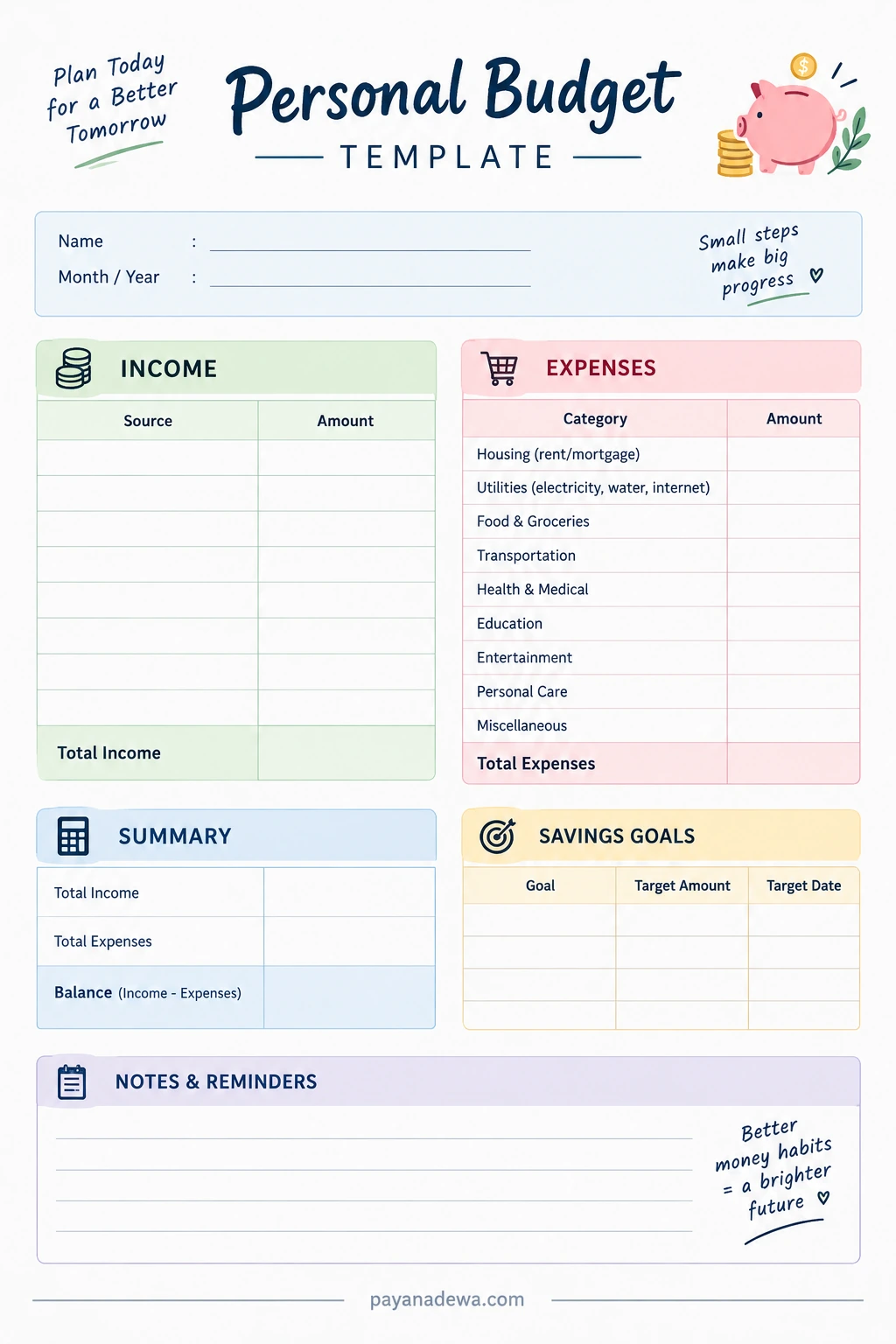
During the month, record what you actually spend. You can use a notebook, a spreadsheet, a budgeting app, or a printable worksheet. At the end of the week or month, compare actual amounts with your planned limits. If one category is consistently higher than expected, investigate why before changing the numbers.
You may discover that a category was underestimated, a bill increased, or a habit is costing more than you realized. Adjust your plan to reflect reality while looking for changes that support your goals. A budget is a living plan, not a test you pass or fail.
Simple Personal Budgeting Tips That Work
- Schedule a weekly money check-in: Spend ten minutes reviewing transactions, upcoming bills, and remaining category balances.
- Separate needs from wants: Before buying something nonessential, ask whether it fits your priorities and current spending limit.
- Plan meals and shopping lists: Preparing before grocery shopping can reduce impulse purchases and food waste.
- Review subscriptions: Cancel services you no longer use and compare recurring costs periodically.
- Use separate savings goals: Naming goals such as “emergency fund” or “new laptop” can make progress easier to track.
- Leave room for flexibility: Include a small miscellaneous category for costs that do not fit neatly elsewhere.
- Automate where appropriate: Scheduled bill payments and savings transfers can reduce missed payments, but keep enough money available to avoid overdraft or penalty fees.
Common Budgeting Mistakes to Avoid
Making the Budget Too Restrictive
Cutting every optional expense can make a plan feel punishing. Allow some reasonable spending for recreation and personal interests. A balanced budget is more likely to last than one that depends on perfect discipline every day.
Forgetting Irregular Expenses
Monthly bills are easy to remember, while annual or seasonal costs can catch you off guard. Review your calendar and past records to identify these expenses, then save a little each month toward them.
Ignoring Small Purchases
Small purchases can add up over time. You do not need to track every cent forever, but recording daily spending for a few weeks can reveal patterns and help you decide where a small adjustment would make a meaningful difference.
Giving Up After One Difficult Month
An unexpected repair or a change in income can disrupt even a thoughtful plan. Instead of abandoning your budget, update it. Decide which costs must be covered first, pause lower-priority spending if needed, and return to your normal plan when circumstances improve.
Choosing a Budgeting Method
The best budgeting method is the one you can use consistently. A zero-based budget assigns all expected income to expenses, savings, or debt payments so that no amount is left without a purpose. A percentage-based budget divides income into broad groups, while an envelope system sets spending limits for categories and tracks how much remains. A simple printable worksheet may be enough if you prefer writing figures by hand.
You can also combine methods. For example, use a monthly worksheet to plan your main categories and a phone app to record purchases while you are out. Choose tools that make your finances clearer rather than adding unnecessary work.
How to Review and Improve Your Budget
Review your budget at the end of each month. Ask yourself three questions: Did I cover my essential costs? Did I make progress toward savings or debt goals? What should I change next month? Use the answers to make one or two practical adjustments rather than trying to overhaul everything at once.
Revisit your plan when your circumstances change, such as moving home, starting a new job, welcoming a child, paying off a loan, or experiencing a change in income. If you share household expenses with a partner or family, agree on responsibilities and discuss larger goals together. Clear communication can make a shared budget more useful.
Conclusion: Make Your Personal Budget Work for You
A personal budget helps you direct your money toward the things that matter most. Start by calculating your income, listing your expenses, setting realistic limits, and including savings in your plan. Track your spending, review the results, and adjust when life changes. You do not need a perfect system to make progress; you need a practical one that you can maintain.
Use a printable personal budget template or another simple tool to get started today. Even a short review of your income and expenses can help you make more confident decisions and build healthier money habits over time.