A well-planned project budget is essential for completing projects on time, controlling expenses, and achieving business goals. Whether you are managing a small business initiative, launching a marketing campaign, organizing an event, or overseeing a construction project, a clear budget helps you understand how much money you need and where it should go.
Without proper financial planning, even a promising project can experience unexpected costs, resource shortages, and costly delays. Fortunately, you do not need complicated financial software to get started. With a practical project budget template, a clear cost breakdown, and regular monitoring, you can make informed decisions throughout the project lifecycle.
In this guide, you will learn what a project budget is, which expenses to include, how to create an accurate budget, and how to track spending effectively. You will also discover practical tips for managing financial risks and keeping your project on budget.
What Is a Project Budget?
A project budget is a financial plan that estimates the total cost of completing a project. It outlines the money required for labor, materials, equipment, software, services, and other project-related expenses. It also provides a reference point for comparing estimated costs with actual spending.
Project managers use this financial plan to allocate resources, control expenses, communicate with stakeholders, and measure financial performance. In addition, a well-organized budget helps decision-makers determine whether a project remains financially viable.
For example, a company planning a website redesign might budget for web development, design services, hosting, content creation, testing, and ongoing maintenance. By estimating these costs before work begins, the team can identify funding needs and avoid unnecessary spending.
Why Is Project Budgeting Important?
Project budgeting is more than listing expenses. It creates a financial framework that supports planning, accountability, and successful project delivery.
- Controls spending: A budget sets financial limits and helps prevent unnecessary purchases.
- Improves resource allocation: Teams can direct money toward the activities that matter most.
- Supports better decisions: Accurate cost estimates help managers evaluate alternatives before committing resources.
- Reduces financial risks: A contingency reserve provides protection against unexpected expenses.
- Improves transparency: Stakeholders can review planned costs, actual expenses, and remaining funds.
- Measures project performance: Comparing budgeted and actual costs reveals overspending before it becomes difficult to correct.
As a result, effective budgeting helps teams maintain financial discipline while adapting to changing project requirements.
What Should a Project Budget Include?
A complete project budget should cover every significant cost associated with delivering the agreed scope. The exact categories depend on the project’s size, industry, duration, and complexity. However, most budgets include the following expenses.
1. Labor Costs
Labor costs include salaries, hourly wages, contractor fees, overtime, and specialist services. Estimate the time each team member will spend on the project, then multiply the expected hours by the applicable hourly rate. Remember to include relevant payroll taxes and employment-related costs when necessary.
2. Materials and Supplies
Materials include physical goods and consumables required to complete project tasks. Examples include construction materials, office supplies, packaging, printing, and production components. Check current supplier prices and include delivery charges to improve estimate accuracy.
3. Equipment and Technology
This category covers equipment rentals, hardware purchases, software subscriptions, cloud services, and technical tools. Consider whether renting or purchasing equipment offers better value. Also, account for installation, maintenance, and training expenses where applicable.
4. Operational and Administrative Expenses
Operational expenses may include travel, accommodation, permits, insurance, communication, and administrative support. Although these costs can seem minor individually, they may represent a significant portion of the total project budget.
5. Contingency Reserve
A contingency reserve helps cover identifiable risks, such as price changes, additional labor, or minor scope adjustments. The appropriate amount depends on uncertainty and project complexity. Estimate it using a documented risk assessment rather than selecting an arbitrary percentage.
How to Create a Project Budget Step by Step
Creating a reliable project budget becomes easier when you follow a structured process. Start with the project scope, estimate each cost category, and establish a system for monitoring spending.
Step 1: Define the Project Scope
First, identify the project’s objectives, deliverables, deadlines, and major activities. A clear scope establishes what the team must deliver and prevents unrelated expenses from entering the budget.
Document important assumptions and exclusions as well. For instance, specify whether the budget covers taxes, post-launch maintenance, or third-party services.
Step 2: Break the Work Into Tasks
Next, create a work breakdown structure that divides the project into manageable tasks or work packages. This approach makes it easier to identify the resources required for each activity.
For a marketing campaign, the tasks might include research, creative development, advertising, content production, launch, and performance reporting. Each task should have an estimated cost and a responsible owner.
Step 3: Estimate Each Expense
Gather information from supplier quotations, historical project data, internal rates, and market research. Use realistic estimates rather than relying on optimistic assumptions.
Whenever possible, record the quantity, unit cost, and calculation behind each estimate. For example, 40 hours of work at $50 per hour produces an estimated labor cost of $2,000.
Step 4: Calculate the Total Budget
Add the estimated costs across all categories. Then include applicable taxes, overhead, and a suitable contingency reserve. Keep direct costs separate from indirect costs so you can understand how the project uses its funding.
A basic calculation is:
Total Project Budget = Direct Costs + Indirect Costs + Contingency Reserve
Check the calculations carefully before sharing the budget with stakeholders. Even small errors can affect purchasing decisions and funding approvals.
Step 5: Assign Responsibilities and Approve the Budget
Assign each expense category to a responsible team member or department. Define who can approve purchases, authorize changes, and review financial reports.
Once the estimates are complete, present the budget to the appropriate stakeholders. Explain the major assumptions, expected financial risks, and reasons for significant expenses. Obtain approval before making substantial commitments.
Step 6: Track Actual Spending
After the project begins, record expenses as they occur. Compare actual costs with the approved budget regularly, and investigate significant differences.
Update forecasts when new information becomes available. This allows the team to address potential overruns early instead of waiting until the project ends.
Project Budget Template: A Practical Way to Organize Costs
A project budget template provides a consistent structure for recording estimated expenses, actual costs, and budget variances. It is particularly useful for small businesses, freelancers, project managers, and teams that need a simple financial tracking system.
A useful template should include project details, a budget summary, category-level estimates, a detailed cost breakdown, and a notes section. These fields help you understand both the overall financial position and the expenses driving it.
Use the printable Project Budget Template below as a starting point for planning and tracking your project finances.
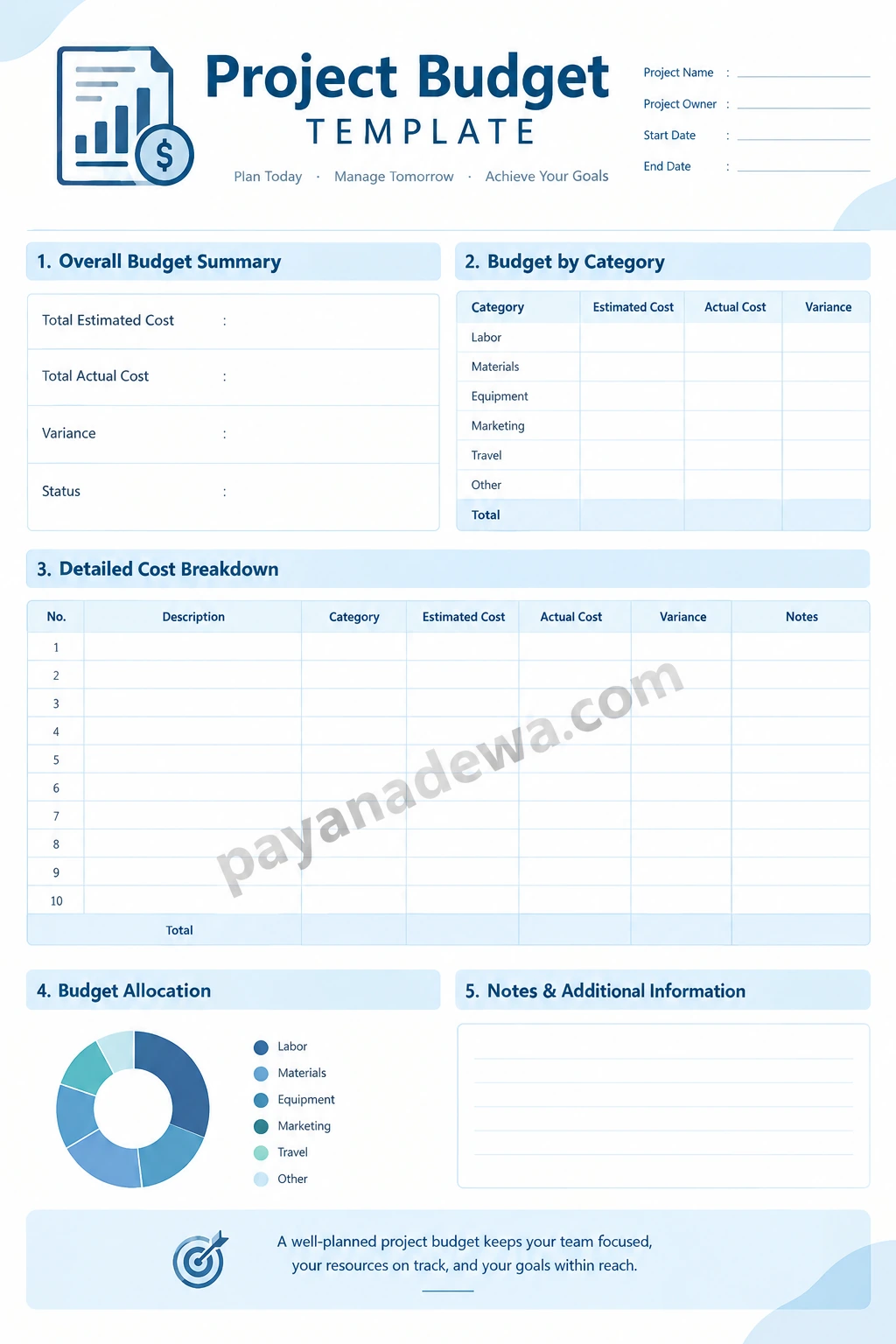
For best results, customize the categories to match your project. Add rows when necessary, record the date of each update, and keep supporting invoices or receipts with your financial records.
How to Calculate and Monitor Budget Variance
Budget variance shows the difference between the planned cost and the actual cost. Monitoring this figure helps project managers identify spending problems and adjust their forecasts.
Use the following formula:
Budget Variance = Actual Cost − Estimated Cost
For example, suppose a project allocates $5,000 for equipment but spends $5,600. The variance is $600, which indicates an unfavorable overrun of $600.
However, if the team spends $4,500, the variance is negative $500. This represents spending below the estimate, although you should confirm that the team has still met the required quality and scope.
When reviewing variance, consider these actions:
- Investigate unexpected price increases or additional work.
- Check whether the original estimates were realistic.
- Review purchase orders and outstanding commitments.
- Update the forecast for the remaining project work.
- Document corrective actions and assign clear responsibilities.
Most importantly, do not treat every underspend as a success. Lower costs may result from delayed work, missing deliverables, or reduced quality. Always assess financial performance alongside project outcomes.
Best Practices for Staying on Budget
Even a carefully prepared budget needs regular attention. Apply these practical strategies to maintain financial control throughout the project.
Use Realistic Estimates
Base estimates on supplier quotes, previous projects, and documented assumptions. For unfamiliar activities, consult experienced specialists or create several cost scenarios.
Review the Budget Regularly
Choose a review schedule that matches the project’s risk and pace. A complex project may require weekly reviews, while a smaller project might need monthly checks. Increase the frequency when costs become unpredictable.
Control Scope Changes
Additional requirements can increase labor, materials, and delivery costs. Before approving a change, estimate its financial impact and confirm whether the budget and timeline can accommodate it.
Keep a Contingency Reserve
Set aside funds for plausible risks, and document the conditions under which the reserve can be used. Track contingency spending separately so the team can distinguish planned project work from unexpected costs.
Use Budget Tracking Tools
A spreadsheet can work well for straightforward projects. Larger projects may benefit from dedicated project management or accounting software. Choose a tool that makes it easy to update costs, identify variances, and share reports with stakeholders.
Communicate Financial Changes Early
Inform stakeholders when spending differs significantly from the approved plan. Explain the cause, the likely impact, and the available options. Early communication creates more opportunities to solve problems before they affect delivery.
Common Project Budgeting Mistakes to Avoid
Several common mistakes can weaken even a well-organized financial plan. Fortunately, you can reduce these risks with careful preparation and consistent monitoring.
- Underestimating costs: Include overlooked expenses such as shipping, taxes, training, and maintenance.
- Ignoring project risks: Assess uncertainty and establish a reasonable contingency reserve.
- Using outdated prices: Verify supplier quotes and labor rates before approving estimates.
- Failing to track commitments: Record purchase orders and contracted expenses, not just payments already made.
- Allowing uncontrolled changes: Require review and approval for changes that affect scope, cost, or schedule.
- Updating records inconsistently: Establish a clear process for entering expenses and reconciling financial information.
By addressing these issues early, you can improve cost predictability and reduce the likelihood of unpleasant financial surprises.
Conclusion
A project budget is a practical tool for planning resources, controlling expenses, and measuring financial performance. By defining the project scope, estimating costs carefully, organizing expenses into clear categories, and tracking actual spending, you can make better decisions at every stage of the project.
Start with a simple project budget template, review it regularly, and update your forecasts whenever circumstances change. Most importantly, communicate financial risks early and evaluate cost performance alongside quality, scope, and deadlines.
With a consistent budgeting process, you can reduce financial uncertainty, use resources more effectively, and give your project a stronger foundation for success.