Managing money as a student can feel challenging, especially when tuition fees, textbooks, transportation, food, and social activities compete for a limited amount of money. Whether you receive financial support from your family, earn income from a part-time job, or rely on scholarships, creating a student budget can help you make smarter financial decisions and reduce unnecessary stress.
A student budget is a simple plan for tracking your income, organizing your expenses, and deciding how much money to save each month. You do not need a large income or advanced financial knowledge to get started. With a realistic budget and consistent habits, you can cover essential costs, enjoy your college experience, and work toward your financial goals.
This guide explains how to create a college student budget, manage everyday expenses, save money, and use a student budget template to keep your finances organized throughout the academic year.
What Is a Student Budget?
A student budget is a financial plan that outlines how much money you receive and how you intend to spend it over a specific period, usually a month. It helps you understand where your money goes and whether your spending matches your priorities.
For example, your monthly income might come from family allowances, student financial aid, scholarships, savings, or part-time employment. Your expenses may include rent, groceries, tuition payments, transportation, phone bills, and entertainment.
By comparing your income with your expenses, you can determine whether you have enough money to cover your needs, build savings, and enjoy occasional activities without overspending.
Why Is Budgeting Important for Students?
Learning to manage money during college can develop financial habits that remain useful long after graduation. A practical budget helps you:
- Understand your spending habits and identify unnecessary expenses.
- Prepare for tuition payments, textbooks, and other academic costs.
- Avoid running out of money before the end of the month.
- Build an emergency fund for unexpected expenses.
- Reduce financial anxiety by planning ahead.
- Develop responsible money management skills before entering the workforce.
Most importantly, budgeting gives you greater control over your financial decisions. Instead of wondering where your money went, you can make deliberate choices about how to use it.
How to Create a Student Budget Step by Step
Creating a college budget does not have to be complicated. Start with a few basic steps and adjust your plan as your financial situation changes.
1. Calculate Your Monthly Income
Begin by listing every source of money you expect to receive during the month. Include regular income and any additional funds you can reasonably anticipate.
Common sources of student income include:
- Monthly allowances from parents or family members.
- Part-time job earnings after taxes and deductions.
- Scholarships, grants, or financial aid available for living expenses.
- Paid internships, tutoring, or freelance work.
- Other dependable sources of financial support.
Use realistic figures rather than your highest possible earnings. If your work schedule changes from week to week, calculate a conservative average. For financial aid, include only the amount available for your budget after accounting for tuition or other restrictions.
2. List Your Fixed Expenses
Fixed expenses are costs that usually remain the same or change very little each month. Identifying these payments first helps you understand how much money is already committed before you spend on other activities.
Examples of fixed student expenses include:
- Rent or regular housing payments.
- Tuition installments and mandatory school fees.
- Phone plans and internet subscriptions.
- Public transportation passes or parking permits.
- Recurring software, study platform, or membership fees.
Write down the amount and due date for each payment. If tuition is charged once per semester, divide the expected cost across the months you have to prepare for it. This makes large expenses easier to anticipate.
3. Estimate Your Variable Expenses
Variable expenses change depending on your activities and spending habits. Although these costs can be harder to predict, tracking them is essential for creating a realistic monthly budget.
Typical variable expenses include groceries, meals on campus, coffee, clothing, entertainment, personal care products, and occasional transportation.
Review your bank transactions or receipts from the previous month to estimate these costs. If you have never tracked your spending, record every purchase for two to four weeks. Your actual spending patterns will provide a useful starting point.
Set reasonable limits for each category instead of trying to eliminate every enjoyable purchase. A budget is easier to maintain when it reflects your real lifestyle.
4. Set Savings Goals
Saving money is important even when your student income is limited. Start with a manageable amount that fits your circumstances, then increase it whenever your income allows.
Consider setting savings goals for:
- Emergency expenses, such as urgent travel or essential replacement items.
- Future tuition payments, academic supplies, or graduation costs.
- A laptop, tablet, or other equipment needed for your studies.
- Travel, personal projects, or other planned purchases.
If you cannot save much at first, that is perfectly fine. Consistency matters more than choosing an ambitious amount that forces you to neglect essential needs.
5. Calculate Your Remaining Balance
After recording your income, fixed expenses, variable expenses, and planned savings, calculate the amount remaining.
Your basic student budget formula is:
Remaining Balance = Total Income − Total Expenses − Planned Savings
If your remaining balance is positive, you have money available for additional goals or unexpected costs. If it is negative, review your spending plan and adjust flexible categories where possible. Make sure you do not cut essential food, housing, healthcare, or academic expenses simply to make the numbers look better.
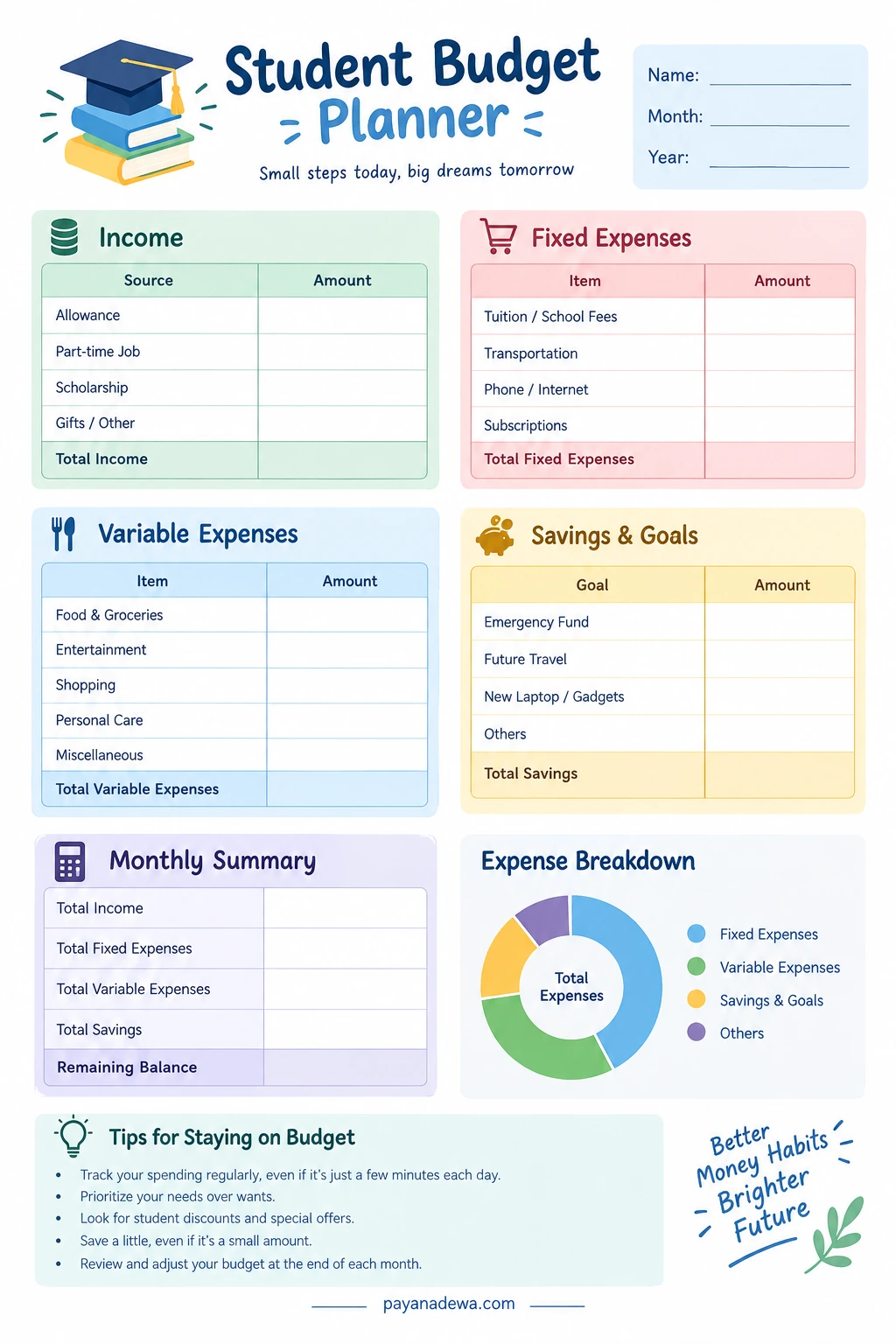
How to Use a Student Budget Template
A student budget template simplifies the budgeting process by placing your income, expenses, savings, and monthly totals in one organized document. You can print the worksheet and complete it by hand or recreate its categories in a spreadsheet.
To get the most value from your budget planner, complete each section in order.
Record Your Income
Enter each source of income in the income section. Include your allowance, employment earnings, scholarship funds available for living costs, and other dependable income. Add the amounts together to calculate your total monthly income.
Track Fixed and Variable Costs
Use the fixed expenses section for predictable bills and the variable expenses section for costs that fluctuate. Record your actual spending as the month progresses instead of relying entirely on estimates made at the beginning.
Organize Your Savings
List your financial goals and assign a target amount to each one. You can prioritize an emergency fund first, followed by academic equipment, upcoming fees, or personal goals. Adjust these targets whenever your income or essential expenses change.
Review Your Monthly Summary
At the end of the month, calculate your totals and compare your planned budget with your actual spending. Identify categories where you spent more or less than expected. Use these observations to create a more accurate budget for the next month.
A printable student budget worksheet is particularly useful if you prefer writing by hand, want a quick overview of your finances, or need a simple system that does not require additional apps.
Practical Ways to Save Money as a Student
Following a budget becomes easier when you combine it with everyday habits that reduce unnecessary spending. Small improvements can make a meaningful difference over an entire semester.
Plan Meals and Grocery Shopping
Food is a major expense for many college students. Preparing meals at home, planning weekly menus, and making a shopping list can help reduce impulse purchases and expensive takeaway orders.
Compare prices, use ingredients across multiple meals, and choose affordable foods that meet your nutritional needs. If your campus provides reasonably priced meal plans or student dining discounts, compare those options with the cost of preparing your own food.
Take Advantage of Student Discounts
Many businesses offer discounts to eligible students. Look for savings on public transportation, software, educational subscriptions, entertainment, museums, and essential supplies.
Always compare the discounted price with your actual needs. Buying something unnecessary simply because it is on sale does not help your budget.
Buy Used Textbooks and Supplies
Textbooks and academic materials can become expensive, especially when several courses require new resources. Before buying, check your library, campus book exchange, legitimate digital resources, and secondhand marketplaces.
Confirm that the edition meets your course requirements and that any required access codes are included. Reusing notebooks, organizing existing supplies, and borrowing equipment when practical can also reduce academic costs.
Limit Impulse Purchases
Small purchases can gradually consume a significant part of your monthly income. Coffee, convenience snacks, online shopping, and unused subscriptions may seem inexpensive individually but add up over time.
Try waiting 24 hours before making a nonessential purchase. Review your subscriptions every month and cancel services you rarely use. You can also set a weekly discretionary spending limit to keep entertainment and shopping under control.
Use Free Campus Resources
Colleges often provide resources that students can use without additional charges. Depending on your institution, these may include libraries, study spaces, career services, academic workshops, fitness facilities, student events, and technology support.
Using available resources can help you maintain a balanced college experience while reducing the need to pay for services elsewhere.
Common Student Budgeting Mistakes to Avoid
Even a simple financial plan can become ineffective when it relies on unrealistic assumptions. Watch out for these common mistakes:
- Underestimating everyday costs: Include small purchases and occasional expenses rather than focusing only on major bills.
- Ignoring irregular payments: Plan ahead for semester fees, annual subscriptions, travel, and replacement equipment.
- Setting overly strict limits: Allow reasonable spending for social activities and personal interests so the budget remains sustainable.
- Forgetting savings: Treat savings as a planned category when your essential needs and available income permit it.
- Failing to review the budget: Update your numbers when rent, work hours, financial aid, or other expenses change.
- Depending on uncertain income: Avoid committing to regular expenses based on overtime, occasional gifts, or work opportunities that are not guaranteed.
Remember that your first budget is a starting point, not a permanent rulebook. It may take a few months to understand your spending patterns and find realistic limits for each category.
How Often Should Students Review Their Budget?
Check your budget briefly each week to see how much you have spent and whether upcoming payments are covered. A quick review can help you recognize problems before they become difficult to manage.
At the end of each month, compare your planned amounts with your actual expenses. If groceries consistently cost more than expected, adjust that category instead of repeatedly treating the difference as a surprise.
Review your budget again at the beginning of each semester, when tuition, housing, class schedules, or employment hours may change. A flexible plan is more useful than a rigid budget that no longer matches your circumstances.
Conclusion
A student budget is one of the most practical tools for managing money during college. By calculating your income, organizing fixed and variable expenses, setting realistic savings goals, and reviewing your spending regularly, you can make better financial decisions throughout the academic year.
You do not need a complicated spreadsheet or a high income to get started. A printable student budget template can provide a clear overview of your finances and help you build consistent money management habits.
Start by recording your current income and expenses, choose a few achievable financial goals, and review your progress every month. With patience and regular adjustments, budgeting can help you reduce financial stress, prepare for unexpected costs, and focus more confidently on your education and future.