A well-planned business budget gives you a clearer view of where your money comes from, where it goes, and how much your business can afford to spend. Whether you run a small business, freelance operation, online store, startup, or established company, budgeting can help you make smarter financial decisions and prepare for future opportunities.
Instead of waiting until the end of the month to discover that expenses are too high, a business budget allows you to plan ahead. You can estimate revenue, control operating costs, set financial goals, manage cash flow, and identify areas where your business can become more profitable.
This guide explains how to create an effective business budget, what categories to include, how to track actual spending, and how to use your budget as a practical tool for business growth.
What Is a Business Budget?
A business budget is a financial plan that estimates a company’s expected income and expenses over a specific period. The period may be monthly, quarterly, or annually, depending on the size and needs of the business.
A typical budget compares planned amounts with actual amounts. This makes it easier to see whether the business is spending according to plan or whether adjustments are necessary.
A simple business budget usually includes:
- Expected sales and revenue
- Operating expenses
- Employee wages and salaries
- Marketing and advertising costs
- Rent and utilities
- Inventory and supplies
- Equipment and maintenance
- Taxes and insurance
- Emergency or contingency funds
- Expected profit or loss
The goal is not simply to restrict spending. A good budget helps you allocate money toward the activities that contribute most to the success of your business.
Why Is a Business Budget Important?
Without a financial plan, it is easy for small expenses to accumulate and reduce your profit. A business budget provides a framework for making financial decisions based on numbers rather than assumptions.
1. Improves Financial Visibility
Budgeting shows you how much money your business expects to generate and how much it plans to spend. This creates a clearer picture of your financial position and helps you identify potential problems earlier.
2. Helps Control Expenses
When every major expense has a planned amount, unusual spending becomes easier to identify. You can review unnecessary subscriptions, excessive advertising costs, expensive suppliers, or other expenses that may not provide enough value.
3. Supports Better Cash Flow Management
A profitable business can still experience financial stress if cash does not arrive when bills are due. A budget helps you anticipate periods of high spending and prepare for them before they become a problem.
4. Makes Business Goals More Realistic
Whether your goal is hiring an employee, purchasing equipment, opening another location, or increasing marketing investment, budgeting helps you determine how much money is required and when the goal may be financially achievable.
5. Makes Decision-Making Easier
When you know your expected revenue, fixed costs, variable expenses, and available cash, it becomes easier to evaluate major business decisions. A budget can help answer questions such as whether you can afford new equipment or whether it is time to increase your marketing investment.
What Should Be Included in a Business Budget?
The categories you use will depend on your industry and business model. However, most businesses can start with four major areas: revenue, fixed expenses, variable expenses, and financial goals.
Revenue and Income
Start by estimating all sources of business income. Depending on your business, this could include product sales, service revenue, subscriptions, commissions, consulting fees, affiliate income, or other sources.
Use realistic estimates rather than optimistic guesses. If possible, compare your projections with previous sales data and seasonal patterns.
Fixed Expenses
Fixed expenses are costs that generally remain consistent from month to month. Examples include:
- Office or business rent
- Software subscriptions
- Insurance premiums
- Loan payments
- Base salaries
- Professional service fees
Knowing your fixed costs helps you determine the minimum amount of revenue your business needs to operate comfortably.
Variable Expenses
Variable expenses change according to business activity. Examples include inventory, packaging, shipping, transaction fees, sales commissions, advertising campaigns, and production costs.
Tracking these expenses is particularly important because they can increase quickly when sales grow.
Taxes and Emergency Funds
Do not create a budget that accounts only for everyday operating costs. Set aside money for taxes, unexpected repairs, equipment replacement, legal expenses, and other unforeseen costs.
How to Create a Business Budget Step by Step
Step 1: Review Previous Financial Data
If your business has been operating for a while, begin by reviewing previous income and expenses. Look for recurring costs, seasonal fluctuations, and unusual transactions.
If you are starting a new business, research expected costs and create conservative revenue estimates. Your first budget does not need to be perfect. It should provide a reasonable starting point that you can improve as real data becomes available.
Step 2: Estimate Your Revenue
Calculate your expected revenue for the upcoming budget period. Consider historical sales, current customers, planned promotions, seasonal demand, and realistic growth expectations.
It can also be useful to create three revenue scenarios: conservative, expected, and optimistic. This gives you a better understanding of how different sales levels could affect your finances.
Step 3: List Every Major Expense
Write down your fixed and variable expenses. Include both obvious expenses and smaller recurring costs that can easily be overlooked.
Group expenses into categories so you can quickly understand where most of your money is being spent.
Step 4: Set Spending Limits
Assign a planned amount to each major expense category. Your goal is to create a spending plan that supports business operations while protecting your expected profit.
Do not automatically increase every expense category simply because revenue is growing. Review whether additional spending is actually generating measurable value.
Step 5: Calculate Expected Profit
A basic calculation is:
Expected Profit = Expected Revenue – Total Expenses
If the result is lower than your target, review the budget before the period begins. You may need to reduce unnecessary costs, improve pricing, increase sales, or adjust your business goals.
Step 6: Compare Budgeted and Actual Results
Once the budget period begins, record actual income and expenses. Compare those figures with your original plan regularly.
This variance analysis helps you identify where the business is performing better or worse than expected. The purpose is not to punish yourself for missing a target. Instead, it is to understand why the difference occurred and make better decisions.
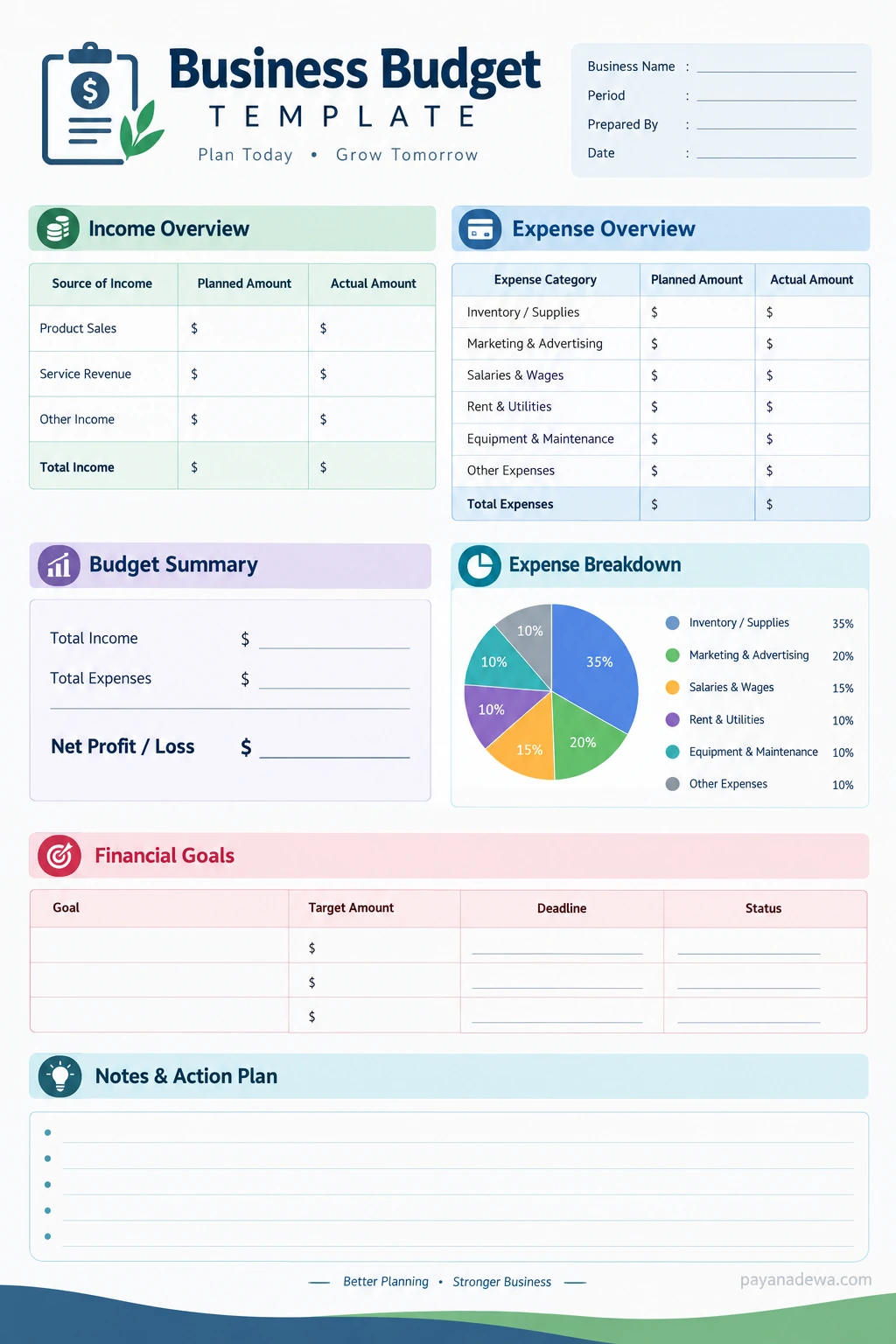
Business Budget Categories to Track
A useful budget should make your financial information easy to understand. Consider organizing your budget into categories such as:
- Sales Revenue: Income generated from products or services
- Payroll: Employee salaries, wages, bonuses, and related costs
- Marketing: Advertising, social media, content, promotions, and campaigns
- Operations: Rent, utilities, software, supplies, and administrative costs
- Inventory: Products, raw materials, packaging, and stock-related expenses
- Technology: Software, hosting, equipment, and technology services
- Professional Services: Accounting, legal, consulting, and other professional fees
- Taxes: Estimated business taxes and applicable fees
- Emergency Reserve: Funds for unexpected business expenses
Tips for Managing Your Business Budget
Review Your Budget Regularly
A budget should be a living financial document rather than something you create once and forget. Review it at least monthly and make adjustments when your business circumstances change.
Separate Business and Personal Expenses
Keep business transactions separate from personal spending whenever possible. Separate accounts and accurate records make budgeting, bookkeeping, tax preparation, and financial analysis much easier.
Focus on Profit, Not Just Revenue
Increasing revenue does not automatically mean your business is becoming more profitable. If expenses grow faster than sales, higher revenue may not produce meaningful financial improvement.
Monitor both revenue and profit margins so you can understand the real financial performance of your business.
Build a Cash Reserve
Unexpected expenses are part of running a business. Building a cash reserve can provide additional flexibility when sales decline, equipment breaks, or an unexpected opportunity requires investment.
Use Simple Tools Consistently
You do not necessarily need complicated financial software to start budgeting. A spreadsheet, accounting system, or simple budget template can be enough if you update it consistently and use accurate information.
Common Business Budget Mistakes to Avoid
Even a simple budget can become ineffective if it is based on unrealistic assumptions or incomplete information.
- Overestimating revenue: Use realistic sales projections instead of assuming every month will be a record month.
- Ignoring small expenses: Recurring small charges can become significant over an entire year.
- Forgetting irregular costs: Include annual fees, equipment replacement, taxes, repairs, and other occasional expenses.
- Failing to update the budget: Business conditions change, so your budget should change with them.
- Focusing only on cutting costs: Some expenses can create substantial returns and should be evaluated based on value rather than price alone.
- Not comparing actual results: A budget becomes much more useful when planned numbers are compared with real financial results.
How Often Should You Update a Business Budget?
For most small businesses, a monthly review is a practical starting point. At the beginning of each month, compare actual results from the previous month with the budget and update your expectations for upcoming months.
Businesses with rapidly changing revenue or expenses may benefit from weekly cash flow monitoring and more frequent budget adjustments. Larger companies may use monthly, quarterly, and annual budgeting processes at the same time.
The important point is consistency. A simple budget that is reviewed regularly is usually more useful than a sophisticated financial model that nobody maintains.
Final Thoughts on Business Budget Planning
A business budget is more than a list of expenses. It is a practical financial roadmap that helps you understand your business, control spending, prepare for unexpected costs, and make informed growth decisions.
Start with your expected revenue, identify fixed and variable expenses, set realistic spending limits, and calculate your expected profit. Then compare your budget with actual results regularly and make adjustments based on what the numbers tell you.
With consistent budgeting, you can gain greater financial visibility and build a stronger foundation for sustainable business growth. Whether you are managing a small business today or planning to expand in the future, a clear budget can help turn financial goals into measurable actions.