Without a clear plan, teams may struggle with missed deadlines, unclear responsibilities, unexpected costs, and inconsistent customer experiences. A structured service plan addresses these challenges by outlining what needs to be done, who is responsible, and how success will be measured.
In this guide, you will learn what a service plan is, why it matters, which elements to include, and how to create a plan that supports your business goals. You will also discover practical tips and ways to use a service plan template to simplify the planning process.
What Is a Service Plan?
A service plan is a structured document that explains how a service will be delivered, managed, monitored, and improved. It identifies the services being provided, the people involved, the resources required, the expected timeline, and the results that the organization wants to achieve.
Businesses use service plans for many purposes, including customer support, maintenance, consulting, IT management, healthcare support, and professional services. The format depends on the industry, but the main goal remains the same: to establish clear expectations and provide a practical roadmap for successful service delivery.
For example, an IT company might create a service plan that includes system maintenance, response times, security monitoring, and technical support. A consulting firm might outline project milestones, client meetings, deliverables, and performance indicators.
A service plan can cover a single project, a recurring service agreement, or a long-term relationship with a client. It should be detailed enough to guide action while remaining flexible enough to accommodate changing needs.
Why Is a Service Plan Important?
A service plan provides structure and direction. Instead of relying on informal conversations or assumptions, everyone involved can refer to one document that explains the agreed approach.
1. Improves Service Quality
Clear procedures and defined standards help teams deliver consistent results. When employees understand the expected level of service, they can complete tasks more efficiently and identify problems before they affect customers.
2. Clarifies Roles and Responsibilities
A service plan identifies who manages each activity, approves decisions, and communicates with clients. This reduces confusion, prevents duplicated work, and makes accountability easier to maintain.
3. Supports Better Resource Management
Planning helps organizations estimate the staff, equipment, budget, and time needed for successful delivery. It also makes resource shortages easier to identify before they cause delays.
4. Strengthens Customer Relationships
Customers appreciate knowing what a service includes, when they can expect results, and how to request assistance. A clear service plan encourages transparency and builds trust through realistic expectations.
5. Makes Performance Easier to Measure
By setting measurable goals and reviewing results regularly, businesses can determine whether their services meet expectations. These insights support continuous improvement and better decision-making.
Key Elements of an Effective Service Plan
Although every organization has different requirements, most effective service plans contain several essential components.
Client and Service Information
Start with the basic details. Include the client or department name, company information, primary contact, service name, and relevant contact details. Add a plan identification number and preparation date when necessary.
These details help team members identify the correct document and contact the right person when questions arise.
Service Description and Scope
Explain exactly what the service covers. Describe the activities, deliverables, support arrangements, and limitations that apply. Be specific about what is included and what requires a separate agreement.
A clearly defined scope reduces misunderstandings and helps prevent unplanned work from consuming time or budget.
Goals and Expected Outcomes
Every service plan should establish clear objectives. Define the results the service is expected to produce and explain how those results will be evaluated.
Whenever possible, use measurable targets. For example, a customer support team might aim to respond to 90% of incoming requests within one business day. A maintenance provider might target a 95% completion rate for scheduled inspections.
Timeline and Milestones
Include the planned start date, completion date, recurring activities, and important milestones. A realistic timeline helps everyone understand priorities and prepare for upcoming responsibilities.
For ongoing services, specify the frequency of routine tasks, such as weekly reviews, monthly reports, or quarterly maintenance visits.
Resources, Budget, and Responsibilities
List the people, tools, materials, systems, and financial resources required to deliver the service. Assign an owner to each major task and identify who is responsible for approvals or escalations.
If costs are relevant, include estimated expenses, payment terms, and any budget limitations. Clear financial expectations make the plan easier to manage.
Performance Indicators and Review Procedures
Choose key performance indicators that reflect the service objectives. Depending on the business, these might include customer satisfaction, response time, completion rate, service availability, error rate, or cost per service request.
Explain when performance will be reviewed, who will evaluate the results, and how corrective actions will be documented.
How to Create a Service Plan Step by Step
Creating a useful service plan does not have to be complicated. Follow these steps to develop a document that supports practical execution.
Step 1: Identify the Service Requirements
Begin by understanding the client’s needs, business objectives, and current challenges. Ask questions about priorities, expected outcomes, deadlines, and any special requirements.
Document the answers so the plan reflects actual needs rather than assumptions. If several stakeholders are involved, confirm that their expectations are aligned.
Step 2: Define the Scope and Objectives
Describe the service activities and establish the boundaries of the work. Then translate the client’s needs into clear objectives with measurable outcomes whenever possible.
For instance, instead of writing “improve technical support,” define a target such as reducing average response time by 20% within three months.
Step 3: Assign Tasks and Resources
Break the service into manageable activities. Assign each task to a responsible person or team, estimate the required time, and identify the tools or materials needed.
Check that the team has sufficient capacity to meet the proposed deadlines. Adjust the scope or timeline if the available resources cannot support the original expectations.
Step 4: Establish a Realistic Timeline
Arrange tasks in the correct order and identify dependencies. Include milestone dates, scheduled reviews, and contingency time for unexpected problems.
Share the timeline with everyone involved so that responsibilities and deadlines are understood from the beginning.
Step 5: Document Communication and Risk Management
Specify how progress updates will be shared, how frequently meetings will take place, and who should be contacted when an issue occurs.
Identify likely risks, such as staffing shortages, delayed approvals, technical failures, or budget changes. For each major risk, outline a practical response to reduce disruption.
Step 6: Review, Approve, and Implement
Review the completed plan with the relevant stakeholders. Check that the scope, objectives, responsibilities, costs, and timeline are realistic and agreed upon.
Once approved, distribute the final document to the people who need it. Store it in an accessible location and establish a process for recording updates.
Service Plan Template: A Practical Tool for Better Organization
A service plan template provides a ready-made structure for documenting important information. Instead of building a new document from scratch, you can fill in predefined sections and adapt them to your specific requirements.
A useful template typically includes client information, a service overview, goals and objectives, service details, resource requirements, timelines, and next steps. You can add sections for pricing, service-level agreements, risk assessments, or performance reports when needed.
Use the template below as a starting point for your own planning process.
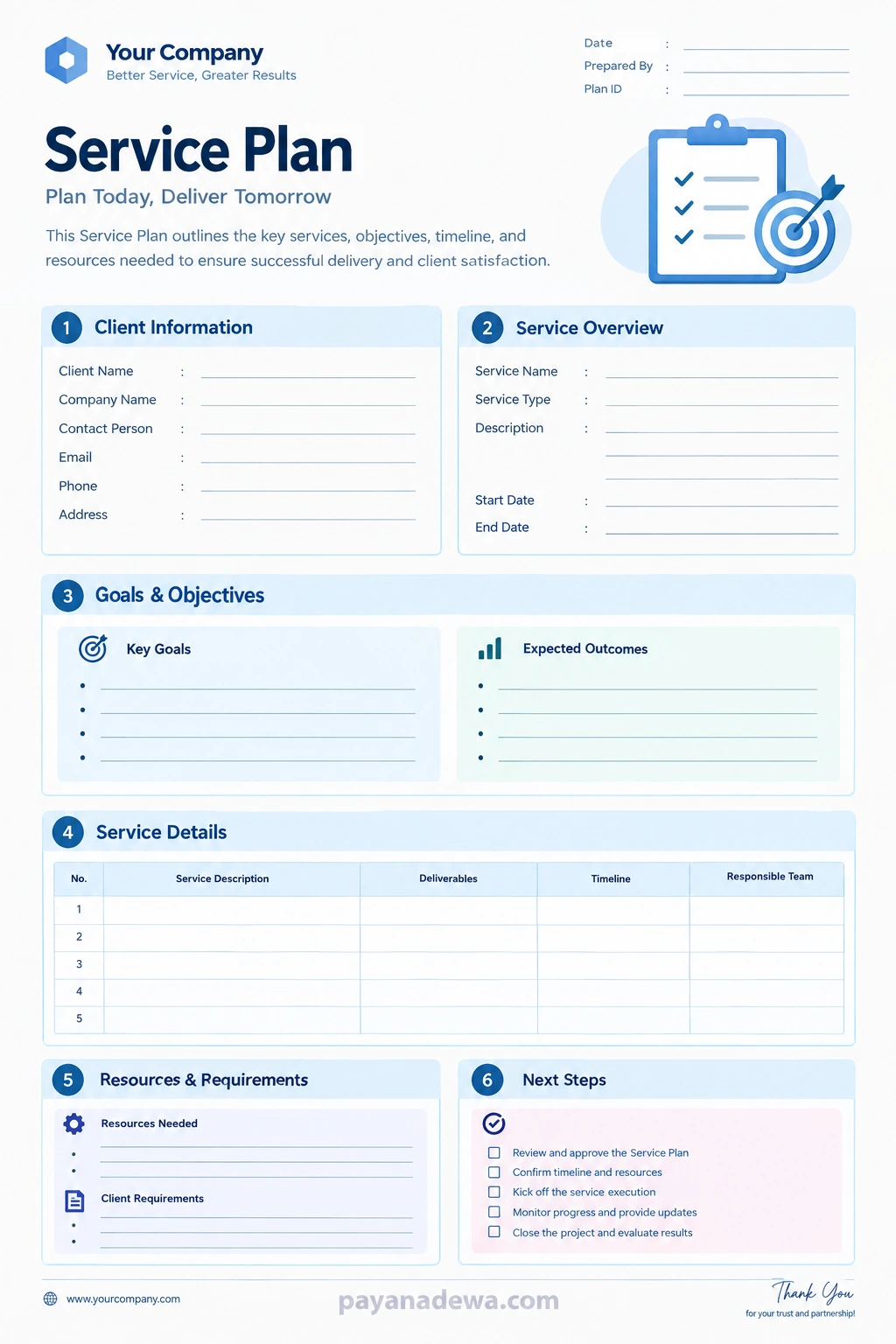
For the best results, customize the template to match your workflow. Remove sections that do not apply and add any information required by your industry or client agreement. Keep the layout simple enough for team members to update and understand quickly.
Practical Tips for Managing Your Service Plan
A service plan is most valuable when people use it consistently. These practical habits can help you keep the document useful throughout the service lifecycle.
- Keep objectives specific. Define outcomes that can be measured instead of relying on vague statements.
- Use clear language. Avoid unnecessary jargon so that clients, managers, and team members understand the same expectations.
- Assign ownership. Give each major task a responsible person and establish clear approval procedures.
- Review progress regularly. Compare actual performance with planned milestones and address delays early.
- Record changes. Document approved adjustments to the scope, timeline, resources, or deliverables.
- Protect sensitive information. Store client details securely and provide access only to authorized people.
- Collect feedback. Ask clients and team members what works well and what needs improvement.
- Keep the document accessible. Use a shared, controlled location so the team can find the current version easily.
Common Service Planning Mistakes to Avoid
Even a detailed service plan can fail if it is unrealistic or poorly maintained. One common mistake is setting goals without defining how success will be measured. Without clear indicators, it becomes difficult to evaluate performance objectively.
Another problem is creating timelines without checking resource availability. Before committing to deadlines, confirm that the assigned team has the time, skills, and tools needed to complete the work.
Some organizations also treat the service plan as a one-time document. In reality, requirements can change as projects progress and customer needs evolve. Review the plan periodically and update it when approved changes occur.
Finally, avoid making the document unnecessarily complicated. Include enough detail to guide execution, but focus on information that supports decisions, responsibilities, and measurable results.
Conclusion
A service plan is an essential tool for organizing work, aligning expectations, managing resources, and delivering reliable results. By defining the service scope, setting measurable objectives, assigning responsibilities, and establishing realistic timelines, businesses can improve both operational efficiency and customer satisfaction.
The most effective approach is to create a practical plan, communicate it clearly, and review progress regularly. A reusable service plan template can make this process faster and more consistent, especially when your organization manages multiple clients or recurring services.
Start with the essential sections, customize the document to your needs, and refine it as you learn from experience. With a clear and well-maintained service plan, your team can work with greater confidence and deliver better service over time.