Although supermarkets offer convenient meat selections, a traditional butcher shop often provides personalized service, expert advice, and a wider range of custom cutting options. Understanding what a butcher does, how different cuts are prepared, and what to look for when buying meat can help you make better purchasing decisions.
In this guide, you will discover the responsibilities of a butcher, the most common types of meat and cuts, tips for choosing a reliable butcher shop, and practical advice for storing and preparing meat safely.
What Is a Butcher?
A butcher is a skilled professional who prepares, cuts, trims, portions, and sells meat for customers. Butchers typically work with beef, pork, lamb, poultry, and other meat products, depending on the shop, local regulations, and customer preferences.
Beyond cutting meat, a professional butcher understands muscle structure, fat distribution, bone placement, and the characteristics that make certain cuts suitable for specific cooking methods. This knowledge helps customers select meat that matches their recipes, budgets, and preferences.
Butchers may work in independent butcher shops, supermarkets, meat processing facilities, restaurants, wholesale businesses, or specialty meat markets. Their daily responsibilities vary according to their workplace and level of experience.
What Does a Butcher Do?
A butcher performs several essential tasks to ensure meat is properly prepared, presented, and handled. These responsibilities require practical skills, attention to detail, and a strong understanding of food safety.
Cutting and Preparing Meat
One of the primary responsibilities of a butcher is dividing larger sections of meat into smaller portions. These portions may include steaks, roasts, chops, ribs, and ground meat.
Customers can often request specific thicknesses, portion sizes, or trimming preferences. For example, a butcher can prepare thin slices for quick cooking, thick steaks for grilling, or boneless portions for convenient meal preparation.
Trimming Fat and Removing Bones
Butchers remove unwanted connective tissue, trim excess fat, and separate meat from bones when requested. However, fat is not always undesirable. A suitable amount of marbling can improve flavor, tenderness, and juiciness, particularly in beef steaks.
A skilled butcher can explain the difference between lean cuts and well-marbled cuts so customers can choose according to their cooking methods and nutritional preferences.
Recommending Suitable Cuts
Choosing the correct cut can make a significant difference in the final dish. Butchers can recommend tender cuts for quick cooking, flavorful cuts for slow braising, or economical options for soups and stews.
They may also suggest alternative cuts when a particular product is unavailable or exceeds the customer’s budget.
Maintaining Food Safety
Safe meat handling is a critical part of a butcher’s job. Responsibilities include maintaining appropriate refrigeration, cleaning equipment, preventing cross-contamination, and following applicable food safety requirements.
Proper labeling, stock rotation, and hygienic work surfaces also help protect customers and maintain product quality.
Common Types of Meat Available at a Butcher Shop
Most butcher shops offer a selection of fresh meat products, although availability depends on location, customer demand, and the shop’s specialization.
Beef
Beef is popular for steaks, burgers, roasts, and slow-cooked dishes. Common cuts include ribeye, sirloin, tenderloin, chuck, brisket, and short ribs.
- Ribeye: A well-marbled cut often chosen for grilling or pan-searing.
- Sirloin: A versatile cut suitable for grilling, roasting, or slicing.
- Tenderloin: A naturally tender cut often used for premium steaks.
- Chuck: A flavorful cut that works well in stews and braised dishes.
- Brisket: A cut commonly prepared through prolonged, slow cooking.
Pork
Pork is used in many cuisines and can be prepared in numerous ways. Popular options include pork shoulder, loin, belly, ribs, and chops. Depending on local preferences, a butcher may also prepare sausages, cured products, or custom portions.
Pork shoulder is particularly useful for slow cooking, while pork loin and chops can work well with roasting or grilling. Pork belly is valued for its combination of meat and fat.
Lamb
Lamb is often selected for its distinctive flavor and versatility. Common cuts include leg, shoulder, loin chops, and ribs. Tender cuts are suitable for grilling or roasting, while shoulder can benefit from slower cooking to develop a tender texture.
Poultry
Chicken and turkey are common choices for everyday meals. A butcher may offer whole birds, breasts, thighs, drumsticks, wings, and boneless portions. Ask about portion sizes and preparation options when purchasing poultry for a particular recipe.
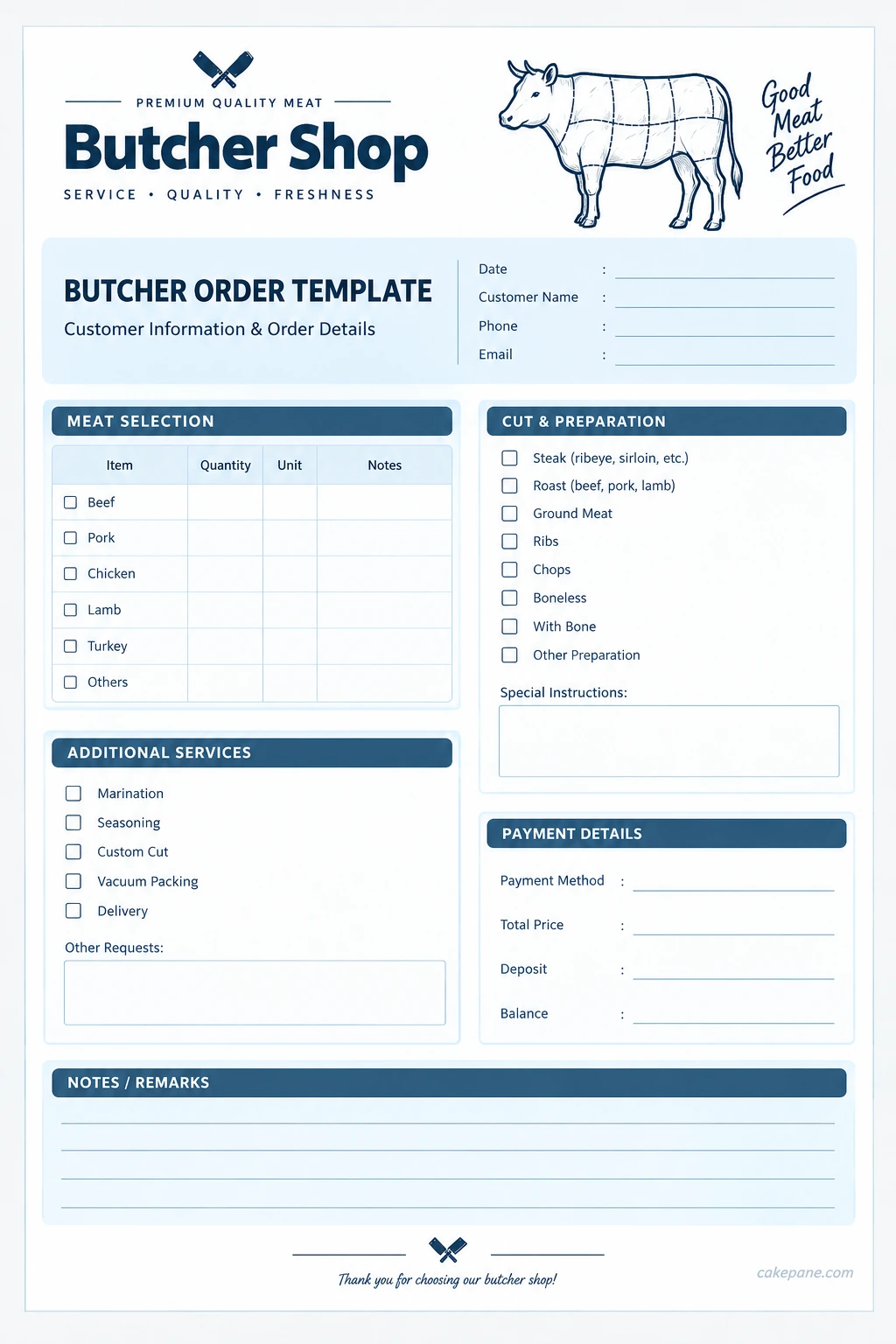
A printable butcher order template can make it easier to organize customer requests, record meat quantities, and communicate cutting preferences. It is especially useful for butcher shops that accept custom orders, prepare special cuts, or manage several orders each day.
Use a simple order form to record customer information, selected meats, quantities, preparation instructions, additional services, payment details, and collection or delivery arrangements. Clear records help reduce misunderstandings and improve the customer experience.
How to Choose the Best Butcher Shop
Finding a reliable butcher can improve the quality of your meals and make buying meat more convenient. Rather than focusing only on price, consider product quality, cleanliness, service, and the shop’s ability to meet your needs.
Check Freshness and Product Quality
Look for meat that has been stored under appropriate refrigerated conditions and is protected from contamination. Freshness indicators vary by meat type, so appearance alone cannot guarantee safety. Packaging integrity, storage temperatures, use-by dates where applicable, and proper handling are also important.
Ask the butcher about the product’s origin, delivery schedule, and recommended storage period when this information is available.
Observe Cleanliness and Hygiene
A professional butcher shop should maintain clean work surfaces, utensils, cutting equipment, and refrigerated displays. Raw meat should be handled in ways that minimize cross-contamination between products and food-contact surfaces.
Staff should also follow appropriate handwashing practices and separate raw meat from ready-to-eat foods.
Compare Prices and Portion Sizes
Meat prices vary according to the cut, grade, source, and local market conditions. Compare prices per kilogram or another consistent unit instead of relying only on the displayed price of a package.
Remember that the cheapest cut is not always the most economical choice. Cooking time, trimming, bone weight, and serving size can influence the overall value of a purchase.
Ask About Custom Cutting Services
A good butcher should be able to explain available cutting options and clarify whether special preparation requires advance notice. Depending on the business, services may include deboning, portioning, trimming, mincing, marinating, or vacuum packaging.
Confirm any additional charges, minimum order quantities, and collection times before placing a large order.
Practical Tips for Buying Meat from a Butcher
A little preparation can help you get better value and avoid buying more meat than you need. Use these practical tips when visiting a butcher shop.
- Plan your meals: Decide which dishes you intend to cook before choosing your cuts.
- Know your cooking method: Ask for tender cuts for quick cooking or suitable cuts for slow braising.
- Specify portion sizes: Tell the butcher how many people you are serving and whether you prefer thick or thin cuts.
- Ask about alternatives: A less expensive cut may work well if you adjust the cooking method.
- Check the quantity: Confirm whether the quoted weight includes bones or other components.
- Bring an insulated bag: Keep meat cool during transportation, especially in warm weather.
- Order in advance: Contact the shop before requesting large quantities or specialized cuts.
How to Store Meat Safely at Home
Correct storage helps preserve meat quality and reduce the risk of foodborne illness. Refrigerate or freeze meat promptly after purchasing it, and avoid leaving raw meat at room temperature for extended periods.
Refrigerating Fresh Meat
Keep your refrigerator at 4°C (40°F) or below. Store raw meat in sealed containers or leak-resistant packaging on the lowest shelf to prevent juices from dripping onto other foods.
As a general guideline, raw ground meat and poultry should usually be refrigerated for only one to two days, while fresh beef, pork, and lamb steaks, chops, and roasts can generally be kept for three to five days. Follow product labels and local food safety guidance when they provide more specific instructions.
Freezing Meat
For longer storage, freeze meat at -18°C (0°F) or below. Divide large quantities into meal-sized portions, remove excess air from suitable freezer packaging, and label each package with the meat type and freezing date.
Thaw frozen meat in the refrigerator, in cold water using a leak-proof package, or in a microwave when it will be cooked immediately. Never thaw meat on the kitchen counter. Cook meat to the recommended safe internal temperature for its type.
What Skills Does a Professional Butcher Need?
Butchery combines technical ability with customer service and careful workplace practices. Although training requirements differ by country and employer, several skills are particularly valuable in this profession.
- Knife skills: Cutting accurately and efficiently while following safe handling practices.
- Meat knowledge: Understanding animal anatomy, meat quality, and suitable cooking methods.
- Attention to detail: Measuring portions, checking orders, and maintaining accurate records.
- Food safety knowledge: Following sanitation, refrigeration, and cross-contamination prevention procedures.
- Customer communication: Explaining cuts, answering questions, and understanding individual preferences.
- Physical stamina: Handling repetitive tasks, standing for long periods, and lifting products safely.
People interested in becoming a butcher can explore vocational training, supervised workplace experience, apprenticeships, and relevant food safety courses. Requirements depend on local laws and the type of establishment.
Butcher Shop vs. Supermarket Meat Counter
Both independent butcher shops and supermarket meat counters can be useful places to buy meat. The best option depends on your priorities, shopping habits, and the products available in your area.
An independent butcher may offer more personalized recommendations, custom cutting, and specialist products. A supermarket may provide convenient opening hours, packaged portions, and the ability to purchase meat alongside other groceries.
Neither option automatically guarantees better quality. Evaluate each seller based on hygiene, storage practices, traceability, product condition, pricing, and service. A reputable business should be willing to answer reasonable questions about its products and handling procedures.
Frequently Asked Questions About Butchers
What is the difference between a butcher and a meat cutter?
The terms often overlap. A butcher may perform a broad range of tasks, including breaking down larger meat sections, preparing custom cuts, advising customers, and selling products. A meat cutter may focus more specifically on portioning and preparing meat. Job titles and responsibilities vary by workplace.
Can a butcher prepare meat according to a recipe?
Yes. Many butchers can recommend suitable cuts and adjust thickness, portion size, or trimming according to your recipe. Some shops also offer services such as mincing or marinating. Ask about available services and any additional costs before placing your order.
Is buying meat from a local butcher more expensive?
Not necessarily. Prices depend on the cut, quality, source, and business. A local butcher may offer competitive prices or help you choose economical cuts. Comparing prices by weight and considering preparation needs is the best way to evaluate value.
How can I tell whether a butcher shop is reliable?
Look for clean facilities, appropriate refrigeration, safe handling practices, clear product information, and helpful staff. Customer reviews may provide additional context, but direct observations and transparent answers about sourcing and storage are also important.
Conclusion
A butcher offers more than prepared cuts of meat. A knowledgeable professional can help you choose suitable products, customize portions, understand cooking options, and make more informed purchasing decisions. Selecting a reputable butcher shop also means paying attention to hygiene, refrigeration, traceability, and customer service.
Whether you are buying beef for a barbecue, lamb for a family meal, or poultry for everyday cooking, knowing how different cuts work can help you achieve better results. Plan your purchases, ask clear questions, and store meat safely once you get home.
For butcher shop owners, using a printable order template can also simplify customer requests and improve day-to-day organization. With the right knowledge and preparation, buying meat becomes a more confident, convenient, and rewarding experience.