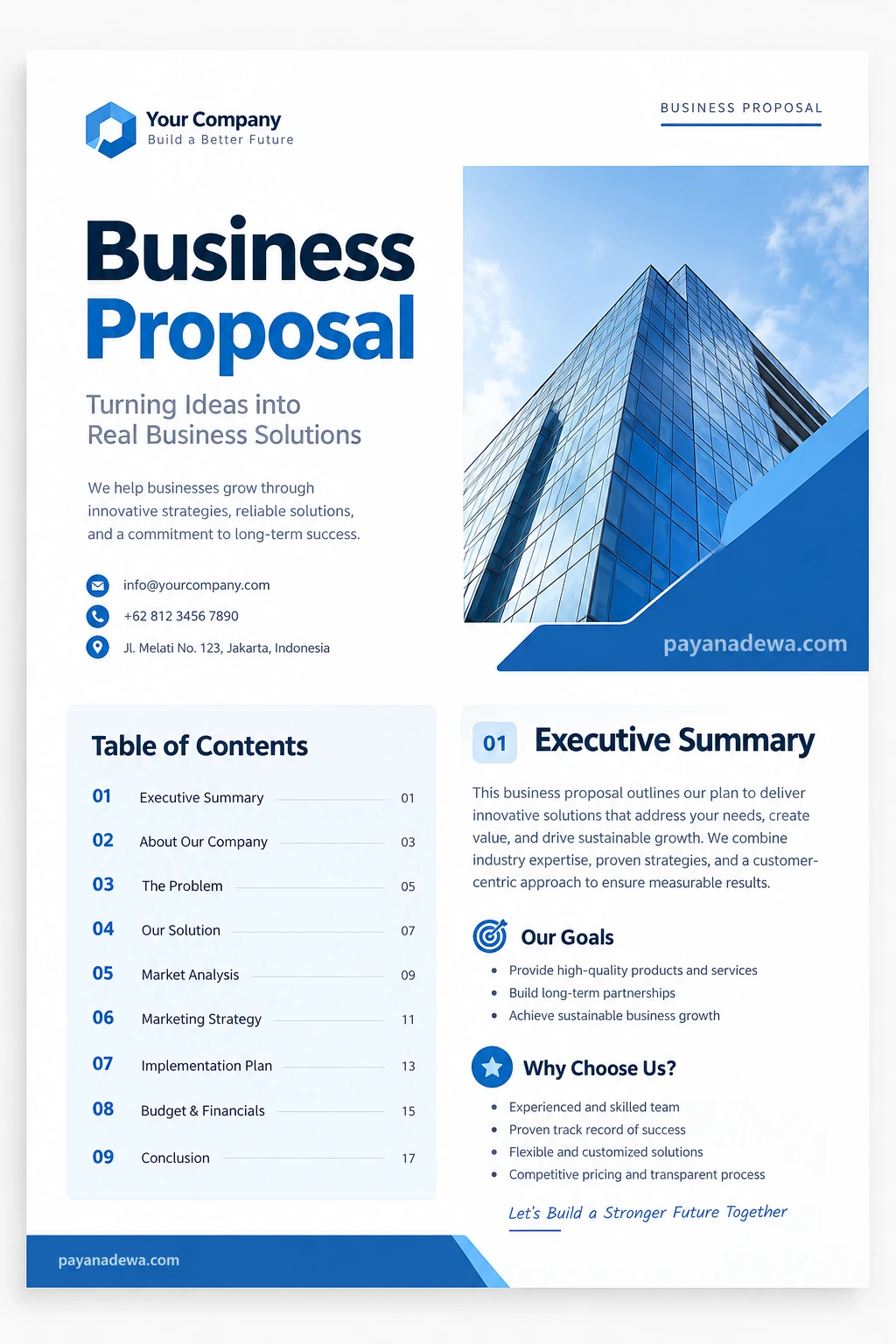
A strong business proposal can help you win new clients and grow your company. It explains your ideas, presents your services, and shows potential clients why they should choose your business. It also helps you build trust and develop long-term relationships.
However, writing a professional business proposal takes careful planning. You need to understand your client’s needs, offer a practical solution, and explain the expected results. In addition, your proposal should be clear, organized, and easy to read.
This guide explains how to write a business proposal step by step. You will learn about essential sections, practical examples, and common mistakes. By the end, you will have a clear plan for creating a professional proposal.
What Is a Business Proposal?
A business proposal is a document that presents a product, service, or project to a potential client. It explains a problem and recommends a solution. It also describes the costs, timeline, and expected benefits.
Businesses use proposals for many purposes. For example, a marketing agency may offer advertising services to a local company. Similarly, a consultant may recommend ways to reduce business expenses.
The main goal is to persuade the reader to take action. Therefore, your proposal should focus on the client’s needs rather than simply describing your company.
Business Proposal vs. Business Plan
A business proposal and a business plan serve different purposes. A business plan explains how a company operates and grows. It usually covers goals, finances, customers, and marketing strategies.
In contrast, a business proposal presents a specific offer. It may help you win a contract, secure a partnership, or gain project approval. For this reason, choose the document that matches your objective.
Why Is a Business Proposal Important?
A well-written business proposal makes your offer easier to understand. It also helps potential clients compare options and make informed decisions.
Here are several important benefits:
- Builds trust: A professional document shows that you understand the project.
- Explains your value: It connects your services to the client’s needs.
- Defines expectations: It outlines tasks, deadlines, and responsibilities.
- Clarifies costs: It explains the budget and payment terms.
- Encourages action: It gives the reader a clear next step.
Most importantly, a proposal helps both parties understand the project before work begins. As a result, it can reduce confusion and support better communication.
Essential Elements of a Business Proposal
A professional business proposal should follow a logical structure. Each section has a specific purpose. Together, these sections help readers understand your offer and evaluate its value.
1. Cover Page
Start with a clean and professional cover page. Include the proposal title, company name, client’s name, and submission date. You should also add your contact information.
Keep the design simple. Use readable fonts, consistent colors, and enough white space. This approach makes your document look professional without distracting readers.
2. Executive Summary
The executive summary introduces your proposal. It explains the client’s main challenge, your recommended solution, and the expected benefits.
Keep this section short and direct. Busy decision-makers should understand your main idea without reading every page. Therefore, focus on the most important information.
3. Problem Statement
Next, describe the problem your client wants to solve. Explain why the issue matters and how it affects the business.
Use relevant research or information from client discussions. This evidence shows that you understand the situation. It also helps you develop a more suitable solution.
4. Proposed Solution
Explain how your product or service will address the problem. Describe the main activities, resources, and expected benefits.
Make your recommendations practical. For example, a marketing proposal might include keyword research, content creation, and website optimization. Each activity should support a clear business objective.
5. Project Scope and Timeline
Define the work included in your proposal. List the main deliverables and explain when each task should be completed.
Also, identify the responsibilities of both parties. Clear deadlines and expectations can prevent misunderstandings later.
6. Pricing and Budget
Present your costs in a clear format. Explain the price of each major service and include the payment terms.
If additional expenses may occur, describe them in advance. Transparent pricing helps clients understand the investment and compare your offer with other options.
7. Company Background
Introduce your company and explain why you are qualified to complete the project. Highlight relevant experience, skills, and successful results.
You can also include testimonials or case studies when available. However, choose examples that relate directly to the client’s needs.
8. Conclusion and Call to Action
Finish by summarizing your main benefits. Then, tell the reader what to do next.
For example, invite the client to schedule a meeting, approve the proposal, or discuss the terms. A clear call to action makes the next step easier.
How to Write a Business Proposal Step by Step
Creating a business proposal becomes easier when you follow a simple process. Use the steps below to organize your ideas and prepare a convincing document.
Step 1: Research Your Client
First, learn about the client’s company, customers, and business goals. Identify the main challenges they face.
You can review their website, public reports, and existing services. You should also ask questions when important details remain unclear. This research helps you create a relevant proposal.
Step 2: Set a Clear Objective
Next, decide what you want to achieve. You might want to win a contract, introduce a new service, or establish a partnership.
A clear objective keeps your proposal focused. It also helps you decide which details to include and which information to leave out.
Step 3: Develop Your Solution
Create a solution that addresses the client’s specific needs. Explain what you will do and how the work will help the business.
Whenever possible, include measurable goals. For example, you might track website traffic, customer inquiries, or project completion rates. However, avoid promising results that you cannot guarantee.
Step 4: Prepare the Budget
Calculate the resources required to complete the project. Consider labor, software, materials, and other expenses.
Then, compare the estimated costs with the available budget. Make sure your pricing reflects the scope of work and the value you provide.
Step 5: Write and Edit the Proposal
Use simple language and short paragraphs. Organize your ideas with descriptive headings and bullet points.
After writing, review the document carefully. Correct spelling errors, check calculations, and confirm that all project details are accurate.
Business Proposal Template and Example
A business proposal template saves time and helps you maintain a consistent format. However, you should customize every proposal to match the client’s requirements.
Consider this example for a digital marketing service.
Project Overview
Proposal title: Digital Marketing Growth Strategy
Prepared for: ABC Company
Prepared by: Your Marketing Agency
Objective: Improve online visibility, attract relevant visitors, and increase customer inquiries.
Proposed Services
- Review the website and existing marketing activities.
- Research target customers and relevant search terms.
- Create a practical content strategy.
- Optimize selected website pages.
- Measure performance and provide regular reports.
Timeline and Results
The project may begin with research and planning. Next, the team can implement the agreed strategy. Finally, regular reviews can measure progress and identify improvements.
Useful performance indicators include website traffic, conversion rates, and customer inquiries. Establish a starting point before the project begins. This makes it easier to evaluate the results fairly.
This example provides a starting point. Adjust the services, timeline, and budget to match the actual project.
Tips for Writing a Winning Business Proposal
A convincing proposal combines useful information with a professional presentation. You do not need complicated language to communicate value.
Instead, focus on the following practical tips:
- Personalize your message: Address the client’s specific challenges and goals.
- Highlight benefits: Explain how your solution can help the business.
- Use reliable evidence: Support important claims with relevant information.
- Keep the design simple: Use clear headings, readable fonts, and consistent spacing.
- Explain the costs: Make your pricing and payment terms easy to understand.
- Address risks: Explain important assumptions and project requirements.
- Include a next step: Tell the reader how to respond to your offer.
In addition, make sure your proposal answers the client’s main questions. A focused document is easier to understand and evaluate.
Common Business Proposal Mistakes to Avoid
Some mistakes can weaken an otherwise strong proposal. Fortunately, you can avoid most of them with careful planning and editing.
Writing Too Much About Your Company
Your experience matters, but the client wants to know how you can help. Therefore, focus on their needs before discussing your qualifications.
Making Vague Promises
Avoid statements that lack clear meaning. Instead, describe the work, deliverables, and performance indicators. Specific details make your proposal more credible.
Ignoring the Budget
Unclear pricing can create doubts. Explain the main costs and identify any possible additional expenses. This helps clients understand the financial commitment.
Forgetting to Proofread
Spelling mistakes and incorrect figures can damage your professional image. Always check names, dates, prices, and deadlines before submitting the document.
Failing to Follow Up
Sending a proposal is not always the final step. Follow up at an appropriate time and ask whether the client needs clarification. A polite message can keep the conversation moving.
How to Make Your Business Proposal Stand Out
A professional design can make your proposal easier to read. Start with consistent colors, readable fonts, and clear headings. Use charts only when they help explain important information.
Next, connect your recommendations to the client’s business goals. Explain how you will measure progress and report results. This shows that your approach has a clear purpose.
You should also make the document easy to share. Save it as a PDF when appropriate and use a descriptive filename. Before sending it, check every link and confirm that the document displays correctly.
Frequently Asked Questions About Business Proposals
What should a business proposal include?
A business proposal usually includes a cover page, executive summary, problem statement, proposed solution, timeline, pricing, company background, and conclusion. The exact sections depend on the project.
How do you write a business proposal for a client?
Research the client, identify their needs, and recommend a practical solution. Then, explain the benefits, deliverables, costs, and next steps.
What is the difference between a business proposal and a business plan?
A business proposal presents a specific offer to a potential client or partner. In contrast, a business plan explains a company’s overall strategy, operations, and financial goals.
Can I use a business proposal template?
Yes. A template saves time and provides a consistent structure. However, customize the content to match each client’s needs and expectations.
How long should a business proposal be?
The ideal length depends on the project’s complexity. A simple offer may need only a few pages, while a larger project may require more detail.
How can I make my business proposal more convincing?
Focus on the client’s needs, explain your solution clearly, provide transparent pricing, and support important claims with evidence. A clear call to action also helps.
Conclusion
A successful business proposal explains a problem, presents a practical solution, and shows the value of your offer. It also defines the project scope, timeline, and costs.
To create a stronger proposal, research your client and focus on their goals. Use a clear structure, provide realistic information, and check your work before submission. A business proposal template can save time, but personalizing the content makes your offer more relevant.
With careful preparation, you can communicate your ideas more effectively and build stronger business relationships. What strategies have helped you write a successful business proposal? Share your experience and ideas with other readers.