Managing money at home does not have to be complicated. A well-planned home budget helps you understand where your money goes, control household expenses, and save for the things that matter most. Whether you live alone, share expenses with a partner, or support a family, a clear budget can make everyday financial decisions easier.
However, many people struggle to create a budget they can actually follow. Bills arrive at different times, grocery prices change, and unexpected expenses can disrupt even the best plans. The good news is that you do not need advanced financial skills or expensive software to get started. With a simple household budget, realistic spending limits, and regular reviews, you can build healthier money habits one month at a time.
In this guide, you will learn how to create a home budget, organize monthly expenses, choose a budgeting method, and find practical ways to save money. You will also discover how a printable home budget template can help you stay organized and track your financial progress.
What Is a Home Budget?
A home budget is a financial plan that shows how much money your household earns, spends, and saves over a specific period. Most people create a monthly budget because many bills, salaries, and other financial commitments follow a monthly schedule.
A household budget usually includes three main areas:
- Income: Money received from salaries, freelance work, business activities, or other sources.
- Expenses: Money spent on housing, groceries, transportation, utilities, insurance, and everyday needs.
- Savings: Money set aside for emergencies, future purchases, retirement, or other financial goals.
By recording these amounts, you can see whether your household spends less than it earns. You can also identify unnecessary costs and decide where your money should go before the month begins.
Why Is a Household Budget Important?
A realistic budget gives you more control over your finances. Instead of wondering where your money went, you can make decisions based on clear information.
Control Monthly Spending
Small purchases can add up quickly. Coffee, online shopping, delivery fees, and subscriptions may seem inexpensive on their own. However, their combined cost can take a significant portion of your monthly income. Tracking these expenses helps you recognize patterns and adjust your spending.
Prepare for Unexpected Expenses
Car repairs, medical bills, home maintenance, and other surprises can put pressure on your finances. A budget helps you make room for an emergency fund. Even small, consistent contributions can provide useful protection when an unexpected bill arrives.
Reach Your Financial Goals
Perhaps you want to pay off debt, buy a home, take a family vacation, or save for education. A monthly budget turns these goals into manageable steps. You can assign a specific amount to each goal and monitor your progress over time.
Reduce Money-Related Stress
Knowing how much you can spend makes everyday decisions easier. You can plan purchases with greater confidence, discuss shared expenses more clearly, and avoid relying on guesswork when money feels tight.
How to Create a Home Budget Step by Step
You can build a useful home budget in a notebook, spreadsheet, budgeting app, or printable worksheet. Choose a method that feels comfortable and is easy to maintain.
Step 1: Calculate Your Total Monthly Income
Start by listing all the money your household expects to receive during the month. Include take-home pay rather than gross salary when possible, since take-home pay reflects deductions already taken from your earnings.
Your income list may include:
- Regular salaries and wages.
- Freelance or part-time earnings.
- Business income after relevant expenses.
- Rental income or other recurring payments.
- Other reliable sources of household income.
If your income changes each month, use a conservative estimate based on your earnings history. This approach helps prevent overspending during slower months.
Step 2: List Your Fixed Monthly Expenses
Fixed expenses are costs that generally stay the same or change very little from month to month. Listing them first helps you understand how much of your income is already committed.
Common fixed household expenses include:
- Rent or mortgage payments.
- Insurance premiums.
- Internet and mobile phone plans.
- Loan payments and other debt obligations.
- School fees or regular childcare payments.
- Subscriptions and membership fees.
Record the amount and due date for each bill. This simple habit can help you plan your cash flow and reduce the risk of late payments.
Step 3: Estimate Variable Household Expenses
Variable expenses change depending on your habits, needs, and circumstances. They often provide the best opportunities to adjust your spending without making major lifestyle changes.
Typical variable expenses include:
- Groceries and household supplies.
- Electricity, water, and gas bills that fluctuate.
- Fuel, public transportation, and parking.
- Dining out and food delivery.
- Clothing, entertainment, and personal care.
- Home repairs and miscellaneous purchases.
Review your recent bank statements, receipts, or payment records to estimate these costs. If you do not have reliable records, track your spending for a month before setting strict limits.
Step 4: Set Savings Goals
Savings should be part of your budget rather than whatever remains at the end of the month. Decide what you want to achieve and assign a realistic amount to each goal.
For example, you might save for an emergency fund, an annual insurance payment, a home improvement project, or a future vacation. If you have high-interest debt, balance your savings plans with a practical debt repayment strategy.
Start with an amount you can consistently afford. You can increase it as your income grows or your expenses decrease. Consistency matters more than choosing an ambitious target that is difficult to maintain.
Step 5: Calculate Your Remaining Balance
Once you have listed your income, expenses, and savings, calculate the amount left over.
Remaining Balance = Total Income – Fixed Expenses – Variable Expenses – Planned Savings
If the result is positive, you have money available for additional savings, debt repayment, or other priorities. If the result is negative, your planned spending exceeds your available income. Review your categories and make adjustments before the month begins.
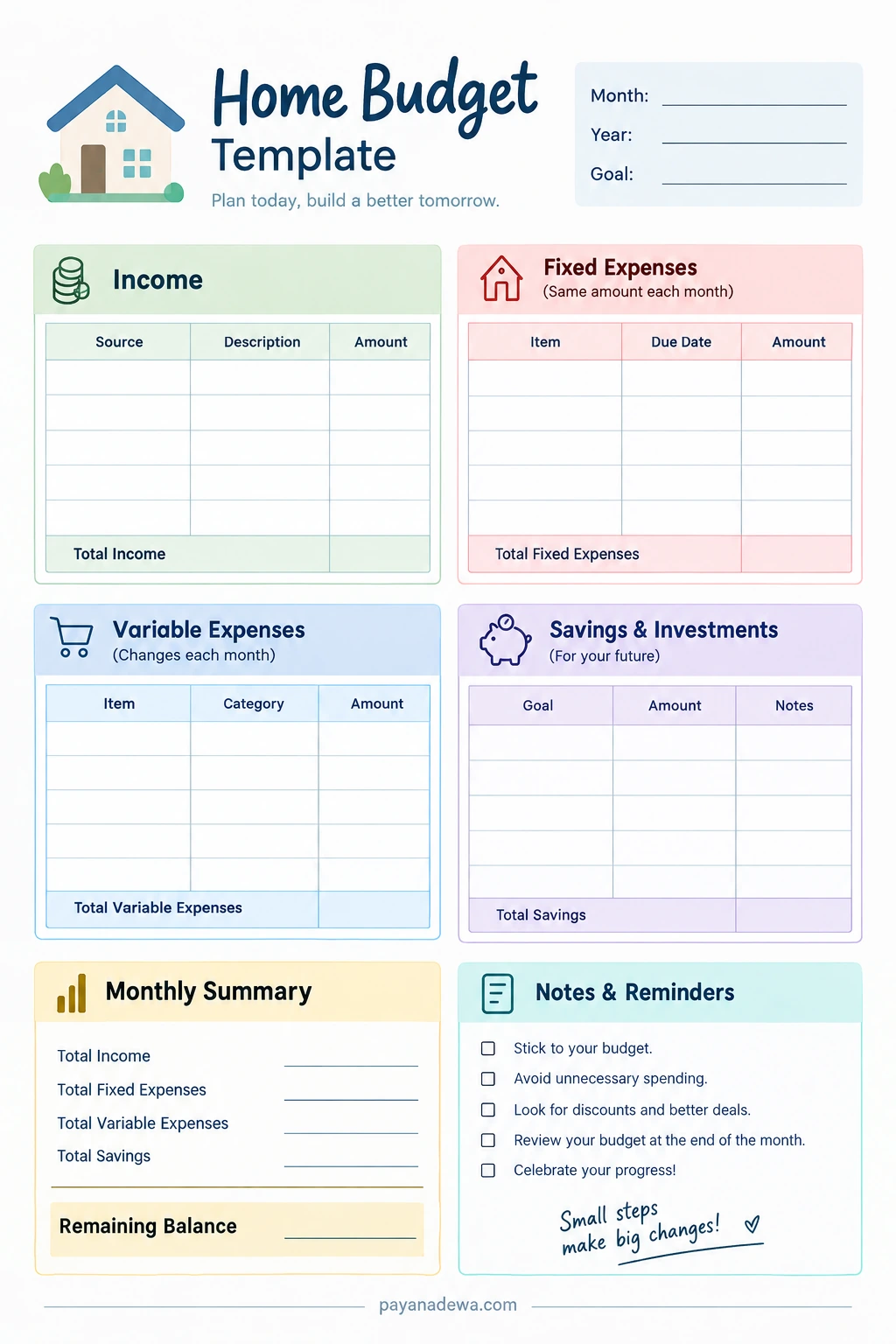
How to Use a Printable Home Budget Template
A printable home budget template makes financial planning easier by putting important numbers in one place. You can print a fresh copy each month, write in your figures, and keep completed sheets for future reference.
For the best results, follow these simple steps:
- Enter the month and year: Label your worksheet so you can compare different months later.
- Record all income: Include every reliable source of household income.
- Write down fixed expenses: Add bill amounts and due dates to help organize payments.
- Track variable spending: Update the worksheet as you spend money on groceries, transportation, and other changing costs.
- Set savings targets: Write down your planned contributions and the goals they support.
- Review the monthly summary: Compare your total income with expenses and savings to understand your financial position.
Keep the worksheet somewhere convenient, such as a household binder or a desk drawer. Alternatively, save a digital copy if you prefer to organize your financial records electronically.
Popular Home Budgeting Methods
There is no single budgeting method that works for everyone. The best approach depends on your income, household needs, and financial goals.
The 50/30/20 Budget Rule
This method divides your take-home income into three broad categories:
- 50% for needs: Essential housing costs, groceries, utilities, transportation, and other necessary expenses.
- 30% for wants: Entertainment, dining out, hobbies, and other optional spending.
- 20% for savings and debt repayment: Savings contributions and additional payments toward eligible debts.
These percentages are guidelines, not strict rules. If housing costs are high or your income is limited, you may need to adjust the proportions to fit your circumstances.
Zero-Based Budgeting
With zero-based budgeting, you assign every unit of income a purpose. You plan for bills, everyday spending, savings, and debt payments until your income minus planned allocations equals zero.
This does not mean spending all your money. Savings and extra debt payments are also budget categories. The goal is to make every dollar intentional.
The Envelope Budget Method
The envelope method assigns a spending limit to specific categories, such as groceries, transportation, and entertainment. You can use physical envelopes with cash or separate digital categories in a budgeting app.
When a category reaches its limit, you pause optional spending in that category or deliberately adjust your plan. This method can help people who struggle with impulse purchases or frequently exceed their spending limits.
Practical Tips to Save Money at Home
Once your budget is in place, look for realistic ways to reduce expenses without making daily life unnecessarily difficult.
- Plan meals before shopping: Create a grocery list, check what you already have, and avoid buying items you do not need.
- Review recurring subscriptions: Cancel services you rarely use and compare available plans before renewing.
- Reduce energy waste: Turn off unused lights, manage air conditioning sensibly, and choose energy-efficient habits.
- Compare prices: Check unit prices, look for suitable discounts, and compare providers before major purchases.
- Limit impulse buying: Wait before making nonessential purchases, especially when they exceed your planned spending limit.
- Automate savings: Schedule a manageable transfer after payday when your account balance and bill schedule allow it.
- Review household services: Compare insurance, internet, phone, and other recurring costs when renewal opportunities arise.
- Plan for irregular expenses: Set aside money monthly for annual fees, holidays, maintenance, and other predictable costs.
Do not try to change every habit at once. Choose two or three practical improvements, measure their impact, and build from there.
Common Home Budgeting Mistakes to Avoid
A budget works best when it reflects real life. Avoid these common mistakes as you develop your financial routine.
Underestimating Everyday Expenses
Small purchases and irregular bills are easy to overlook. Review actual spending records and include a reasonable allowance for miscellaneous costs. Update your estimates when your spending patterns change.
Setting Unrealistic Spending Limits
Cutting every optional expense may look good on paper, but an overly restrictive plan can be difficult to follow. Leave reasonable room for enjoyment while protecting your essential needs and priorities.
Forgetting Irregular Bills
Annual insurance premiums, school expenses, vehicle maintenance, and holiday costs can disrupt your monthly plan. Estimate these expenses in advance and save toward them gradually.
Creating a Budget but Never Reviewing It
Your first budget is a starting point, not a permanent solution. Review it regularly, especially after changes in income, rent, family circumstances, or debt payments.
How Often Should You Review Your Household Budget?
A simple review routine helps you stay on track without spending hours managing your money.
- Weekly: Check recent transactions and compare your spending with category limits.
- Monthly: Calculate total income, expenses, savings, and remaining balance.
- Every few months: Adjust your budget for changing bills, new priorities, and progress toward financial goals.
- After a major life change: Revisit the entire plan when your income, household size, housing costs, or financial responsibilities change significantly.
If you share household expenses with a partner or family member, review the budget together. Agree on priorities, discuss upcoming bills, and decide how to handle shared spending. Clear communication can prevent confusion and help everyone work toward the same goals.
Conclusion: Build Better Financial Habits With a Home Budget
A home budget is a practical tool for managing household expenses, preparing for unexpected costs, and working toward long-term financial goals. By calculating your income, listing fixed and variable expenses, and planning savings, you can make more informed decisions about your money.
You do not need a complicated system to get started. Choose a budgeting method that suits your household, use a printable home budget template to organize your figures, and review your progress regularly. Make adjustments whenever your circumstances change.
Most importantly, focus on steady improvement rather than perfection. Small changes in spending and saving can make a meaningful difference over time. Start your home budget today and take one practical step toward a more organized financial future.