Managing food costs can be challenging, especially when grocery prices change and eating out becomes an easy habit. A clear food budget helps you understand where your money goes and gives you a practical plan for spending less without sacrificing good meals.
With a simple food budget template, you can record daily food expenses, plan meals, compare your budget with actual spending, and identify areas where you can save. More importantly, budgeting does not have to make meals boring. Instead, it can help you make better choices, reduce food waste, and enjoy your meals with less financial stress.
What Is a Food Budget?
A food budget is a planned amount of money that you set aside for food during a specific period. The period can be weekly or monthly, depending on your income, household size, and spending habits.
Your food budget may include several types of expenses, such as:
- Groceries and supermarket purchases
- Fresh vegetables and fruits
- Meat, seafood, and other proteins
- Dairy products and eggs
- Pantry staples and household food items
- Snacks and beverages
- Takeout and restaurant meals
- Other food-related purchases
The goal is not simply to spend as little as possible. Instead, the goal is to create a realistic spending limit that supports your nutritional needs and financial priorities.
Why Is a Food Budget Important?
Food is a necessary expense, but it can also become one of the easiest areas to overspend. Small purchases may seem harmless. However, frequent snacks, delivery orders, and unplanned grocery trips can quickly increase your monthly expenses.
A food budget gives you a clear picture of your habits. As a result, you can make decisions based on real numbers instead of guesses.
1. It Helps Control Spending
When you know your spending limit, you can make better choices before making a purchase. You can also compare your actual expenses with your planned budget throughout the month.
2. It Reduces Food Waste
Meal planning encourages you to buy food with a purpose. Therefore, you are less likely to purchase ingredients that you never use. This can save money while also reducing unnecessary waste.
3. It Makes Meal Planning Easier
A weekly meal plan gives you a simple roadmap for breakfast, lunch, dinner, and snacks. You can then create a grocery list based on the meals you actually intend to prepare.
4. It Supports Better Financial Habits
Tracking food expenses teaches you how to manage a recurring household expense. Over time, this habit can make your overall budget more organized and predictable.
How to Create a Food Budget
Creating a food budget does not require complicated financial software. A notebook, spreadsheet, or printable food budget template can work well. Follow these simple steps to get started.
Step 1: Review Your Current Food Spending
Before setting a new budget, review what you already spend. Check grocery receipts, restaurant bills, delivery orders, and other food purchases from the previous month.
Look for patterns. For example, you may discover that groceries are reasonable while restaurant spending is much higher than expected. This information gives you a realistic starting point.
Step 2: Set a Realistic Spending Limit
Choose a monthly or weekly amount that fits your income and household needs. Avoid setting an extremely low number simply because you want to save more.
A budget should be challenging but achievable. If the limit is unrealistic, you may abandon the plan after a few weeks.
Step 3: Divide Your Budget Into Categories
Breaking your food budget into categories makes tracking easier. Common categories include groceries, vegetables and fruits, meat and seafood, dairy and eggs, pantry items, snacks, beverages, and dining out.
You do not need dozens of categories. Keep the system simple enough that you will continue using it.
Step 4: Create a Weekly Meal Plan
Plan your meals before shopping. Start with foods you already have at home. Then choose recipes that use similar ingredients.
For example, roasted vegetables can become a side dish for dinner and an ingredient for lunch the following day. This approach helps you use food efficiently and reduces unnecessary purchases.
Step 5: Make a Grocery List
Once your meals are planned, write a shopping list. Group similar items together, such as produce, dairy, meat, pantry products, and frozen foods.
Most importantly, follow your list when you shop. Avoid buying extra items simply because they look attractive or are on sale.
How to Track Food Expenses
Tracking expenses is one of the most useful parts of a food budget. Record each purchase as soon as possible. This makes your information more accurate and prevents forgotten expenses.
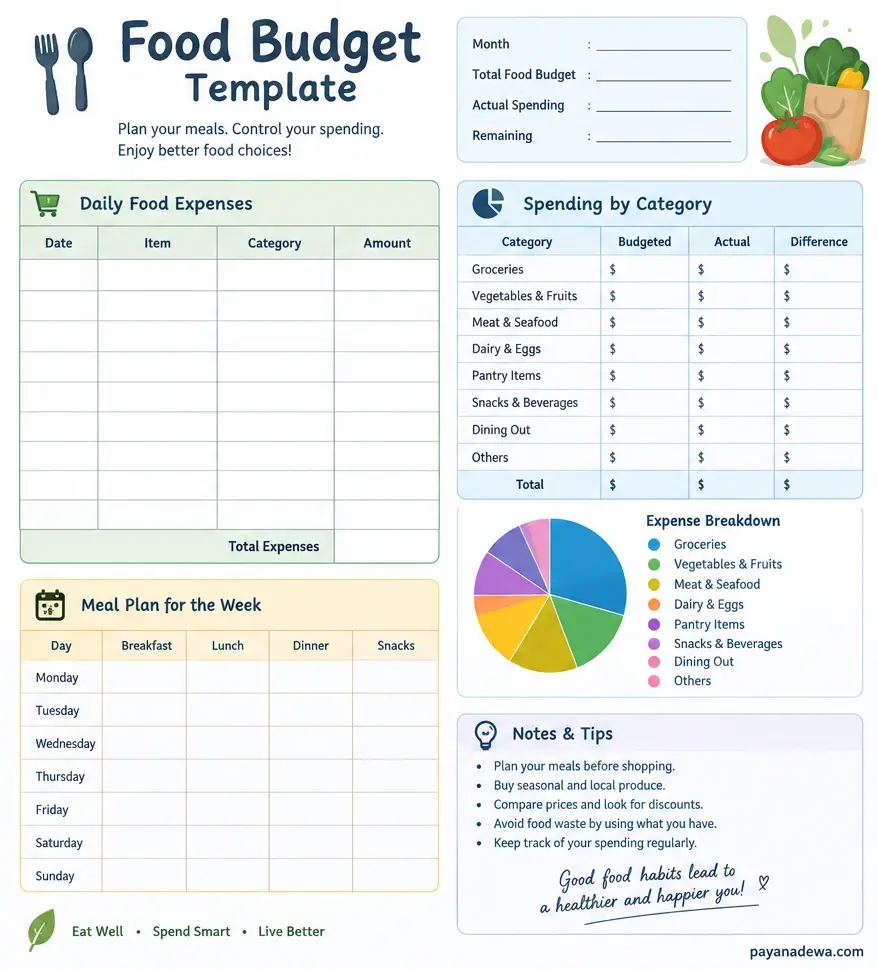
A basic food expense tracker can include:
- Date: When the purchase was made
- Item: What you purchased
- Category: Groceries, dining out, snacks, or another category
- Amount: How much you spent
At the end of each week, add your expenses together. Then compare the total with your planned spending limit. If you are spending too much, make a small adjustment before the next week begins.
Food Budget Categories to Consider
Every household has different priorities. Still, these categories provide a useful starting point for organizing your food expenses.
Groceries
This category includes general supermarket purchases and ingredients used for home cooking. It will often represent the largest part of a household food budget.
Fresh Produce
Vegetables and fruits are important parts of a balanced diet. Planning seasonal purchases can sometimes help you get better value.
Meat and Seafood
Protein can take up a significant portion of your grocery spending. Compare prices, use different protein sources, and plan meals around ingredients that offer good value.
Dining Out
Restaurant meals, takeout, and food delivery should have their own category. Separating these expenses makes it easier to see how much convenience spending affects your overall budget.
Snacks and Beverages
Small purchases can add up quickly. Tracking snacks, coffee, soft drinks, and other beverages can reveal spending patterns that are easy to overlook.
Practical Ways to Save on Food
You do not need to stop enjoying your favorite foods to reduce expenses. Instead, focus on small changes that are easy to maintain.
- Plan meals before going grocery shopping.
- Check your pantry before buying more food.
- Use a grocery list and stick to it.
- Compare prices between brands and stores.
- Buy seasonal produce when possible.
- Cook larger portions and save suitable leftovers.
- Use ingredients in several meals.
- Limit impulse purchases.
- Compare the cost of homemade meals with takeout.
- Track your spending regularly.
In addition, consider setting one or two low-cost meal days each week. Simple meals such as rice bowls, soups, pasta, eggs, beans, or vegetable dishes can help reduce the average cost per meal.
How a Food Budget Template Can Help
A printable food budget template gives you a visual way to organize your spending. Instead of keeping information in different notes or receipts, you can place important details in one location.
A useful template can include a monthly budget summary, daily food expense tracker, spending categories, weekly meal plan, and notes section. A category comparison can also show the difference between your planned amount and actual spending.
This visual approach makes it easier to spot problems. For example, if dining out is consistently above your target, you can reduce restaurant visits or set a separate weekly limit.
Tips for Staying Consistent With Your Food Budget
The biggest challenge is often not creating a budget. It is following the budget consistently. Fortunately, a few simple habits can make the process easier.
Review Your Budget Every Week
Do not wait until the end of the month to discover that you have spent too much. A short weekly review gives you time to adjust your habits.
Leave Room for Flexibility
Unexpected events happen. You may need to attend a dinner, replace an ingredient, or buy food for guests. Therefore, leave a small amount of flexibility in your budget.
Focus on Progress
You do not need a perfect month. If you spend slightly more than planned, review what happened and continue. The purpose of budgeting is to improve your habits over time.
Use Your Existing Food First
Before shopping, check your refrigerator, freezer, and pantry. You may already have enough ingredients for several meals. Using what you own can lower your grocery bill and reduce food waste.
Common Food Budget Mistakes to Avoid
A few mistakes can make an otherwise useful budget difficult to maintain.
- Setting an unrealistic budget: A very low limit may not match your actual needs.
- Ignoring small purchases: Coffee, snacks, and convenience foods can add up.
- Shopping without a plan: Unplanned shopping often leads to unnecessary purchases.
- Forgetting dining expenses: Restaurant and delivery costs should be included in your budget.
- Not reviewing spending: A budget only works when you check your progress.
By avoiding these mistakes, you can build a food spending system that is both practical and sustainable.
Conclusion
A well-planned food budget can make everyday spending easier to understand and control. By tracking food expenses, planning weekly meals, creating a grocery list, and reviewing your spending regularly, you can reduce waste and make better financial decisions.
You do not need a complicated system to get started. A simple food budget template can provide everything you need to organize daily expenses, compare planned and actual spending, and keep your meal planning on track.
Start with realistic goals, make small improvements, and stay consistent. Over time, these simple habits can help you spend smarter while still enjoying nutritious and satisfying meals.