A baby feeding chart can help parents and caregivers keep track of breast milk, formula, early solid foods, and changes in a baby’s appetite. During the first year, feeding needs change quickly. Newborns usually eat small amounts often, while older babies gradually develop more predictable routines and begin exploring complementary foods.
Use a chart as a flexible record—not as a strict rulebook. Every baby is different, and appetite can vary from one feed or day to the next. Your baby’s age, growth, hunger and fullness cues, health, and advice from a pediatrician are more important than hitting an exact number on a schedule.
Baby Feeding Chart by Age
The overview below describes common feeding patterns. It is not a personalized prescription, and amounts can vary considerably, especially for breastfed babies. Follow your pediatrician’s guidance if your baby was born prematurely, has medical needs, is not gaining weight as expected, or has feeding difficulties.
Birth to 3 Months
Newborns generally feed frequently throughout the day and night. Many breastfed newborns nurse around 8–12 times in 24 hours, often every 2–3 hours, but some feed more frequently. Bottle-fed babies also need responsive feeding; the interval and amount depend on age, weight, and individual appetite.
- Offer feeds when your baby shows early hunger cues, such as rooting, bringing hands to the mouth, or becoming more alert.
- Do not wait for crying, which is a late hunger cue.
- Allow breaks during bottle-feeding and stop when your baby shows signs of fullness, such as turning away or relaxing their hands.
- Ask your healthcare professional how to monitor wet diapers and weight gain.
3 to 6 Months
Many babies continue to get all or nearly all of their nutrition from breast milk or infant formula during this stage. Feeding patterns may become more regular, but growth spurts can temporarily increase appetite. Unless a healthcare professional advises otherwise, do not introduce solid foods before around 6 months, and never add cereal to a bottle to help a baby sleep.
- Continue responsive breast or bottle-feeding.
- Use infant formula prepared exactly according to the package directions.
- Watch your baby’s cues rather than pressuring them to finish a bottle.
- Discuss concerns about reflux, feeding refusal, or unusually long or short feeds with your pediatrician.
Around 6 to 8 Months
At around 6 months, many babies are ready to begin complementary foods while continuing breast milk or infant formula. Readiness signs include being able to sit upright with support, having good head and neck control, showing interest in food, and being able to move food to the back of the mouth and swallow. Development varies, so ask your pediatrician if you are unsure.
- Start with small tastes and gradually offer a variety of soft, safe textures.
- Include iron-rich foods, such as iron-fortified infant cereal, soft meat, beans, lentils, or other suitable options.
- Offer foods without forcing bites; let your baby explore at their own pace.
- Breast milk or infant formula remains a major source of nutrition.
Around 9 to 12 Months
Babies often become more comfortable with different textures and may begin eating small meals alongside milk feeds. Offer soft finger foods that are appropriately sized and prepared to reduce choking risk. Appetite can fluctuate as activity, teething, and development change.
- Offer a variety of nutrient-rich foods and let your baby decide how much to eat.
- Continue breast milk or infant formula as recommended for your baby’s age and needs.
- Offer small sips of water with meals from an age-appropriate open or straw cup.
- Avoid using food as a reward or pressuring your baby to finish everything.
How to Use a Baby Feeding Chart
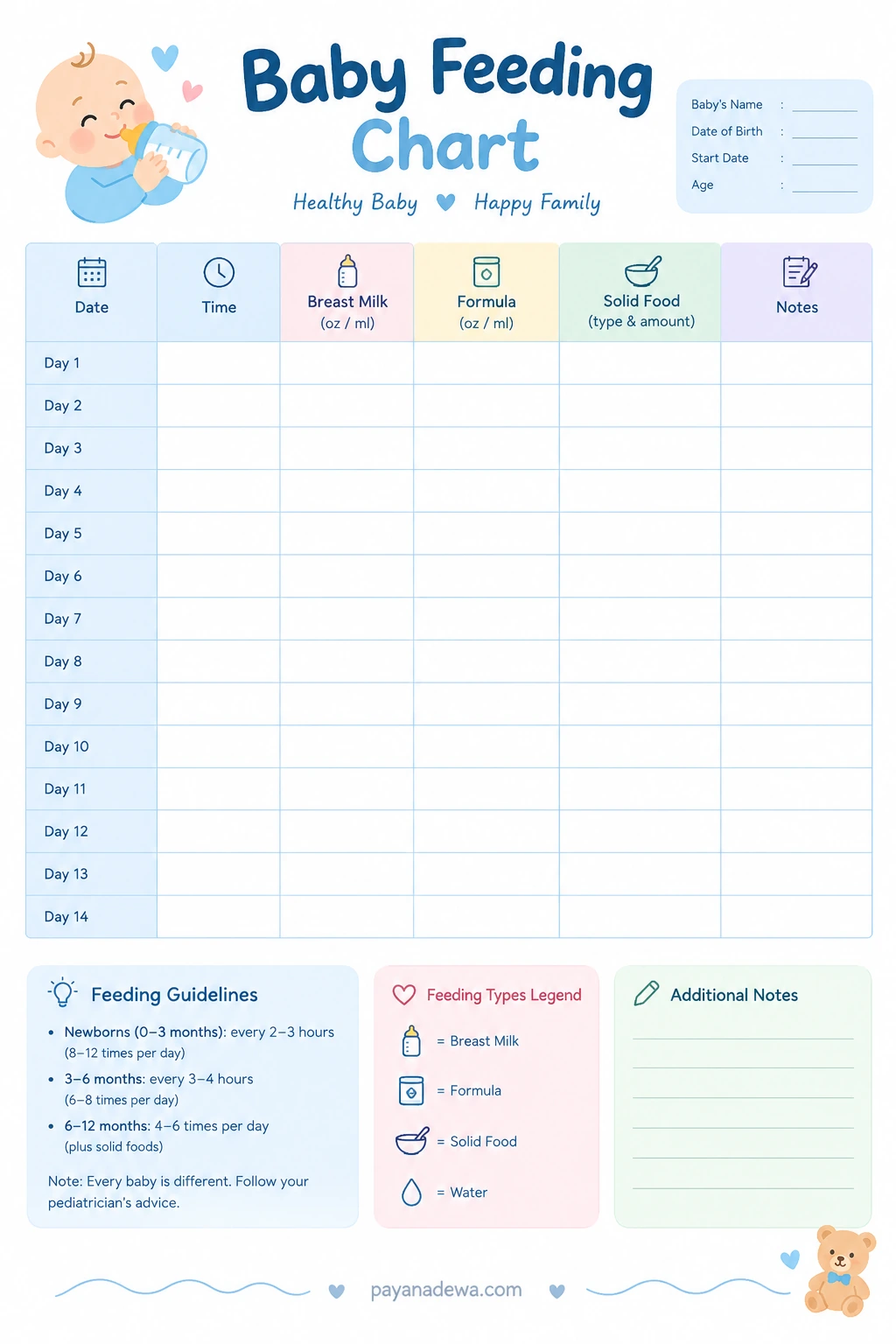
A feeding chart is most useful when it captures patterns without turning every feed into a test. Use the printable chart to record the date and time, breast milk or formula offered, solid foods tried, and any observations that may be useful at a checkup.
- Date and time: Record when a feed begins, or use approximate times if that is easier.
- Breast milk: For nursing, you can note which side or the duration if your clinician has asked you to track it. Pumped milk can be recorded by the amount offered.
- Formula: Record the amount prepared or taken, using ounces or milliliters consistently. Do not dilute or concentrate formula beyond the label instructions.
- Solid food: Note the food and texture, such as mashed lentils or soft steamed vegetables, rather than focusing only on the number of spoonfuls.
- Notes: Record reactions, vomiting, stool changes, feeding challenges, or questions for your healthcare professional.
Review the chart over several days instead of judging one feed in isolation. It can help you notice changes, but it cannot diagnose a health problem or replace growth checks and professional advice.
Hunger and Fullness Cues to Watch For
Babies communicate with their bodies before and during feeding. Learning these cues helps caregivers respond to hunger while respecting fullness.
Common Hunger Cues
- Rooting or turning the head toward a touch on the cheek.
- Opening the mouth, sucking on hands, or making sucking motions.
- Becoming more alert, moving toward the breast or bottle, or fussing.
Common Fullness Cues
- Slowing down, pausing, or stopping sucking.
- Turning the head away, closing the mouth, or pushing the bottle away.
- Relaxing the hands or appearing content and no longer interested.
Never force a baby to finish a bottle or a serving. For bottle-feeding, hold your baby in a supported, semi-upright position and keep the bottle angled to allow pauses. Do not prop a bottle or leave a baby feeding unattended.
Introducing Solid Foods Safely
When your baby is developmentally ready, offer a wide range of suitable foods, including vegetables, fruit, grains, protein foods, and iron-rich choices. Introduce textures gradually, and supervise every meal while your baby is seated upright.
- Prevent choking: Avoid whole nuts, whole grapes, popcorn, hard raw vegetable pieces, chunks of hot dog, and spoonfuls of thick nut butter. Prepare foods in safe shapes and textures for your baby’s developmental stage.
- Allergens: Introduce common allergenic foods in age-appropriate forms when your baby is ready for solids. If your baby has severe eczema, an existing food allergy, or another risk factor, ask a clinician about the safest plan.
- Honey: Do not give honey before 12 months.
- Milk and drinks: Breast milk or infant formula should remain the main milk drink during the first year. Cow’s milk should not replace breast milk or infant formula as the main drink before 12 months; ask your clinician about suitable foods and drinks.
- Food safety: Wash hands, prepare food cleanly, refrigerate perishable foods promptly, and discard food that has been in contact with your baby’s mouth or used spoon.
Breast Milk, Formula, and Water: Key Reminders
Breast milk and commercially prepared infant formula provide the primary nutrition for young babies. If using formula, follow the product’s preparation and storage instructions carefully, measure water and powder exactly as directed, and never make homemade infant formula. Do not give extra water to young infants unless a healthcare professional specifically instructs you to do so.
As complementary foods begin around 6 months, small sips of water with meals may be appropriate. The amount and timing depend on age, milk intake, climate, and health. If you have questions about supplementation, vitamin D, iron, or a special formula, get advice from your baby’s healthcare professional rather than changing feeds on your own.
When to Contact a Healthcare Professional
Seek medical advice if your baby consistently feeds poorly, has fewer wet diapers than expected, is not gaining weight as anticipated, repeatedly vomits forcefully, has pain during feeding, or shows signs of a possible food reaction. Difficulty waking for feeds, unusual limpness, breathing trouble, blue or gray coloring, or signs of severe dehydration need urgent medical attention. For a suspected severe allergic reaction—such as trouble breathing or swelling of the tongue or throat—call emergency services immediately.
Keep routine well-baby visits so your clinician can assess growth, development, and feeding. Bring your chart and ask which details are most useful to track for your child.
Conclusion
A baby feeding chart can make daily feeding easier to organize and help you discuss patterns with your pediatrician. Use it to note milk feeds, new foods, timing, and questions—not to impose a rigid schedule or compare your baby with others. Follow hunger and fullness cues, introduce solids when your baby is developmentally ready, prepare foods safely, and seek professional guidance whenever you are concerned. A flexible, responsive approach supports both your baby’s nutrition and a calmer feeding routine.