Blood sugar, also called blood glucose, is the body’s main source of energy. However, glucose levels that remain too high or fall too low can cause health problems. Therefore, knowing how to read a blood sugar chart can help you recognize important changes and make informed decisions about your care.
In this guide, you will learn about normal blood sugar ranges, glucose levels before and after meals, diabetes and prediabetes screening results, and practical ways to record your readings. You will also discover how to use a printable blood sugar log to discuss your results with a healthcare professional.
What Is a Blood Sugar Chart?
A blood sugar chart is a reference guide that displays blood glucose levels at different times of the day or under specific testing conditions. It may include readings taken after fasting, before meals, after eating, or at bedtime.
People use blood glucose charts for several reasons:
- Daily monitoring: Record glucose readings and observe changes throughout the day.
- Diabetes management: Compare readings with personalized treatment targets.
- Health screening: Understand laboratory results used to assess the risk of prediabetes or diabetes.
- Pattern recognition: Identify possible relationships between meals, physical activity, medication, stress, sleep, and glucose levels.
- Medical appointments: Share organized records with a healthcare professional.
However, a blood sugar chart is a guide rather than a diagnostic tool. Your age, pregnancy status, medications, medical history, and individual treatment plan can affect your target range.
Blood Sugar Chart: Normal and Reference Ranges
Blood glucose levels vary depending on when you test and which test is used. The following table provides commonly used reference values for nonpregnant adults. Laboratory diagnostic thresholds and daily treatment targets are different, so they should not be used interchangeably.
Common Blood Glucose Reference Values
| Testing condition | Blood glucose level | What it means |
|---|---|---|
| Fasting blood glucose | 70–99 mg/dL | Common reference range for fasting glucose in people without diabetes |
| Fasting blood glucose | 100–125 mg/dL | Prediabetes range under standard diagnostic criteria |
| Fasting blood glucose | 126 mg/dL or higher | Diabetes range; usually requires confirmation in the absence of unequivocal hyperglycemia |
| Two-hour oral glucose tolerance test | Below 140 mg/dL | Normal glucose tolerance under standard nonpregnant adult criteria |
| Two-hour oral glucose tolerance test | 140–199 mg/dL | Prediabetes range |
| Two-hour oral glucose tolerance test | 200 mg/dL or higher | Diabetes range |
| Random blood glucose | 200 mg/dL or higher | Can indicate diabetes when accompanied by classic symptoms or a hyperglycemic crisis |
These diagnostic thresholds generally apply to nonpregnant adults and specific laboratory tests. A random glucose reading does not have one universal normal range because the result depends on recent meals and other factors. A home glucose meter reading alone should not be used to diagnose diabetes.
For fasting tests, fasting generally means consuming no calories for at least eight hours. A healthcare professional may recommend additional testing or repeat laboratory measurements to confirm an abnormal result.
Blood Sugar Levels Before and After Meals
Glucose levels naturally change throughout the day. Food provides carbohydrates that the body breaks down into glucose, while insulin helps move glucose from the bloodstream into cells. As a result, readings before and after meals may differ considerably.
Before Meals
For many nonpregnant adults with diabetes, a commonly recommended premeal blood glucose target is 80–130 mg/dL. However, this is a treatment target rather than a normal range for diagnosing diabetes. Your healthcare provider may recommend a different goal based on your circumstances.
One to Two Hours After Meals
For many nonpregnant adults with diabetes, the American Diabetes Association commonly recommends a peak postmeal glucose target below 180 mg/dL, measured one to two hours after the beginning of a meal. Individual targets may vary.
Do not confuse this diabetes management target with the two-hour oral glucose tolerance test. The latter uses a standardized glucose drink and specific laboratory procedures to assess glucose tolerance.
At Bedtime
Bedtime glucose targets depend on your treatment plan, medication schedule, and risk of overnight hypoglycemia. Recording a bedtime reading may help identify patterns, particularly if your healthcare professional has recommended overnight monitoring.
Always follow your personalized treatment plan instead of relying on a general chart to adjust medication doses.
Blood Sugar Chart for Prediabetes and Diabetes
A blood sugar chart can help explain laboratory results, but a diagnosis requires the correct test and clinical interpretation.
Prediabetes
Prediabetes means blood glucose levels are higher than normal but do not meet the standard laboratory criteria for diabetes. Common diagnostic thresholds include:
- Fasting plasma glucose of 100–125 mg/dL.
- Two-hour plasma glucose of 140–199 mg/dL during a 75-gram oral glucose tolerance test.
- Hemoglobin A1C of 5.7%–6.4%.
Prediabetes does not mean that diabetes is inevitable. Healthy lifestyle changes, regular physical activity, weight management when appropriate, and medical follow-up can help reduce the risk of progression.
Diabetes
Common laboratory criteria for diabetes in nonpregnant adults include fasting plasma glucose of 126 mg/dL or higher, a two-hour oral glucose tolerance result of 200 mg/dL or higher, or an A1C of 6.5% or higher. A random plasma glucose of 200 mg/dL or higher can also establish the diagnosis when classic symptoms or a hyperglycemic crisis are present.
When symptoms are not unequivocal, abnormal results generally need confirmation with repeat testing or another diagnostic test. Your healthcare provider can explain which test is appropriate for you.
How to Use a Printable Blood Sugar Chart
A printable blood sugar log makes it easier to organize readings and share useful information during medical appointments. For the best results, record your measurements consistently and include the circumstances surrounding each test.
Use the following steps to create a helpful monitoring routine:
- Record the date and time. This helps you compare readings across different days.
- Enter your glucose result. Write the number displayed by your meter and include the unit, usually mg/dL or mmol/L.
- Identify the testing condition. Note whether you tested while fasting, before a meal, after a meal, during exercise, or at bedtime.
- Write relevant notes. Record meals, physical activity, illness, stress, medication timing, or symptoms when useful.
- Look for recurring patterns. Review your log with your healthcare provider rather than reacting to a single reading in isolation.
- Bring the chart to appointments. A consistent record can support more informed discussions about your care.
Choose a chart with enough space for daily entries. If you use a digital glucose meter or continuous glucose monitor, you may also be able to download reports that show averages, trends, and time spent within your target range.
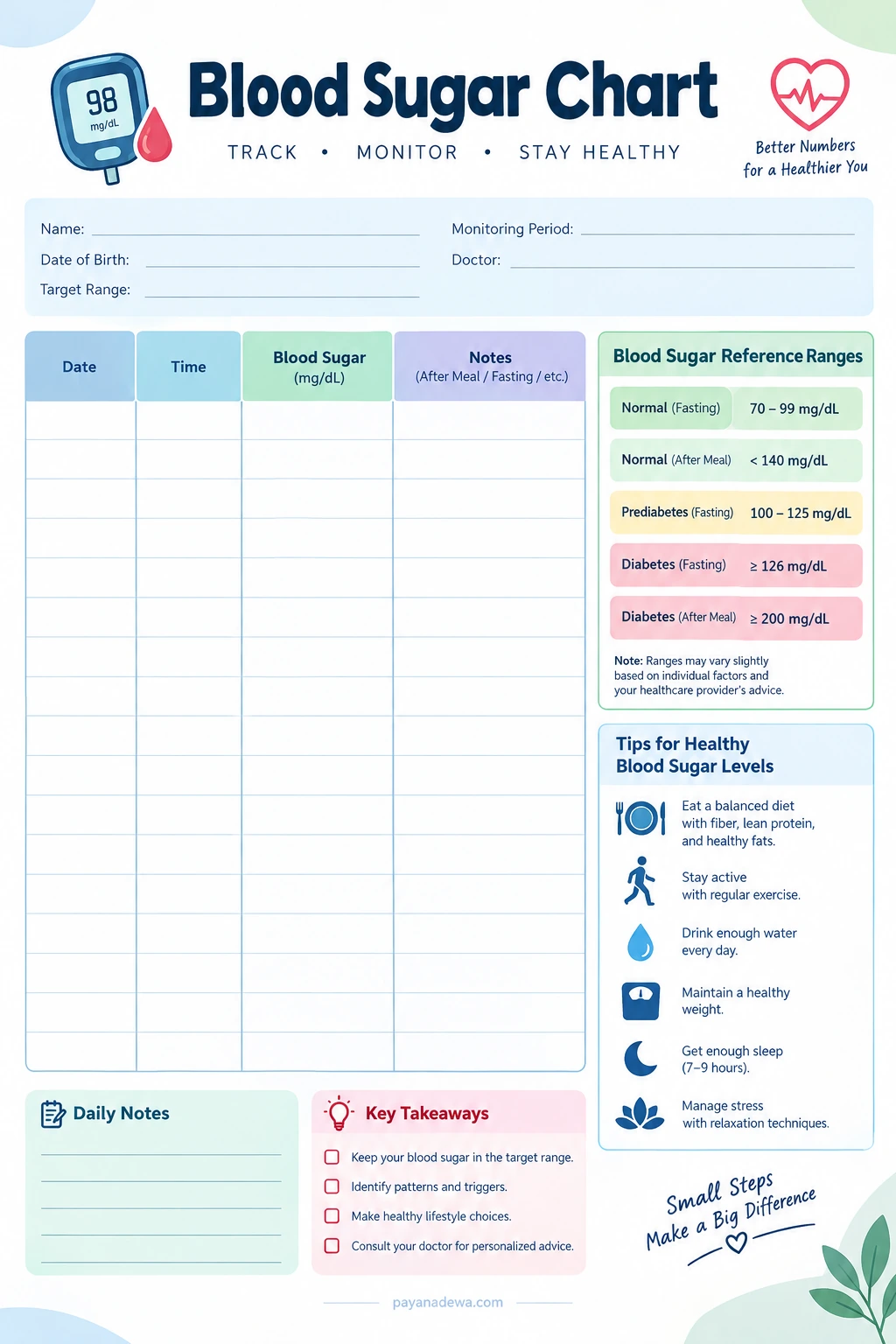
Tips for Maintaining Healthy Blood Sugar Levels
Daily habits can influence blood glucose levels. Although lifestyle changes cannot replace prescribed treatment, practical adjustments may support better glucose management and overall health.
Choose Balanced Meals
Build meals around vegetables, high-fiber carbohydrates, lean protein, and healthy fats. Beans, whole grains, leafy greens, nuts, and other minimally processed foods can support a balanced eating pattern.
Carbohydrate-containing foods generally have the most direct effect on blood glucose. However, portion sizes, food combinations, medication, and individual responses also matter. A registered dietitian can help you develop an eating plan that fits your needs.
Stay Physically Active
Regular physical activity can help the body use insulin more effectively. Walking, cycling, swimming, and strength training are useful options for many people. Start at a comfortable level and increase activity gradually.
If you take insulin or medications that can cause low blood sugar, ask your healthcare provider how to manage glucose before, during, and after exercise.
Drink Enough Water
Water supports normal body functions and is a practical alternative to sugary drinks. Replacing sweetened beverages with water may help reduce added sugar intake. Your individual fluid needs may vary if you have a medical condition that requires fluid restrictions.
Prioritize Sleep and Stress Management
Insufficient sleep and ongoing stress can affect glucose regulation. Aim for a consistent sleep schedule and use helpful stress-management strategies, such as gentle exercise, relaxation techniques, or deep breathing.
Follow Your Treatment Plan
If you have diabetes, take medications as prescribed and attend recommended follow-up appointments. Do not stop medication or change a dose based solely on a general blood sugar chart. Your healthcare professional can help you interpret readings and adjust your plan safely.
Signs of High and Low Blood Sugar
Monitoring glucose levels is especially important when you experience symptoms that may indicate a reading outside your target range.
High Blood Sugar (Hyperglycemia)
Possible symptoms include increased thirst, frequent urination, fatigue, blurred vision, and headaches. Persistently high readings should be discussed with a healthcare professional.
Seek emergency medical care if high blood sugar occurs with vomiting, abdominal pain, deep or rapid breathing, fruity-smelling breath, severe dehydration, or confusion. These symptoms may indicate diabetic ketoacidosis or another serious complication.
Low Blood Sugar (Hypoglycemia)
Low blood sugar is generally defined as a glucose level below 70 mg/dL for people with diabetes. Symptoms can include shakiness, sweating, hunger, dizziness, a fast heartbeat, and difficulty concentrating.
For someone who is conscious and able to swallow, the commonly recommended approach is to consume 15 grams of fast-acting carbohydrate and recheck glucose after 15 minutes. Repeat if the reading remains below 70 mg/dL, following your treatment plan. Severe hypoglycemia that causes seizures, unconsciousness, or an inability to swallow requires emergency assistance. Do not give food or drink by mouth to someone who cannot swallow safely.
When Should You Contact a Healthcare Professional?
Contact your healthcare provider if your readings repeatedly fall outside your target range, your glucose patterns change unexpectedly, or you experience recurring symptoms of high or low blood sugar.
Seek urgent care for severe symptoms, suspected diabetic ketoacidosis, or hypoglycemia that does not improve with appropriate treatment. If you are pregnant, have a serious illness, or use medications that can cause hypoglycemia, you may need different monitoring instructions and glucose targets.
A healthcare professional can also help you decide how often to test, which chart to use, and whether additional laboratory tests are necessary.
Conclusion
A blood sugar chart is a practical way to track glucose readings, recognize patterns, and support conversations with your healthcare provider. Understanding fasting glucose, postmeal readings, and laboratory diagnostic ranges can help you interpret your numbers more accurately.
For the best results, record your readings consistently, note relevant daily activities, maintain healthy habits, and follow your personalized treatment plan. Remember that general reference ranges are not suitable for everyone, and a chart cannot replace professional medical advice.
Start with a printable blood sugar chart, keep your records organized, and use the information to take informed steps toward better health.
Medical disclaimer: This article is for educational purposes only and does not replace professional medical advice, diagnosis, or treatment. Blood glucose targets and diagnostic interpretation may vary by individual. Consult a qualified healthcare professional about your results.