Understanding your weight can be an important step toward better health. A BMI chart makes it easier to see how your weight compares with a range commonly used for adults. By checking your Body Mass Index (BMI), you can gain a general idea of whether your weight falls within the underweight, healthy weight, overweight, or obesity category.
However, BMI is only one tool for understanding your health. It does not measure body fat directly or account for every difference in body composition. This guide explains how to read a BMI chart, calculate your BMI, understand the different categories, and use your result as a starting point for healthier habits.
What Is a BMI Chart?
A BMI chart is a reference guide that classifies Body Mass Index results into categories based on a person’s weight and height. It is commonly used by healthcare professionals as an initial screening tool to identify potential weight-related health concerns.
BMI is calculated by dividing body weight in kilograms by the square of height in meters. The resulting number can then be compared with standard adult BMI ranges.
For example, an adult with a BMI of 22 falls within the healthy weight category under commonly used international adult classifications. A BMI of 28 falls within the overweight category. These classifications provide general guidance rather than a complete assessment of individual health.
A BMI chart can be useful because it offers a simple way to interpret a number that might otherwise seem difficult to understand. It can also help people prepare questions for a healthcare professional about weight, nutrition, and long-term well-being.
Adult BMI Chart and Weight Categories
The following BMI chart uses commonly accepted adult classification ranges. These categories generally apply to adults aged 20 and older and should not be used to interpret the weight of children or teenagers.
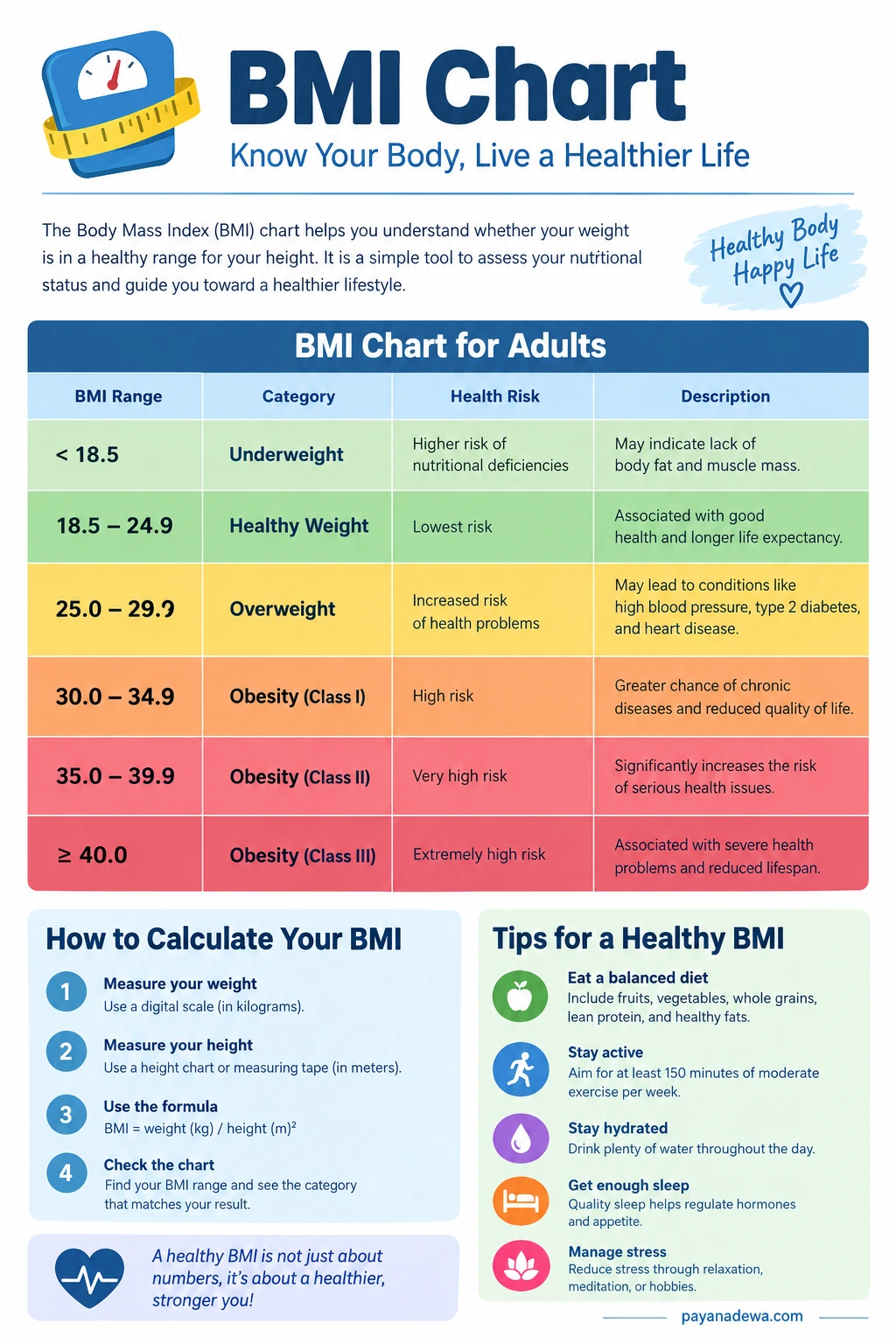
Underweight: BMI Below 18.5
A BMI below 18.5 is classified as underweight for adults. This result may be associated with inadequate calorie intake, nutritional deficiencies, or certain underlying health conditions. However, BMI alone cannot determine the cause of a low body weight.
If your BMI falls below this range, consider discussing your weight and nutritional needs with a qualified healthcare professional, particularly if you have experienced unexplained weight loss, fatigue, or changes in appetite.
Healthy Weight: BMI From 18.5 to 24.9
A BMI from 18.5 to 24.9 is generally classified as a healthy weight for adults. This range is associated with a lower risk of several weight-related health conditions at a population level.
Being within this range does not automatically mean that every aspect of your health is optimal. Physical activity, nutrition, sleep, family history, and other health indicators also influence overall well-being.
Overweight: BMI From 25.0 to 29.9
A BMI from 25.0 to 29.9 falls within the overweight category. Depending on a person’s body composition and other risk factors, this result may indicate a higher likelihood of developing certain health conditions.
Muscular individuals can have a higher BMI without having excessive body fat. Therefore, it is helpful to consider waist circumference, physical activity, blood pressure, and other relevant health measurements before drawing conclusions.
Obesity: BMI of 30.0 or Higher
A BMI of 30.0 or higher is classified as obesity in standard adult BMI categories. Obesity is commonly divided into three classes to describe increasing BMI ranges.
- Class I obesity: BMI from 30.0 to 34.9.
- Class II obesity: BMI from 35.0 to 39.9.
- Class III obesity: BMI of 40.0 or higher.
Higher BMI levels are associated with an increased risk of certain chronic conditions, including type 2 diabetes, cardiovascular disease, and high blood pressure. These are statistical associations, not a diagnosis for any individual.
A healthcare professional can help assess your overall health, discuss possible contributing factors, and recommend an appropriate plan based on your needs.
How to Calculate Your BMI
You do not need a complicated calculator to work out your Body Mass Index. With your weight and height, you can use a simple mathematical formula.
Use the BMI Formula
BMI = Weight in kilograms ÷ (Height in meters × Height in meters)
For example, suppose an adult weighs 70 kilograms and has a height of 1.75 meters. First, multiply 1.75 by 1.75 to get 3.0625. Next, divide 70 by 3.0625. The result is approximately 22.9.
Under standard adult BMI classifications, a BMI of 22.9 falls within the healthy weight category.
Follow These Simple Calculation Steps
- Step 1: Measure your weight using a reliable scale.
- Step 2: Measure your height accurately in meters.
- Step 3: Multiply your height by itself.
- Step 4: Divide your weight in kilograms by the result.
- Step 5: Compare your BMI with the adult BMI chart.
If your measurements use pounds and inches, you can use an imperial BMI calculator instead. Make sure the calculator uses the correct units to avoid an inaccurate result.
What Does Your BMI Result Really Mean?
Your BMI result is best understood as a screening indicator rather than a complete picture of your health. It can help identify a possible concern, but it cannot explain why your weight falls within a particular category.
For a more complete assessment, healthcare professionals may consider additional information, such as waist circumference, blood pressure, blood glucose, cholesterol levels, medical history, and lifestyle habits.
Why BMI Does Not Tell the Whole Story
BMI does not distinguish between fat, muscle, bone, and other body tissues. As a result, an athlete with substantial muscle mass may have a high BMI despite having relatively low body fat.
Age, body composition, and individual circumstances also matter. Older adults may experience changes in muscle mass, while people with certain medical conditions may need a more individualized assessment.
For children and teenagers, BMI is interpreted differently using age- and sex-specific growth charts. Pregnant people should not use standard adult BMI categories to assess pregnancy weight changes. If either situation applies, seek guidance from a qualified healthcare professional.
Practical Tips for Maintaining a Healthy Weight
Whether your BMI falls within the healthy range or outside it, sustainable habits are generally more useful than quick fixes. Focus on behaviors that support your energy, strength, and overall health rather than relying on a single number.
Eat a Balanced Diet
Build meals around a variety of vegetables, fruits, whole grains, protein-rich foods, and healthy fats. Choose foods that provide the nutrients your body needs, and aim for an eating pattern you can maintain over time.
You do not need to eliminate entire food groups or follow an extreme diet to improve your eating habits. Small, consistent changes can be easier to maintain.
Stay Physically Active
Regular movement supports cardiovascular health, muscle strength, and overall well-being. For most adults, a useful general target is at least 150 minutes of moderate-intensity aerobic activity each week, alongside muscle-strengthening activities on two or more days.
Walking, cycling, swimming, dancing, and strength training are possible options. Choose activities that suit your fitness level and increase the intensity gradually.
Prioritize Sleep and Stress Management
Getting enough sleep can support appetite regulation, mood, energy, and daily functioning. Many adults benefit from approximately seven to nine hours of sleep each night, although individual needs vary.
Stress management also matters. Relaxation exercises, time outdoors, enjoyable hobbies, and supportive relationships can help you build a healthier routine.
Set Realistic Goals
Healthy weight management is not about reaching a particular number as quickly as possible. It is about developing habits that support long-term health.
- Make gradual changes to eating and activity patterns.
- Track progress using more than body weight alone.
- Celebrate improvements in stamina, strength, and daily energy.
- Seek professional advice if you have concerns about weight changes.
Avoid comparing your BMI with someone else’s. People have different body types, health histories, and nutritional needs. Your goals should reflect your circumstances and professional guidance when appropriate.
When Should You Talk to a Healthcare Professional?
Consider speaking with a healthcare professional if your BMI is outside the standard adult healthy range, you have experienced unexplained weight changes, or you have concerns about nutrition or weight-related health risks.
Professional advice is particularly valuable if you have an existing medical condition, take medications that affect weight, or are considering a significant change to your diet or exercise routine.
A clinician can help interpret your BMI alongside other health measurements and determine whether additional tests or support are appropriate. You do not need to wait until your BMI reaches a particular category to ask for help.
Frequently Asked Questions About BMI Charts
What Is a Normal BMI for Adults?
A BMI from 18.5 to 24.9 is generally classified as healthy weight for adults aged 20 and older. However, individual health cannot be determined by BMI alone.
Is BMI the Same for Men and Women?
The standard adult BMI category thresholds are generally the same for men and women. However, BMI does not account for differences in body composition, so additional measurements may help provide a more complete assessment.
Can I Use an Adult BMI Chart for Children?
No. Children and teenagers need age- and sex-specific BMI-for-age charts because their bodies are still growing and developing.
How Often Should I Check My BMI?
There is no single schedule that suits everyone. You may check it when reviewing your general health or following professional advice. Frequent measurements are not necessary for everyone, and BMI should not become a source of unnecessary stress.
Does a Healthy BMI Guarantee Good Health?
No. A healthy BMI does not guarantee that you are free from disease or nutritional deficiencies. Blood pressure, cholesterol, blood glucose, fitness, sleep, and other factors also contribute to your health.
Conclusion
A BMI chart provides a straightforward way to understand Body Mass Index and compare your weight with standard adult categories. By learning how to calculate your BMI and interpret the result, you can use this information as a starting point for making informed health decisions.
Remember that BMI is a screening tool, not a diagnosis or a measure of personal worth. Your body composition, medical history, lifestyle, and individual needs all matter when evaluating your health.
Focus on balanced nutrition, regular physical activity, sufficient sleep, and realistic goals. If you have concerns about your BMI or your health, consult a qualified healthcare professional for personalized advice.
Have you used a BMI chart to understand your healthy weight range? Share your thoughts, questions, or helpful experiences with others as we continue learning about healthier living.