Understanding your blood pressure is an important step toward maintaining a healthy heart. A blood pressure chart helps you interpret your readings, recognize potentially concerning changes, and understand when you may need medical attention. Whether you monitor your blood pressure at home or check it during a doctor’s appointment, knowing what the numbers mean can help you make informed decisions about your health.
Blood pressure is measured using two numbers: systolic pressure and diastolic pressure. These numbers indicate the pressure in your arteries when your heart beats and when it rests between beats. A blood pressure chart organizes these readings into categories, making it easier to identify normal blood pressure, elevated readings, and different stages of high blood pressure.
This guide explains adult blood pressure ranges, how to use a blood pressure chart, how to measure your blood pressure accurately at home, and when to seek medical advice. It also includes a printable blood pressure tracking template to help you record your readings over time.
What Is a Blood Pressure Chart?
A blood pressure chart is a reference guide that classifies blood pressure readings according to their systolic and diastolic values. It can help adults understand whether their measurements fall within a generally healthy range or may require further evaluation.
Blood pressure is written in millimeters of mercury (mmHg). For example, a reading of 118/76 mmHg means the systolic pressure is 118 and the diastolic pressure is 76.
- Systolic blood pressure: The upper number, representing the pressure in your arteries when your heart contracts and pumps blood.
- Diastolic blood pressure: The lower number, representing the pressure in your arteries when your heart relaxes between beats.
Both numbers matter. A reading may be considered high if either the systolic or diastolic value reaches a higher category, even when the other number remains lower.
Blood Pressure Chart for Adults
The following blood pressure ranges are based on commonly used American Heart Association categories for adults. They are general reference points, not a personal diagnosis. Individual targets may differ depending on age, pregnancy, medical conditions, medications, and your healthcare provider’s recommendations.
Normal Blood Pressure
Normal adult blood pressure is generally below 120/80 mmHg, with systolic pressure below 120 and diastolic pressure below 80.
A reading such as 115/75 mmHg falls within the normal category. Maintaining healthy habits, including regular physical activity, balanced nutrition, and adequate sleep, can help support healthy blood pressure.
Elevated Blood Pressure
Elevated blood pressure is defined as a systolic reading of 120–129 mmHg and a diastolic reading below 80 mmHg.
For example, 124/78 mmHg falls within the elevated category. This range is not classified as hypertension, but it may indicate an increased risk of developing high blood pressure over time. Lifestyle changes and regular monitoring can be helpful.
High Blood Pressure: Stage 1
Stage 1 hypertension is defined as a systolic reading of 130–139 mmHg or a diastolic reading of 80–89 mmHg.
A reading of 134/84 mmHg falls within this category. A healthcare professional may assess your overall cardiovascular risk, medical history, and other health factors before recommending a treatment plan.
High Blood Pressure: Stage 2
Stage 2 hypertension is defined as a systolic reading of 140 mmHg or higher or a diastolic reading of 90 mmHg or higher.
For example, 145/92 mmHg falls within the Stage 2 category. If your readings repeatedly fall into this range, arrange a medical appointment for evaluation. Do not change or stop prescribed medication without consulting your healthcare provider.
Hypertensive Crisis
A blood pressure reading higher than 180 mmHg systolic and/or 120 mmHg diastolic is considered severely elevated and may require urgent medical assessment.
If you obtain a reading in this range, wait at least one minute and measure again. If it remains very high and you have symptoms such as chest pain, shortness of breath, weakness, numbness, vision changes, or difficulty speaking, call your local emergency service immediately. Do not wait for the blood pressure to return to normal.
If the repeat reading remains above 180 systolic and/or 120 diastolic but you have no concerning symptoms, contact a healthcare professional immediately for guidance.
Printable Blood Pressure Chart Template
A printable blood pressure chart can make home monitoring more organized. Instead of relying on memory, use a tracking sheet to record the date, time, systolic pressure, diastolic pressure, heart rate, and any relevant observations.
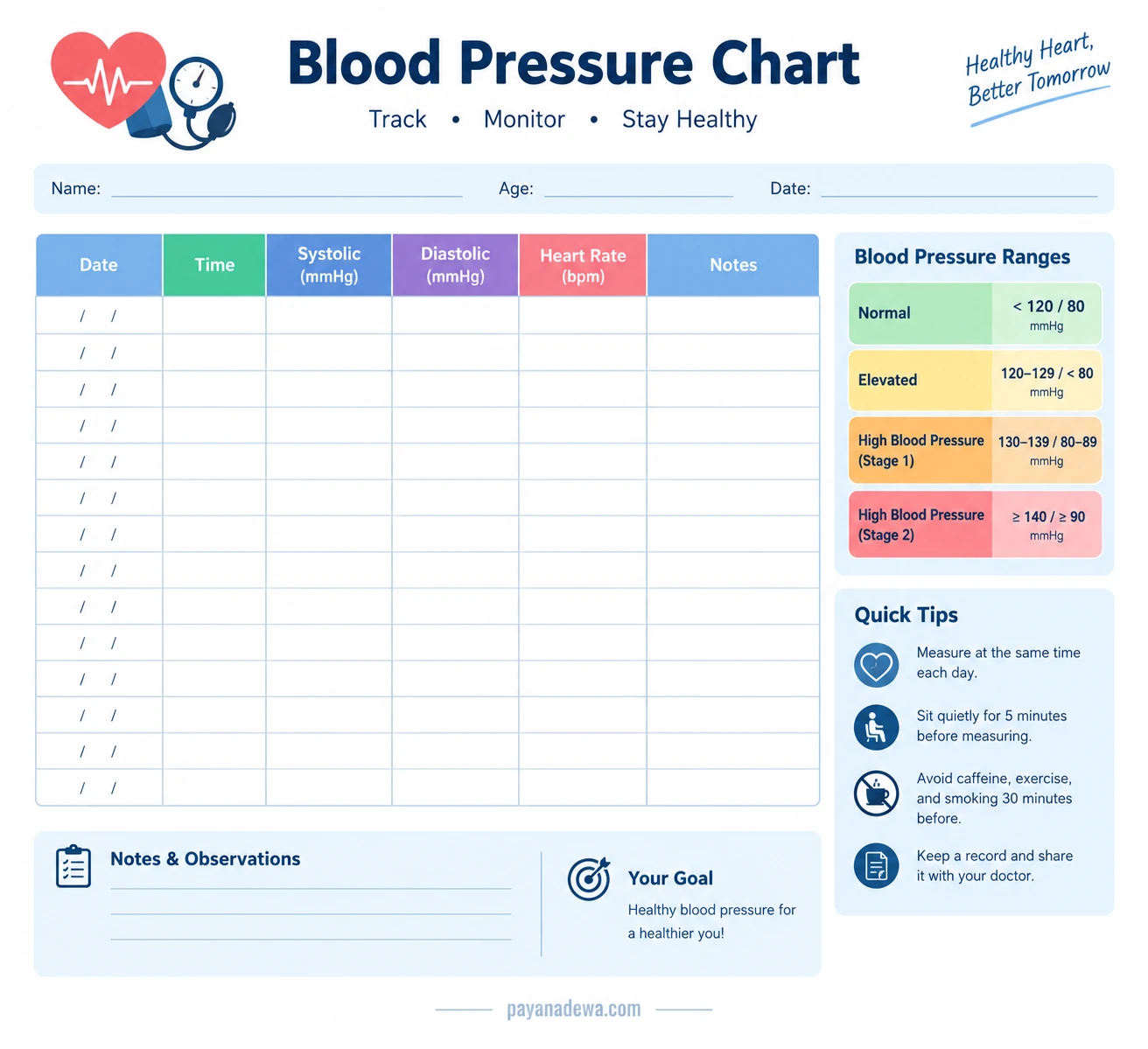
When using a blood pressure tracking sheet, consider recording:
- Date and time of each measurement.
- Systolic and diastolic blood pressure in mmHg.
- Heart rate, if displayed by your monitor.
- Medication timing, if relevant to your monitoring plan.
- Symptoms or unusual circumstances, such as dizziness, stress, or feeling unwell.
Bring your completed chart to medical appointments. A series of readings often provides more useful information than a single measurement taken during a stressful or unusual moment.
How to Measure Blood Pressure Correctly at Home
Accurate measurement is essential for making your blood pressure chart useful. Poor positioning, talking during the measurement, or using an incorrectly sized cuff can affect your results.
1. Choose a Reliable Blood Pressure Monitor
Use a validated automatic upper-arm blood pressure monitor with a cuff that fits your arm circumference. Wrist and finger monitors may be less reliable for routine measurements, so an upper-arm device is generally preferred unless a healthcare professional recommends another type.
2. Prepare Before Measuring
For the most consistent results:
- Avoid smoking, caffeine, and exercise for at least 30 minutes before measuring.
- Empty your bladder before taking a reading.
- Sit quietly for at least five minutes.
- Keep your back supported and both feet flat on the floor.
- Place your arm on a table so the cuff is approximately at heart level.
Apply the cuff to your bare upper arm according to the monitor’s instructions. Avoid measuring over clothing.
3. Take Two Readings
Remain still and avoid talking during the measurement. Take two readings about one minute apart and record both results, or follow the averaging method recommended by your healthcare professional.
Try to measure at consistent times each day. If your healthcare provider has requested morning and evening measurements, follow that schedule and any instructions about medication timing.
What Can Affect Your Blood Pressure Readings?
Blood pressure naturally changes throughout the day. A single high or low reading does not necessarily mean you have a chronic condition.
Common factors that may influence a measurement include:
- Stress and anxiety: Feeling nervous during a measurement can temporarily raise blood pressure.
- Caffeine and nicotine: These substances can cause short-term increases in blood pressure.
- Physical activity: Blood pressure may rise temporarily after exercise.
- Medication: Some prescription and over-the-counter medicines can affect blood pressure.
- Sleep and daily routines: Poor sleep, inconsistent schedules, and other lifestyle factors may influence readings.
White coat hypertension occurs when blood pressure is higher in a healthcare setting than at home. Masked hypertension is the opposite: readings may appear normal in a clinic but be elevated outside it. Home monitoring or ambulatory blood pressure monitoring can help healthcare professionals investigate these patterns.
How to Maintain Healthy Blood Pressure
If your readings are elevated or you want to support cardiovascular health, several everyday habits may help.
Eat a Heart-Healthy Diet
Choose a balanced eating pattern that includes vegetables, fruits, whole grains, beans, nuts, and other nutritious foods. A DASH-style eating plan is commonly recommended for people seeking to lower blood pressure. Reduce excessive sodium intake and limit highly processed foods when possible.
Stay Physically Active
Regular physical activity can help improve cardiovascular health and support healthy blood pressure. Many adults can aim for at least 150 minutes of moderate-intensity aerobic activity each week, such as brisk walking, if appropriate for their health and fitness level.
Prioritize Sleep and Stress Management
Consistent sleep, relaxation techniques, and manageable daily routines may contribute to better overall health. If you regularly snore heavily, experience breathing interruptions during sleep, or feel excessively sleepy during the day, discuss possible sleep problems with a healthcare professional.
Follow Your Treatment Plan
If you have been prescribed blood pressure medication, take it as directed. Keep appointments, track your readings, and discuss side effects or concerns with your healthcare provider. Lifestyle changes can complement treatment but should not replace prescribed medication without professional guidance.
When Should You See a Doctor About Your Blood Pressure?
Arrange a healthcare appointment if your home readings repeatedly fall into the elevated or hypertension ranges, especially if your blood pressure is consistently 130/80 mmHg or higher. Your healthcare provider can confirm the pattern and recommend an appropriate target based on your individual circumstances.
Seek urgent medical help for a severely elevated reading above 180 systolic and/or 120 diastolic, particularly if it is accompanied by chest pain, breathing difficulty, neurological symptoms, or vision changes.
Low blood pressure is often defined as below 90/60 mmHg, but it is not always a problem. Some people naturally have lower readings without symptoms. However, seek medical advice if low blood pressure is accompanied by repeated dizziness, fainting, confusion, or weakness. Sudden fainting, severe confusion, or signs of shock require emergency care.
Pregnancy and certain medical conditions require special consideration. If you are pregnant or recently gave birth and experience a severe headache, visual disturbances, upper abdominal pain, shortness of breath, or concerning blood pressure readings, seek prompt medical assessment because pregnancy-related hypertension can be serious.
Conclusion
A blood pressure chart is a practical tool for understanding systolic and diastolic readings and recognizing patterns that may need attention. Normal adult blood pressure is generally below 120/80 mmHg, while higher readings can fall into elevated or hypertension categories depending on the systolic and diastolic values.
For the most useful results, measure your blood pressure correctly, record readings consistently, and share your tracking chart with a healthcare professional. A printable blood pressure chart can support better monitoring, but it cannot replace a medical diagnosis or personalized treatment advice. If you have repeated high readings or symptoms that concern you, seek appropriate medical care.