For most healthy adults at sea level, an oxygen saturation reading of 95% to 100% is generally considered normal. Lower readings may require monitoring, medical advice, or urgent assessment, depending on the number, symptoms, personal health conditions, and your clinician’s recommendations. This guide explains the blood oxygen level chart, normal oxygen saturation ranges, possible causes of low readings, and practical steps you can take.
What Is a Blood Oxygen Level?
Blood oxygen level refers to the amount of oxygen carried through your bloodstream. Your lungs transfer oxygen into your blood when you breathe, and red blood cells carry it to organs, muscles, and other tissues. Adequate oxygen supply is essential for normal body function.
Oxygen saturation, written as SpO2, estimates the percentage of hemoglobin in your blood that is carrying oxygen. A pulse oximeter measures this estimate by shining light through a fingertip or another suitable body part. The result appears as a percentage, such as 98% or 94%.
SpO2 is not the same as arterial oxygen pressure, known as PaO2, which is measured using an arterial blood gas test. A pulse oximeter is convenient for home monitoring, but its reading is an estimate rather than a complete assessment of your breathing or overall health.
Blood Oxygen Level Chart: Understanding Your SpO2 Reading
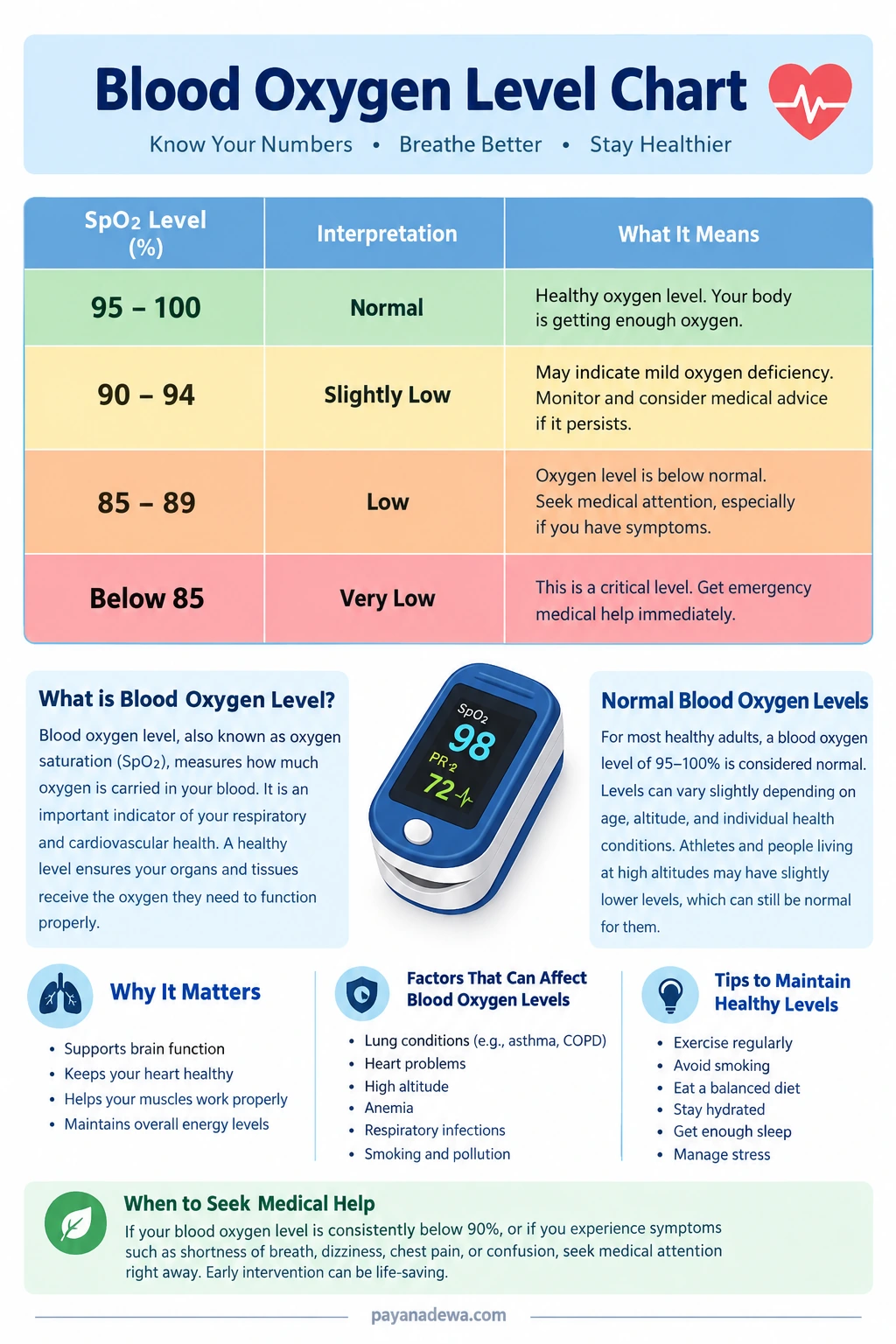
The following blood oxygen level chart provides general guidance for adults at or near sea level. It is not a universal diagnostic standard, and your healthcare professional may recommend a different target based on your medical history.
- 95% to 100% — Generally normal: This is the typical range for most healthy adults at sea level.
- 93% to 94% — Potentially below your usual range: Recheck the measurement carefully. If the reading persists, contact a healthcare professional promptly for advice.
- 91% to 92% — Concerning low reading: Seek urgent medical advice, particularly if this is new or lower than your usual level.
- 90% or below — Potentially dangerous: Seek emergency medical assessment, especially if the reading is confirmed or you have symptoms. Do not delay care while repeatedly checking the device.
These categories are general reference points, not strict cutoffs that apply to everyone. Some people with chronic lung conditions may have individualized oxygen targets prescribed by their clinicians. High altitude can also affect normal readings. Always follow your personal medical plan when one has been provided.
What Is a Normal Blood Oxygen Level?
For most healthy adults at sea level, a normal blood oxygen level is generally between 95% and 100%. However, a single reading does not tell the whole story. Your usual oxygen saturation, physical condition, altitude, and symptoms all help determine whether a result is reassuring or concerning.
Normal Oxygen Levels by Age
Healthy children and adults commonly have oxygen saturation readings in the same general range at sea level. Age alone does not determine whether a reading is safe. Older adults may have medical conditions that affect oxygen levels, while infants and people with specific illnesses may require individualized assessment.
For children, infants, and newborns, interpretation depends on age, clinical circumstances, and the purpose of monitoring. Parents should follow their pediatrician’s guidance rather than relying exclusively on a general adult blood oxygen chart.
Blood Oxygen Levels During Sleep
Oxygen saturation can fluctuate during sleep. Some people experience temporary drops, particularly those with obstructive sleep apnea or other breathing disorders. Repeated or prolonged drops should not automatically be considered normal simply because they occur at night.
If you regularly wake up gasping, snore heavily, experience morning headaches, or feel excessively sleepy during the day, discuss these symptoms with a healthcare professional. A fingertip pulse oximeter alone cannot diagnose sleep apnea.
Symptoms of Low Blood Oxygen
Low blood oxygen, also called hypoxemia when oxygen levels in arterial blood are reduced, can affect the brain, heart, and other organs. Symptoms vary, and some people may have low oxygen saturation without obvious warning signs.
Possible symptoms include:
- Shortness of breath or difficulty breathing.
- Rapid breathing or an unusually fast heartbeat.
- Headache, dizziness, or unusual fatigue.
- Confusion, restlessness, or difficulty staying alert.
- Bluish or gray discoloration of the lips, face, or fingernails.
- Chest discomfort or a feeling that you cannot get enough air.
Seek emergency medical help if you experience severe breathing difficulty, chest pain, new confusion, blue or gray lips, or other serious symptoms. Do not wait for a pulse oximeter reading to become low before getting help.
What Causes Low Oxygen Saturation?
A low SpO2 reading can have several causes. Identifying the underlying reason is important because treatment depends on the condition rather than the number alone.
Lung and Respiratory Conditions
Conditions such as pneumonia, asthma attacks, chronic obstructive pulmonary disease (COPD), and other lung disorders can interfere with oxygen entering the bloodstream. Respiratory infections may also reduce oxygen levels, particularly when they affect the lungs.
Heart and Circulatory Problems
Some heart conditions can affect how efficiently oxygenated blood reaches body tissues. Serious cardiovascular problems may cause breathlessness, weakness, chest discomfort, or other symptoms that need prompt medical evaluation.
High Altitude and Other Factors
Oxygen saturation may be lower at high elevations because the available oxygen pressure decreases. Other possible influences include sleep-related breathing disorders, anemia, and certain acute illnesses. Anemia reduces the blood’s oxygen-carrying capacity, although SpO2 may still appear normal because the device measures the percentage of hemoglobin carrying oxygen rather than the total amount of hemoglobin.
How to Measure Blood Oxygen at Home
A fingertip pulse oximeter is commonly used to estimate oxygen saturation. To improve the reliability of your measurement, follow these steps:
- Rest before measuring: Sit comfortably and allow your breathing and circulation to settle.
- Warm your hands: Cold fingers may interfere with the measurement.
- Remove nail polish if necessary: Dark polish or artificial nails can affect some devices.
- Position the device correctly: Follow the manufacturer’s instructions for placing the oximeter on your finger.
- Keep still: Movement can interfere with the signal and produce unstable readings.
- Wait for a stable result: Allow the displayed percentage and pulse rate to settle before recording them.
- Repeat an unexpected reading: Check your hand position and technique, but never delay urgent medical care if you have serious symptoms.
Record the date, time, reading, and any symptoms if you are monitoring your oxygen level regularly. This information can help your healthcare professional identify changes from your normal baseline.
How Accurate Are Pulse Oximeters?
Pulse oximeters are useful screening and monitoring tools, but they are not perfect. Accuracy can be affected by poor circulation, cold skin, movement, skin pigmentation, tobacco use, nail products, and device quality. Some consumer devices may not be validated for medical decision-making.
In certain circumstances, a pulse oximeter may display a result that differs from the actual oxygen level in arterial blood. For this reason, a seemingly normal reading should not override symptoms that suggest a medical emergency.
If your reading seems inconsistent with how you feel, repeat the measurement using correct technique and contact a healthcare professional for guidance. A clinician may recommend additional testing when the result and symptoms do not match.
Tips for Maintaining Healthy Oxygen Levels
Supporting your overall respiratory and cardiovascular health can help your body use oxygen effectively. However, lifestyle changes cannot replace treatment for an underlying medical condition.
- Avoid smoking: Tobacco smoke damages the lungs and can interfere with oxygen delivery.
- Stay physically active: Follow an exercise routine appropriate for your fitness level and medical condition.
- Manage existing health conditions: Follow your treatment plan for asthma, COPD, heart disease, or other relevant conditions.
- Reduce exposure to air pollution: Avoid smoke and other respiratory irritants when possible.
- Maintain healthy sleep habits: Seek medical advice if you have symptoms of sleep apnea or other nighttime breathing problems.
- Follow prescribed oxygen therapy: If oxygen has been prescribed, use it according to your clinician’s instructions. Do not change the flow rate without medical guidance.
Breathing exercises may help some people manage breathing patterns, but they do not reliably correct dangerous hypoxemia. If you have a low oxygen reading, focus on appropriate medical assessment rather than relying on home remedies.
When Should You Seek Medical Help?
Contact a healthcare professional promptly if your oxygen saturation remains below your usual level or falls below the target recommended for you. A persistent reading of 93% to 94% may warrant prompt assessment, while readings of 92% or lower generally require urgent advice for someone whose usual level is normal. A confirmed reading of 90% or below may indicate a medical emergency.
Seek emergency help immediately if you experience severe shortness of breath, chest pain, confusion, blue or gray lips, fainting, or rapidly worsening symptoms, regardless of the number shown on your device. Follow any individualized emergency instructions provided by your healthcare team.
Conclusion
A blood oxygen level chart is a practical way to understand SpO2 readings and recognize when a result may need attention. For most healthy adults at sea level, 95% to 100% is generally normal, while persistent lower readings deserve closer assessment. The correct interpretation depends on symptoms, personal health conditions, altitude, and measurement accuracy.
Use a pulse oximeter carefully, keep track of meaningful changes, and seek professional advice when readings are concerning. Most importantly, never let a seemingly reassuring number delay emergency care when serious symptoms occur. Understanding your blood oxygen level can help you make more informed decisions about your health.