Planning a home renovation can be exciting, but the costs can quickly become overwhelming without a clear plan. A well-prepared home renovation budget helps you understand what you can afford, prioritize important improvements, and avoid unpleasant financial surprises.
Whether you are updating one room or renovating your entire house, a realistic budget gives you greater control over the project. It allows you to estimate materials, labor, permits, fixtures, and unexpected expenses before work begins. More importantly, it helps you make better decisions when costs change during the renovation.
This guide explains how to create a practical renovation budget, where to allocate your money, how to reduce unnecessary expenses, and how to keep your project financially manageable from start to finish.
What Is a Home Renovation Budget?
A home renovation budget is a financial plan that estimates how much you expect to spend on improving, repairing, or remodeling your home. It should include both planned expenses and a reserve for unexpected costs.
A complete budget may cover materials, contractor fees, labor, appliances, furniture, permits, design services, delivery charges, and cleanup. By listing these expenses in advance, you can see the estimated total cost instead of relying on guesswork.
Your renovation budget should also reflect your priorities. For example, structural repairs and essential plumbing or electrical work should generally come before decorative upgrades.
How to Create a Home Renovation Budget
1. Define Your Renovation Goals
Start by deciding exactly what you want to change. Write down every renovation task and separate essential improvements from optional upgrades.
For example, replacing damaged flooring may be essential, while installing premium decorative lighting may be optional. This simple distinction can help you protect your budget when costs increase.
- List every room or area you want to renovate.
- Identify necessary repairs and safety improvements.
- Separate must-have features from luxury upgrades.
- Decide which improvements can wait until later.
- Set a realistic target for the finished project.
2. Determine How Much You Can Afford
Next, establish your maximum spending limit. Consider your available savings, financing options, and other financial obligations before setting the renovation amount.
It is important not to spend your entire available amount on the initial estimates. Instead, reserve part of your budget for unexpected expenses. A contingency fund of around 10% to 15% is a useful starting point for many renovation projects.
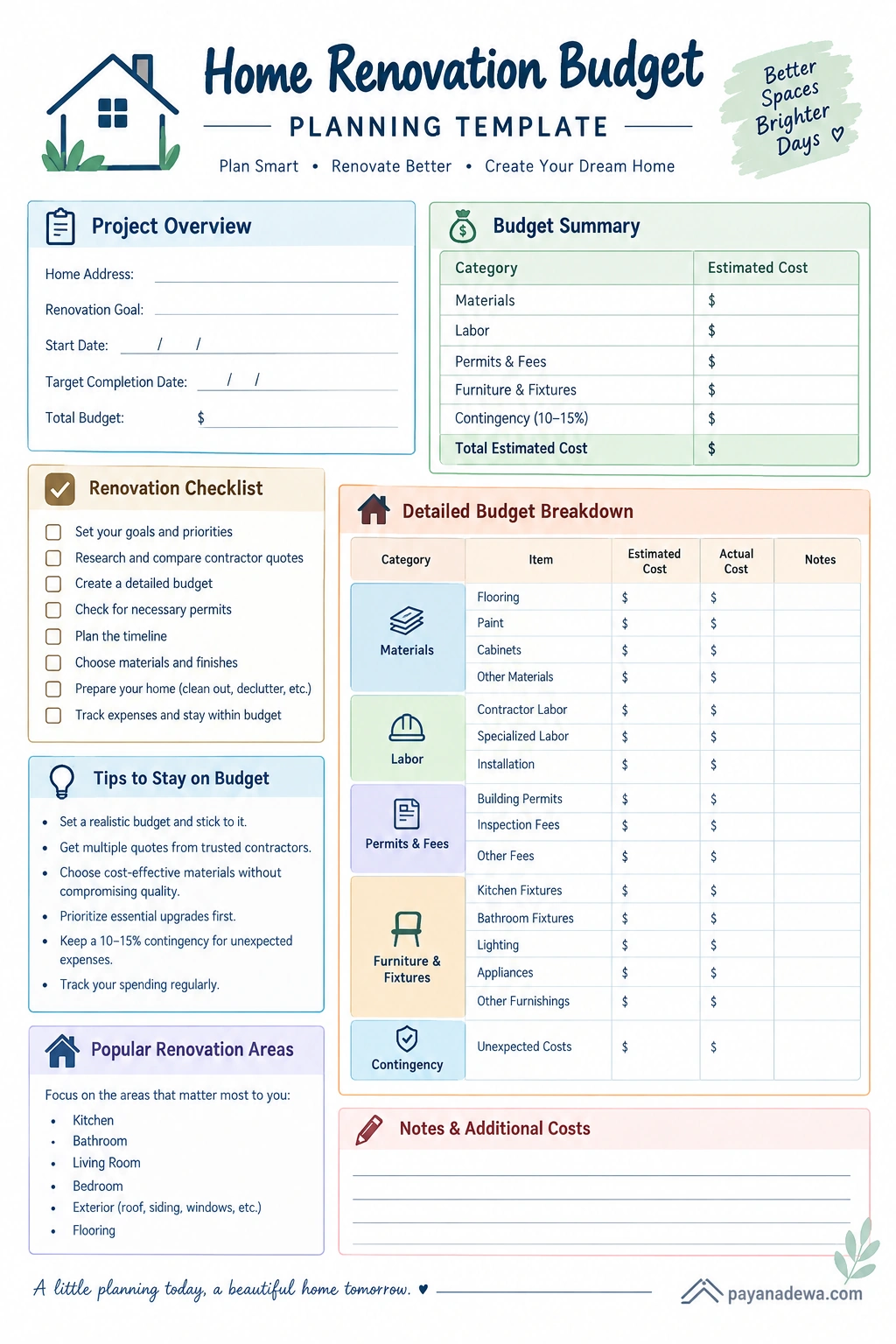
3. Break the Budget Into Categories
Once you know your overall limit, divide it into practical categories. This makes the budget easier to track and helps you identify areas where spending is higher than expected.
- Materials: Flooring, paint, cabinets, tiles, lumber, countertops, and other building materials.
- Labor: Contractor fees, electricians, plumbers, painters, installers, and specialized trades.
- Permits and fees: Building permits, inspections, design fees, and other project-related charges.
- Fixtures and furnishings: Lighting, bathroom fixtures, appliances, furniture, and decorative items.
- Contingency: Money reserved for unexpected repairs, price changes, or additional work.
Keeping these categories separate makes it easier to compare your original estimate with your actual spending.
Typical Home Renovation Costs to Consider
Renovation costs vary significantly depending on your location, property size, materials, project complexity, and contractor rates. Therefore, it is better to use cost categories rather than relying on one fixed price.
Kitchen Renovation
Kitchen projects can include cabinets, countertops, flooring, appliances, lighting, plumbing, and electrical work. Because kitchens combine several trades, costs can increase quickly.
If your budget is limited, consider keeping the existing layout when possible. Repainting cabinets, replacing hardware, upgrading lighting, or installing a new backsplash can create a noticeable improvement without requiring a complete redesign.
Bathroom Renovation
Bathroom remodeling may involve tiles, showers, bathtubs, toilets, vanities, plumbing, ventilation, lighting, and waterproofing. Plumbing changes can be especially expensive because they may require more labor and structural work.
To control costs, prioritize repairs and essential fixtures first. You can then add decorative improvements as your remaining budget allows.
Living Room and Bedroom Updates
Living rooms and bedrooms are often easier to renovate on a smaller budget. Fresh paint, updated flooring, new lighting, window treatments, and carefully selected furniture can significantly change the appearance of a room.
These spaces can also be good candidates for phased renovations. For instance, you might repaint first and replace furniture later.
Exterior Renovation
Exterior projects can include roofing, siding, windows, doors, landscaping, decks, and outdoor lighting. Some exterior improvements are essential for protecting the structure of your home.
Before spending money on cosmetic improvements, inspect the roof, drainage, windows, and other areas that can cause expensive problems if neglected.
How to Build an Accurate Renovation Cost Estimate
Getting several estimates is one of the best ways to improve the accuracy of your renovation budget. Contact multiple qualified contractors and ask for detailed quotes rather than one total price.
A useful quote should clearly explain what is included. It should also identify labor, materials, installation, disposal, permits, and other fees where applicable.
- Request at least two or three comparable estimates when practical.
- Ask contractors to provide itemized pricing.
- Confirm which materials are included.
- Ask about possible additional charges.
- Check the expected project timeline.
- Discuss payment schedules before work begins.
Do not automatically choose the cheapest quote. A very low estimate may exclude important work or use lower-quality materials. Instead, compare the overall value, experience, scope of work, and contract terms.
Why You Need a Renovation Contingency Fund
Even a carefully prepared renovation plan can change once construction begins. Walls may reveal hidden water damage, electrical systems may require upgrades, or materials may become more expensive than expected.
That is why a contingency fund is an important part of your home renovation budget. Setting aside approximately 10% to 15% can provide a financial cushion for unexpected expenses.
However, the contingency fund should not be treated as extra spending money. Keep it reserved until an actual unexpected cost appears.
Ways to Save Money on a Home Renovation
Keep the Existing Layout
Moving plumbing, electrical connections, walls, or major structural elements can increase labor and material costs. If possible, keep the existing layout and focus your money on improvements that provide the most noticeable benefit.
Compare Material Prices
Research several suppliers before purchasing renovation materials. Prices can vary considerably between stores and brands. However, avoid choosing materials based only on the lowest price.
Look for products that offer a good balance between durability, appearance, maintenance, and cost.
Prioritize High-Impact Improvements
Not every upgrade needs to happen at the same time. Focus first on improvements that affect safety, functionality, comfort, and long-term property condition.
Once those areas are complete, you can use any remaining funds for decorative features.
Reuse What You Can
Some existing features may still be in good condition. Reusing cabinets, doors, furniture, fixtures, or appliances can reduce waste and lower your renovation expenses.
Even simple changes, such as replacing cabinet handles or refinishing furniture, can create a fresh look without the cost of complete replacement.
How to Track Your Renovation Spending
Creating a budget is only the first step. You also need to monitor your spending throughout the project.
Create a simple expense tracker with columns for the planned cost, actual cost, payment date, and notes. Update it whenever you purchase materials or pay a contractor.
- Record every renovation expense.
- Save receipts and invoices.
- Compare actual costs with estimates regularly.
- Track remaining funds after each major payment.
- Review your contingency balance before approving upgrades.
Regular tracking makes it easier to identify problems early. If one category exceeds its allowance, you can adjust another category before the entire project goes over budget.
Common Home Renovation Budget Mistakes
Many renovation budget problems happen because homeowners focus only on the visible costs. For example, someone may calculate the price of new cabinets but forget installation, delivery, hardware, disposal, and related electrical work.
Other common mistakes include:
- Underestimating labor costs.
- Forgetting permits and inspection fees.
- Choosing expensive materials too early.
- Failing to include a contingency fund.
- Changing the project scope repeatedly.
- Ignoring small expenses that accumulate over time.
- Starting work without a written agreement.
A detailed budget helps prevent these mistakes because every major expense has a place in your plan.
Should You Renovate Everything at Once?
Not necessarily. A phased renovation can be a smart choice when your budget is limited.
For example, you could renovate the kitchen this year, update the bathroom next year, and complete exterior improvements later. This approach spreads costs over time and gives you more flexibility.
However, some projects are more efficient when completed together. If several improvements require the same contractor or demolition work, combining them may reduce duplicated labor and preparation costs.
Final Home Renovation Budget Checklist
Before starting your renovation, review the following checklist:
- Define your renovation goals.
- Set a maximum spending limit.
- Separate essential work from optional upgrades.
- Research material and labor costs.
- Compare contractor estimates.
- Include permits and project fees.
- Set aside a 10% to 15% contingency fund.
- Create a detailed expense tracker.
- Review spending regularly.
- Avoid unnecessary changes during construction.
Conclusion
A successful renovation starts with a realistic home renovation budget. By defining your goals, estimating every major expense, comparing quotes, and maintaining a contingency fund, you can make better financial decisions throughout the project.
Remember that a good renovation budget is not simply about spending less. It is about spending wisely. Prioritize essential repairs, choose materials that provide lasting value, track every expense, and leave room for unexpected costs.
With careful planning and consistent expense tracking, you can transform your home while maintaining much better control over your finances. A clear budget turns a complicated renovation into a manageable project and helps you move closer to creating a home that fits your needs, lifestyle, and long-term goals.