A well-prepared Bid Template can make the process of creating a professional bid faster, clearer, and more consistent. Whether you are responding to a construction project, service request, freelance opportunity, procurement process, or business proposal, a structured bid helps potential clients understand exactly what you offer. It also gives you a reliable framework for presenting pricing, project details, timelines, terms, and deliverables.
Creating every bid from scratch can take valuable time. A reusable template solves this problem by providing a practical starting point. You can customize the information for each project while keeping important sections organized. The result is a professional document that is easier to review and easier for your team to manage.
In this guide, you will learn what a bid template should contain, how to structure one, how to avoid common mistakes, and how to create a bid that communicates value without unnecessary complexity.
What Is a Bid Template?
A Bid Template is a reusable document designed to help businesses or individuals prepare a formal bid for a project, service, contract, or purchasing opportunity. Instead of starting with a blank document, you can use predefined sections and simply update the information that changes from one opportunity to another.
A typical bid document may include the project name, client information, scope of work, pricing, estimated timeline, payment terms, assumptions, and acceptance details. Depending on the industry, it may also include specifications, qualifications, materials, labor costs, warranties, and additional conditions.
The main purpose is simple: make the bid easy to understand. A client should be able to quickly identify what you are offering, how much it costs, what is included, and what happens after acceptance.
Why Use a Bid Template?
Using a standardized template offers several practical advantages. It reduces repetitive work while helping you maintain consistency across different proposals and projects.
- Saves time: Common sections are already prepared, so you only need to customize project-specific information.
- Improves consistency: Every bid can follow the same professional structure.
- Reduces omissions: A checklist-style layout makes it easier to remember important details.
- Improves readability: Organized headings and tables help clients find important information quickly.
- Supports accurate pricing: Itemized cost sections make calculations easier to review.
- Creates a professional impression: A clean document can communicate preparation and attention to detail.
A template is especially useful for businesses that submit bids regularly. Once the basic structure is established, your team can reuse it for future opportunities without rebuilding the document each time.
Essential Sections of a Bid Template
A strong bid should contain enough information to support an informed business decision. At the same time, it should avoid unnecessary content that makes the document difficult to read.
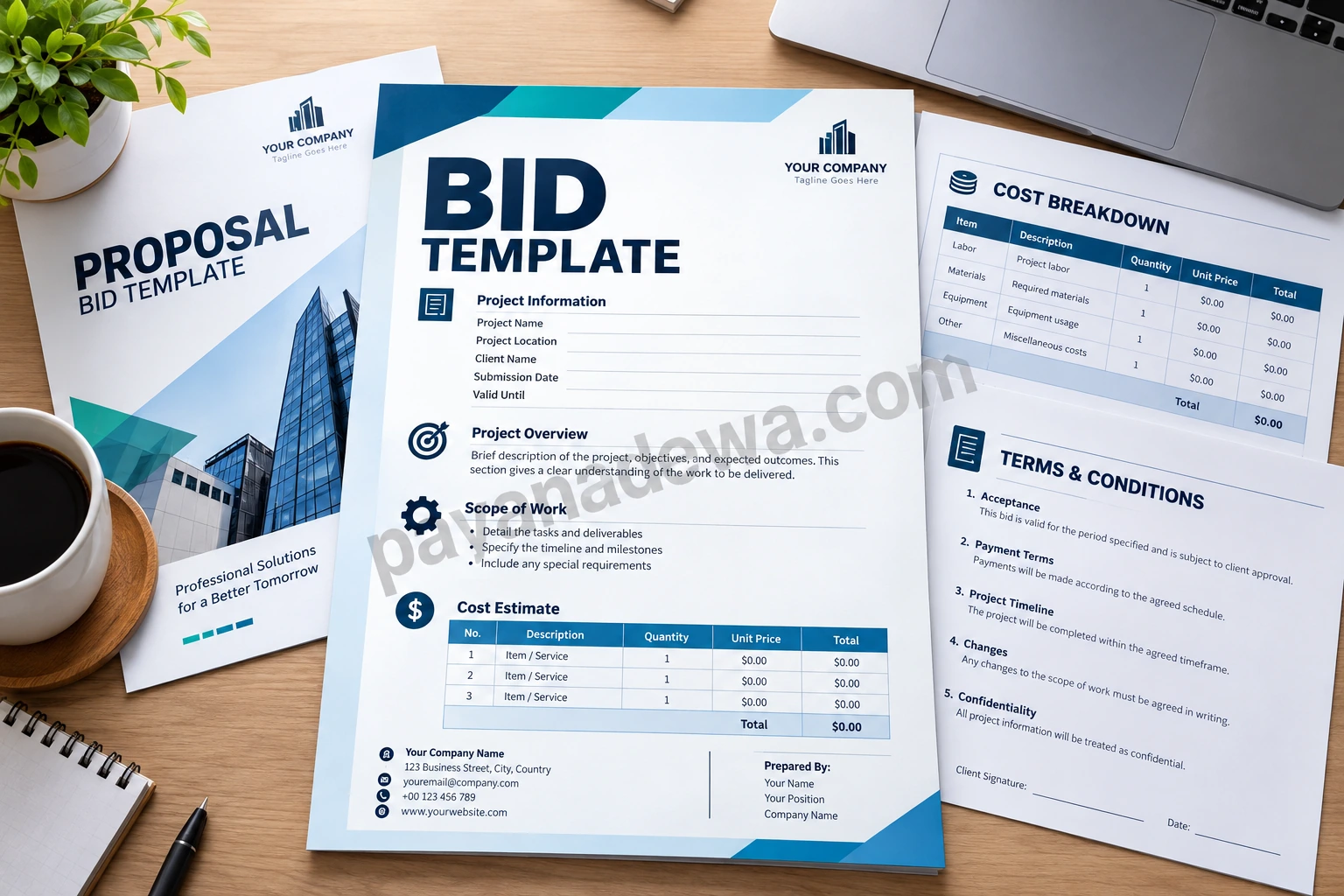
1. Project and Client Information
Start with basic identifying information. Include the project name, client name, project location, bid number if applicable, submission date, and the date through which the bid remains valid.
This information creates a clear reference point for both parties. It also helps prevent confusion when a company is handling multiple bids at the same time.
2. Company Information
Include your business name, address, contact information, website, and the name of the person responsible for the bid. If relevant, you can also include a short company description or qualifications.
Keep this section concise. The goal is to establish who is submitting the bid without distracting from the project itself.
3. Project Overview
The project overview provides a short explanation of the opportunity. Describe the client’s needs and summarize the proposed solution.
A good overview should answer three basic questions: What is the project? What does the client need? What will your company provide?
4. Scope of Work
The scope of work is one of the most important parts of a bid. Clearly explain the tasks, services, materials, or deliverables included in the proposed work.
- List the major project activities.
- Identify specific deliverables.
- Explain important requirements.
- Clarify what is included in the quoted price.
- Identify exclusions when necessary.
Clear scope details can reduce misunderstandings later. If an item is not included, state that explicitly rather than leaving the client to make assumptions.
5. Cost Breakdown
A professional bid should make pricing easy to understand. An itemized cost breakdown can include labor, materials, equipment, services, taxes, fees, and other project expenses.
Use a table when possible. A simple pricing structure can include the item description, quantity, unit price, and total price. If there are optional services, separate them from the required project costs.
Before submitting the bid, double-check all calculations. A small pricing error can create unnecessary questions and may affect the final agreement.
6. Project Timeline
Explain when the project can begin and how long the work is expected to take. You can include milestones when a project has several phases.
A realistic timeline is more useful than an overly optimistic promise. Consider dependencies, material availability, client approvals, staffing, and other factors that could influence completion.
7. Terms and Conditions
Terms and conditions establish the basic rules surrounding the bid. They may address payment schedules, project changes, cancellation, validity periods, warranties, responsibilities, and other relevant matters.
For complex projects, professional legal or contractual advice may be appropriate. A general template should not replace requirements specific to your industry or jurisdiction.
8. Acceptance and Signature
Finish the document with an acceptance section when appropriate. Include spaces for names, signatures, dates, and other information required to confirm acceptance.
This section creates a clear transition from the proposal stage to the agreed project. Make sure the final version reflects the terms that both parties intend to accept.
How to Create an Effective Bid
Creating a useful bid involves more than filling in a template. You also need to understand the client’s requirements and present your offer in a way that is easy to evaluate.
Understand the Requirements First
Read the project requirements carefully before preparing the bid. Identify mandatory specifications, requested deliverables, submission deadlines, pricing requirements, and evaluation criteria.
If the client has provided a request for proposal or request for quotation, use it as the primary reference. Missing one required detail can create avoidable problems.
Customize the Template
A template should provide structure, not make every bid look identical. Customize the introduction, scope, pricing, timeline, and supporting information for each opportunity.
Personalization shows that you understand the specific project. It also prevents the bid from feeling like a generic document.
Use Clear and Direct Language
A bid does not need complicated language to sound professional. Use short paragraphs, descriptive headings, and straightforward explanations.
Replace vague statements with specific information. Instead of saying that a service will be completed quickly, provide an estimated timeframe or milestone schedule.
Explain the Value
Price is important, but clients may also want to understand the value behind the proposed cost. Explain relevant expertise, deliverables, service quality, efficiency, materials, support, or other benefits connected to the project.
Keep the explanation focused on the client’s needs. Strong bids connect the proposed solution to the actual requirements of the project.
Common Bid Template Mistakes to Avoid
Even a well-designed template can produce a weak bid if the information is incomplete or unclear. Review your document carefully before sending it.
- Using the same generic bid for every client: Customize important sections for each opportunity.
- Leaving the scope unclear: Define what is included and excluded.
- Hiding important costs: Present pricing in a transparent format.
- Ignoring deadlines: Submit the bid according to the requested schedule.
- Providing unrealistic timelines: Base estimates on actual resources and project requirements.
- Forgetting contact information: Make it easy for the client to ask questions.
- Skipping the final review: Check spelling, calculations, dates, names, and attachments.
Tips for Making Your Bid More Professional
A professional appearance can improve the usability of your document. The design does not need to be complicated. A clean layout is often more effective than excessive graphics.
- Use consistent fonts and heading sizes.
- Keep margins and spacing comfortable.
- Use tables for itemized pricing.
- Highlight important totals clearly.
- Keep branding consistent with your business identity.
- Use page numbers for longer documents.
- Proofread the final version before submission.
- Save a master template separately from completed bids.
It is also useful to create different versions of your template for different types of projects. For example, a construction bid may require material and labor details, while a freelance service bid may focus more on deliverables, milestones, and hourly or project-based pricing.
When Should You Use a Bid Template?
A bid template can be useful whenever you regularly prepare formal offers. Contractors, consultants, freelancers, agencies, suppliers, service providers, and small businesses can all benefit from a reusable structure.
It can also be helpful for internal workflows. A standardized document makes it easier for different team members to prepare bids while following the same basic process.
For larger organizations, templates can become part of a broader proposal management system. Teams can maintain approved language, pricing formats, terms, and branding while still customizing project-specific sections.
Final Checklist Before Submitting a Bid
Before sending your completed bid, take a few minutes to review the entire document. A final checklist can help catch simple mistakes before the client receives it.
- Confirm the client and project information.
- Verify the submission date and bid validity period.
- Review the scope of work.
- Check every quantity and calculation.
- Confirm the total project price.
- Review payment terms.
- Confirm the project timeline.
- Check exclusions and assumptions.
- Proofread the document.
- Make sure required signatures or attachments are included.
Conclusion
A well-structured Bid Template provides a practical foundation for creating professional project bids. By organizing client information, project requirements, scope of work, pricing, timelines, terms, and acceptance details, you can make your documents easier to prepare and easier for clients to evaluate.
The best approach is to treat the template as a flexible framework. Keep the core structure consistent, but customize each bid according to the client’s requirements. Clear pricing, realistic timelines, precise deliverables, and concise language can make the entire bidding process more efficient.
Whether you prepare bids occasionally or submit them every week, a reusable template can reduce repetitive work while helping your business maintain a consistent and professional presentation.