Eid al-Adha 2025 is an important Islamic celebration observed by Muslims around the world. Also known as the Festival of Sacrifice, this special day represents faith, obedience, gratitude, and generosity. It commemorates the devotion of Prophet Ibrahim and his willingness to obey Allah’s command.
In Indonesia, Eid al-Adha 2025 fell on Friday, June 6, 2025. Millions of Muslims celebrated the occasion through special prayers, Qurbani, family gatherings, and charitable activities. Moreover, the celebration coincided with the annual Hajj pilgrimage in Makkah.
Whether you want to understand its religious significance or learn about traditional celebrations, this guide covers everything you need to know. Read on to discover the Eid al-Adha 2025 date, Islamic traditions, Qurbani practices, and helpful preparation tips.
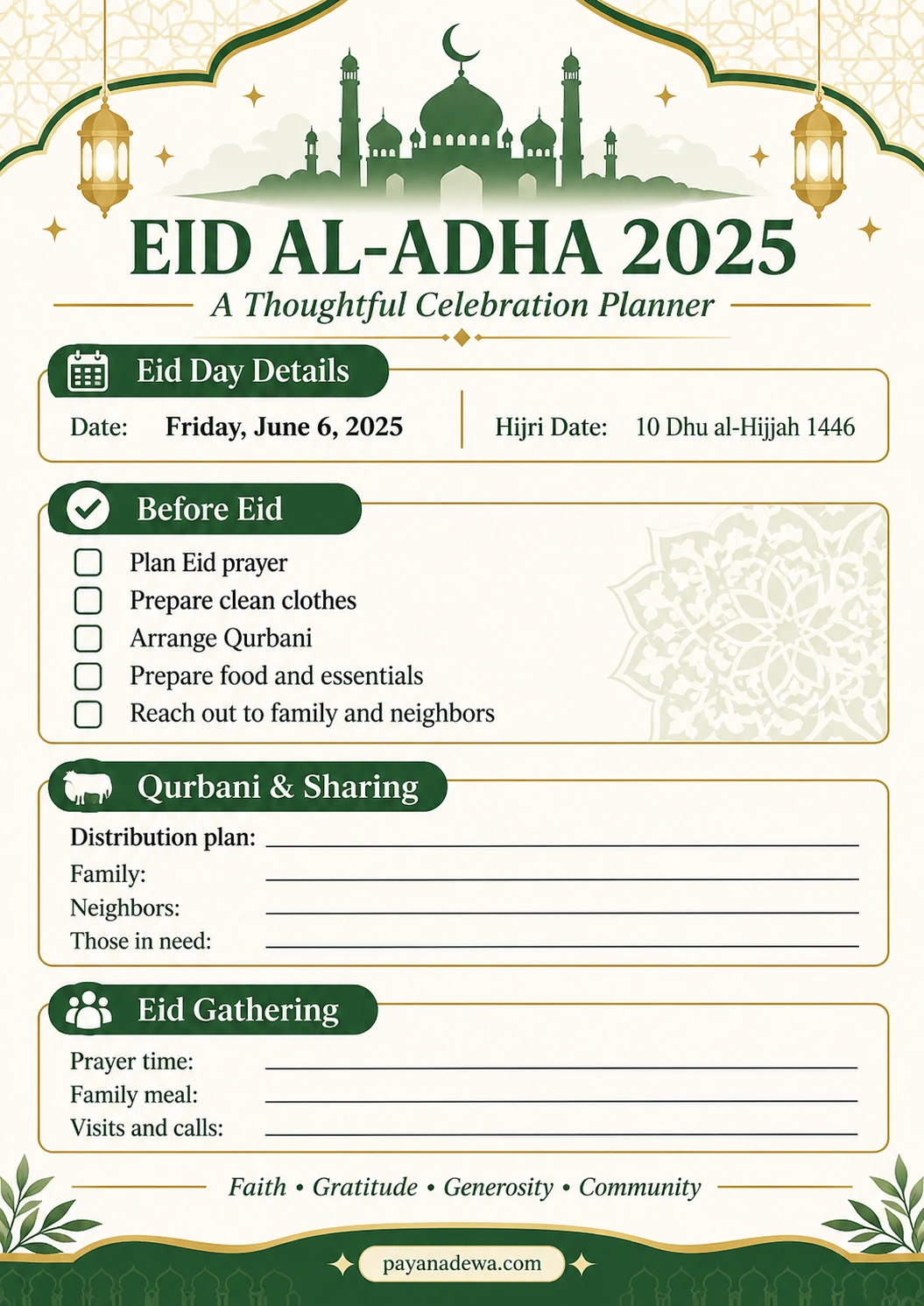
When Is Eid al-Adha 2025?
Eid al-Adha 2025 was celebrated on Friday, June 6, in Indonesia. This date corresponded to the 10th day of Dhu al-Hijjah 1446 AH, the final month of the Islamic lunar calendar.
However, the exact Gregorian date can differ between countries. Islamic authorities determine the beginning of each lunar month through moon sighting or approved astronomical methods. Therefore, Muslims should follow the official announcement in their respective countries.
Important Dates During Eid al-Adha 2025
- June 5, 2025: Day of Arafah, an important day of the Hajj pilgrimage.
- June 6, 2025: Eid al-Adha, the 10th of Dhu al-Hijjah.
- June 7–9, 2025: Following days of Tashriq, within the broader period of Eid observances.
These dates are particularly useful for understanding the religious calendar. They also help families plan prayers, Qurbani arrangements, and holiday activities.
What Is Eid al-Adha and Why Is It Important?
Eid al-Adha is one of the two major Islamic celebrations. The other is Eid al-Fitr, which marks the end of Ramadan. While Eid al-Fitr celebrates the completion of fasting, Eid al-Adha focuses on sacrifice, devotion, and sharing blessings.
The celebration commemorates Prophet Ibrahim’s willingness to sacrifice his son in obedience to Allah. Before the sacrifice took place, Allah provided a ram as a substitute.
This powerful story teaches several important lessons:
- Faith requires sincerity and complete trust in Allah.
- Obedience and patience are important parts of Islamic life.
- Gratitude helps Muslims appreciate their blessings.
- Generosity encourages people to support those in need.
Therefore, Eid al-Adha is much more than a religious holiday. It is an opportunity to strengthen faith and build stronger relationships within the community.
Understanding Qurbani During Eid al-Adha 2025
Qurbani, also known as Udhiya, is the religious sacrifice performed during Eid al-Adha. Eligible Muslims offer an animal as an act of worship and gratitude to Allah.
Depending on local Islamic guidelines, eligible animals include:
- Sheep and goats.
- Cows and cattle.
- Camels.
However, the animal must meet specific Islamic requirements. These include appropriate age, good physical condition, and proper treatment before slaughter.
How Is Qurbani Meat Distributed?
Sharing meat is an important part of Qurbani. Families commonly distribute portions to relatives, neighbors, and people experiencing financial difficulties.
As a result, more people can enjoy nutritious meals during the celebration. This tradition also encourages kindness and strengthens community relationships.
Many families arrange their sacrifice through local mosques or trusted Islamic organizations. These institutions can help manage the process and organize fair distribution.
How Muslims Celebrate Eid al-Adha 2025
Muslims celebrate Eid al-Adha through several religious and cultural activities. Although traditions differ between countries, the central values remain the same.
1. Attending the Eid Prayer
The celebration usually begins with Salat al-Eid, a special congregational prayer. Muslims gather at mosques or designated prayer grounds to worship together.
After the prayer, an Islamic sermon often reminds the congregation about sacrifice, gratitude, and compassion. Many people also greet one another and exchange warm wishes.
2. Performing Qurbani
Eligible Muslims perform Qurbani during the prescribed days. The sacrifice follows Islamic guidelines and must be carried out humanely.
Families can arrange the process independently or through reliable organizations. Nevertheless, they should always check the organization’s procedures and distribution policies.
3. Sharing Food With Others
Food sharing brings families and communities closer. In addition to distributing Qurbani meat, many households prepare meals for relatives and neighbors.
Furthermore, people often provide food packages to families who need additional support. These simple acts reflect the generous spirit of Eid.
4. Visiting Family and Friends
Family gatherings are another meaningful tradition. People visit their parents, relatives, and neighbors to exchange greetings and strengthen personal relationships.
Children often enjoy special meals, gifts, and time with their extended families. Meanwhile, adults use the occasion to reconnect with loved ones.
Eid al-Adha Traditions Around the World
Eid al-Adha is celebrated across many countries. Although the religious foundation is shared, local cultures create different food traditions and family activities.
Eid al-Adha in Indonesia
In Indonesia, people commonly call this celebration Idul Adha or Hari Raya Kurban. The day usually begins with congregational prayers, followed by Qurbani activities.
Community volunteers often work together to prepare and distribute meat. Popular dishes include sate kambing, gulai, and tongseng. These meals are enjoyed during family gatherings and neighborhood celebrations.
Eid al-Adha in the Middle East
In many Middle Eastern countries, families celebrate with traditional meals, charitable activities, and visits to relatives. Hospitality is especially important during this period.
People also exchange greetings such as Eid Mubarak. In addition, many communities organize food distribution programs for vulnerable families.
Eid al-Adha in South Asia
Countries such as Pakistan, Bangladesh, and India have distinctive Eid customs. Families prepare festive meals, wear special clothing, and participate in Qurbani.
Community members also distribute meat to neighbors and people experiencing financial hardship. Consequently, the celebration promotes unity and generosity.
How to Prepare for Eid al-Adha 2025
Preparing early makes the celebration easier and more enjoyable. A simple plan can help families organize their responsibilities and avoid unnecessary stress.
1. Organize Your Eid Schedule
First, check the local prayer schedule and plan your family activities. Set aside time for worship, visits, and community events.
2. Arrange Qurbani in Advance
Next, contact a trusted supplier or Islamic organization. Confirm the animal’s eligibility, payment details, and meat distribution arrangements.
3. Clean and Prepare Your Home
A clean home creates a welcoming environment for guests. Prepare your living space and organize a comfortable area for family gatherings.
4. Prepare Clothes and Essentials
Choose clean and comfortable clothing for Eid prayer. Also, prepare prayer essentials and other items your family may need.
5. Plan Charity Activities
Finally, consider supporting people in need. You can donate money, share food, or volunteer in a local community program.
Practical Tips for a Meaningful Eid Celebration
Eid al-Adha becomes more meaningful when families focus on its spiritual values. Here are several practical ways to make the occasion special:
- Begin with gratitude: Take time to pray and appreciate your blessings.
- Spend time with family: Visit parents, relatives, and friends.
- Practice generosity: Share food and support people experiencing hardship.
- Follow Islamic guidance: Make sure your Qurbani arrangements follow the rules of your community.
- Maintain cleanliness: Keep food preparation and distribution areas hygienic.
- Avoid food waste: Prepare reasonable portions and store food safely.
- Teach children about Eid: Explain the importance of faith, patience, and kindness.
Most importantly, remember that meaningful celebrations do not require expensive preparations. Small acts of kindness can create lasting positive memories.
Frequently Asked Questions About Eid al-Adha 2025
What date was Eid al-Adha 2025?
Eid al-Adha 2025 fell on Friday, June 6, in Indonesia. It marked the 10th day of Dhu al-Hijjah 1446 AH.
Why do Muslims celebrate Eid al-Adha?
Muslims celebrate Eid al-Adha to commemorate Prophet Ibrahim’s devotion and obedience to Allah. The occasion emphasizes faith, sacrifice, gratitude, and generosity.
What does Qurbani mean?
Qurbani refers to the religious sacrifice of an eligible animal during the prescribed days of Eid al-Adha. The meat is shared with relatives, neighbors, and people in need.
How long does Eid al-Adha last?
The main celebration begins on the 10th of Dhu al-Hijjah. The associated days of Tashriq continue through the 13th of Dhu al-Hijjah.
What should Muslims do during Eid al-Adha?
Muslims commonly attend Eid prayers, remember Allah, perform Qurbani if eligible, share food, visit relatives, and help people in need.
Conclusion: The True Meaning of Eid al-Adha 2025
Eid al-Adha 2025 was a meaningful celebration that brought Muslims together through faith, family traditions, and generosity. Observed on June 6 in Indonesia, the occasion commemorated Prophet Ibrahim’s devotion and highlighted the importance of sacrifice.
From attending special prayers to sharing Qurbani meat, every tradition offers an opportunity to practice kindness. Moreover, supporting people in need makes the celebration more meaningful for the entire community.
Ultimately, the true spirit of Eid al-Adha is not measured by expensive gifts or elaborate meals. Instead, it comes from sincere worship, gratitude, and compassion toward others.
May the lessons of Eid al-Adha inspire stronger relationships, greater generosity, and lasting kindness. Eid Mubarak!
Learn more: Visit the Indonesian Ministry of Religious Affairs for official information about Islamic holidays and religious announcements.