A bike is more than a simple way to travel. It can be a practical transportation option, an enjoyable hobby, a fitness companion, or a reliable way to explore new places. Whether you own a road bike, mountain bike, hybrid bike, commuter bike, or electric bike, keeping it organized and properly maintained can make every ride safer and more enjoyable. A well-planned Bike Template can help riders record maintenance tasks, track important bike information, plan riding goals, and build consistent habits.
For beginners, keeping track of tire pressure, chain condition, brake performance, cleaning, and regular servicing can sometimes feel complicated. A simple printable bike worksheet makes these responsibilities easier to manage. Instead of trying to remember when a component was last checked, you can write down the details and create a practical maintenance routine.
What Is a Bike Template?
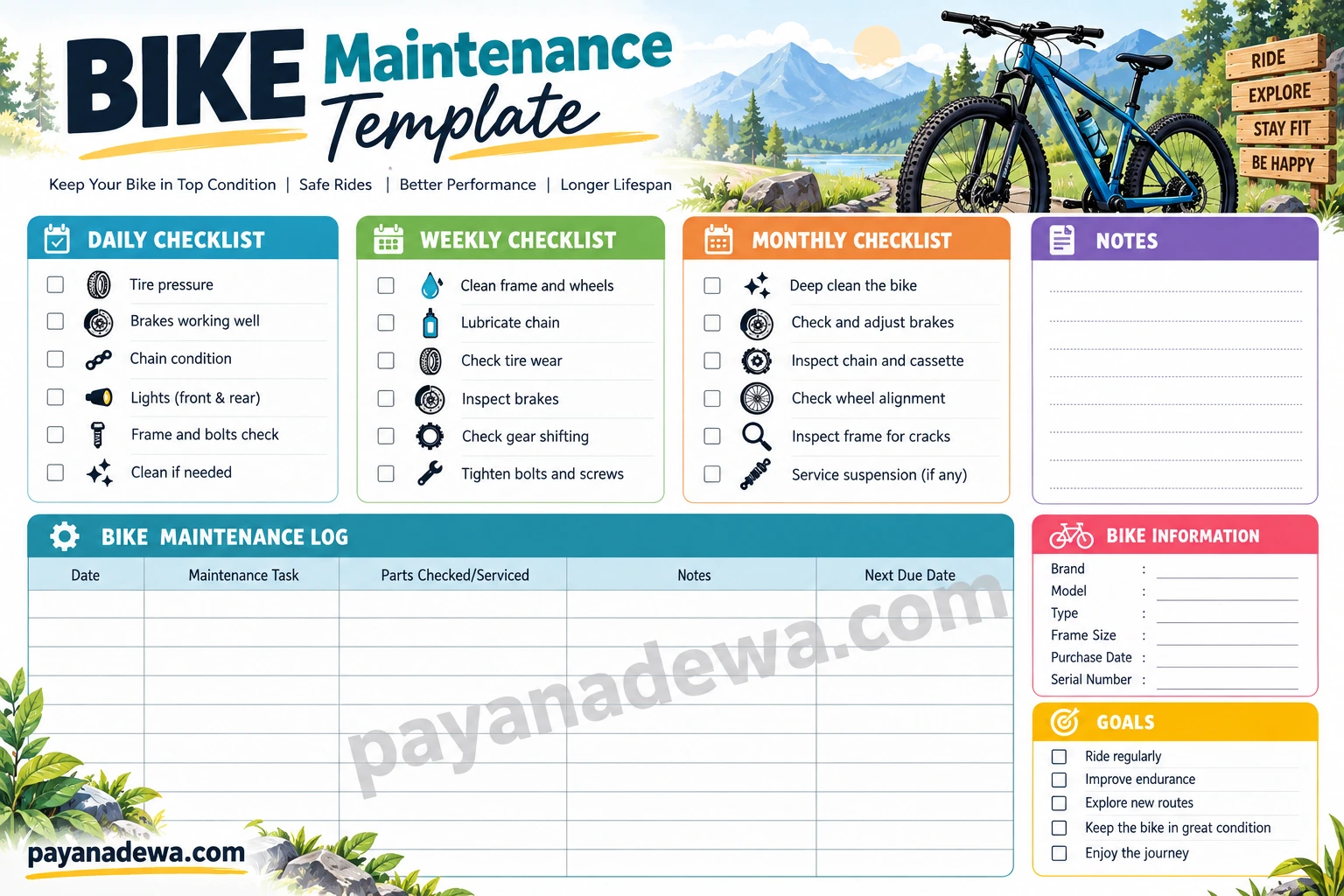
A Bike Template is a structured document that helps cyclists organize information related to a bike. Depending on its purpose, the template may include sections for bike specifications, maintenance schedules, repair records, riding goals, inspection checklists, and personal notes.
Instead of keeping maintenance information scattered across notebooks, phone notes, receipts, or memory, a dedicated template provides one convenient place to record everything. This is particularly useful for people who ride frequently and want to develop a consistent bike care routine.
Information You Can Record
A useful bike worksheet can include several types of information, such as:
- Bike brand and model
- Bike type and frame size
- Purchase date
- Serial number
- Tire pressure checks
- Brake inspections
- Chain cleaning and lubrication
- Gear adjustment records
- Wheel and tire inspections
- Repair and replacement history
- Future maintenance dates
- Personal riding goals
Why Use a Bike Maintenance Template?
Regular bike maintenance helps identify small problems before they become more inconvenient or expensive. A bike may appear to be working correctly while gradually developing worn brake pads, loose bolts, underinflated tires, or a dry chain. Recording routine checks makes it easier to notice changes over time.
Build a Consistent Maintenance Routine
One of the biggest advantages of a printable bike maintenance checklist is consistency. Riders can establish daily, weekly, and monthly inspection habits without relying entirely on memory.
For example, a quick pre-ride inspection can focus on tire pressure, brakes, wheels, and the chain. A weekly inspection can involve cleaning and lubrication, while a monthly check can be more detailed and include drivetrain components, fasteners, wheels, and the frame.
Keep Service Records Organized
A maintenance log can also provide a useful history of work performed on the bike. Recording the date, maintenance task, parts checked, observations, and next service date creates a simple reference for future decisions.
This information can be especially useful when replacing components. Instead of guessing when a chain, brake component, tire, or other part was last serviced, you can review your previous records.
Daily Bike Checklist
A daily bike inspection does not need to take a long time. A few simple checks before riding can help you identify obvious problems before starting your journey.
- Check tire pressure: Make sure both tires have appropriate pressure for the bike and riding conditions.
- Test the brakes: Squeeze the brake levers and confirm that the brakes respond properly.
- Inspect the chain: Look for unusual dirt, dryness, damage, or visible problems.
- Check lights: If you ride in low-light conditions, confirm that front and rear lights work.
- Inspect the frame: Look for cracks, unusual damage, or loose components.
- Check the wheels: Make sure the wheels appear secure and rotate normally.
A short inspection can become a natural part of preparing for a ride. The goal is not to perform a complete mechanical service every day, but to identify obvious issues that deserve attention.
Weekly Bike Maintenance
Weekly maintenance is more detailed than a quick pre-ride inspection. The exact schedule depends on how often and where you ride. A bike used daily in wet, muddy, or dusty environments may require more frequent cleaning and lubrication than a bike used occasionally on clean paved roads.
Clean the Bike
Dirt and road debris can accumulate around the frame, wheels, drivetrain, and other components. Cleaning the bike regularly helps keep these areas easier to inspect and can reduce the buildup of contaminants.
Lubricate the Chain
The chain should be clean before applying an appropriate bicycle chain lubricant. Avoid applying excessive lubricant because extra residue can attract dirt. Follow the instructions for the lubricant you use and wipe away excess product when appropriate.
Inspect Tires and Brakes
Look at the tire surface for unusual wear, cuts, embedded objects, or other visible damage. Also inspect the braking system and pay attention to changes in braking feel. If you notice a serious mechanical issue, have the bike inspected by a qualified bicycle mechanic.
Monthly Bike Inspection
A monthly inspection provides an opportunity to look beyond the basic checks. Riders can review the condition of the drivetrain, wheels, frame, fasteners, and other components.
- Deep clean the bike when necessary.
- Inspect the chain and cassette.
- Check wheel alignment and visible spoke condition.
- Inspect the frame for damage.
- Review brake adjustment and component condition.
- Check bolts and fasteners according to the manufacturer’s recommendations.
- Review suspension components if the bike is equipped with suspension.
These checks should be adjusted according to the bike manufacturer’s recommendations and the rider’s usage. A bicycle used for demanding terrain may need professional servicing more frequently.
How to Choose the Right Bike
Choosing a bike starts with understanding how and where you plan to ride. Different bike categories are designed around different riding environments and priorities.
Road Bikes
Road bikes are generally designed for paved surfaces and efficient longer-distance riding. They commonly feature lightweight frames, narrow tires, and riding positions designed around speed and efficiency.
Mountain Bikes
Mountain bikes are designed for trails and uneven terrain. They commonly feature wider tires, stronger components, and suspension systems depending on the model and intended use.
Hybrid Bikes
Hybrid bikes combine characteristics associated with road and recreational bikes. They can be suitable for commuting, casual riding, bike paths, and general-purpose cycling.
Electric Bikes
Electric bikes use an electric motor to provide assistance while riding. They can be useful for commuting, longer trips, hills, and riders who want additional support during cycling.
Bike Fit and Comfort
A properly adjusted bike can make riding more comfortable and efficient. Saddle height, handlebar position, reach, and other fit considerations can affect how the rider interacts with the bike.
If you experience persistent discomfort while riding, consider having your bike fit evaluated by a qualified professional. Small adjustments can sometimes make a significant difference, but the correct setup depends on the individual rider, bicycle, and riding style.
Practical Tips for Better Bike Care
Good maintenance is easier when it becomes part of a routine. Rather than waiting until something feels wrong, create simple habits around inspection and cleaning.
- Keep a basic bike maintenance checklist near your bike storage area.
- Record important repairs immediately after they are completed.
- Keep the bike clean enough that cracks and damage are easy to see.
- Use tools and maintenance products designed for bicycles.
- Follow manufacturer recommendations for components and service intervals.
- Do not ignore unusual noises, movement, or changes in braking and shifting.
- Ask a qualified bicycle mechanic for assistance with complex repairs.
- Review your maintenance log regularly to identify recurring problems.
Using a Bike Template for Riding Goals
A Bike Template does not have to focus entirely on maintenance. It can also help you establish personal cycling goals. Writing down realistic goals can make progress easier to monitor and can encourage consistency.
Examples of Cycling Goals
- Ride a specific number of times each week.
- Explore new cycling routes.
- Increase riding distance gradually.
- Improve endurance through consistent cycling.
- Keep the bike clean and maintained throughout the year.
- Track important maintenance milestones.
Goals should be realistic for your schedule, experience, equipment, and riding environment. The purpose of a tracking template is to make progress visible and manageable rather than create unnecessary pressure.
What to Include in a Printable Bike Template
If you are creating or customizing a printable bike worksheet, consider including sections that match your actual needs. A simple layout is often more useful than a complicated document filled with information you rarely use.
- Bike Information: Record brand, model, type, frame size, purchase date, and serial number.
- Daily Checklist: Include quick tire, brake, chain, wheel, and frame checks.
- Weekly Checklist: Add cleaning, lubrication, tire inspection, and adjustment tasks.
- Monthly Checklist: Include deeper inspections and service reminders.
- Maintenance Log: Record service dates, tasks, parts, notes, and future due dates.
- Notes: Keep space for observations, repair reminders, and questions for a mechanic.
- Goals: Track cycling objectives and personal riding plans.
When to Seek Professional Bike Service
Some maintenance tasks are appropriate for routine home care, while other repairs require specialized tools, knowledge, or inspection. If you are unsure whether a component is safe to use, professional advice is appropriate.
Consider professional service when you notice significant frame damage, serious wheel problems, persistent brake issues, complex drivetrain problems, suspension concerns, or other mechanical conditions that you cannot confidently diagnose and repair.
Safety should take priority over attempting a repair simply to avoid a service appointment. A maintenance template is an organizational tool; it does not replace professional mechanical inspection when one is needed.
Conclusion
A well-designed Bike Template can turn bike care from a task you try to remember into a simple and repeatable routine. By recording bike information, performing regular inspections, tracking maintenance, and setting practical riding goals, cyclists can stay more organized and understand their bike’s condition over time.
Whether you ride for commuting, fitness, recreation, adventure, or everyday transportation, a printable bike checklist can provide a convenient reference. Start with a few essential checks, keep accurate service records, and gradually customize your template around your riding habits. With consistent organization and responsible maintenance, you can make bike ownership easier while enjoying more confident and prepared rides.