A successful banquet, conference, wedding, corporate meeting, or special event depends on more than great food and an attractive venue. Every operational detail needs to be clearly communicated between the client, event planner, hotel, catering team, banquet staff, kitchen, and other departments. This is where a Banquet Event Order (BEO) becomes essential.
A BEO is a detailed event document that organizes important information about an upcoming function. It can include the event schedule, guest count, room setup, menu selections, beverage requirements, audiovisual equipment, special requests, billing instructions, and responsibilities. When prepared correctly, a banquet event order gives the entire team a shared reference for executing an event smoothly.
Whether you work in hotel management, catering, event planning, hospitality, or corporate event coordination, understanding how to create and use a BEO can improve communication and reduce costly mistakes. A well-structured Banquet Event Order template also makes it easier to standardize event planning and ensure that important details are not overlooked.
What Is a Banquet Event Order (BEO)?
A Banquet Event Order (BEO) is an official event planning document used by hotels, banquet facilities, restaurants, catering companies, and event venues. It communicates the specific requirements of an event to the departments responsible for delivering it.
The document typically transforms information from a client agreement or event contract into practical instructions for the operational team. Instead of relying on scattered emails, phone calls, or handwritten notes, staff can refer to one organized document.
A BEO may be created for a wide range of functions, including:
- Corporate meetings and conferences
- Wedding receptions
- Birthday and anniversary celebrations
- Private dinners
- Business luncheons and breakfasts
- Product launches
- Networking events
- Training sessions and seminars
- Holiday parties
- Charity and fundraising events
Why Is a Banquet Event Order Important?
Event operations involve many people working toward the same objective. Without clear documentation, small communication gaps can quickly become operational problems. A BEO provides a central source of information that helps teams understand what needs to happen, when it needs to happen, and who is responsible.
One of the biggest advantages is improved communication. The sales team can communicate client requirements to operations, while banquet managers can use the same document to coordinate setup, food service, timing, and staffing.
A detailed BEO can also help prevent issues such as incorrect guest counts, missing equipment, incorrect room layouts, wrong menu items, delayed service, or misunderstood special requests.
For clients, the BEO provides additional clarity because important arrangements can be reviewed before the event. This makes it easier to identify discrepancies and confirm that expectations are aligned.
Key Information to Include in a BEO
Although BEO formats vary between organizations, an effective document should contain enough information for the operational team to execute the event without constantly searching for clarification.
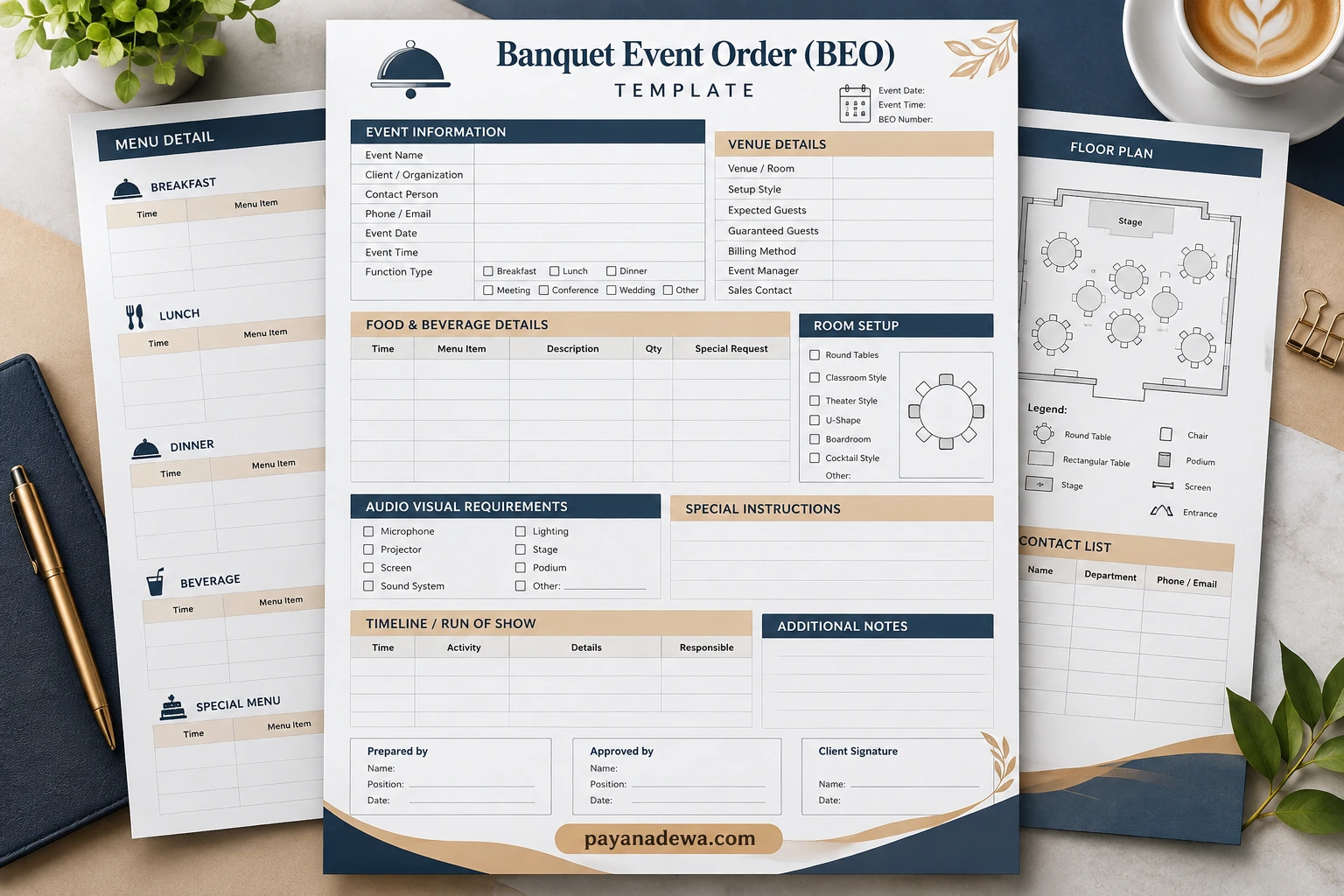
1. Event and Client Information
Start with the basic information needed to identify the event. Include the event name, client or organization, primary contact, phone number, email address, event date, and event time.
If the venue uses an internal booking or BEO number, include that reference as well. Clear identification becomes especially important when a venue handles multiple events on the same day.
2. Venue and Room Details
The BEO should identify the specific venue, ballroom, meeting room, dining area, or outdoor space where the event will take place. Include the expected number of attendees and the guaranteed guest count when applicable.
Room setup information is also important. Specify whether the room should use round tables, classroom seating, theater-style seating, boardroom arrangements, a U-shape, cocktail tables, or another configuration.
3. Food and Beverage Requirements
Food and beverage information is one of the most important sections of a banquet event order. Clearly document the selected menu, serving time, number of guests, quantities, and any special dietary requirements.
Depending on the event, the BEO may include breakfast, lunch, dinner, snacks, coffee breaks, appetizers, desserts, alcoholic beverages, non-alcoholic drinks, or specialty stations.
Dietary requirements should be documented clearly. Vegetarian, vegan, gluten-free, allergy-related, religious, and other special meal requests may require additional preparation and communication with the kitchen.
4. Room Setup and Equipment
A BEO should provide practical instructions for preparing the event space. This can include table arrangements, chairs, linens, staging, podiums, registration tables, dance floors, signage, and decorative elements.
For larger events, a floor plan can make the instructions even easier to understand. The combination of written instructions and visual room layouts can reduce confusion during setup.
5. Audio Visual Requirements
Modern events frequently require audiovisual equipment. Include all requested equipment and identify when it needs to be installed and tested.
- Microphones
- Projectors
- Projection screens
- Speakers and sound systems
- Lighting equipment
- Podiums
- Presentation displays
- Video conferencing equipment
- Stage equipment
If an external audiovisual provider is involved, include the appropriate contact details and access requirements so the venue team can coordinate efficiently.
How to Create an Effective Banquet Event Order
Start With Confirmed Event Information
Begin by collecting information from the signed agreement, event proposal, client communications, and venue booking system. Avoid entering assumptions into the BEO. Information should be confirmed before it becomes an operational instruction.
Organize Details by Operational Category
Group information into logical sections such as event details, venue setup, catering, beverages, audiovisual requirements, timeline, special instructions, and billing. This structure allows staff to find information quickly.
Create a Detailed Timeline
A clear event timeline can be one of the most useful parts of a BEO. List important activities in chronological order, including room access, setup, guest arrival, meal service, speeches, presentations, entertainment, breaks, and event conclusion.
Assign responsibility when appropriate. For example, the timeline can identify whether the banquet captain, kitchen team, event planner, audiovisual technician, or client representative is responsible for a particular task.
Document Special Instructions Clearly
Special requests should never be buried in an email thread. Include them directly in the BEO so the relevant team members can see them during preparation and service.
Examples include VIP arrangements, accessibility requirements, surprise announcements, customized menus, special decorations, preferred service timing, branded materials, or specific seating arrangements.
Banquet Event Order Template Best Practices
A reusable Banquet Event Order template can make event administration faster and more consistent. However, the template should remain flexible enough to accommodate different event types.
- Keep the layout organized: Use clear headings and logical sections.
- Use consistent terminology: Make instructions easy for every department to understand.
- Highlight critical details: Make guest counts, timing, allergies, and special requirements easy to locate.
- Include approval fields: Allow responsible people to confirm important details.
- Use version control: Identify the latest version when event details change.
- Review before distribution: Check the BEO for missing or conflicting information.
Common Mistakes to Avoid When Preparing a BEO
Even experienced event teams can encounter problems when information is incomplete or outdated. Avoiding common mistakes can make the document significantly more useful.
Using Outdated Guest Numbers
Guest counts may change as the event approaches. Make sure the operational team knows which number is the current expected attendance and which number represents the guaranteed count.
Leaving Timing Details Vague
Instructions such as “set up before guests arrive” are less useful than a specific setup deadline. Precise times help departments coordinate their work.
Forgetting Dietary Requirements
Food allergies and dietary preferences should be recorded prominently. A missed dietary request can create a serious service problem and negatively affect the guest experience.
Failing to Update Changes
Event information can change several times before the event date. When a revision occurs, make sure the updated BEO reaches every department that depends on the changed information.
Benefits of Using a Digital BEO Template
A digital BEO can provide additional flexibility compared with paper-based event documentation. Teams can update information more efficiently, share revisions, store previous event records, and search for specific details.
Digital templates can also be adapted for different types of events. A hotel may maintain separate versions for weddings, corporate meetings, conferences, social events, and large banquets while keeping the core structure consistent.
When multiple departments use the same current version, the risk of conflicting information can be reduced. Digital workflows can also make approvals and internal communication easier.
Practical Tips for Better BEO Management
Good BEO management is not simply about creating a detailed document. The information must also be reviewed and communicated effectively.
- Confirm major event details with the client before finalizing the BEO.
- Review the guest count and menu selections before the event.
- Verify room setup against the latest floor plan.
- Confirm audiovisual equipment and technical requirements.
- Review special dietary and accessibility requirements.
- Share the final BEO with all relevant operational departments.
- Keep a record of approved revisions.
- Conduct a final pre-event review with responsible staff.
Who Uses a Banquet Event Order?
A BEO can be useful to many members of an event operation. The sales team may use it to confirm what has been sold, while event managers use it to coordinate execution.
Banquet captains can refer to the document during setup and service. The kitchen uses food and beverage information to prepare production. Housekeeping or setup teams may use room arrangement details, while audiovisual teams can review technical requirements.
The client or event organizer can also review the document to confirm that the venue understands the agreed requirements.
Final Checklist Before an Event
Before distributing the final Banquet Event Order, perform a quick review of the most important operational details.
- Event date and time are correct.
- Venue and room assignment are correct.
- Expected and guaranteed guest counts are documented.
- Menu and beverage selections are confirmed.
- Dietary requirements are listed.
- Room setup matches the event requirements.
- Audio visual equipment is documented.
- Special instructions are clearly written.
- Event timeline is complete.
- Responsible contacts are identified.
- Latest revisions have been distributed.
- Required approvals and signatures are complete.
Conclusion
A Banquet Event Order (BEO) is an essential communication tool for professional event operations. By bringing event information, catering requirements, room setup, audiovisual needs, schedules, special instructions, and responsibilities into one organized document, a BEO helps teams work from the same information.
A well-designed Banquet Event Order template can save time, improve communication, reduce preventable mistakes, and create a more consistent planning process. Whether you manage hotel banquets, corporate meetings, weddings, conferences, or private functions, using a structured BEO can make complex event requirements easier to organize and execute.
The most effective approach is to keep every detail clear, current, practical, and easy for the operational team to use. With a reliable BEO workflow, event planners and hospitality teams can turn client requirements into a well-coordinated event experience.