An Appraisal Form is a practical tool used to evaluate an employee’s performance, skills, achievements, and areas for improvement. When designed properly, it helps managers conduct structured performance reviews and gives employees clear feedback about their work and professional development.
A well-organized employee appraisal form can also make performance discussions more consistent. Instead of relying only on memory or informal opinions, managers can review specific criteria such as job knowledge, productivity, communication, teamwork, problem-solving, and professionalism.
Whether you are an HR professional, business owner, manager, or team leader, using a clear performance appraisal template can simplify the review process and create a useful record of employee progress.
What Is an Appraisal Form?
An appraisal form is a structured document used to assess an employee’s performance during a specific review period. It usually contains employee information, performance criteria, rating scales, comments, strengths, improvement areas, future goals, and signatures.
The form provides a consistent framework for performance evaluations. It can be used for annual reviews, quarterly assessments, probation reviews, promotion discussions, or other employee development meetings.
A typical appraisal form may evaluate areas such as:
- Job knowledge and technical skills
- Quality of work
- Productivity and efficiency
- Communication skills
- Teamwork and collaboration
- Problem-solving abilities
- Initiative and dependability
- Professionalism and workplace behavior
The exact categories can be customized based on the employee’s role, department, company objectives, and evaluation period.
Why Use an Employee Appraisal Form?
Employee evaluations can become inconsistent when managers do not have a standard process. An appraisal form creates a common structure that makes performance discussions easier to organize.
1. Creates a Consistent Evaluation Process
A standardized performance appraisal form gives managers the same general framework for evaluating employees. This can make it easier to compare performance against established expectations and job responsibilities.
2. Provides Clear Feedback
Employees need to understand what they are doing well and where they can improve. A structured form provides space for specific comments rather than relying on vague statements.
3. Supports Employee Development
A good appraisal should not focus only on past performance. It should also identify future goals, training needs, and development opportunities. This makes the performance review more useful for both employees and managers.
4. Documents Performance Discussions
Completed appraisal forms provide a written record of performance discussions. Organizations can use these records to track progress over time and support ongoing employee development processes.
Key Sections of an Appraisal Form
The best appraisal form templates are easy to understand and contain the information needed for a productive review. The following sections are commonly included.
Employee Information
The first section should identify the employee and the review period. Useful fields include the employee’s name, job title, department, employee ID, manager, hire date, and appraisal date.
This information makes each completed evaluation easier to organize and reference later.
Performance Evaluation
The performance evaluation section contains the main assessment criteria. A rating scale can help managers indicate the employee’s performance level for each category.
For example, a five-point rating system may include Excellent, Good, Average, Fair, and Poor. Organizations can use different terminology if it better fits their performance management system.
Adding a comments field beside each criterion is especially useful. It encourages managers to explain the reasoning behind a rating and provide examples of actual performance.
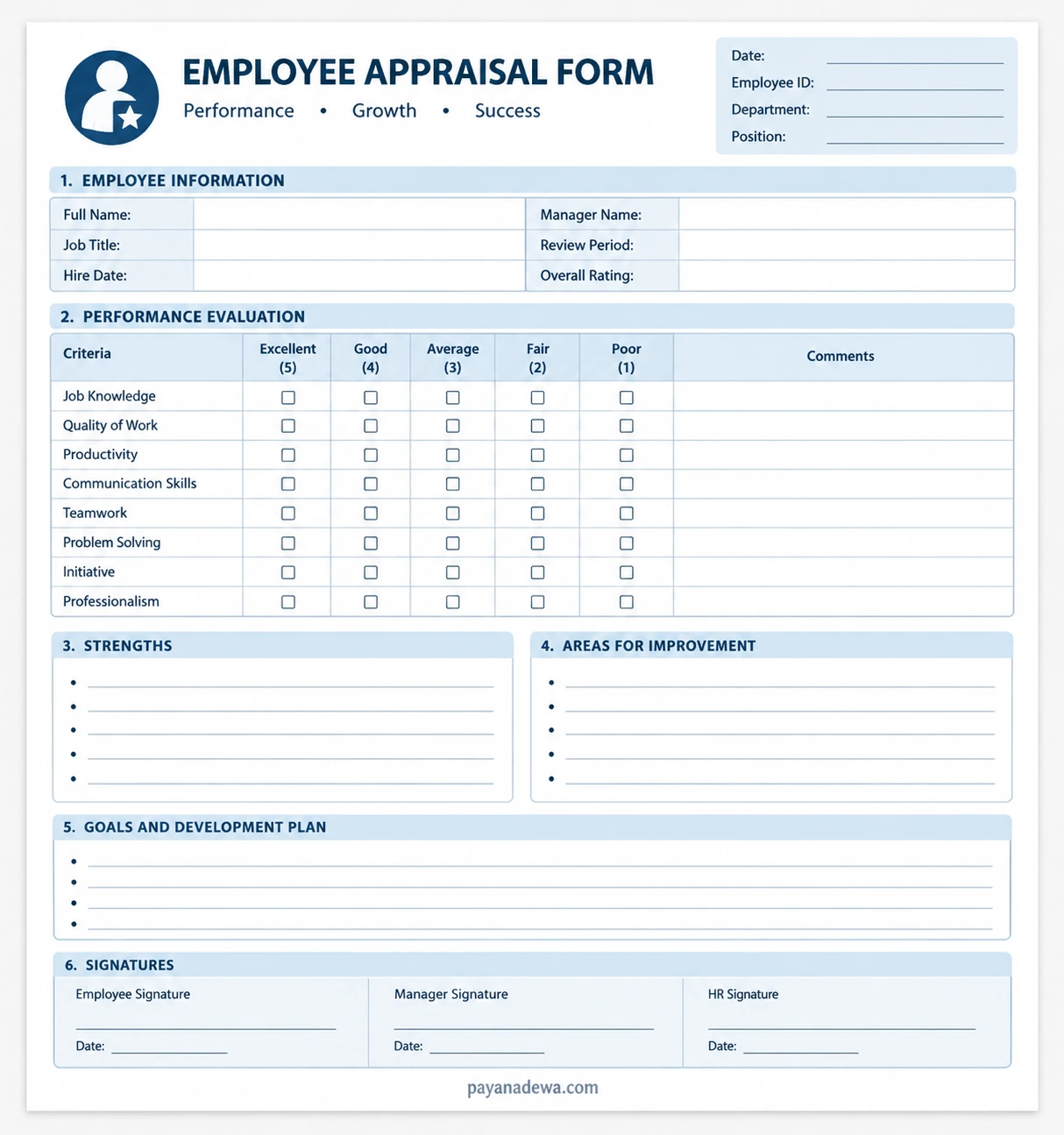
A dedicated strengths section allows the reviewer to recognize positive contributions. Examples may include strong communication, reliable performance, leadership, creativity, customer service, technical expertise, or effective teamwork.
Specific examples make positive feedback more meaningful. Instead of simply writing “good communication,” a manager can describe how the employee successfully communicated project requirements to the team.
Areas for Improvement
Constructive feedback is another important part of an employee performance review. The appraisal should identify areas that need attention without making the discussion unnecessarily negative.
Improvement areas should be specific and practical. For example, “improve time management” can be made more useful by identifying a particular issue, such as meeting project deadlines or prioritizing competing tasks.
Goals and Development Plan
Future goals help connect the appraisal process with employee growth. Goals can focus on performance, skills, responsibilities, training, leadership, or career development.
Whenever possible, goals should be clear and measurable. A useful development plan can specify what needs to be achieved, how success will be measured, and when progress should be reviewed.
Signatures and Dates
Signature fields can confirm that the employee and manager participated in the review process. Depending on the organization, an HR representative may also sign the completed appraisal.
A signature does not necessarily mean that everyone agrees with every evaluation statement. It can simply document that the review was presented and discussed.
How to Complete an Appraisal Form Effectively
Completing an appraisal form should involve more than selecting ratings. The most useful evaluations are based on observable performance and relevant examples.
Review the Entire Evaluation Period
Consider the employee’s performance throughout the full review period. Avoid focusing only on a recent success or mistake. Reviewing projects, responsibilities, feedback, and achievements can provide a more balanced picture.
Use Specific Examples
Whenever possible, support comments with specific examples. Explain what happened, what the employee did, and what result was achieved.
Specific feedback is easier for employees to understand and use for future improvement.
Focus on Job-Related Performance
Evaluation criteria should relate directly to the employee’s responsibilities and established workplace expectations. Avoid including unrelated personal judgments.
Balance Positive and Constructive Feedback
A productive performance review recognizes achievements while also addressing areas that require improvement. Employees should leave the discussion with a clear understanding of both their strengths and their next development priorities.
How to Choose the Right Appraisal Form Template
Not every organization needs the same type of performance evaluation form. The best template depends on the size of the organization, employee roles, review frequency, and evaluation goals.
Before choosing a template, consider the following:
- Job requirements: Include criteria that are relevant to the employee’s actual responsibilities.
- Evaluation frequency: Choose a format that works for annual, quarterly, monthly, or probation reviews.
- Rating system: Select a rating scale that managers can apply consistently.
- Comment space: Allow enough room for useful examples and feedback.
- Development goals: Include a section for future objectives and training needs.
- Ease of use: Keep the layout simple enough to complete without confusion.
Tips for Creating a Better Performance Appraisal
A template is only one part of an effective appraisal process. The quality of the conversation and feedback also matters.
Set Expectations Before the Review
Employees should know what performance standards they are expected to meet. Clear expectations make later evaluations easier and more transparent.
Encourage Two-Way Communication
Performance reviews should not be treated as one-sided conversations. Give employees an opportunity to discuss achievements, challenges, resources, career goals, and questions about their evaluation.
Keep Feedback Actionable
Feedback should help employees understand what they can do next. Instead of simply identifying a weakness, discuss practical steps that can support improvement.
Follow Up After the Appraisal
The appraisal should not be the end of the performance management process. Schedule follow-up discussions to review goals, progress, training, and challenges.
Digital vs Printable Appraisal Forms
An appraisal form can be used as a printable document or converted into a digital form. Both approaches can be useful depending on the organization’s workflow.
Printable forms are convenient for face-to-face meetings, handwritten notes, and organizations that prefer physical records. Digital forms can make it easier to store evaluations, search records, share documents, and manage large numbers of employees.
Organizations may also combine both approaches. For example, a manager can complete a digital evaluation before meeting with an employee and then use the same structure during the performance discussion.
Common Mistakes to Avoid
A poorly designed evaluation can reduce the value of the appraisal process. Avoid these common mistakes:
- Using vague performance criteria
- Giving ratings without supporting examples
- Focusing only on recent events
- Ignoring employee achievements
- Including irrelevant personal judgments
- Setting goals that are unclear or impossible to measure
- Failing to follow up after the review
A clear and practical appraisal form can help prevent many of these problems by giving managers a structured place to record relevant information.
Benefits of Using a Printable Appraisal Form Template
A printable appraisal form template can save time when creating employee evaluation documents from scratch. It provides a ready-made structure that can be adapted to different departments and roles.
A well-designed template also makes the evaluation process easier to follow. Managers can move through employee information, performance criteria, feedback, development goals, and signatures in a logical order.
For small businesses and teams without a complex HR system, a simple employee appraisal template can provide a practical starting point for establishing a more organized performance review process.
Final Thoughts on Appraisal Forms
An Appraisal Form is more than a document for assigning performance ratings. When used effectively, it can support communication, employee development, goal setting, and continuous improvement.
The most useful appraisal forms are clear, relevant, and easy to complete. They include measurable performance criteria, space for specific feedback, areas for improvement, and a development plan for the future.
Whether you need an annual employee evaluation form, performance review template, staff appraisal form, or printable employee assessment document, starting with a structured template can make the process more organized and efficient.
Customize the criteria to match your organization’s needs, provide specific feedback, and use the completed appraisal as a foundation for meaningful conversations about performance and professional growth.