Writing an autobiography can be one of the most meaningful ways to document your life, memories, experiences, achievements, challenges, and personal growth. However, starting with a blank page can feel overwhelming. An autobiography template gives you a clear structure so you can organize important moments and turn scattered memories into a readable personal story.
Whether you are writing for a school assignment, family history project, personal journal, professional portfolio, or long-term keepsake, a structured approach can make the process much easier. Instead of wondering what to write next, you can work through key stages of your life one section at a time.
This guide explains what an autobiography is, what to include, how to organize your story, and how to use a template to create an engaging narrative that sounds authentic and personal.
What Is an Autobiography?
An autobiography is a written account of a person’s life told by that person. Unlike a biography, which is written by someone else, an autobiography uses the author’s own perspective to describe experiences, relationships, decisions, accomplishments, setbacks, and lessons learned.
A good autobiography is more than a list of dates and events. It connects experiences and explains why certain moments mattered. Personal details, emotions, reflections, and lessons can help readers understand the person behind the events.
Autobiography vs Biography
The main difference is the narrator. An autobiography is written by the person whose life is being described, while a biography is written by another person. An autobiography can therefore include personal thoughts and first-hand reflections that may not appear in an externally written life story.
Why Use an Autobiography Template?
An autobiography template provides a practical framework for collecting information before turning it into polished paragraphs. It can be especially useful if you have many memories but are unsure how to arrange them.
- Creates structure: It gives your story a logical beginning, middle, and ending.
- Saves time: Prompts help you identify the information you need without starting from scratch.
- Improves organization: Important memories can be grouped into themes or periods of your life.
- Encourages reflection: Questions about challenges, achievements, and lessons can add depth.
- Supports different projects: A template can be adapted for students, adults, families, professionals, and personal keepsakes.
The goal is not to make every autobiography look identical. Instead, a template should serve as a flexible starting point that you can personalize with your own voice and experiences.
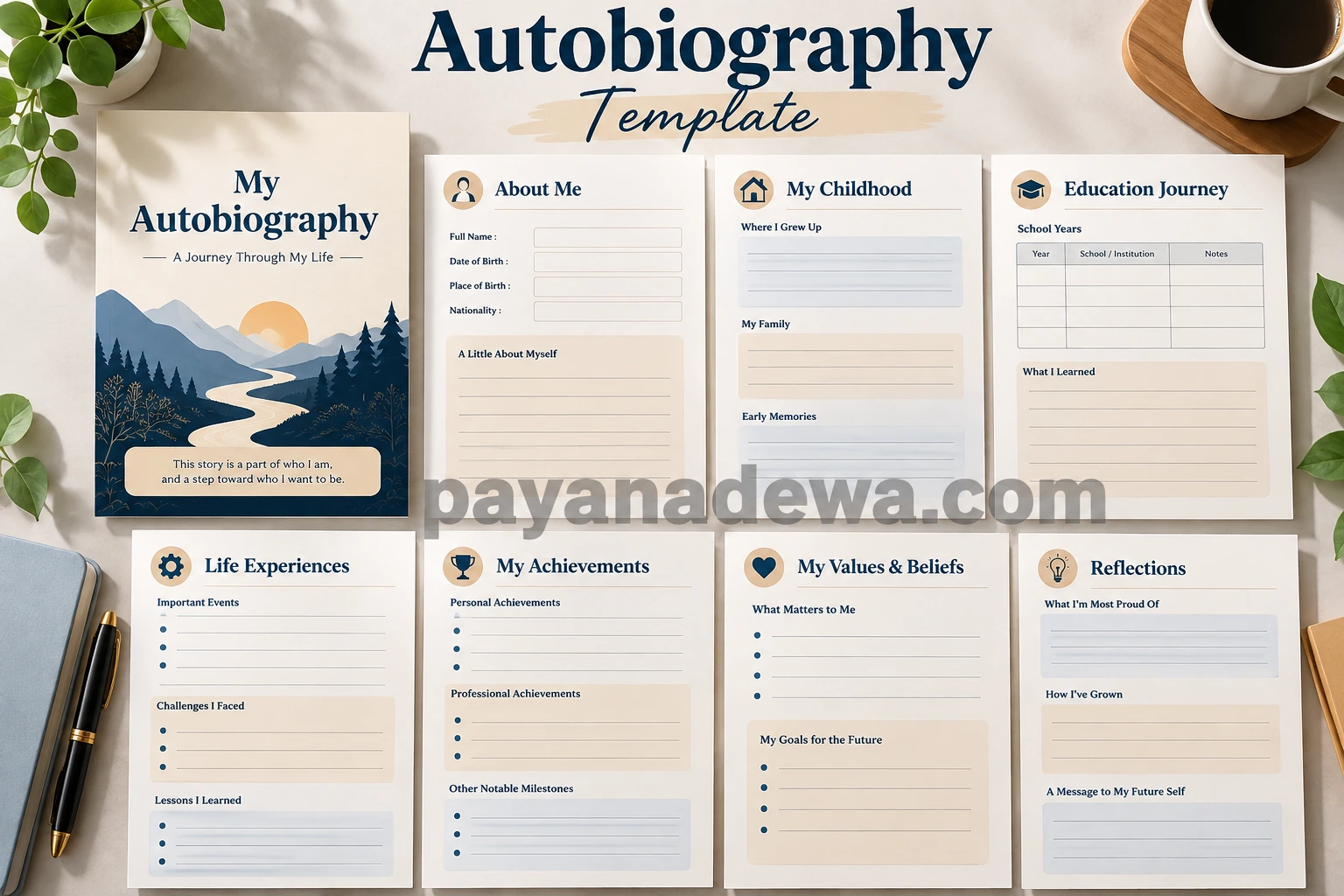
What to Include in an Autobiography
A strong life story usually combines factual information with personal reflection. You do not need to include every event that has happened in your life. Instead, focus on experiences that shaped your identity, influenced your choices, or taught you something important.
1. Personal Background
Begin with basic information that introduces you to the reader. Depending on the purpose of your autobiography, this section may include your name, date and place of birth, family background, hometown, cultural influences, and a short description of yourself.
2. Childhood Memories
Childhood often provides the foundation for an autobiography. Describe where you grew up, the people who influenced you, favorite activities, memorable experiences, and early dreams. Specific details can make these memories more vivid.
3. Education and Learning
Explain your educational journey and highlight experiences that affected your interests or future direction. You can mention schools, teachers, subjects, friendships, extracurricular activities, and important lessons that extended beyond the classroom.
4. Major Life Experiences
Choose significant events that changed your perspective or influenced your path. These may include moving to a new place, starting a career, meeting an important person, overcoming a challenge, discovering a passion, or reaching a major milestone.
5. Achievements and Milestones
Achievements do not have to be limited to awards or professional success. Completing a difficult goal, helping others, learning a new skill, building meaningful relationships, or overcoming a personal obstacle can all be important milestones.
6. Values and Beliefs
Explain the principles that guide your decisions. You can discuss values such as honesty, persistence, creativity, kindness, responsibility, independence, family, education, or service. Give examples that demonstrate how these values developed.
7. Lessons and Reflections
Reflection gives an autobiography emotional depth. Consider what you have learned from success and failure, how your priorities have changed, and which experiences helped shape the person you are today.
How to Write an Autobiography Step by Step
Step 1: Collect Your Memories
Start by making a timeline of important moments. Do not worry about writing perfect sentences yet. Record names, places, dates, events, feelings, and details that you remember.
Step 2: Choose the Most Meaningful Events
Review your timeline and select experiences that contribute to your overall story. Ask yourself why each event matters. If a memory does not add information, emotion, context, or insight, it may not need a large section.
Step 3: Organize Your Story
Many autobiographies use chronological order, beginning with childhood and moving toward the present. However, you can also organize your story around themes such as family, education, career, creativity, relationships, challenges, or personal growth.
Step 4: Add Personal Details
Use sensory and specific details where appropriate. Instead of simply saying that you enjoyed school, explain what made the experience memorable. A short description of a classroom, conversation, place, or feeling can make your writing more engaging.
Step 5: Explain the Meaning Behind Events
After describing an important experience, explain what you learned from it. This reflection helps readers understand how an event influenced your beliefs, decisions, relationships, or goals.
Step 6: Revise and Proofread
After completing your first draft, read the autobiography from beginning to end. Remove unnecessary repetition, improve transitions, check dates and names, and correct grammar and spelling. Reading the story aloud can also help you identify awkward sentences.
Tips for Making an Autobiography More Engaging
- Write in your natural voice: Your personality should be visible in the language you use.
- Use specific examples: Concrete moments are usually more memorable than broad statements.
- Balance facts and reflection: Tell readers what happened and why it mattered.
- Be selective: Focus on experiences that contribute to your overall story.
- Use clear transitions: Help readers understand how one stage of your life connects to another.
- End with reflection: Consider what your experiences mean to you now and what you hope to do next.
Autobiography Ideas for Different Purposes
For Students
A student autobiography can focus on childhood memories, family, school experiences, friendships, interests, accomplishments, challenges, and future ambitions. Simple prompts can help younger writers develop ideas before creating full paragraphs.
For Adults
An adult autobiography can explore education, career development, relationships, major decisions, personal challenges, accomplishments, values, and turning points. It can also become a meaningful family history document.
For Professional or Portfolio Use
A professional life story may emphasize career milestones, skills, leadership experiences, projects, accomplishments, and lessons learned. Keep the tone appropriate for the intended audience while retaining a personal perspective.
Common Mistakes to Avoid
One common mistake is turning an autobiography into a simple list of events. Readers need context and reflection to understand why those events matter. Another problem is trying to include every detail. A focused story is often easier to follow than a complete record of every day.
It is also helpful to avoid exaggerated claims, unclear timelines, excessive repetition, and long sections that do not move the story forward. Keep the information accurate and distinguish memories from facts when exact details are uncertain.
How an Autobiography Template Can Help You Finish Faster
A template works best when you treat it as a planning tool rather than a rigid form. Fill in short notes first, then expand the most important answers into paragraphs. This approach reduces the pressure of writing a complete life story in one sitting.
You can also save your completed template and update it over time. New achievements, relationships, lessons, and goals can become part of a living personal record. For families, an autobiography template can preserve stories that might otherwise be forgotten.
Conclusion
An autobiography is a personal record of the experiences, people, decisions, challenges, and lessons that shape a life. With a well-organized autobiography template, the writing process becomes easier because you can develop your story section by section.
Start with your background, explore meaningful memories, describe important milestones, and finish by reflecting on what you have learned. Most importantly, write honestly and use your own voice. Your experiences are what make the story unique, and a thoughtful structure can help those experiences become a clear and memorable life story.