An Appointment Letter is a formal document from an employer to a selected candidate. It confirms the candidate’s appointment to a specific job. It also explains important employment terms.
For example, an appointment letter may include the job title, start date, salary, working hours, and reporting manager. It can also explain company policies and other employment conditions.
A clear appointment letter helps both sides understand the job. It also creates a useful written record. Therefore, employers should make the document clear, accurate, and easy to read.
This guide explains what an appointment letter is, what it should contain, and how to write one. It also includes a practical appointment letter template that you can customize.
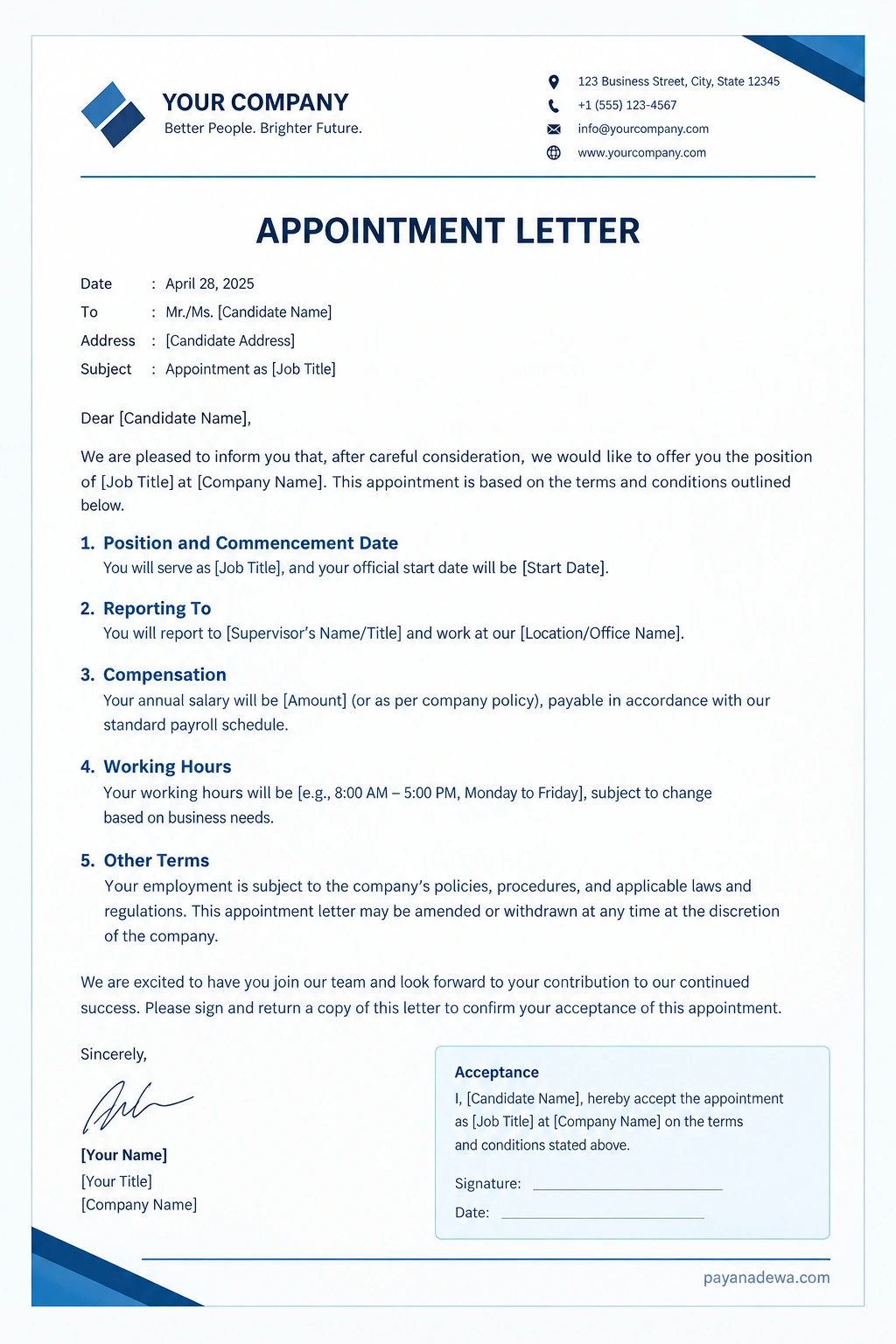
What Is an Appointment Letter?
An appointment letter is a formal employment document. A company usually gives it to a candidate after selecting them for a position.
The letter confirms the employee’s job appointment. It also provides important information about the position and employment terms.
Depending on the company, it may also be called an employment appointment letter, job appointment letter, or appointment confirmation letter.
The exact format can vary. However, most appointment letters contain similar information. The goal is simple: both the employer and employee should understand the main terms of the job.
Why Is an Appointment Letter Important?
An appointment letter makes the hiring process more organized. It gives the employee clear information before they start work.
It also helps the employer communicate important conditions in writing. As a result, both parties have a document they can refer to later.
A good appointment letter can:
- Confirm the job: It confirms the employee’s appointment to a specific position.
- Define the role: It identifies the job title and reporting structure.
- Explain compensation: It can state salary and other applicable payments.
- Confirm the start date: It tells the employee when they should begin work.
- Explain working conditions: It can include working hours and location.
- Create a written record: Both parties can keep a copy for future reference.
What Should an Appointment Letter Include?
A professional appointment letter should contain the information needed to understand the employment arrangement. The exact content depends on the company and the position.
However, several sections are common in most appointment letters.
1. Company Information
Start with the company name and contact details. You can also use official company letterhead.
The header may include the company address, phone number, email address, and website. This information helps identify the employer clearly.
2. Date of the Letter
Add the date when the appointment letter is issued. Use a clear date format to avoid confusion.
3. Employee Information
Include the candidate’s full name. You may also include the employee’s address or other relevant details.
4. Job Title
Clearly state the position offered to the employee. If needed, include the department or business unit.
For example, the position could be Marketing Executive, Sales Manager, or Graphic Designer.
5. Start Date
State the employee’s expected start date. A clear start date helps both sides prepare for the first working day.
6. Reporting Manager
Identify the manager or supervisor who will oversee the employee’s work. This makes the reporting structure clear.
7. Salary and Compensation
Explain the agreed salary or compensation. If applicable, include allowances, bonuses, commissions, or other benefits.
Use clear terms. Also, make sure the information matches the company’s official employment records.
8. Working Hours
State the normal working schedule. For example, you may mention the daily working hours and working days.
If the position uses shifts or flexible hours, explain the arrangement clearly.
9. Work Location
Include the main work location when relevant. For remote positions, explain the remote working arrangement.
10. Employment Terms
The letter may include important employment conditions. These can include probation, confidentiality, company policies, leave rules, and notice requirements.
Keep these terms clear. When necessary, refer to the company’s employee handbook or other official documents.
11. Acceptance and Signature
Finally, include an acceptance section. The employee can sign and date the letter to confirm their acceptance.
Appointment Letter Format
A simple appointment letter format should follow a logical order. This makes the document easy to read.
A basic structure can include:
- Company name and contact details
- Date of issue
- Employee name and address
- Subject or appointment heading
- Greeting
- Appointment confirmation
- Job title and department
- Start date
- Reporting manager
- Salary and compensation
- Working hours and location
- Terms and conditions
- Closing statement
- Employer signature
- Employee acceptance and signature
This structure provides a useful starting point. You can then adjust the sections for your company and position.
How to Write an Appointment Letter
Writing an appointment letter is simple when you follow a clear process. First, collect all the correct employment details.
Step 1: Add the Company Details
Begin with the company’s official name and contact information. Use company letterhead if available.
Step 2: Add the Employee Details
Enter the employee’s full name and other required information. Check the spelling carefully.
Step 3: Confirm the Job Position
State the exact job title. Also, mention the department when necessary.
Step 4: Add the Start Date
Clearly state when the employee will begin work. Make sure this date matches the hiring records.
Step 5: Explain Compensation
Add the agreed salary and other relevant compensation details. Keep the wording simple and specific.
Step 6: Explain Working Conditions
Include working hours, work location, and reporting information. Also, mention any special working arrangements.
Step 7: Add Employment Terms
Include relevant company policies and employment conditions. Only add information that applies to the position.
Step 8: Add the Acceptance Section
Give the employee a clear way to accept the appointment. Add signature and date fields when required.
Appointment Letter vs Offer Letter
An appointment letter and an offer letter are closely related. However, companies may use them at different stages of hiring.
An offer letter usually presents an employment offer. It may include the position, salary, and basic conditions.
An appointment letter often confirms the employee’s appointment. It may also provide more information about the employment arrangement.
However, terminology differs between companies and countries. Some organizations use the two terms interchangeably.
Therefore, always check the actual content of the document. The title alone does not explain every legal or contractual detail.
Appointment Letter Example
A typical appointment letter starts with a formal confirmation. For example, the employer can state that the candidate has been appointed to a specific position.
The letter can then explain the start date, reporting manager, salary, and working hours. It may also include company policies and other employment conditions.
The final section can ask the employee to confirm acceptance. The employee can then sign and date the document.
Every company can adapt the wording to suit its hiring process. However, the information should remain accurate and easy to understand.
Tips for Creating a Professional Appointment Letter
A professional appointment letter should be clear from the first line to the final signature. Use the following tips when preparing your document.
- Use simple language: Avoid unnecessary technical or complicated wording.
- Keep sentences short: Short sentences are easier to understand.
- Check employee details: Verify the name, position, and contact information.
- Check salary details: Make sure the compensation matches the agreed terms.
- Confirm the start date: Check the date before sending the letter.
- Use clear headings: Headings make long documents easier to scan.
- Keep the layout clean: Use consistent spacing and formatting.
- Use company branding: Official branding creates a professional appearance.
- Review the document: Check grammar, spelling, dates, and numbers.
- Keep a signed copy: Store the completed document in the appropriate company records.
Common Appointment Letter Mistakes
Small mistakes can create confusion. Therefore, review the appointment letter before sending it.
Common mistakes include:
- Incorrect employee name
- Incorrect job title
- Missing start date
- Unclear salary information
- Incorrect working hours
- Missing work location
- Unclear reporting structure
- Missing acceptance instructions
- Inconsistent employment terms
- Spelling and formatting errors
A final review can prevent many of these problems. If possible, ask an HR professional or authorized manager to review the document.
What Should Employees Check Before Signing?
Employees should read an appointment letter carefully before signing it. The document should match the main details discussed during the hiring process.
Pay particular attention to the following points:
- Job title: Confirm that the position is correct.
- Start date: Check the expected commencement date.
- Salary: Confirm the stated compensation.
- Working hours: Check the expected schedule.
- Work location: Confirm where the work will take place.
- Probation: Check whether a probation period applies.
- Benefits: Review any benefits mentioned in the document.
- Notice terms: Check the applicable notice requirements.
- Company policies: Read any referenced policies or rules.
- Special conditions: Look for any additional requirements.
If something looks different from the original employment discussion, ask the employer for clarification before signing.
Free Appointment Letter Template
A ready-to-use appointment letter template can save time. It also helps maintain a consistent format across employee documents.
The template shown in this article provides a simple structure. You can customize the company name, employee details, position, salary, working hours, and other sections.
For example, you can use the template for office employees, managers, executives, administrative staff, sales teams, or other roles.
Before using the document officially, review all information. Also, make sure the final version follows your company procedures and applicable employment requirements.
How to Customize an Appointment Letter Template
Customizing a template only takes a few simple steps.
Replace Placeholder Information
First, replace all placeholder fields. Add the correct company name, employee name, job title, date, and salary.
Adjust the Employment Terms
Next, review the working hours, location, reporting manager, and other conditions. Remove sections that do not apply.
Add Company Branding
You can add your company logo, colors, address, and contact details. Keep the design professional and easy to read.
Review Before Sending
Finally, check the complete document. Make sure there are no missing fields, incorrect dates, or spelling errors.
Frequently Asked Questions About Appointment Letters
What is the purpose of an appointment letter?
The main purpose is to formally confirm an employee’s appointment. It also explains important job and employment details.
When should an appointment letter be issued?
Companies commonly issue the letter after selecting a candidate and before the employee starts work. However, the timing can vary between organizations.
Can an appointment letter be sent by email?
Many companies send employment documents electronically. However, the accepted process can depend on company policy and local requirements.
Can an appointment letter be changed?
Changes may be possible when circumstances require them. However, important changes should be communicated clearly and documented properly.
Is an appointment letter a legal document?
The legal effect of an appointment letter depends on its wording, the employment arrangement, and applicable law. Therefore, employers should use appropriate terms and seek professional advice when needed.
Does an appointment letter replace an employment contract?
Not always. Some companies use an appointment letter as part of their employment documentation. Others use a separate employment contract with more detailed terms.
Final Thoughts on Appointment Letters
An Appointment Letter is an important part of the hiring process. It confirms the employee’s position and explains the main employment terms.
A good letter should include accurate information about the job title, start date, salary, working hours, reporting manager, and other relevant conditions.
It should also use simple language and a clean layout. As a result, both employers and employees can understand the document more easily.
Using an appointment letter template can make the process faster. However, always customize the template before using it. Check every detail and review the final document carefully.
Most importantly, make sure the appointment letter fits your company’s procedures and applicable employment requirements. A clear document creates a better start for the employee and a more organized hiring process for the employer.