An application letter is a professional document that introduces you to an employer and explains why you are interested in a specific job. While your resume presents your qualifications, an application letter gives you the opportunity to connect those qualifications to the position and show why you could be a valuable addition to the organization.
A well-written application letter can make your job application more personal, focused, and persuasive. It should be concise, tailored to the role, and easy for a hiring manager to scan. Whether you are applying for your first job, changing careers, or seeking a more senior position, the right structure can help you communicate your strengths clearly.
In this guide, you will learn what an application letter is, how to structure one, what to include in each section, common mistakes to avoid, and practical tips for creating a professional application letter.
What Is an Application Letter?
An application letter is a formal letter submitted as part of a job application. It is also commonly called a cover letter, job application letter, or letter of application. Its main purpose is to explain your interest in a position and highlight the skills, experience, and achievements that are most relevant to the employer’s needs.
Unlike a resume, which typically uses a structured list of qualifications, an application letter uses paragraphs to tell a short professional story. It answers an important question for the employer: Why should this candidate be considered for this particular position?
A strong letter does not simply repeat your resume. Instead, it selects a few relevant qualifications and explains how they can help you perform the job successfully.
Why Is an Application Letter Important?
An effective application letter can help a hiring manager understand your professional background in context. It also gives you space to demonstrate communication skills, enthusiasm, and knowledge of the company.
- Introduces you professionally: It provides a focused introduction beyond your resume.
- Connects your experience to the job: You can explain why specific skills are relevant to the position.
- Shows motivation: A tailored letter demonstrates that you have taken the time to understand the role.
- Highlights achievements: You can emphasize measurable results that deserve attention.
- Creates a professional first impression: Clear structure and polished writing show attention to detail.
Application Letter Format
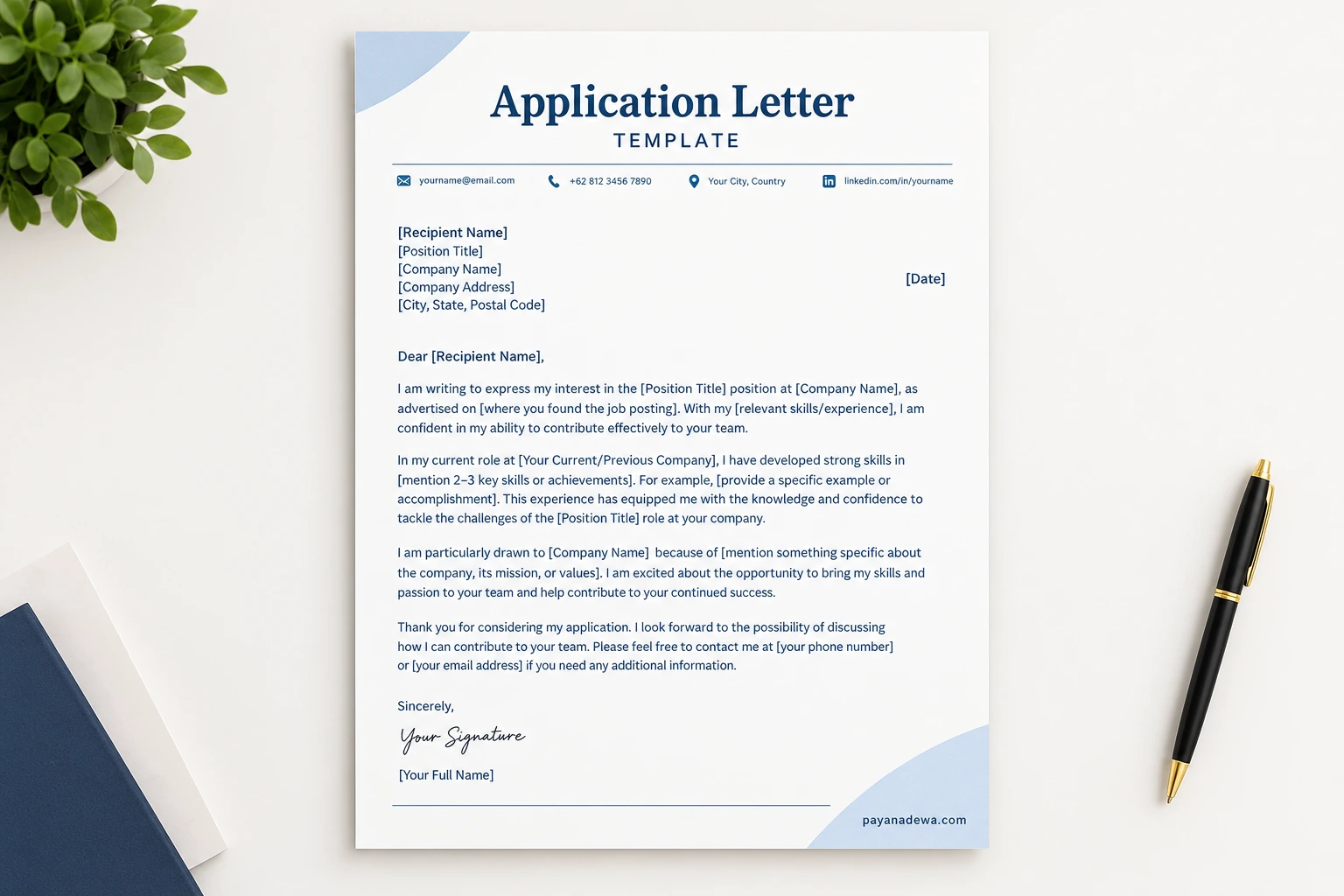
A professional application letter usually follows a simple structure. Keeping the format consistent makes the document easier to read and helps the reader find important information quickly.
1. Your Contact Information
Begin with your name and contact details. Depending on the application method and local conventions, you may include your phone number, email address, city and country, LinkedIn profile, or professional portfolio.
2. Date and Employer Information
Add the date and, when known, the hiring manager’s name, job title, company name, and company address. Using a specific recipient name is generally more personal than beginning with a generic greeting.
3. Professional Greeting
Use a polite greeting such as Dear Ms. Johnson or Dear Hiring Manager. If the job advertisement provides the recruiter’s name, use it accurately and spell it correctly.
4. Opening Paragraph
The opening should quickly state the position you are applying for and give the reader a reason to continue. Mention where you found the vacancy if that information is useful, then introduce one or two qualifications that make you relevant to the role.
5. Body Paragraphs
Use one or two paragraphs to explain your most relevant experience, skills, and achievements. Focus on evidence rather than broad claims. For example, instead of saying that you are a strong project manager, briefly describe a project you managed and the result you achieved.
6. Closing Paragraph
End by reinforcing your interest and inviting further discussion. Thank the employer for considering your application and provide a professional closing such as Sincerely followed by your full name.
What to Include in an Application Letter
The strongest application letters are customized for the specific job. Before writing, review the job description and identify the requirements that match your background.
- The exact job title you are applying for.
- Your most relevant professional skills.
- One or two specific accomplishments or examples.
- Your relevant education, training, or certifications when appropriate.
- A brief explanation of why you are interested in the company or position.
- A clear indication that you are available for an interview or further discussion.
Keep the information relevant. An application letter is not the place to include every detail from your career history. Choose the qualifications that directly support your application.
How to Write an Application Letter Step by Step
Research the Employer
Before writing, learn about the organization, its products or services, and the requirements of the role. This allows you to make your application more specific instead of relying on generic statements.
Study the Job Description
Identify important skills and responsibilities mentioned in the vacancy. Then compare them with your own experience. If the employer emphasizes customer service, for example, describe a relevant customer-service achievement rather than focusing on an unrelated skill.
Choose Relevant Evidence
Select two or three examples that demonstrate your ability to perform the job. Whenever possible, include measurable outcomes. Numbers can make achievements easier to understand, such as reducing processing time, increasing sales, managing a specific number of clients, or completing projects ahead of schedule.
Write a Focused First Paragraph
Your opening should be direct. Avoid lengthy personal histories before explaining why you are contacting the employer. A hiring manager should understand the purpose of your letter within the first few sentences.
Connect Your Skills to Employer Needs
Do not simply list skills. Explain how your skills can contribute to the position. This changes the letter from a general description of yourself into a targeted professional application.
Proofread Before Sending
Check grammar, spelling, punctuation, names, job titles, company names, and contact information. Read the letter aloud once to identify awkward sentences or unnecessary repetition. A final review can also help you remove phrases that sound overly generic.
Application Letter Example Structure
A simple application letter can follow this structure:
- Header: Your name and contact information.
- Date: The date of submission.
- Recipient: Hiring manager, recruiter, or company representative.
- Subject or position: The job title you are applying for, when appropriate.
- Greeting: A professional salutation.
- Introduction: State the position and your strongest relevant qualification.
- Body: Explain relevant experience, skills, and achievements.
- Company connection: Explain why the role or organization interests you.
- Closing: Express interest in an interview and thank the reader.
- Signature: Your full name and optional contact details.
Tips for Writing a Better Application Letter
Tailor Every Letter
A generic application letter may be easy to reuse, but it often fails to show why you are suitable for a particular role. Adjust the introduction, skills, examples, and company-specific section for each application.
Keep It Concise
In most cases, one page is enough. Use short paragraphs and clear language. Remove sentences that do not add useful information about your qualifications or motivation.
Use Professional Language
Write naturally and confidently without using exaggerated claims. Replace vague phrases such as “I am the best candidate” with evidence that demonstrates what you can do.
Focus on Results
Whenever possible, describe what you accomplished rather than only what you were responsible for. Results help employers understand the practical value of your experience.
Match the Tone to the Industry
A professional application letter should always be respectful, but the level of formality can vary. A traditional corporate, legal, or financial role may call for a more formal style, while a creative or technology company may allow a slightly more conversational approach.
Common Application Letter Mistakes to Avoid
Even strong candidates can weaken an application with avoidable errors. Review your letter for these common problems:
- Using the same letter for every employer without customization.
- Repeating the entire resume instead of adding context.
- Writing a letter that is too long or difficult to scan.
- Using generic statements without supporting examples.
- Addressing the wrong person or company.
- Including spelling or grammar mistakes.
- Focusing only on what you want from the employer rather than what you can contribute.
- Using an unprofessional email address or outdated contact information.
- Forgetting to attach the required resume or supporting documents.
Application Letter vs. Resume
An application letter and resume serve different purposes, and they work best when used together. The resume provides a structured overview of your employment history, education, skills, and achievements. The application letter explains why those qualifications matter for the specific opportunity.
Think of the resume as the evidence and the application letter as the explanation. The two documents should support each other without becoming identical copies.
Frequently Asked Questions About Application Letters
How long should an application letter be?
A concise one-page application letter is usually sufficient. The exact length depends on the role and your experience, but relevance and readability are more important than reaching a particular word count.
Can I use an application letter template?
Yes. A template can help you organize the document and maintain a professional format. However, you should customize the content for every position rather than submitting the template unchanged.
What should I write if I have no work experience?
Focus on transferable skills, education, internships, volunteer activities, academic projects, extracurricular responsibilities, and relevant achievements. Explain how these experiences demonstrate qualities needed for the position.
Should an application letter repeat my resume?
No. Use the letter to expand on the most relevant parts of your resume. Choose a few qualifications and provide context, examples, or results that cannot be fully explained in a resume.
Conclusion
A well-crafted application letter gives you an opportunity to connect your qualifications with an employer’s needs. The most effective letters are specific, concise, professional, and supported by real examples. Start with a clear introduction, focus on relevant skills and achievements, explain your interest in the position, and finish with a confident professional closing.
Using a clean application letter template can make the formatting process easier, but the content should always be tailored to the job. Take time to research the employer, study the vacancy, proofread your letter, and make every paragraph contribute something useful. With a focused approach, your application letter can become a strong companion to your resume and a clear introduction to your professional value.