An avatar can be much more than a simple profile picture. In the digital world, an avatar may represent a person, a brand, a customer persona, or even a fictional identity. From social media profiles and online communities to marketing strategies and virtual environments, avatars have become an important part of how people present themselves and understand their audiences.
For businesses, creators, marketers, and website owners, the concept of an avatar is especially useful. A well-defined audience avatar helps you understand who you are trying to reach, what they need, what problems they face, and what motivates them to take action. This information can make your content, products, services, and marketing messages more relevant.
In this guide, you will learn what an avatar means in different contexts, why an avatar matters, how to create an audience avatar, and how to use an avatar template to organize important information in one place.
What Is an Avatar?
The word avatar can have several meanings depending on the context. Online, an avatar commonly refers to a visual representation of a person. It can be a photograph, illustration, cartoon character, icon, or AI-generated image used to represent someone on a website, social platform, forum, game, or virtual environment.
In marketing and business, however, an avatar often refers to an ideal customer profile or customer avatar. Instead of representing how a person looks, this type of avatar represents who the ideal customer is and what influences their decisions.
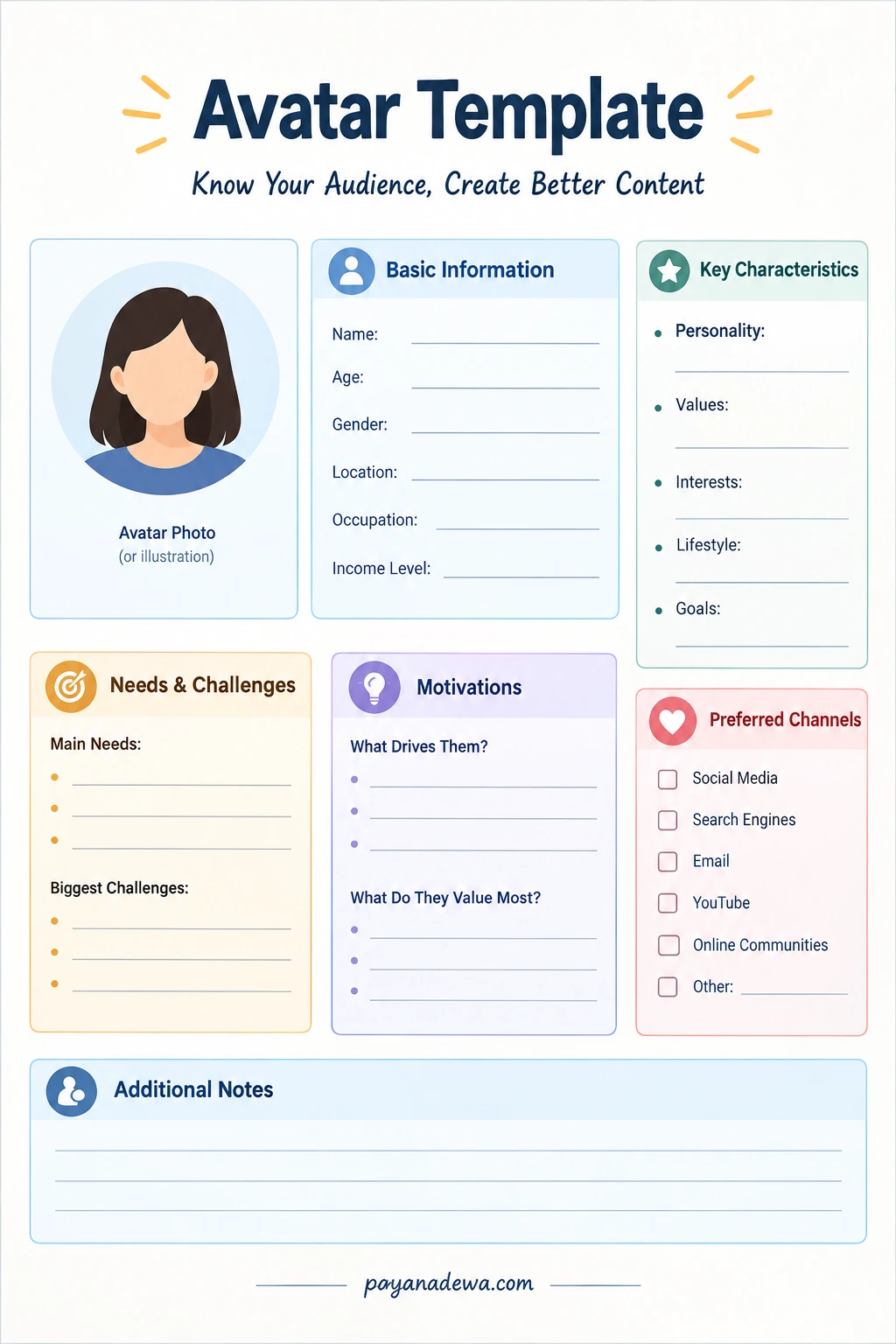
A customer avatar may include information such as:
- Age and general demographic characteristics
- Location and occupation
- Interests and lifestyle
- Goals and aspirations
- Common problems and challenges
- Motivations and values
- Preferred communication channels
- Buying habits and content preferences
Understanding these details gives you a clearer picture of the audience behind your website traffic, social media followers, subscribers, or potential customers.
Why Is an Avatar Important?
An avatar helps turn a broad audience into a more understandable and useful profile. Instead of creating content for “everyone,” you can think about the specific type of person most likely to benefit from what you offer.
1. It Makes Content More Relevant
When you understand your audience, you can create articles, videos, emails, and social media posts around their actual questions and interests. This can make your content easier to understand and more useful.
2. It Improves Marketing Messages
A clearly defined customer avatar can help you choose language that matches your audience. For example, a message aimed at beginners may need simple explanations, while an experienced professional may prefer detailed technical information.
3. It Helps You Identify Customer Problems
An effective avatar does not focus only on demographic information. It also identifies the problems your audience wants to solve. These challenges can provide valuable ideas for content, products, services, and frequently asked questions.
4. It Supports Better Business Decisions
When you know who you are serving, it becomes easier to evaluate new ideas. You can ask whether a product, article, feature, or campaign actually addresses the needs of your target audience.
Different Types of Avatars
The meaning of avatar changes depending on how it is being used. Understanding the different types can help you choose the right approach.
Digital Profile Avatar
A digital profile avatar is an image or graphic that represents a person online. Social media profiles, messaging platforms, forums, gaming accounts, and online communities commonly use this type of avatar.
The image can be a real photograph, illustration, logo, cartoon, or personalized character. A consistent visual avatar can also help people recognize the same person across different platforms.
Customer Avatar
A customer avatar is a fictional but research-based representation of an ideal customer. It combines useful characteristics into a single profile so that marketers and business owners can visualize the audience they want to serve.
For example, a website selling productivity tools might create an avatar representing a busy freelancer who wants to organize projects, save time, and reduce administrative work.
Brand Avatar
A brand avatar represents the personality or human characteristics associated with a business. It can help define how a brand communicates with its audience, including its tone, personality, values, and visual identity.
Virtual or Gaming Avatar
In gaming and virtual environments, an avatar can be a customizable digital character controlled by a user. Players may change the character’s appearance, clothing, accessories, and other characteristics to create a unique identity.
How to Create a Customer Avatar
Creating an avatar does not require complicated software. The most important part is collecting useful information and organizing it logically. An avatar template can make this process much easier.
Start With Basic Information
Begin with basic characteristics that help you understand the person you are trying to reach. Depending on your business, this may include age range, location, occupation, income level, or professional background.
Avoid collecting demographic information simply because it is available. Every detail should have a practical purpose. Ask yourself whether the information could influence your content, product, service, communication style, or marketing strategy.
Define Key Characteristics
Next, describe the person’s personality, values, interests, lifestyle, and goals. These details can reveal what matters to your audience beyond basic demographics.
For example, two people may have the same occupation and income but completely different priorities. One may value convenience, while another may prioritize affordability or premium quality.
Identify Needs and Challenges
This is one of the most important parts of an audience avatar. Write down the main problems your ideal customer experiences and the obstacles preventing them from reaching their goals.
Useful questions include:
- What problem are they trying to solve?
- What frustrates them?
- What takes too much time?
- What information do they struggle to find?
- What prevents them from achieving their goals?
The answers can become a valuable source of content ideas and product improvements.
Understand Their Motivations
Knowing what people need is useful, but understanding why they want a solution can be even more valuable. Your avatar should identify the motivations behind their decisions.
Consider whether your audience is motivated by saving time, reducing costs, gaining convenience, improving results, learning something new, increasing confidence, or reaching a specific personal or professional goal.
Determine Preferred Channels
Think about where your audience spends time online. Some people discover information through search engines, while others rely heavily on YouTube, social media, email newsletters, online communities, or blogs.
Knowing these preferences can help you decide where to publish and promote your content.
Tips for Creating a More Accurate Avatar
A common mistake is creating an avatar based entirely on assumptions. A useful avatar should be supported by real observations whenever possible.
Use Real Audience Data
Look at website analytics, search queries, customer feedback, comments, reviews, survey responses, and frequently asked questions. These sources can reveal patterns that are difficult to identify through assumptions alone.
Listen to the Language Your Audience Uses
Pay attention to the words people use when describing their problems. Using familiar terminology in your content can make your articles and marketing messages feel more relevant and natural.
Focus on Problems and Goals
Demographics are useful, but they should not become the entire avatar. Problems, motivations, goals, preferences, and behaviors often provide more actionable information for content creation.
Keep the Avatar Practical
Your avatar does not need to contain dozens of pages of information. Include details that can actually influence decisions. A concise, well-researched profile is often more useful than an extremely detailed profile filled with assumptions.
How to Use an Avatar Template
An avatar template provides a structured way to organize your audience research. Instead of keeping information scattered across notes, you can place important details into clearly defined sections.
A practical template can include areas for basic information, key characteristics, needs and challenges, motivations, preferred channels, and additional notes.
Once the template is completed, use it as a reference when creating new content. Before publishing an article, video, product description, or advertisement, consider whether it addresses something important to the avatar.
You can also create multiple avatars when your business serves substantially different audience groups. However, avoid creating too many profiles without a clear reason. Each avatar should represent a meaningful audience segment.
Avatar vs Target Audience
Although the terms are related, an avatar and a target audience are not exactly the same. A target audience is generally a broader group of people who may be interested in a product, service, or topic.
An avatar takes that concept one step further by creating a more specific representation of an ideal person within the audience. The target audience might be “small business owners,” while an avatar could represent a particular type of small business owner with specific goals, challenges, preferences, and motivations.
Using both concepts together can provide a clearer marketing strategy. The target audience defines the broader group, while the avatar helps you understand an individual within that group.
Common Mistakes When Creating an Avatar
- Making too many assumptions: Build your profile from research whenever possible.
- Focusing only on demographics: Include goals, challenges, interests, and motivations.
- Making the profile too broad: A useful avatar should represent a meaningful audience segment.
- Ignoring customer language: Use the phrases and questions your audience actually uses.
- Never updating the profile: Review your avatar when customer behavior, market conditions, or your business changes.
Final Thoughts on Avatar Creation
An avatar can serve many purposes, from representing an individual online to helping a business understand its ideal customer. For content creators and marketers, a customer avatar is particularly valuable because it turns an abstract audience into a practical profile that can guide everyday decisions.
The best avatar is not necessarily the longest or most detailed one. It is the one that helps you understand your audience’s needs, challenges, motivations, interests, and preferred communication channels.
Start with reliable information, organize it using a simple avatar template, and update the profile as you learn more about your audience. When used consistently, an avatar can help you create more relevant content, communicate more clearly, and build experiences that better match what your audience is actually looking for.