Aviation connects people, businesses, and destinations across the world. From commercial airlines and airport operations to aircraft technology and flight planning, the aviation industry plays an important role in modern transportation. Whether you are a frequent traveler, an aviation enthusiast, a student, or someone planning a flight for the first time, understanding the basics of aviation can make air travel easier and more enjoyable.
This guide explains what aviation means, how the aviation industry works, the main types of aviation, important airport and flight procedures, and practical tips for preparing for a smooth journey.
What Is Aviation?
Aviation refers to the activities, technology, operations, and systems associated with aircraft and air transportation. It includes everything from designing and manufacturing aircraft to operating airlines, managing airports, controlling air traffic, maintaining aircraft, and transporting passengers or cargo.
The modern aviation sector includes a wide range of activities. Commercial aviation carries passengers between cities and countries, while cargo aviation transports goods around the world. General aviation covers private flying, flight training, business aircraft, aerial photography, medical flights, and other specialized operations.
How the Aviation Industry Works
Aviation depends on many organizations and professionals working together. A passenger flight may appear simple from the outside, but every journey involves extensive planning, safety procedures, aircraft maintenance, airport services, and air traffic management.
Airlines
Airlines operate aircraft to transport passengers and cargo. Their responsibilities include scheduling flights, managing crews, maintaining aircraft, selling tickets, handling baggage, and coordinating airport operations.
Airlines may operate domestic flights, international routes, regional services, long-haul flights, or specialized cargo operations.
Airports
Airports provide the infrastructure required for aircraft to take off, land, and serve passengers. A typical airport may include terminals, runways, taxiways, aircraft parking areas, baggage systems, security checkpoints, immigration facilities, and air traffic control facilities.
Air Traffic Control
Air traffic controllers help manage aircraft movements in the air and on the ground. They coordinate aircraft departures, arrivals, routes, and movements around airports to support safe and organized air traffic.
Aircraft Maintenance
Aircraft require regular inspections and maintenance. Engineers and maintenance technicians inspect systems, repair components, perform scheduled servicing, and ensure that aircraft meet applicable safety requirements before returning to operation.
Different Types of Aviation
The term aviation covers much more than commercial passenger flights. Several major categories serve different purposes.
- Commercial aviation: Passenger airlines and scheduled air transportation.
- Cargo aviation: Transportation of packages, freight, mail, and other goods by air.
- General aviation: Private flying, business aviation, recreational aircraft, and flight training.
- Military aviation: Aircraft operations conducted for defense and military purposes.
- Emergency aviation: Medical evacuation, disaster response, firefighting, and search-and-rescue operations.
- Specialized aviation: Aerial surveying, photography, agricultural aviation, research, and other specialized missions.
Understanding the Basic Flight Process
Every commercial flight follows a series of important steps. Knowing what happens at each stage can help passengers understand airport procedures and reduce unnecessary stress.
1. Booking and Check-In
The journey normally begins when a passenger books a flight. Before departure, travelers should check their flight number, departure time, terminal, baggage allowance, and required travel documents.
Online check-in may be available before arriving at the airport. Depending on the airline and airport, passengers may receive a digital boarding pass that can be displayed on a smartphone.
2. Airport Security
Passengers normally pass through security screening before reaching the departure area. Travelers should follow airport instructions regarding liquids, electronic devices, prohibited items, and carry-on baggage.
3. Boarding
After reaching the correct gate, passengers wait for boarding announcements. Airlines may board passengers in groups based on seat location, boarding zone, cabin class, or other operational procedures.
4. Takeoff and Flight
Once passengers are seated and the aircraft doors are closed, the aircraft may taxi toward the runway. The flight crew completes required procedures before takeoff. During the flight, pilots and air traffic controllers coordinate the aircraft’s route and altitude.
5. Landing and Arrival
As the aircraft approaches its destination, the crew prepares for landing. After landing, the aircraft taxis to its assigned gate or parking position. Passengers then collect their belongings and, when applicable, complete immigration, customs, and baggage procedures.
Essential Aviation Terms Travelers Should Know
Understanding common aviation terminology can make airport announcements and flight information easier to follow.
- Departure: The airport or location from which a flight leaves.
- Arrival: The airport or location where a flight is scheduled to land.
- Gate: The designated area where passengers board an aircraft.
- Runway: A prepared surface used by aircraft for takeoff and landing.
- Taxiway: A route used by aircraft to move between runways and other airport areas.
- Layover: A period spent at an intermediate airport between flights.
- Connecting flight: A subsequent flight used to reach the final destination.
- Boarding pass: A document or digital pass that permits a passenger to board a flight.
- Flight number: The identifying code assigned to a particular flight service.
- Cabin baggage: Bags permitted inside the passenger cabin within airline size and weight limits.
How to Prepare for a Flight
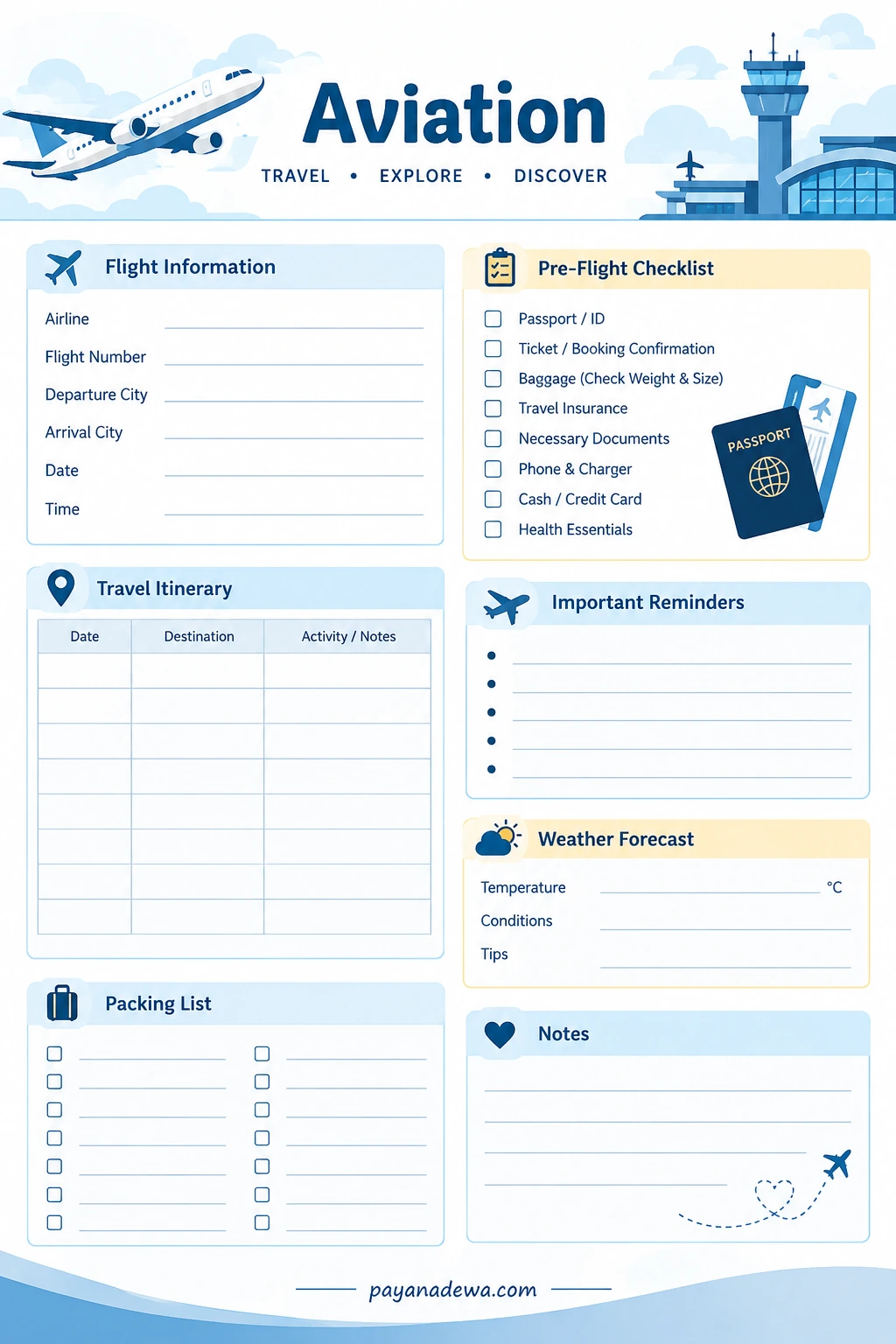
Good preparation can make air travel considerably easier. Instead of waiting until the last minute, create a simple checklist before leaving home.
Check Your Travel Documents
Make sure your passport or identification document is valid and that you have any required visas, permits, booking confirmations, or other travel documents. International travelers should also check the entry requirements of their destination.
Review Baggage Rules
Baggage policies vary between airlines and ticket types. Before packing, check the permitted number, size, and weight of checked and cabin baggage.
Check the Flight Status
Flight schedules can change because of weather, operational issues, airport conditions, or other factors. Check the airline’s official flight status information before traveling to the airport.
Arrive at the Airport Early
Allow enough time for check-in, baggage drop-off, security screening, immigration, and walking to the departure gate. International flights generally require more preparation time than short domestic journeys.
Practical Aviation Travel Tips
Small preparations can make a significant difference during air travel. Consider the following tips before your next flight.
- Keep your passport, identification, boarding pass, and important documents easy to access.
- Place essential medication and valuables in your cabin baggage when appropriate.
- Label checked baggage with your name and contact information.
- Keep electronic devices charged before arriving at the airport.
- Wear comfortable clothing and footwear for longer journeys.
- Check the weather at both your departure and destination airports.
- Save important booking information offline in case internet access is limited.
- Pay attention to gate-change announcements and airport information screens.
- Leave sufficient time for connecting flights, especially at large airports.
Aviation Technology and the Future of Air Travel
Aviation continues to evolve through advances in aircraft design, navigation, communications, automation, and sustainable technologies. Modern aircraft use sophisticated systems to improve operational efficiency, navigation, passenger comfort, and safety.
Airports are also becoming increasingly digital. Mobile boarding passes, automated baggage systems, biometric technologies, self-service check-in, and real-time flight information can streamline the passenger experience.
Sustainable Aviation
Environmental sustainability is another important area of aviation development. Airlines, aircraft manufacturers, airports, and researchers are exploring more efficient aircraft, sustainable aviation fuel, improved operational procedures, and other approaches that may reduce aviation’s environmental impact.
Why Aviation Matters
Aviation is more than a method of transportation. It supports international tourism, global trade, business travel, humanitarian operations, medical services, and connections between communities that may otherwise be difficult to reach.
For businesses, air transportation can move high-value and time-sensitive goods rapidly. For travelers, aviation makes it possible to cross countries and continents within hours rather than days. During emergencies, aircraft can also support evacuation, medical transportation, disaster relief, and search-and-rescue operations.
Frequently Asked Questions About Aviation
What does aviation mean?
Aviation refers to the operation, development, maintenance, and use of aircraft and the broader systems involved in air transportation.
What are the main types of aviation?
The main categories include commercial aviation, cargo aviation, general aviation, military aviation, emergency aviation, and specialized aviation.
What should I check before a flight?
Check your travel documents, flight schedule, baggage allowance, airport terminal, boarding requirements, and the latest flight status. It is also useful to check the weather at your departure and arrival locations.
Why is aviation important?
Aviation enables rapid transportation of passengers and goods across long distances. It supports tourism, international commerce, business, emergency services, and global connectivity.
Conclusion
Aviation is a complex industry that brings together aircraft, airports, airlines, air traffic control, maintenance teams, technology, and countless other services. For passengers, understanding the basics of aviation can make planning and navigating a flight much easier.
Whether you are preparing for your first flight or regularly traveling around the world, a simple checklist can help you stay organized. Confirm your documents, review baggage requirements, monitor your flight status, arrive with enough time, and keep essential items accessible. With good preparation, the aviation experience can be more efficient, comfortable, and enjoyable.