Autumn is one of the most beautiful and distinctive seasons of the year. Known for colorful leaves, cooler temperatures, cozy evenings, and seasonal traditions, autumn creates a natural transition between the warmth of summer and the cold of winter. For many people, it is also a time to slow down, reconnect with nature, refresh daily routines, and prepare for the months ahead.
Whether you love taking scenic walks through colorful forests, decorating your home with seasonal accents, enjoying warm drinks, or simply appreciating cooler weather, autumn offers countless ways to make everyday life more enjoyable. This guide explores what makes autumn special, when it occurs, popular activities, decorating ideas, seasonal foods, and practical ways to enjoy the season.
Use the Autumn Planning Template below to organize your seasonal goals, activities, important dates, self-care ideas, and things you are grateful for.
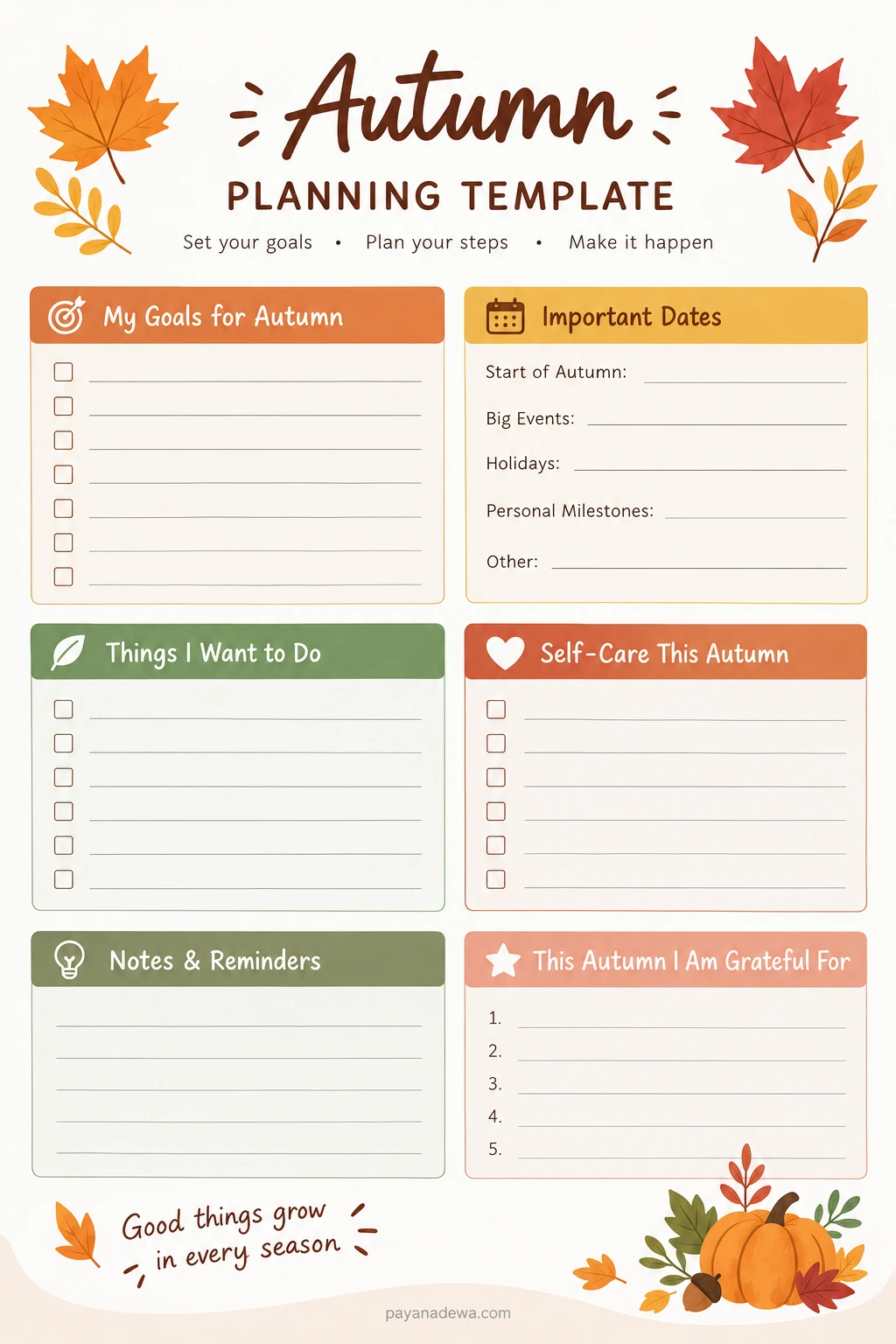
What Is Autumn?
Autumn, also called fall, is one of the four temperate seasons. It comes between summer and winter and is generally associated with cooler temperatures and shorter days. The exact timing of autumn depends on location and whether you are referring to the astronomical or meteorological season.
One of the most recognizable features of autumn is the changing color of leaves. As daylight decreases and temperatures become cooler, many deciduous trees stop producing as much chlorophyll. The green color gradually fades, allowing yellow, orange, red, and brown pigments to become more visible.
This transformation gives autumn its characteristic scenery and makes it a popular season for photography, hiking, road trips, outdoor activities, and nature walks.
When Does Autumn Begin?
The beginning of autumn can be defined in two common ways: astronomical autumn and meteorological autumn.
Astronomical Autumn
Astronomical autumn begins around the autumnal equinox, which usually occurs around September 22 or 23 in the Northern Hemisphere. During the equinox, day and night are approximately equal in length.
Meteorological Autumn
Meteorologists generally divide the year into three-month seasons. In the Northern Hemisphere, meteorological autumn typically includes September, October, and November. This approach makes seasonal climate data easier to compare from year to year.
In the Southern Hemisphere, the seasons are reversed. Autumn generally occurs during March, April, and May.
Why Do Autumn Leaves Change Color?
Changing leaves are one of the most fascinating characteristics of autumn. During summer, leaves appear green because they contain large amounts of chlorophyll, the pigment involved in photosynthesis.
As autumn approaches, shorter daylight hours and changing temperatures signal many deciduous trees to prepare for winter. Chlorophyll production decreases, causing the green color to disappear.
Different pigments then become visible, producing a variety of autumn colors:
- Yellow: Often produced by pigments called carotenoids.
- Orange: Also associated with carotenoids and related pigments.
- Red: Often created by anthocyanins that develop in some leaves.
- Brown: Can appear as leaves age and their cells break down.
The intensity of fall foliage can vary depending on tree species, temperature, sunlight, moisture, and local weather conditions.
Popular Autumn Activities
Autumn is an excellent season for outdoor adventures and simple activities at home. You do not need an expensive vacation or complicated plans to enjoy the season.
1. Go for a Fall Nature Walk
Take a walk through a local park, forest, garden, or neighborhood and look for changing leaves. Bring a camera or smartphone to capture interesting colors and textures.
2. Visit a Pumpkin Patch
Pumpkin patches are a classic autumn attraction in many areas. They can be especially enjoyable for families, couples, and anyone who enjoys seasonal photography.
3. Enjoy a Scenic Drive
If colorful foliage is available in your region, a scenic drive can be a relaxing way to experience autumn landscapes. Choose a route with parks, forests, lakes, or countryside views.
4. Have a Cozy Movie Night
Autumn is also ideal for staying indoors. Prepare a warm drink, make some snacks, turn on comfortable lighting, and enjoy a favorite movie or television series.
5. Start a Seasonal Reading List
Cooler evenings provide a great opportunity to read. Choose novels, travel books, personal development titles, or anything else that helps you relax.
- Take a photography walk.
- Visit a farmers’ market.
- Try a new autumn recipe.
- Decorate your home with seasonal colors.
- Make a fall-themed playlist.
- Plan a weekend getaway.
- Write down personal goals for the final months of the year.
Autumn Food and Drinks
Seasonal food is another reason many people look forward to autumn. Cooler weather often inspires warm, comforting meals and drinks.
Popular autumn flavors and ingredients include:
- Pumpkin
- Apples
- Cinnamon
- Sweet potatoes
- Squash
- Pears
- Maple
- Ginger
- Nutmeg
- Cloves
You can incorporate these ingredients into soups, baked goods, roasted vegetables, pies, oatmeal, hot drinks, and other seasonal recipes. Cooking with seasonal ingredients can also become a fun weekend activity for friends or family.
Autumn Home Decorating Ideas
You do not need to completely redecorate your home to create an autumn atmosphere. A few small changes can make a noticeable difference.
Use Warm Seasonal Colors
Consider adding shades inspired by autumn landscapes, such as rust, burnt orange, mustard yellow, deep green, cream, and warm brown.
Add Natural Decorations
Leaves, branches, pinecones, pumpkins, dried flowers, and other natural elements can create a seasonal look without making a room feel overly decorated.
Create a Cozy Atmosphere
Soft blankets, cushions, warm lighting, candles, and comfortable textures can make your living space feel particularly inviting during cooler evenings.
Autumn Self-Care Ideas
Autumn can also be a useful time to slow down and review your routines. Instead of treating the season only as a visual change, use it as an opportunity to create healthier and more enjoyable habits.
- Set a few realistic goals for the next three months.
- Spend more intentional time outdoors.
- Make time for hobbies you enjoy.
- Organize your home and remove unnecessary clutter.
- Prepare comfortable routines for shorter days.
- Keep a gratitude journal.
- Make time for family and friends.
A seasonal reset does not have to involve major lifestyle changes. Small, consistent habits can make autumn feel more purposeful and refreshing.
How to Plan a Memorable Autumn
A simple plan can help you make the most of the season without filling every day with activities. Start by choosing a few experiences that genuinely interest you.
Make an Autumn Bucket List
Write down five to ten things you would like to do before winter arrives. Your list might include visiting a new park, trying a seasonal recipe, taking photographs, reading a book, attending a local event, or spending a quiet weekend at home.
Mark Important Dates
Use a calendar to record holidays, family events, travel plans, school activities, work deadlines, and other important dates.
Balance Activities With Rest
A good autumn routine should include both adventure and downtime. Leave some free days for spontaneous plans, relaxation, or simply enjoying the changing season.
Autumn Photography Tips
Fall foliage provides excellent opportunities for photography. Even a smartphone can produce beautiful results when you pay attention to lighting and composition.
- Photograph during early morning or late afternoon for softer light.
- Look for reflections in lakes, rivers, and puddles.
- Capture individual leaves as well as wide landscapes.
- Use contrasting colors to make your subject stand out.
- Photograph textures such as tree bark, fallen leaves, pumpkins, and dried plants.
- Try different angles instead of photographing everything from eye level.
Simple Ways to Enjoy Autumn Every Day
You do not have to travel far to appreciate autumn. Small daily rituals can help you notice the season around you.
Drink your favorite warm beverage while watching the sunrise, take a short walk after work, listen to seasonal music, cook a comforting meal, or spend a few minutes outside observing the changing landscape.
The most enjoyable autumn experiences are often simple. What matters is paying attention to the small details that make the season different from summer and winter.
Final Thoughts on Autumn
Autumn is more than a transition between summer and winter. It is a season filled with changing landscapes, cooler weather, seasonal food, outdoor opportunities, cozy traditions, and opportunities for reflection.
Whether you enjoy colorful fall foliage, pumpkin-inspired recipes, peaceful nature walks, home decorating, photography, or quiet evenings indoors, there are many ways to make the season meaningful. With a little planning, you can create your own autumn traditions and make the most of every week.
Use a simple seasonal checklist or planning template to turn your ideas into action. Set a few goals, choose activities you genuinely enjoy, make time for self-care, and leave room to appreciate the beauty of the season.