Living with roommates can be affordable, convenient, and enjoyable, but sharing a home also means sharing responsibilities, expenses, schedules, and personal space. Without clear expectations, small misunderstandings can quickly turn into bigger disagreements. A well-written Roommate Agreement helps everyone understand what is expected before problems arise.
A roommate agreement is a written understanding between people who share a home. It can cover rent, utilities, cleaning duties, guests, quiet hours, shared spaces, groceries, privacy, household supplies, and procedures for resolving disagreements. Unlike a lease, which is generally between tenants and a landlord, a roommate agreement focuses on how roommates will live together.
Whether you are moving into an apartment with friends, sharing a house with coworkers, or renting a room with other tenants, creating clear household rules can make everyday life much easier.
What Is a Roommate Agreement?
A Roommate Agreement is a written document that establishes practical rules and responsibilities for people who live together. It gives roommates an opportunity to discuss expectations before issues develop.
The agreement does not need to be complicated. In many situations, a simple document covering the most important household matters is enough. The goal is to create a shared understanding that everyone can refer to when questions or disagreements occur.
Common topics include:
- Rent and utility payments
- Cleaning schedules and household chores
- Use of shared rooms and appliances
- Quiet hours and noise expectations
- Guests and overnight visitors
- Food, groceries, and shared supplies
- Privacy and personal belongings
- Parking and storage arrangements
- Pets and smoking rules
- How roommates will handle conflicts
Why Use a Roommate Agreement?
Many roommate conflicts happen because people have different assumptions about how a shared home should work. One person may expect the kitchen to be cleaned immediately after cooking, while another may be comfortable leaving dishes until later. One roommate may enjoy having friends over frequently, while another may prefer a quiet home.
A written agreement brings those expectations into the open.
1. It Clarifies Responsibilities
A roommate agreement can identify who is responsible for particular chores and when those chores should be completed. Instead of repeatedly asking someone to take out the trash or clean the bathroom, roommates can establish a schedule in advance.
2. It Makes Shared Expenses Easier
Money is one of the most common sources of household disagreements. A clear agreement can explain how roommates divide rent, electricity, water, internet, cleaning products, and other shared costs.
3. It Protects Personal Boundaries
Everyone has different expectations about privacy. The agreement can establish reasonable boundaries regarding bedrooms, personal belongings, borrowing items, and entering another roommate’s private space.
4. It Provides a Conflict-Resolution Framework
Disagreements are possible even among close friends. A roommate agreement can establish a simple process for discussing problems calmly and finding a mutually acceptable solution.
Roommate Agreement Template: What Should It Include?
A useful roommate agreement should focus on the practical details that affect daily life. The exact contents can vary depending on the household, but several sections are especially useful.
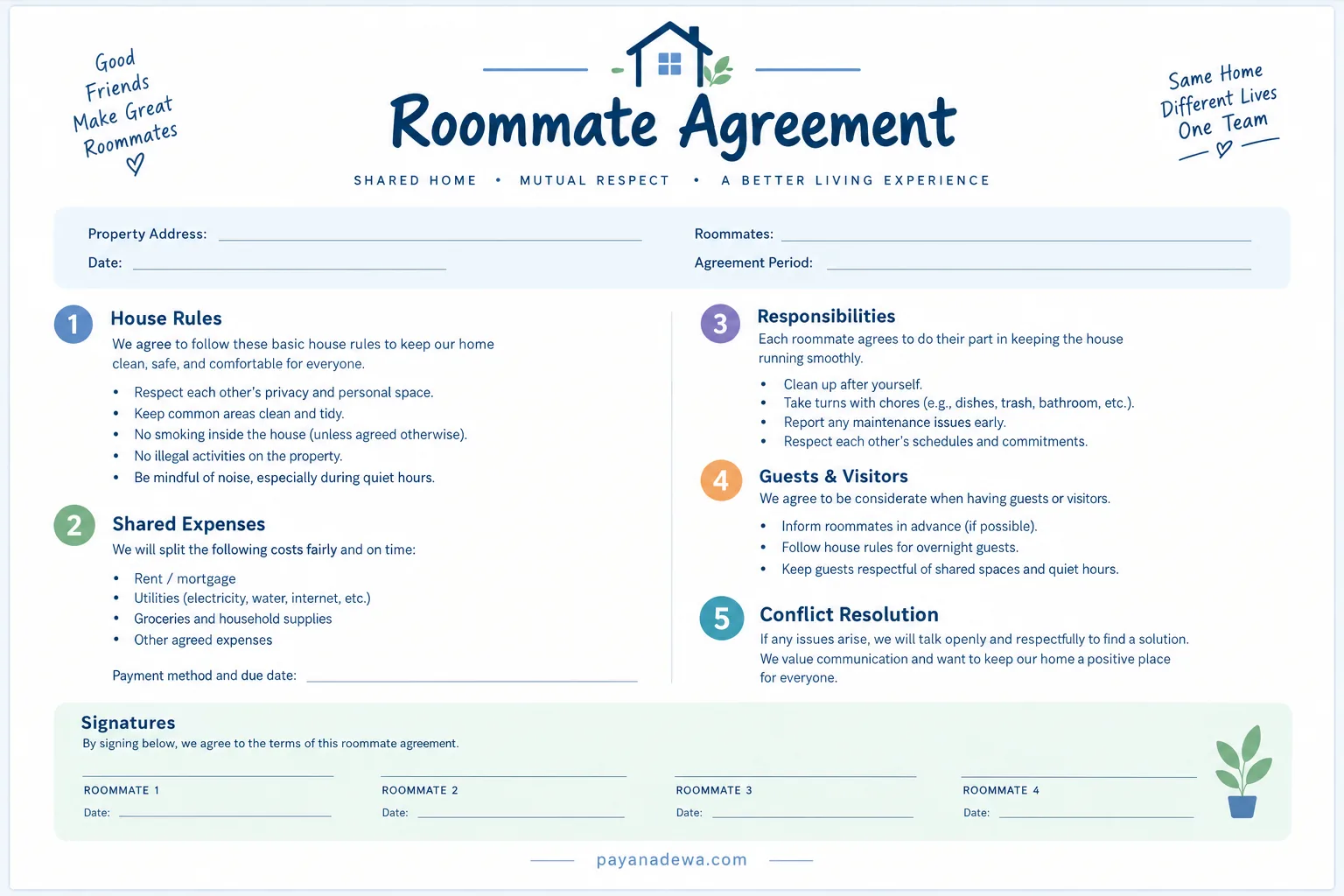
Rent and Shared Expenses
Start by explaining how housing costs will be divided. Specify each roommate’s expected contribution and when payments are due.
You can also address shared expenses such as:
- Electricity and gas
- Water
- Internet
- Trash collection
- Cleaning supplies
- Shared household products
- Common groceries, if applicable
It is helpful to state how roommates will handle unexpected costs. For example, the agreement can explain whether repairs or replacement items require everyone’s approval before money is spent.
Cleaning and Chores
Cleaning expectations should be specific rather than vague. Instead of simply stating that everyone must “keep the house clean,” identify the areas and tasks that need regular attention.
- Kitchen and dishes
- Bathrooms
- Living room
- Floors and carpets
- Trash and recycling
- Shared appliances
- Outdoor areas, where applicable
A rotating chore schedule can be useful when several roommates share the same home. The schedule should be realistic and easy to maintain.
Quiet Hours and Noise
Noise expectations are particularly important in shared housing. Consider establishing quiet hours based on everyone’s work, school, and sleep schedules.
The agreement might cover music, television, parties, phone calls, gaming, and other activities that can disturb other residents. Flexibility can also be included for special occasions, provided roommates communicate beforehand.
Guests and Overnight Visitors
Guests can become a source of tension when roommates have different expectations. A roommate agreement can explain whether advance notice is expected, how often overnight guests may stay, and whether guests must follow the household’s basic rules.
The objective is not necessarily to restrict visitors. Instead, it is to make sure that everyone understands how guests will affect shared spaces, privacy, security, and household routines.
Shared Spaces and Personal Property
Clearly define which areas are shared and which spaces are private. This may include the kitchen, living room, laundry area, parking spaces, storage areas, and bathrooms.
It is also helpful to establish a rule about borrowing personal belongings. A simple expectation such as asking before using another person’s property can prevent unnecessary misunderstandings.
How to Create a Fair Roommate Agreement
Discuss Expectations Before Writing
Before completing the document, have an honest conversation with all roommates. Ask questions about schedules, cleaning habits, guests, food, privacy, noise, and money.
Encourage everyone to mention concerns rather than assuming that others share the same expectations.
Make the Rules Specific
Specific rules are easier to understand and follow. For example, “Keep noise down at night” can mean different things to different people. A clearer approach is to agree on a reasonable quiet period and discuss exceptions.
Keep the Agreement Realistic
A long list of unrealistic rules can make an agreement difficult to follow. Focus on the issues that actually matter in your household. The best roommate agreement is practical enough that everyone can use it consistently.
Review the Agreement When Circumstances Change
Household arrangements can change. A roommate may change jobs, adopt a pet, begin working from home, or have a different schedule. Review the agreement when a major change affects shared living arrangements.
Roommate Agreement vs Lease Agreement
A roommate agreement and a lease serve different purposes. A lease generally establishes the legal relationship between a landlord and tenant and may contain legally enforceable terms concerning rent, occupancy, property use, and other matters.
A roommate agreement is primarily designed to establish expectations between people sharing a home. It can address practical household matters that may not appear in the main lease.
Because laws vary by location, roommates should not assume that a private agreement overrides a landlord’s lease or applicable housing laws. When legal rights or obligations are involved, consider obtaining advice from a qualified local professional.
Tips for Avoiding Common Roommate Problems
A good agreement works best when it is supported by regular communication. The document should not replace respectful conversations.
- Talk about problems early: Do not allow minor frustrations to accumulate.
- Be clear about money: Track shared bills and payment deadlines.
- Respect privacy: Ask before entering private rooms or using personal belongings.
- Communicate about guests: Give reasonable notice when visitors may affect the household.
- Clean up after yourself: Do not rely entirely on the chore schedule for basic personal responsibility.
- Be flexible: Reasonable households sometimes need exceptions.
- Document important changes: If everyone agrees to change an important rule, update the written agreement.
Roommate Agreement Checklist
Before everyone signs the agreement, review the following checklist:
- All roommates are identified.
- The property or shared residence is identified.
- Rent contributions are clearly explained.
- Utility and shared expenses are addressed.
- Cleaning responsibilities are defined.
- Quiet hours are discussed.
- Guest and overnight visitor expectations are clear.
- Shared spaces and personal spaces are identified.
- Borrowing personal property is addressed.
- Pet, smoking, and parking rules are covered where relevant.
- A process for resolving disagreements is included.
- Everyone has an opportunity to suggest changes.
- Each roommate receives a copy of the final agreement.
How to Handle a Roommate Disagreement
Even with a carefully prepared agreement, disagreements can happen. When they do, focus on the specific behavior or issue rather than attacking the person.
Start with a private conversation. Explain what happened, how it affected the household, and what change you would like to see. Then listen to the other roommate’s perspective.
If the problem continues, review the relevant section of the roommate agreement. If everyone agrees that the existing rule no longer works, discuss a reasonable amendment rather than ignoring the issue.
When Should Roommates Sign the Agreement?
Ideally, roommates should complete and sign the agreement before moving in together. This gives everyone a chance to discuss expectations while the household arrangement is still new.
However, it is never too late to create one. Existing roommates can create an agreement when recurring disagreements begin or when household circumstances change.
Readability Analysis
This article is structured for easy scanning with a clear H1, descriptive H2 and H3 headings, short paragraphs, transition phrases, active voice, and practical bullet lists. The primary keyword is used naturally rather than repeatedly, while related terms such as roommate rules, shared expenses, household responsibilities, cleaning schedule, guest policy, and shared living arrangements provide semantic relevance.
The content is designed to support strong readability and SEO fundamentals commonly evaluated by tools such as Yoast SEO. Sentence length, paragraph structure, heading distribution, keyword placement, and transition language should remain easy to review when the article is added to a WordPress editor.
Conclusion
A well-prepared Roommate Agreement can make shared living more predictable and comfortable. By discussing rent, expenses, cleaning, privacy, guests, noise, personal property, and conflict resolution in advance, roommates can reduce misunderstandings and establish clear expectations.
The most effective agreement is not necessarily the longest one. It is the document that reflects the actual needs of the people living together and gives everyone a clear understanding of their responsibilities. Review it whenever household circumstances change, communicate openly, and make practical adjustments when necessary.
For anyone preparing to share a home, a simple roommate agreement template can be a useful starting point for creating a more organized and respectful living environment.