A Room Rental Agreement is a written contract that explains the terms between a person renting a room and the landlord or property owner. It can help both parties understand their rights, responsibilities, payment obligations, house rules, and the conditions for ending the tenancy.
Whether you are renting a spare bedroom, a room in a shared house, or a private room in a residential property, putting the arrangement in writing can reduce misunderstandings. A clear agreement gives both the landlord and tenant a written reference for important details such as rent, security deposits, utilities, guests, maintenance, and notice periods.
This guide explains what to include in a room rental contract, how to customize a template, and practical points to review before signing.
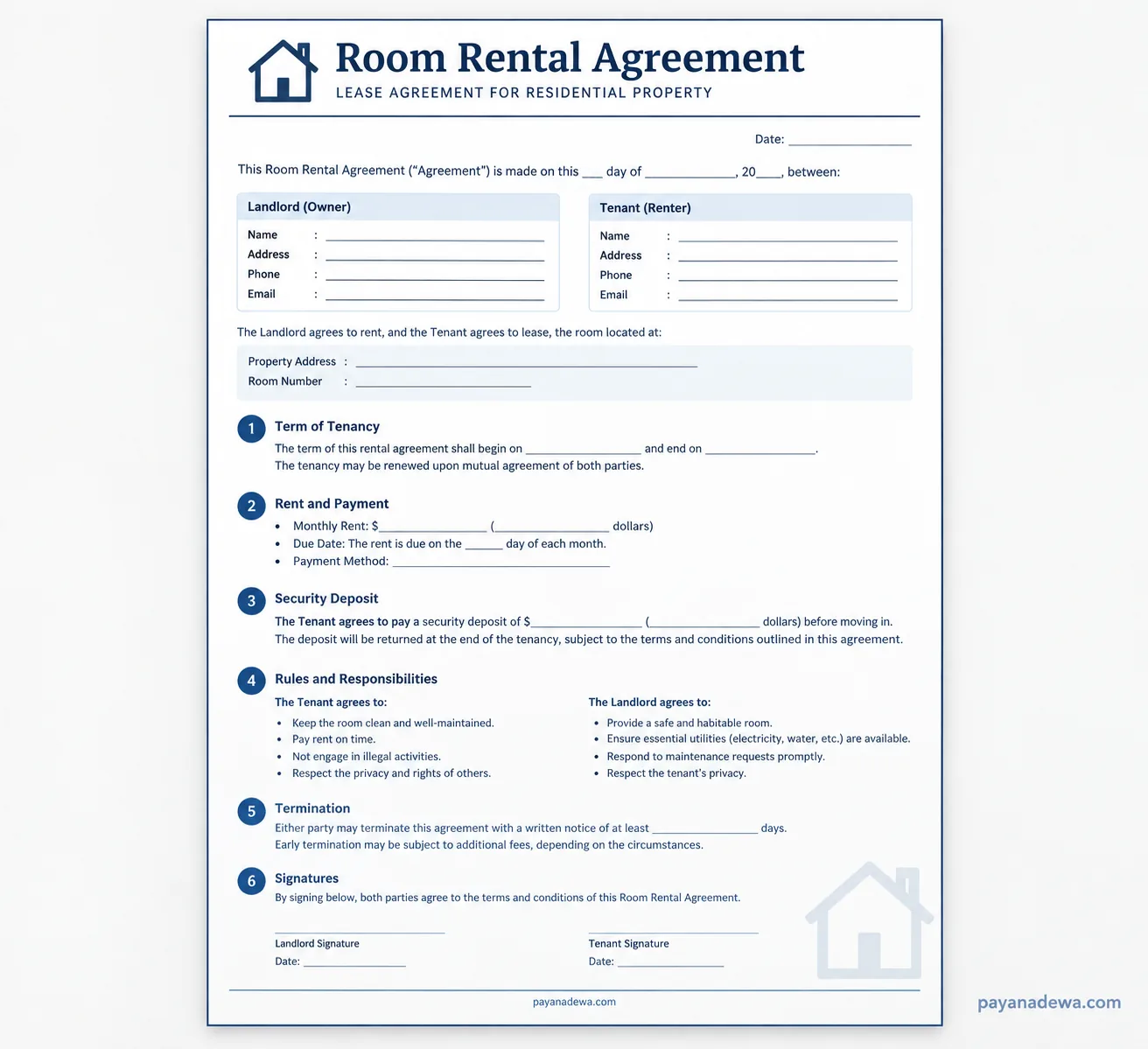
What Is a Room Rental Agreement?
A Room Rental Agreement is a written document between a landlord or property owner and an individual renting a specific room. Unlike a general property lease, it can focus on the use of one bedroom or living space while also explaining how shared areas and household responsibilities are handled.
The agreement may be used for short-term or long-term arrangements, depending on local laws and the terms agreed upon by the parties. It can also be adapted for furnished rooms, shared homes, student housing, or other residential arrangements.
A well-written agreement should be specific enough that both parties can understand exactly what was agreed upon before the tenant moves in.
Why Use a Room Rental Agreement?
Verbal agreements can lead to different interpretations. A written room rental contract creates a clear record of the arrangement and gives both parties an opportunity to discuss important terms before the tenancy begins.
Some of the main benefits include:
- Clear payment terms: The agreement can state the rent amount, due date, payment method, and applicable late-payment terms.
- Defined responsibilities: Both parties can understand who handles cleaning, repairs, utilities, and other obligations.
- House rules: Policies concerning guests, pets, smoking, noise, parking, and shared spaces can be documented.
- Security deposit details: The amount and conditions for returning the deposit can be clearly described.
- Fewer misunderstandings: Written terms provide a reference if a disagreement occurs.
- Better organization: Important information is kept together in one document for both parties.
What Should Be Included in a Room Rental Agreement?
A useful room rental agreement template should cover the key elements of the tenancy without unnecessary complexity. The exact requirements can vary depending on the location and circumstances, so the document should be reviewed against applicable local rental laws.
1. Landlord and Tenant Information
Start by identifying everyone who is entering the agreement. Include the landlord’s or property owner’s name and contact information and the tenant’s full name and contact details.
If several tenants share the property, identify each person who has obligations under the agreement. Accurate names can make the document easier to reference later.
2. Property and Room Details
Describe the rental location clearly. Include the property address and, when applicable, the room number or a description that distinguishes the rented room from other bedrooms.
If the tenant has access to shared areas, such as a kitchen, bathroom, living room, laundry area, parking space, or garden, consider identifying those areas in the agreement.
3. Rental Term
State when the tenancy begins and whether it ends on a specific date or continues on a recurring basis. A fixed-term room rental agreement and a month-to-month arrangement may have different requirements.
The agreement should also explain how renewal works and what notice is required to end the tenancy, subject to applicable law.
4. Rent and Payment Terms
Clearly state the rental amount and when it must be paid. The agreement can also identify the accepted payment method and any other permitted charges.
For example, specify whether rent is paid monthly, weekly, or according to another schedule. Avoid vague wording that could create confusion about the amount or due date.
5. Security Deposit
If a security deposit is required, record the amount and explain the conditions under which it may be withheld or returned. Local laws may impose specific limits and deadlines regarding deposits, so these provisions should be checked carefully.
6. Utilities and Shared Expenses
One of the most important parts of a shared housing arrangement is explaining how utilities are handled. Identify whether electricity, water, gas, internet, waste collection, or other services are included in rent or paid separately.
If expenses are divided among occupants, explain the calculation method. For example, the agreement might specify an equal split or another mutually agreed formula.
House Rules to Consider
A room rental arrangement often involves shared living spaces. Clear house rules can therefore be just as important as the rental amount.
Depending on the property, consider addressing:
- Guest and overnight visitor policies
- Quiet hours and noise expectations
- Smoking or vaping restrictions
- Pet policies
- Use of kitchens and shared appliances
- Cleaning responsibilities
- Parking and vehicle rules
- Storage areas and personal belongings
- Use of common areas
- Internet and utility usage
Rules should be written clearly and applied consistently. Avoid adding provisions that conflict with applicable housing, tenancy, discrimination, privacy, or consumer-protection laws.
Landlord and Tenant Responsibilities
A good room lease agreement should make responsibilities easy to understand. The tenant may be responsible for paying rent on time, keeping the rented room reasonably clean, following agreed house rules, and reporting maintenance problems.
The landlord or property owner may have responsibilities relating to the condition of the property, legally required repairs, essential services, and reasonable access to the rented premises, depending on local law.
Because landlord-tenant rules vary significantly by jurisdiction, the agreement should not be treated as a substitute for local legal requirements.
How to Use a Room Rental Agreement Template
Step 1: Enter the Correct Parties
Fill in the legal names and contact information of the landlord and tenant. Double-check spelling before signing.
Step 2: Describe the Rental Space
Enter the complete property address and identify the room being rented. List shared spaces or included amenities when necessary.
Step 3: Add Financial Terms
Enter the agreed rent, payment frequency, due date, security deposit, and utility arrangements. Make sure both parties agree on these figures before signing.
Step 4: Add Property-Specific Rules
Customize the house rules according to the actual living arrangement. Shared housing often benefits from clear provisions about guests, cleaning, noise, pets, and common areas.
Step 5: Review Termination Requirements
Confirm the required notice period and other termination conditions. These provisions should comply with applicable local law.
Step 6: Sign and Keep Copies
Both parties should review the completed agreement carefully before signing. Each party should retain a complete copy of the signed document and any relevant attachments.
Practical Tips for a Clear Room Rental Contract
Before finalizing a room rental agreement, use a simple checklist to catch potential problems.
- Be specific: Replace vague statements with clear amounts, dates, responsibilities, and rules.
- Discuss unusual arrangements: If the tenant will perform chores or share expenses, document the arrangement.
- Document the property’s condition: Consider using a move-in inspection checklist and photographs where appropriate.
- Keep records: Save receipts, payment confirmations, notices, and copies of communications relating to the tenancy.
- Review local requirements: Rental laws can differ by city, state, province, or country.
- Update agreements properly: If both parties agree to change an important term, record the change in writing.
Common Mistakes to Avoid
Even a simple room rental contract can cause problems if important details are omitted. One common mistake is agreeing on rent verbally without documenting the exact payment schedule. Another is failing to explain who pays for utilities or how shared expenses are calculated.
It is also wise to avoid copying generic clauses without considering the actual property. A rule that makes sense for one shared house may not make sense for another.
Finally, do not assume that a template overrides local law. Mandatory tenant protections, notice requirements, deposit rules, privacy rights, and housing standards may apply regardless of what a contract says.
When Should You Use a Room Rental Agreement?
A written agreement can be useful whenever one person rents a room from another person or property owner. Common situations include renting a spare bedroom, sharing a house with separate rental arrangements, renting a furnished room, or creating a student or temporary housing arrangement.
The more complex the arrangement, the more important it becomes to document details such as shared facilities, utilities, furnishings, visitors, and responsibilities.
Final Thoughts
A Room Rental Agreement provides a practical way to document the expectations of a room rental arrangement. By clearly recording the rental space, payment terms, deposit, utilities, house rules, responsibilities, and termination provisions, both parties can begin the tenancy with a shared understanding.
Use a room rental agreement template as a starting point, customize it for the actual property and arrangement, and check the final terms against applicable local laws before signing. A few minutes spent clarifying the details can make the rental relationship much easier to manage.