A Research Agreement sets clear rules for a research project. It explains what each party will do, how the project will work, and how research results will be handled. As a result, everyone can start the project with the same expectations.
Research projects often involve several people or organizations. They may also involve funding, confidential information, data, equipment, and intellectual property. Therefore, a written agreement can help prevent confusion later.
A good research agreement does not need to be complicated. Instead, it should clearly explain the most important terms. You can use a research agreement template as a starting point and then adjust it to fit your project.
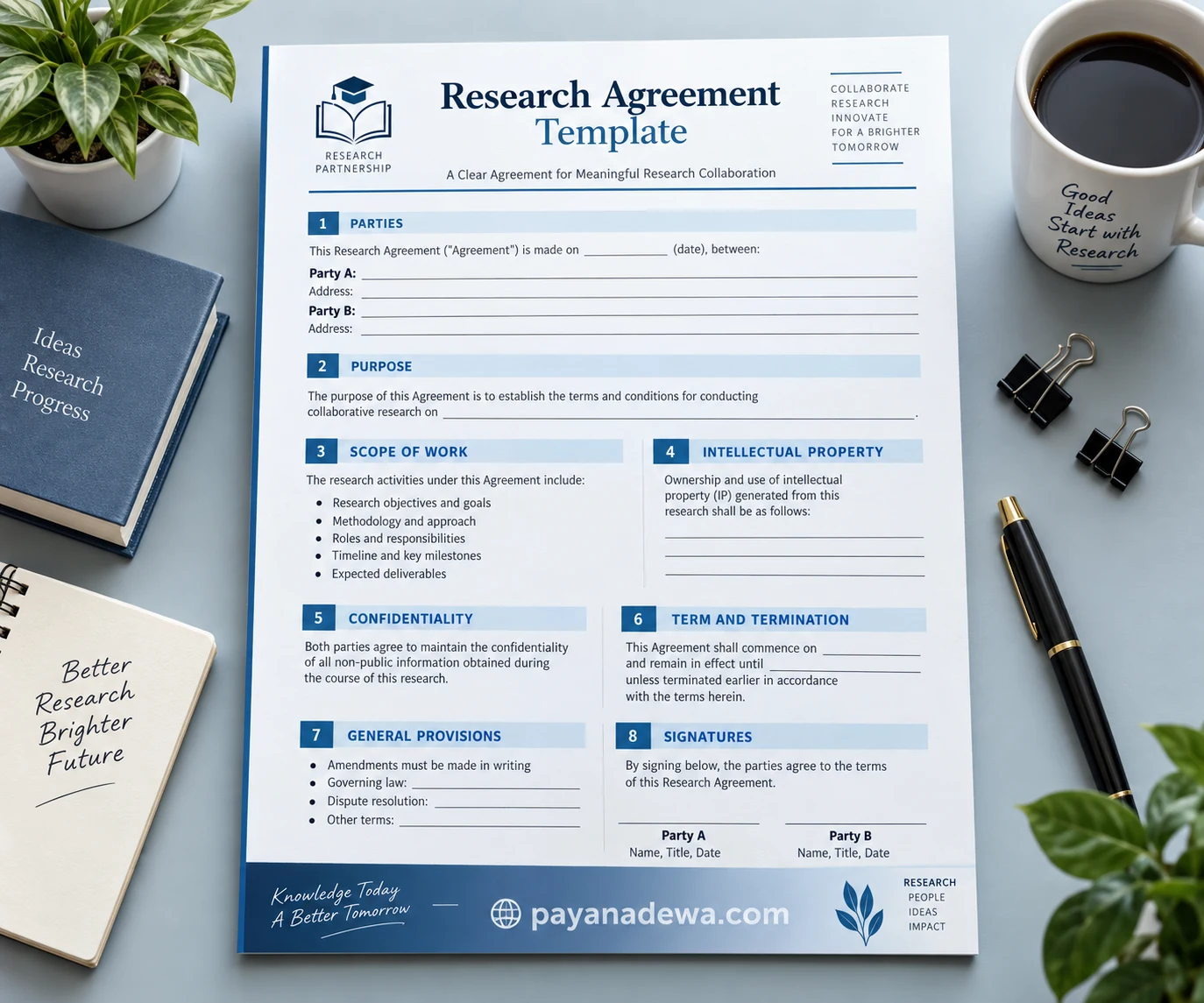
What Is a Research Agreement?
A Research Agreement is a written document between two or more parties. It defines the terms for conducting or supporting a research project. The parties may include researchers, universities, companies, laboratories, nonprofit organizations, or other institutions.
The agreement can cover many areas. For example, it can explain the project goals, research methods, funding, responsibilities, confidentiality, data, intellectual property, and publication rights.
In addition, the agreement creates a shared reference for the entire project. When questions arise, the parties can review the document and check the agreed terms.
Why Is a Research Agreement Important?
Research can involve valuable information and resources. It can also produce results that have long-term value. For this reason, the parties should define their expectations before the research begins.
A clear agreement can help you:
- Define the research objectives
- Assign responsibilities to each party
- Set project deadlines and deliverables
- Explain funding and expenses
- Protect confidential information
- Define intellectual property rights
- Set rules for research data
- Explain publication and disclosure procedures
- Establish termination conditions
What Should a Research Agreement Include?
Every research project has different needs. However, most agreements contain several basic sections. These sections make the document easier to understand and manage.
1. Identify the Parties
Start by identifying everyone involved in the project. Use the correct legal names of the organizations or individuals. You can also include addresses, representatives, and contact information when appropriate.
This section removes uncertainty about who has entered into the agreement. It also makes the document easier to administer later.
2. Explain the Research Purpose
Next, describe the purpose of the research. Keep this section clear and specific. Explain what the project aims to study, develop, test, or discover.
A clear purpose gives the parties a common direction. It can also help them decide whether future requests fall within the original project.
3. Define the Scope of Work
The scope of work explains what the research team will do. It can include the research methods, activities, milestones, and expected results.
For example, the scope may cover:
- Research objectives
- Research methods
- Project activities
- Team responsibilities
- Key milestones
- Expected deliverables
- Project timeline
Be as specific as practical. A clear scope makes it easier to manage the project. It also reduces the risk of disagreements about additional work.
4. Assign Roles and Responsibilities
Each party should know what it must contribute. Therefore, describe the responsibilities of each participant in simple terms.
Responsibilities may include research staff, equipment, laboratory facilities, data, funding, technical support, reporting, or project management.
Clear responsibilities also make progress easier to track. Each participant can see what they need to complete and when they need to complete it.
5. Describe Funding and Expenses
If money supports the research, explain the financial arrangement. Include the funding amount, payment schedule, approved expenses, and reporting requirements when applicable.
Sponsored research may require additional financial terms. For example, the agreement may include rules for budgets, records, audits, or unused funds.
Always make the financial terms easy to understand. This approach can prevent disputes later.
6. Address Intellectual Property
Research can create valuable intellectual property. This may include inventions, software, designs, databases, methods, discoveries, or other research results.
For this reason, the agreement should explain how intellectual property will be handled. It should also distinguish between existing intellectual property and new research results.
Depending on the project, you may need to address:
- Ownership of research results
- Licensing rights
- Patent applications
- Commercial use
- Software rights
- Use of existing intellectual property
Clear terms can make future decisions easier. They can also reduce uncertainty when the research produces valuable results.
7. Protect Confidential Information
Research teams may exchange private or sensitive information. Therefore, the agreement should explain how the parties will protect that information.
A confidentiality section can define confidential information, permitted uses, access rights, and approved disclosures. It can also explain what happens to confidential information after the agreement ends.
Keep the language specific. Clear confidentiality rules help every participant understand their obligations.
8. Explain Data Management
Research projects often involve large amounts of data. Some data may also contain personal, commercial, clinical, or other sensitive information.
For that reason, the agreement can explain how the parties will collect, store, access, transfer, protect, retain, and delete research data.
When applicable, the parties should also review privacy, ethical, institutional, and regulatory requirements before the project begins.
9. Set Publication Rules
Many research projects produce reports, academic papers, presentations, or other publications. The agreement should explain how the parties will handle these materials.
For example, the parties may establish a review process before publication. They may also define rules for confidential information, intellectual property, authorship, and public disclosure.
Clear publication rules help researchers share results while protecting legitimate interests.
10. Set the Project Term
Every research agreement should state when the project begins and when it ends. It should also explain how the parties can extend or terminate the agreement.
Termination terms may cover unfinished work, outstanding payments, research materials, data, confidential information, and intellectual property.
These details are important because some obligations may continue after the research project ends.
11. Add Signature Sections
Finally, provide signature blocks for the authorized representatives. Each party should review the agreement before signing it.
Some organizations may require additional internal approval. Therefore, check the applicable approval process before treating the agreement as final.
How to Use a Research Agreement Template
A Research Agreement Template can save time during the drafting process. However, you should customize the template for your specific project.
Follow these steps:
- Identify every party involved in the research.
- Describe the research purpose.
- Define the project scope.
- Assign responsibilities.
- Explain funding and expenses.
- Address intellectual property.
- Define confidentiality requirements.
- Explain data management procedures.
- Set publication and disclosure rules.
- Define the project term.
- Review the completed document before signing.
This process gives you a practical framework. It also makes it easier to identify missing information before the project begins.
Tips for Creating a Clear Research Agreement
Use Simple and Specific Language
Keep sentences clear and direct. Avoid unnecessary legal or technical language when a simpler term works better.
For example, describe a responsibility in terms of who will do the work, what they will deliver, and when they will deliver it.
Define Important Terms
If the agreement uses special terms, define them clearly. This is especially useful for research results, confidential information, data, intellectual property, and project deliverables.
Keep Responsibilities Easy to Find
Organize responsibilities under clear headings. This makes the agreement easier to use during the project.
Plan for Project Changes
Research projects can change as new findings appear. Therefore, include a process for approving major changes.
The process may cover changes to the research scope, budget, timeline, personnel, methods, or deliverables.
Review Intellectual Property Early
Do not wait until the project produces valuable results to discuss ownership. Address intellectual property before the research begins.
This step can help the parties understand their rights and responsibilities from the start.
Protect Research Data
Data management deserves careful attention. Establish appropriate rules before sensitive data changes hands.
Also, make sure the research team understands the agreed data procedures. Consistent practices can reduce avoidable problems.
Common Research Agreement Mistakes
Even a simple research project can become difficult when important terms remain unclear. Fortunately, many common problems are easy to prevent.
Watch for these mistakes:
- Using vague project objectives
- Leaving responsibilities undefined
- Ignoring intellectual property rights
- Failing to explain confidentiality
- Overlooking research data requirements
- Leaving publication rules unclear
- Forgetting termination procedures
- Using an old template without updating it
- Failing to review the final document
Before signing, read the entire agreement from beginning to end. Check that the document matches the actual research arrangement.
When Should You Use a Research Agreement?
A Research Agreement can be useful whenever two or more parties share responsibilities or resources for a research project.
Common examples include:
- University and company research partnerships
- Sponsored research projects
- Joint academic studies
- Laboratory collaborations
- Technology research projects
- Research involving external data
- Projects using specialized research facilities
- Collaborative scientific investigations
In each case, the agreement can provide a clear framework for the relationship.
Research Agreement vs. Other Research Documents
A Research Agreement is not the only document used in research. Different documents serve different purposes.
Research Agreement vs. Research Proposal
A research proposal usually explains what researchers want to study and how they plan to conduct the project. In contrast, a Research Agreement establishes the terms accepted by the participating parties.
Research Agreement vs. Non-Disclosure Agreement
A non-disclosure agreement mainly focuses on confidential information. A Research Agreement can cover confidentiality as well as many other project terms.
Research Agreement vs. Research Contract
The terms can overlap in practice. However, organizations may use different names based on the purpose, structure, and legal relationship involved.
Always consider the specific requirements of the project rather than relying only on the document title.
Final Checklist Before Signing
Before completing your Research Agreement, check each important section.
- Are all parties correctly identified?
- Is the research purpose clear?
- Is the scope specific enough?
- Are responsibilities clearly assigned?
- Are funding terms documented?
- Are intellectual property rights addressed?
- Are confidentiality rules clear?
- Are data requirements covered?
- Are publication rules explained?
- Are the start and end dates included?
- Are termination procedures clear?
- Have all required parties reviewed the document?
Conclusion
A well-written Research Agreement creates a clear foundation for research collaboration. It explains the project purpose, scope, responsibilities, funding, data, confidentiality, intellectual property, and publication requirements.
A Research Agreement Template can make the drafting process faster. However, you should always customize the template for the actual project. Clear and specific terms are more useful than generic language.
Finally, review the completed agreement carefully before signing. For projects involving significant funding, sensitive data, intellectual property, or complex legal obligations, appropriate professional or institutional review can provide additional protection.