A Music Agreement is an important document for artists, songwriters, producers, musicians, labels, and other creative professionals who work together on a music project. It helps everyone understand their responsibilities, rights, payment arrangements, ownership interests, and expectations before the work begins.
Music projects often involve multiple contributors. One person may write the lyrics, another may compose the melody, a producer may create the arrangement, and an artist may perform the final recording. Without clear written terms, disagreements can arise over royalties, copyrights, credits, licensing, or ownership.
A well-prepared music contract provides a practical framework for collaboration. It does not have to be complicated, but it should clearly describe the relationship between the parties and address the issues that matter to the specific project.
What Is a Music Agreement?
A Music Agreement is a written contract between two or more parties involved in creating, recording, producing, distributing, licensing, or otherwise using music. The agreement explains what each party will do and how rights, compensation, and ownership will be handled.
Depending on the project, the document may be used between an artist and producer, songwriter and co-writer, musician and band, artist and record label, or music creator and client.
Common subjects covered by a music agreement include:
- Names and contact details of the parties
- Description and scope of the music project
- Creative responsibilities
- Copyright and intellectual property ownership
- Master recording rights
- Songwriting and publishing rights
- Royalties and other compensation
- Credits and attribution
- Delivery requirements
- Confidentiality
- Contract duration and termination
- Dispute resolution
Why Use a Music Agreement?
Creative collaboration works best when expectations are clear from the beginning. A written agreement gives the parties a reference point if questions arise later.
Clarify Ownership
Music can involve several different rights. The composition, lyrics, sound recording, performance, and related materials may have different owners or contributors. A contract can explain how those rights are allocated.
Define Payment and Royalties
Payment terms should be specific. Depending on the arrangement, compensation may include a flat fee, advance, royalties, revenue sharing, or a combination of these methods.
Reduce Future Disputes
Important decisions that exist only in conversations or messages can become difficult to prove later. A signed agreement creates a clearer record of what the parties agreed to.
Protect Creative Contributions
Songwriters, producers, performers, and other contributors can use contractual terms to document their role in a project. This can be especially useful when several people contribute to the same musical work.
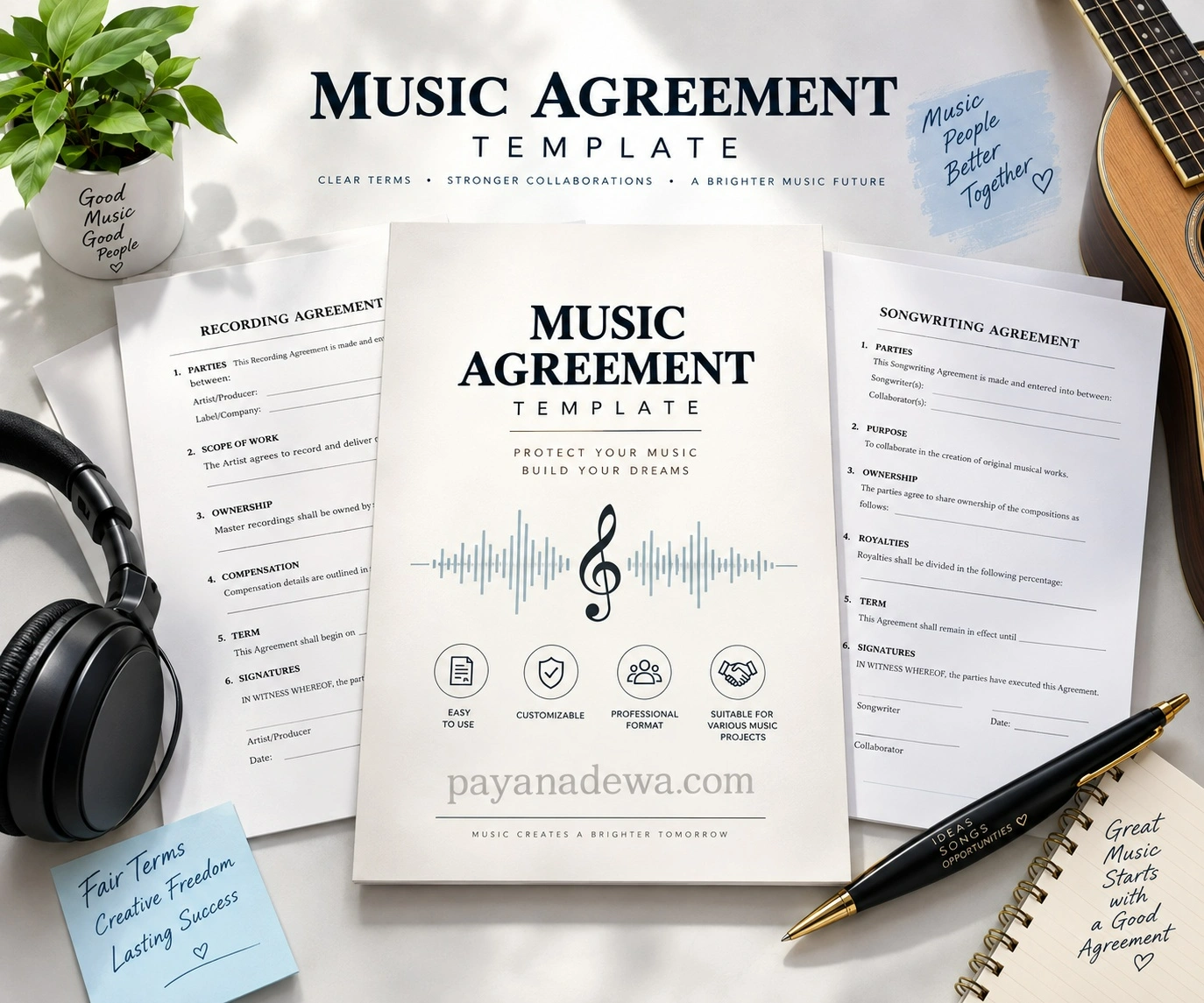
Key Elements of a Music Agreement
A useful agreement should reflect the actual relationship and project. The following sections are commonly considered when preparing a music contract.
1. Parties to the Agreement
Start by identifying everyone entering the agreement. Use complete legal names where appropriate and provide relevant contact information. If a company or label is involved, identify the legal entity correctly.
2. Scope of Work
Describe the project and the services being provided. For example, a producer agreement might specify production, recording, arrangement, editing, mixing, or mastering responsibilities.
Clear scope language can help prevent confusion about whether additional services are included in the original compensation.
3. Ownership and Copyright
Ownership is one of the most important parts of a Music Agreement. The contract should identify who owns the relevant musical composition, lyrics, sound recording, or other intellectual property.
Where multiple creators contribute to a composition, the agreement can document the agreed ownership percentages. The parties should also distinguish between ownership of the underlying composition and ownership of a particular sound recording when applicable.
4. Royalties and Compensation
Explain how each party will be paid. A strong agreement avoids vague phrases such as “a fair share” and instead provides specific percentages, amounts, payment dates, or calculation methods.
Depending on the project, the agreement may address producer royalties, songwriter royalties, mechanical royalties, performance income, licensing revenue, or other forms of compensation.
5. Credits
Music creators often depend on accurate credits for professional recognition. Include the expected artist, songwriter, producer, featured performer, engineer, or other relevant credits when appropriate.
6. Delivery Requirements
If someone is responsible for delivering recordings, stems, instrumental versions, artwork, metadata, or other materials, explain what must be delivered and when.
7. Term and Termination
State when the agreement begins and how long it remains effective. The contract can also explain circumstances under which either party may terminate the relationship.
Different Types of Music Agreements
There is no single contract that works for every music project. The appropriate document depends on the parties and the nature of their collaboration.
Artist and Producer Agreement
This type of agreement can define production services, fees, ownership, producer royalties, credits, recording responsibilities, and rights to the finished master.
Songwriter Collaboration Agreement
Co-writers can use an agreement to document contributions and agreed ownership percentages. This can be particularly helpful when several writers create a song together.
Recording Agreement
A recording agreement can address the creation and use of sound recordings. Depending on the arrangement, it may include recording obligations, advances, royalties, ownership, delivery, and release terms.
Music Licensing Agreement
A licensing agreement gives a party defined permission to use music under specified conditions. Important terms may include the permitted use, territory, duration, media, exclusivity, and licensing fee.
Band Agreement
Band members can use a written agreement to establish how income, expenses, songwriting, equipment, recordings, performances, and band-related assets will be handled.
How to Create a Music Agreement
Creating a music contract becomes easier when the important business questions are answered before writing the final document.
Discuss the Business Terms First
Before preparing the agreement, discuss who is doing what, who owns the work, how contributors will be credited, and how everyone will be compensated.
Put Specific Terms in Writing
Replace unclear statements with measurable terms. Instead of saying that a contributor will receive “some royalties,” specify the applicable percentage and explain how those royalties are calculated.
Review Intellectual Property Rights Carefully
Music rights can be complex. Make sure the agreement distinguishes between the composition and recording when that distinction matters to the project.
Make the Document Easy to Understand
A contract should be organized logically. Use clear headings and concise language so the parties can quickly find information about payment, ownership, responsibilities, and termination.
Have the Parties Sign Before Work Begins
Ideally, the major terms should be agreed and documented before significant creative work, recording, distribution, or commercial exploitation takes place. Each party should retain a copy of the completed agreement.
Practical Tips for Using a Music Agreement Template
A Music Agreement Template can provide a useful starting structure, especially for independent musicians and small creative teams. However, a template should be customized for the specific project rather than treated as a universal contract.
- Replace every placeholder with accurate information.
- Clearly identify all parties and their roles.
- Specify ownership percentages where relevant.
- Define payment amounts and royalty arrangements precisely.
- Document songwriting and production credits.
- Describe the intended use of the music.
- Include delivery dates and project requirements when necessary.
- Review termination and dispute provisions.
- Keep a signed copy for every party.
- Consider professional legal review for significant commercial projects.
Common Mistakes to Avoid
Even a simple agreement can become problematic if important details are missing.
Relying Only on Verbal Promises
Friendly collaborations can change over time. Written terms make it easier for everyone to remember what was actually agreed.
Leaving Ownership Unclear
Statements such as “we both own the song” may not provide enough detail. Identify the relevant work, ownership interests, and rights as clearly as possible.
Ignoring Future Uses
Consider whether the music could later be used for streaming, advertising, film, television, games, social media, synchronization, live performances, or other commercial purposes.
Using the Same Contract for Every Project
A producer agreement and a synchronization license can have very different requirements. Customize the agreement to match the actual relationship and intended use.
When Should You Get Legal Advice?
A template can help organize information, but it is not a substitute for legal advice when the project involves substantial money, complicated intellectual property rights, exclusive arrangements, record labels, publishing interests, international transactions, or significant commercial licensing.
Professional legal advice can help identify issues that may not be obvious to artists or independent creators. The applicable rules can also vary depending on the jurisdiction and circumstances of the agreement.
Final Thoughts on Music Agreements
A well-structured Music Agreement helps turn creative expectations into clear business terms. By documenting responsibilities, ownership, compensation, credits, licensing rights, and other important conditions, the parties can begin their collaboration with a shared understanding of the project.
Whether you are an independent artist, songwriter, producer, musician, label, or creative client, taking time to document the arrangement can make a music project easier to manage. A customizable Music Agreement Template can provide a practical starting point, while professional legal guidance may be appropriate when the rights or financial interests involved are significant.