A Membership Agreement is an important document that establishes the relationship between an organization and its members. Whether you operate a professional association, private club, nonprofit organization, fitness community, online membership platform, or business network, a clear agreement can help everyone understand what membership involves.
A well-written membership agreement explains important details such as member rights, responsibilities, fees, benefits, renewal terms, termination conditions, and applicable rules. Instead of relying on verbal explanations or scattered policies, organizations can use one structured document to communicate expectations clearly from the beginning.
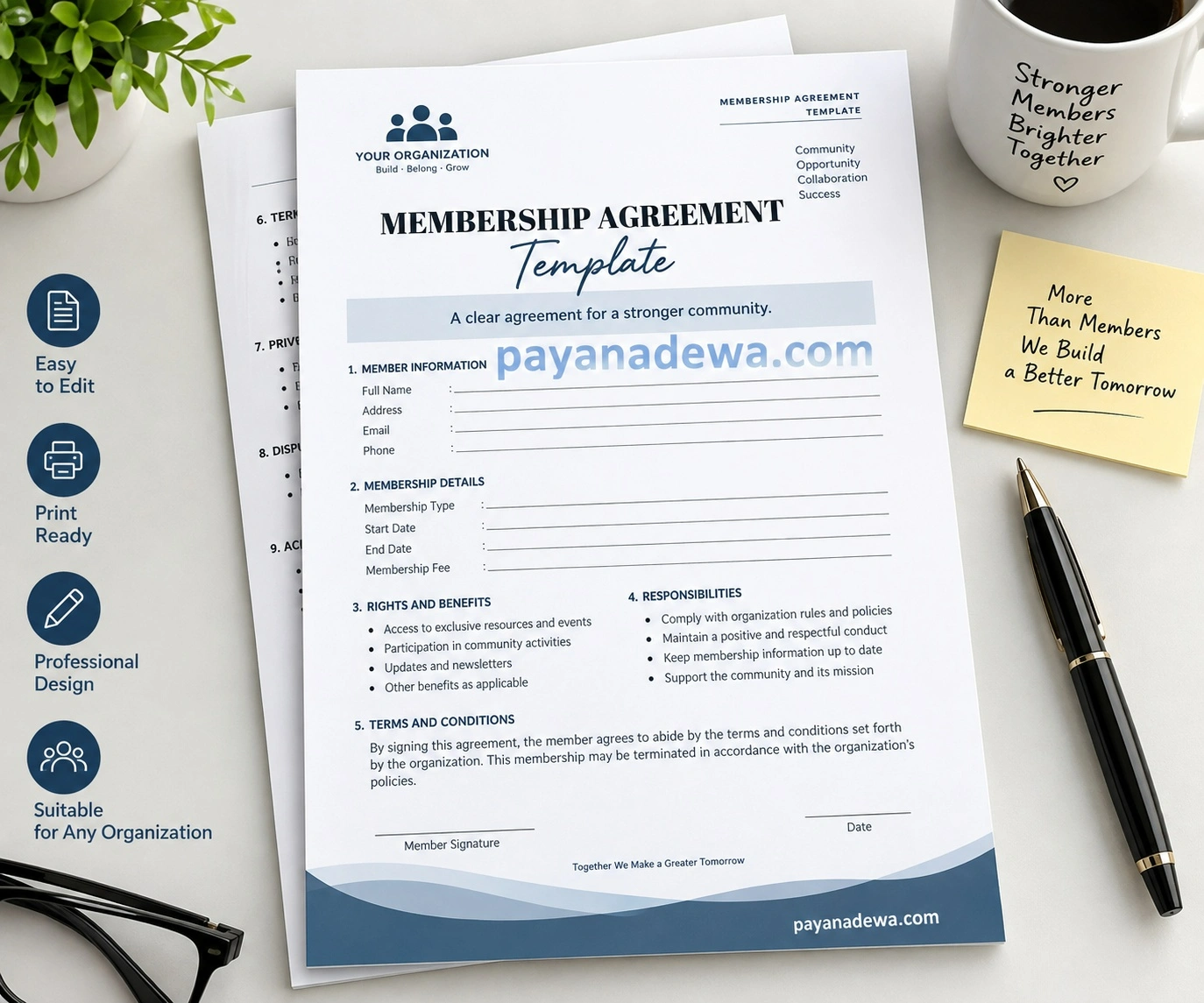
Using a Membership Agreement Template can also make the drafting process easier. A template provides a practical starting structure while allowing organizations to customize provisions according to their membership model, services, internal policies, and applicable laws.
What Is a Membership Agreement?
A Membership Agreement is a written document that defines the terms under which an individual or organization becomes and remains a member of another organization. It creates a clear framework for the membership relationship and can reduce misunderstandings about what each party is expected to do.
The exact content depends on the organization. For example, a professional association may focus on membership eligibility and professional standards, while a private club may emphasize access privileges, fees, conduct rules, and facility usage.
Although membership agreements vary, they commonly address:
- Member identification and contact information
- Membership type and duration
- Membership fees and payment requirements
- Member benefits and access rights
- Rules, responsibilities, and conduct expectations
- Renewal and cancellation procedures
- Suspension or termination conditions
- Privacy and use of member information
- Dispute resolution procedures
- Signature and agreement acknowledgment
Why Is a Membership Agreement Important?
A membership agreement gives both the organization and its members a shared understanding of the membership arrangement. Clear documentation can make administrative processes more consistent and provide members with a convenient reference when questions arise.
Sets Clear Expectations
Members should know what they receive in exchange for their membership and what obligations apply to them. A written agreement can describe these expectations in straightforward language before the membership begins.
Explains Membership Benefits
Membership programs often provide access to resources, events, discounts, services, facilities, educational materials, or online communities. Documenting these benefits helps distinguish included services from optional offerings or benefits that may be subject to additional conditions.
Defines Member Responsibilities
An effective agreement should also explain member responsibilities. These may include paying fees on time, following organizational policies, maintaining appropriate conduct, protecting confidential information, and using facilities or services responsibly.
Supports Consistent Administration
A standardized agreement can help an organization manage new memberships, renewals, cancellations, and policy acknowledgments more consistently. It can also provide a central reference for staff and members.
Essential Elements of a Membership Agreement
Before creating a membership agreement, identify the information that members need to understand before accepting the terms. The following sections provide a practical structure.
1. Member Information
Start with basic identifying information. Depending on the membership model, this may include the member’s full name, address, email address, telephone number, organization name, or membership identification number.
2. Membership Details
Specify the membership category, start date, expiration date, and other relevant details. If several membership levels exist, explain which category applies to the member and what that category includes.
3. Fees and Payment Terms
Clearly state the membership fee and payment schedule. Explain whether payments are monthly, quarterly, annually, or based on another schedule. If applicable, describe late payments, automatic renewal, taxes, refunds, or additional charges.
4. Rights and Benefits
Describe what members can access as part of their membership. This section should be specific enough to prevent confusion about services, facilities, events, content, discounts, voting rights, or other privileges.
5. Responsibilities and Rules
Members should understand the standards that apply to their participation. Include relevant organizational rules, acceptable conduct requirements, usage policies, and responsibilities for maintaining accurate account information.
6. Renewal and Cancellation
Explain how the membership renews and how a member can cancel it. If notice is required, clearly state the required notice period and the acceptable cancellation process.
7. Suspension or Termination
The agreement may describe circumstances in which membership can be suspended or terminated. Examples may include nonpayment, serious policy violations, misuse of services, or other circumstances defined by the organization’s rules.
8. Signatures and Acceptance
Finish with an acknowledgment that allows the member and, when appropriate, an authorized organization representative to confirm acceptance of the agreement. Include signature and date fields or an appropriate electronic acceptance mechanism.
How to Create a Membership Agreement
Identify Your Membership Model
Begin by determining what type of organization you operate and how membership works. Consider whether members pay a recurring fee, receive physical access, participate in a professional community, receive digital services, or obtain a combination of benefits.
List Member Benefits and Obligations
Create two simple lists before drafting the agreement. One should identify what the organization promises to provide, while the other should identify what members are expected to do. This makes it easier to create balanced and understandable terms.
Use Simple and Specific Language
A membership document does not need unnecessarily complicated wording. Clear language can make important provisions easier for members to understand. Define specialized terms when they are necessary and avoid vague descriptions where a specific explanation would be more useful.
Organize the Document Logically
Use headings and short sections so readers can quickly find information. A logical structure can improve readability and make the agreement easier to review before signing.
Tips for Using a Membership Agreement Template
A template can save time, but it should be customized rather than used without review. Start with the basic structure and adapt each section to the actual membership program.
- Replace placeholder information: Add your organization name, contact information, membership categories, and applicable details.
- Customize benefits: Make sure every listed benefit accurately reflects what members receive.
- Review payment terms: Confirm that fees, billing cycles, renewals, refunds, and cancellation procedures are accurate.
- Match your policies: Ensure the agreement does not conflict with your current membership rules or internal policies.
- Keep language understandable: Remove unnecessary repetition and explain important obligations clearly.
- Review applicable requirements: Depending on your location and organization, legal or regulatory requirements may apply.
Common Mistakes to Avoid
Even a professionally formatted membership agreement can create problems if important details are missing or inconsistent. Before publishing or signing the document, check the following areas.
Using Generic Terms Without Customization
A generic template may contain provisions that do not apply to your organization. Review every section and remove or modify information that does not match your actual membership program.
Leaving Fees or Renewal Rules Unclear
Payment and renewal conditions should be easy to find and understand. Ambiguous billing terms can lead to unnecessary questions and disputes.
Ignoring Cancellation Procedures
Members should know how to cancel their membership and whether any notice period applies. The organization should also have a consistent process for handling cancellation requests.
Overlooking Policy Updates
Membership programs can change over time. Review the agreement periodically to make sure it continues to reflect current fees, benefits, policies, services, and procedures.
When Should You Update a Membership Agreement?
A membership agreement should be reviewed whenever a significant change affects the membership relationship. Updating the document can help keep the information presented to new and existing members consistent with current practices.
Consider reviewing the agreement when you change membership prices, introduce new membership levels, modify benefits, change cancellation procedures, introduce new services, update organizational policies, or face changes in applicable legal requirements.
Organizations should also establish a regular review process rather than waiting for a problem to occur. The appropriate review frequency depends on the nature of the organization and how frequently its membership terms change.
Membership Agreement vs Membership Policy
A membership agreement and a membership policy can serve related but different purposes. A membership agreement generally establishes the terms accepted by the member, while a membership policy may provide broader operational rules or procedures.
For example, an organization could use a membership agreement to establish fees, membership duration, benefits, and acceptance terms while maintaining separate policies for facility use, community conduct, privacy, or event participation.
The best structure depends on the organization. Some organizations may combine related information into one agreement, while others may use separate policies that are incorporated by reference where appropriate.
How a Membership Agreement Improves the Member Experience
A clear agreement is not only an administrative document. It can also improve the member experience by making important information easier to understand before someone joins.
When members can quickly identify fees, benefits, responsibilities, renewal conditions, and cancellation procedures, they can make informed decisions about participation. Clear documentation can also reduce repetitive questions for staff and provide members with a useful reference after enrollment.
The most effective approach is to treat the agreement as part of the overall membership journey. Present it at the appropriate stage, make it accessible, and ensure that the information matches the organization’s actual services and policies.
Final Checklist Before Using Your Membership Agreement
Before distributing a new agreement, review the document carefully. A practical final checklist includes:
- Member information fields are complete and appropriate.
- Membership categories are accurately described.
- Fees and payment schedules are clearly stated.
- Benefits and access rights match the actual membership program.
- Member responsibilities are understandable.
- Renewal and cancellation procedures are clearly explained.
- Suspension and termination provisions are consistent with organizational policies.
- Signature or electronic acceptance fields are included.
- Contact information for membership questions is current.
- The document has been reviewed for applicable legal and organizational requirements.
Conclusion
A well-structured Membership Agreement helps organizations establish clear expectations, explain member benefits, document responsibilities, and create a consistent membership process. Whether you are managing a club, association, nonprofit, professional community, or subscription-based organization, the right agreement can make important membership terms easier to understand.
A Membership Agreement Template provides a useful starting point for organizing these details. Customize the template carefully, verify that the terms reflect your actual membership program, and review the document whenever significant policies or services change. For agreements with significant legal or financial consequences, consider having the final document reviewed by a qualified legal professional in the relevant jurisdiction.