A Reseller Agreement is a written contract that defines the relationship between a company and a reseller who is authorized to market or sell the company’s products or services. By clearly documenting the rights, responsibilities, pricing terms, intellectual property rules, and termination conditions, both parties can establish a more predictable business relationship.
Whether you are a manufacturer, software provider, wholesaler, service company, or independent reseller, a well-structured reseller contract can help reduce misunderstandings and establish clear expectations from the beginning. It can also provide a practical framework for handling payments, customer relationships, branding, confidentiality, and disputes.
This guide explains what a Reseller Agreement should contain, how it works, and what businesses should consider before signing one.
What Is a Reseller Agreement?
A Reseller Agreement is a legally binding business document between a supplier or company and an authorized reseller. The agreement gives the reseller permission to promote and sell specified products or services under agreed terms.
Unlike an informal arrangement based on emails or verbal discussions, a formal reseller agreement puts important commercial terms into writing. Depending on the business model, the reseller may purchase products at wholesale prices and resell them to customers, or receive a commission for generating sales.
The exact structure depends on the relationship. Some agreements cover physical products, while others are designed for software, subscriptions, digital products, professional services, or technology solutions.
Why Is a Reseller Agreement Important?
A written reseller contract helps both parties understand what they can and cannot do. It establishes a common reference point if questions arise about pricing, branding, sales territories, customer ownership, or termination.
Common benefits include:
- Clearly defining the reseller’s authorization and responsibilities.
- Documenting wholesale prices, commissions, discounts, and payment terms.
- Protecting trademarks, copyrighted materials, and other intellectual property.
- Establishing confidentiality obligations.
- Defining the agreement term and termination process.
- Reducing misunderstandings between the supplier and reseller.
- Creating a framework for resolving business disputes.
However, an agreement should be tailored to the actual business relationship rather than copied without review. Local laws, industry requirements, and the nature of the products or services may affect which provisions are appropriate.
Key Elements of a Reseller Agreement
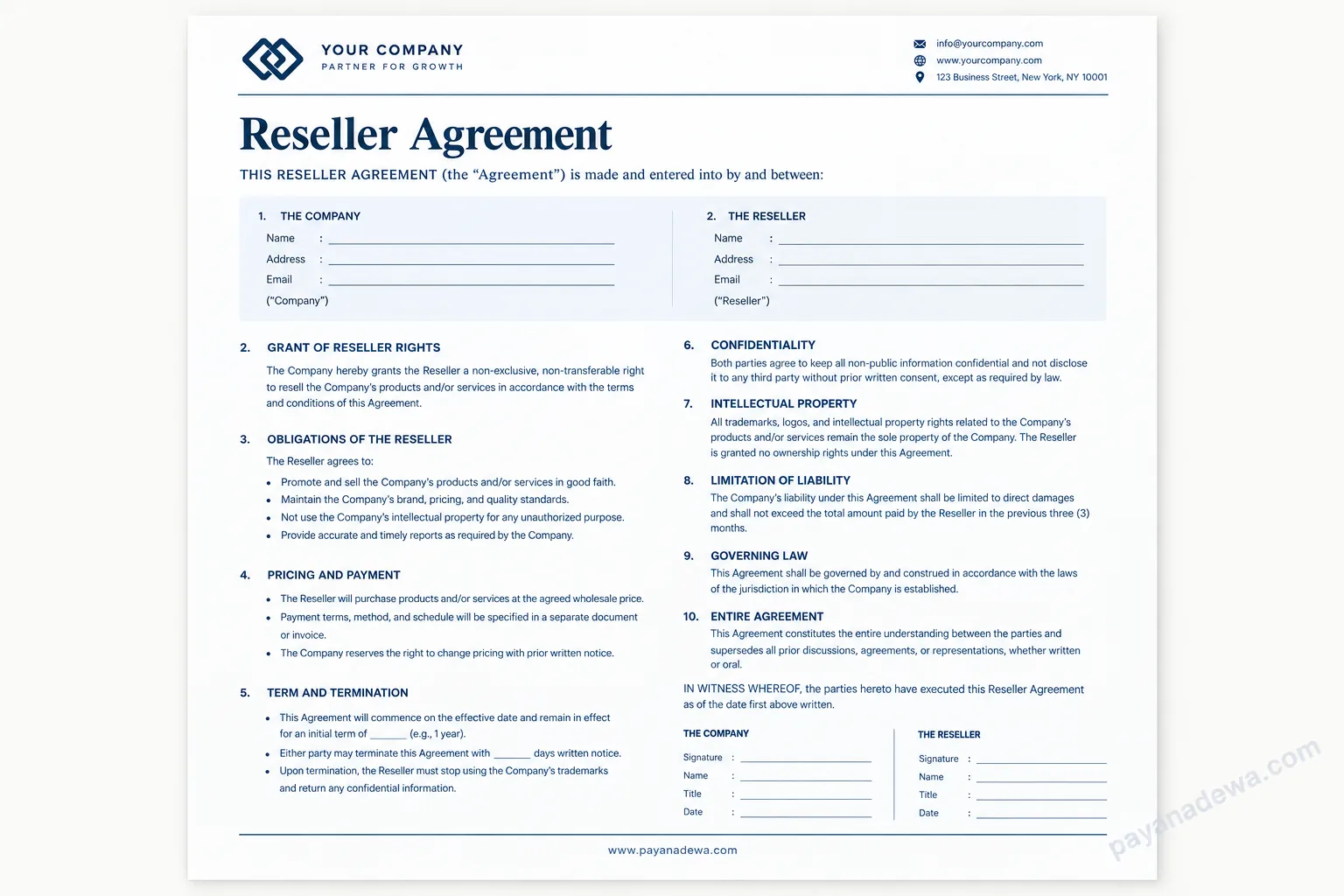
A comprehensive reseller agreement typically contains several important sections. The precise provisions will vary depending on the transaction, but the following areas deserve particular attention.
1. Identification of the Parties
The contract should identify the company or supplier and the reseller accurately. Include legal business names, addresses, contact information, and, where appropriate, registration or tax details.
Correct identification is important because it establishes exactly which entities are entering into the agreement.
2. Appointment and Reseller Rights
This section explains what the reseller is authorized to sell and whether the appointment is exclusive or non-exclusive. It can also specify geographic territories, sales channels, customer categories, or product lines.
For example, an agreement might allow a reseller to sell selected products through its website but prohibit sales through certain marketplaces or geographic regions.
3. Products and Services
The agreement should clearly describe the products or services covered by the reseller relationship. If the supplier offers a large catalog, the contract can reference an attached product schedule or pricing list.
Clear product definitions help prevent disputes about which items are included under the reseller arrangement.
4. Pricing and Payment Terms
Pricing is one of the most important commercial provisions in a reseller contract. The agreement should explain how the reseller purchases products or earns compensation.
Depending on the business model, relevant terms may include:
- Wholesale or reseller pricing.
- Recommended retail pricing.
- Discount structures.
- Commission percentages.
- Payment deadlines.
- Accepted payment methods.
- Taxes and applicable charges.
- Currency and invoicing requirements.
If prices can change, the agreement should explain how much notice the supplier must provide and when new pricing becomes effective.
5. Reseller Responsibilities
A reseller may have obligations concerning product promotion, customer support, advertising, reporting, brand usage, and compliance with applicable laws.
For example, the reseller may be required to provide accurate product information, avoid misleading advertising, follow approved branding guidelines, and submit periodic sales reports.
6. Intellectual Property
A Reseller Agreement should distinguish between the right to sell a product and ownership of intellectual property. Permission to use a company logo, trademark, product photographs, marketing materials, or software does not necessarily transfer ownership of those assets.
The contract should explain how intellectual property may be used and what happens to those permissions when the relationship ends.
7. Confidentiality
Resellers may receive confidential information such as wholesale pricing, customer information, product roadmaps, technical documentation, marketing plans, or business strategies.
A confidentiality clause can establish how such information must be protected, who may access it, and what happens to confidential information after termination.
8. Term and Termination
The agreement should specify when it begins, how long it remains effective, and how either party can terminate it.
Common termination provisions address:
- Termination for convenience with advance written notice.
- Termination for material breach.
- Failure to make required payments.
- Insolvency or bankruptcy events where legally appropriate.
- Unauthorized use of intellectual property.
- Actions that materially damage the supplier’s brand or business.
The contract should also explain what happens after termination, including outstanding payments, customer orders, confidential information, inventory, and use of trademarks.
Exclusive vs Non-Exclusive Reseller Agreements
One important decision is whether the reseller receives exclusive rights. An exclusive arrangement may restrict the supplier from appointing other resellers within a specified territory or customer segment.
A non-exclusive agreement allows the supplier to work with multiple resellers. The contract should state the arrangement clearly because exclusivity can have significant commercial consequences.
Questions to Consider Before Granting Exclusivity
- What geographic territory is covered?
- Which products or services are exclusive?
- Is exclusivity tied to minimum sales targets?
- Can the supplier sell directly to customers?
- How long does exclusivity last?
- What events cause exclusivity to end?
Reseller Agreement vs. Distribution Agreement
The terms “reseller” and “distributor” are sometimes used interchangeably, but the underlying business relationship can differ. A reseller generally purchases or promotes products for resale to customers, while a distributor may have broader responsibilities involving inventory, logistics, territory management, or downstream sales channels.
The appropriate agreement depends on how the parties actually operate. Businesses should avoid relying solely on the document title and instead ensure that the contract accurately describes the commercial relationship.
Tips for Creating a Reseller Contract
Keep Commercial Terms Specific
Avoid vague language for important financial and operational terms. Instead of simply stating that the reseller will receive a “discount,” specify how the discount is calculated and when it applies.
Define Customer Ownership
For businesses with recurring subscriptions or service contracts, clarify who owns the customer relationship and who handles renewals, support, refunds, and upselling.
Address Brand Guidelines
Explain how the reseller may use logos, trademarks, product images, promotional materials, and company names. Clear brand rules can help maintain consistent customer-facing communications.
Plan for the End of the Relationship
A strong reseller agreement does not only describe how the relationship begins. It also explains what happens when the relationship ends. Include provisions covering pending orders, unpaid invoices, customer support, inventory, confidential information, and intellectual property.
Common Mistakes to Avoid
Several issues can create unnecessary problems in reseller relationships.
- Using an agreement that does not match the actual business model.
- Failing to define whether reseller rights are exclusive.
- Leaving pricing and payment terms ambiguous.
- Ignoring intellectual property and trademark permissions.
- Failing to specify termination procedures.
- Using inconsistent company names throughout the document.
- Assuming a generic template automatically complies with local law.
A template can provide a useful starting point, but important commercial agreements should be reviewed and customized for the parties, jurisdiction, products, and intended business relationship.
How to Use a Reseller Agreement Template
A reseller agreement template can save time by providing a structured starting point. Begin by identifying both parties and describing the products or services covered. Next, customize the commercial terms, reseller rights, responsibilities, payment arrangements, intellectual property provisions, confidentiality requirements, and termination clauses.
After completing the document, both parties should review the terms carefully. Any schedules, pricing tables, product lists, or additional policies referenced by the agreement should also be attached or clearly incorporated.
Before signing, verify that the final version reflects the actual agreement between the parties and complies with applicable legal requirements.
Frequently Asked Questions About Reseller Agreements
Is a Reseller Agreement legally binding?
It can be legally binding when properly formed and executed, but enforceability depends on the applicable law, the contract terms, and the circumstances surrounding the agreement.
Can a Reseller Agreement be changed?
Yes. The contract can generally be amended when the parties agree to changes in accordance with its amendment provisions. Material changes should be documented clearly and signed or otherwise accepted as required by the agreement and applicable law.
Should a reseller agreement include a minimum sales requirement?
It can. Minimum purchase or sales requirements may be useful when the supplier provides territory protection, exclusivity, special pricing, or other benefits. If included, the targets and consequences of failing to meet them should be clearly defined.
Does a reseller own the supplier’s trademarks?
Generally, permission to use a trademark for authorized sales does not itself transfer ownership. The agreement should clearly describe the reseller’s permitted use and any restrictions.
Conclusion
A well-prepared Reseller Agreement creates a clear framework for a supplier and reseller to work together. By addressing authorization, products, pricing, payments, responsibilities, intellectual property, confidentiality, exclusivity, termination, and dispute-related provisions, the parties can establish clearer expectations and reduce avoidable misunderstandings.
A professional reseller agreement template is a useful starting point, but it should be customized to the specific business arrangement and reviewed for applicable legal requirements before it is signed. Clear terms at the beginning can make the reseller relationship easier to manage as the business grows.
Readability analysis: Green-style readability target achieved through short paragraphs, descriptive headings, active-voice sentences, transition words, and scannable bullet lists.