A Maintenance Agreement is a written contract that defines how maintenance services will be provided, what work is included, how often services will occur, and what each party is responsible for. Whether you manage equipment, property, software, facilities, vehicles, or other assets, a well-structured agreement can make ongoing maintenance easier to organize and manage.
Instead of relying on informal promises or verbal arrangements, a maintenance contract gives both the client and service provider a clear reference point. It can establish service expectations, payment terms, response procedures, responsibilities, contract duration, and other important conditions before maintenance work begins.
A carefully prepared agreement can also help reduce misunderstandings. When the scope of work, service frequency, pricing, and responsibilities are documented in advance, both parties have a better understanding of what the maintenance relationship is expected to deliver.
For businesses and independent service providers, using a Maintenance Agreement Template can make the drafting process more efficient. A template provides a practical starting structure while still allowing the agreement to be customized for the specific services, assets, and relationship involved.
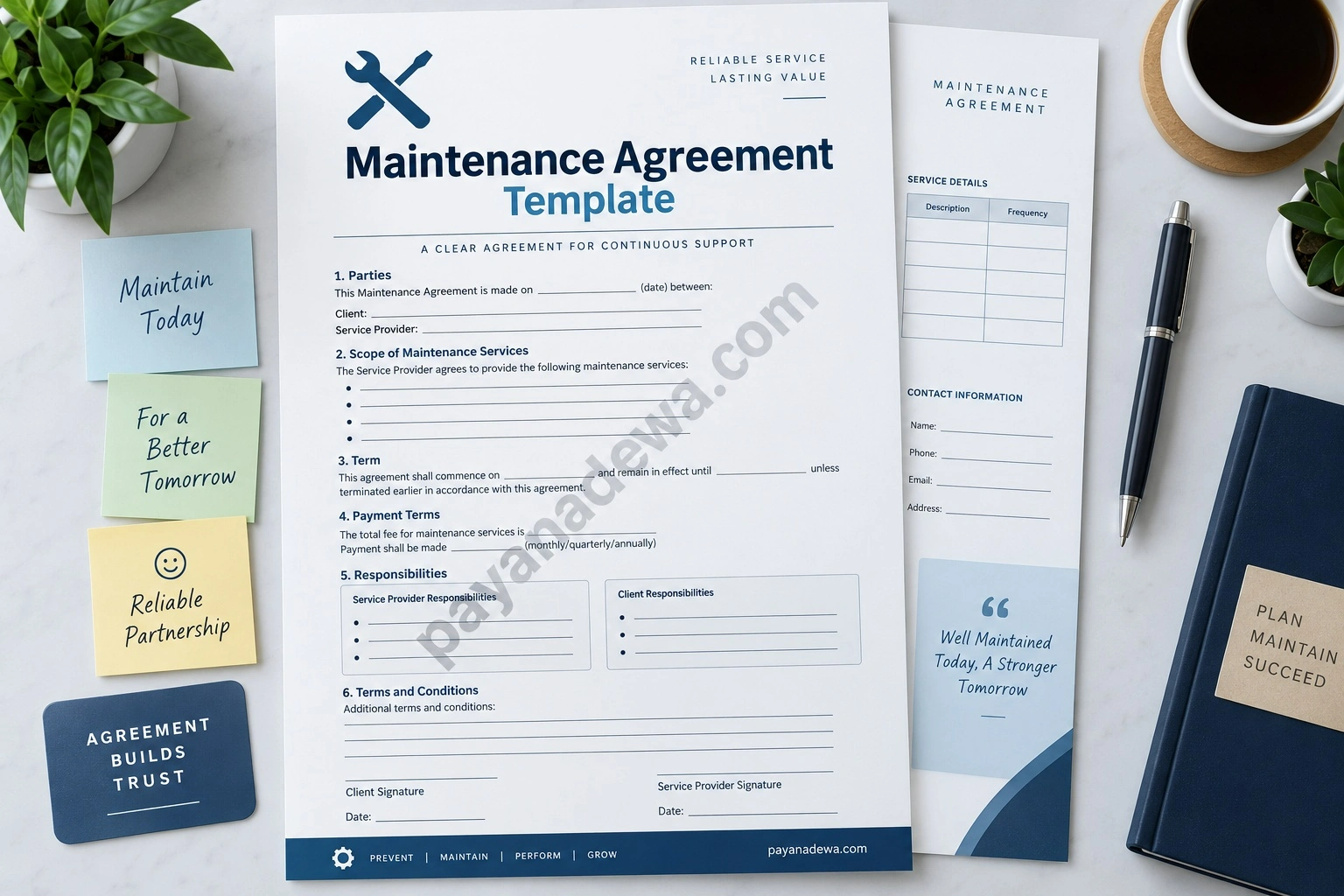
What Is a Maintenance Agreement?
A Maintenance Agreement is a formal arrangement between a service provider and a client that establishes the terms for recurring or ongoing maintenance services. Depending on the industry, the agreement may cover preventive maintenance, inspections, repairs, technical support, servicing, replacements, or routine upkeep.
The agreement typically identifies the parties involved and explains the services that the provider will perform. It may also specify when services will be delivered, how maintenance requests should be submitted, what happens when additional work is required, and how fees will be calculated.
Why a Written Maintenance Agreement Matters
Written documentation provides clarity for both sides. A client can understand exactly what services are included, while a provider can clearly establish the limits of its responsibilities.
- Defines the scope of maintenance services
- Clarifies service schedules and frequencies
- Documents payment and billing terms
- Establishes client and provider responsibilities
- Creates a reference for handling maintenance requests
- Provides a framework for renewals, changes, and termination
Key Elements of a Maintenance Agreement
The contents of a maintenance agreement will vary depending on the service and industry. However, several sections are commonly useful when preparing a professional maintenance contract.
1. Identification of the Parties
Start by clearly identifying the client and service provider. Include relevant business names, contact information, addresses, and other details necessary to distinguish the parties.
2. Scope of Maintenance Services
The scope of services is one of the most important sections. Describe what the provider is expected to maintain and what tasks are included. Avoid vague language whenever possible.
For example, instead of simply stating “equipment maintenance,” the agreement could identify inspections, cleaning, calibration, preventive servicing, component checks, or other applicable tasks.
3. Maintenance Schedule
Specify how frequently maintenance will take place. Depending on the arrangement, services may be performed weekly, monthly, quarterly, annually, or according to usage or manufacturer recommendations.
4. Payment Terms
Explain the maintenance service fee and payment schedule. The agreement can identify whether payments are monthly, quarterly, annually, or based on individual service visits.
It is also useful to explain how additional services, emergency maintenance, replacement parts, travel costs, or work outside the agreed scope will be handled.
5. Responsibilities of Each Party
A strong maintenance contract should distinguish between provider responsibilities and client responsibilities. This helps prevent assumptions about who must perform a particular task.
- Service provider: Perform agreed maintenance tasks professionally and according to the defined schedule.
- Client: Provide reasonable access to the equipment, property, systems, or facilities requiring service.
- Service provider: Communicate relevant maintenance findings or recommendations.
- Client: Make payments according to the agreed terms.
Types of Maintenance Agreements
Maintenance agreements can be adapted to different industries and service models. Understanding the type of arrangement can help you determine which clauses and service details should be included.
Preventive Maintenance Agreement
A preventive maintenance agreement focuses on scheduled inspections and servicing intended to help keep equipment or systems operating properly. Regular maintenance may include inspections, cleaning, adjustments, testing, and other routine procedures.
Equipment Maintenance Agreement
This type of agreement is commonly used for machinery, appliances, commercial equipment, industrial systems, and other physical assets. The contract should clearly identify the equipment covered and explain which repairs or parts are included or excluded.
Property Maintenance Agreement
A property maintenance contract may cover services such as landscaping, building inspections, cleaning, HVAC maintenance, plumbing checks, or other recurring property-related tasks.
Software and Technical Maintenance Agreement
Technology providers may use maintenance agreements to define software updates, troubleshooting, technical support, monitoring, security maintenance, and response procedures.
How to Create a Maintenance Agreement
Creating an effective agreement becomes easier when the document is built around the actual service relationship rather than generic wording.
Define the Service Clearly
List the assets, systems, locations, or services covered by the agreement. Then describe the specific maintenance activities that will be performed.
Establish Service Frequency
Determine how often routine maintenance will occur and document the schedule. If emergency or on-demand service is available, explain how those requests will be handled.
Separate Included and Additional Services
Clearly distinguish between work included in the regular maintenance fee and services that may generate additional charges. This can be particularly important when repairs or replacement components are involved.
Document Contract Duration
Specify the effective date and expiration date, if applicable. If the agreement automatically renews, explain the renewal procedure and any notice requirements.
Review the Terms Before Signing
Both parties should review the completed document carefully before signing. Check names, dates, service descriptions, prices, schedules, responsibilities, exclusions, and other important provisions for accuracy.
Tips for Using a Maintenance Agreement Template
A template can save time, but it should not simply be completed without reviewing whether its structure matches the actual service arrangement.
- Replace generic placeholders with accurate information.
- Describe maintenance tasks as specifically as practical.
- Identify equipment, locations, or systems covered by the contract.
- Explain exclusions and additional service charges.
- Confirm the maintenance schedule before signing.
- Review payment terms and billing procedures.
- Keep a signed copy accessible to both parties.
- Update the agreement when the scope of services changes.
Common Mistakes to Avoid
Even a simple maintenance agreement can become difficult to manage when important details are missing. Avoid using broad statements that leave room for different interpretations.
Another common mistake is failing to define what happens when a maintenance issue falls outside the original scope. A clear process for additional work can help both parties understand how unexpected repairs or services will be handled.
It is also important to keep contract information current. Changes to service pricing, contact information, equipment, schedules, or responsibilities should be documented rather than relying on informal conversations.
Benefits of a Well-Organized Maintenance Contract
A well-organized maintenance contract provides a practical framework for ongoing service relationships. It can make expectations easier to communicate and provide a consistent reference when questions arise.
For clients, the agreement can make it easier to understand what maintenance services are included and when they should occur. For providers, it establishes a documented scope of work and helps organize recurring service obligations.
The agreement can also support better record keeping. Service dates, maintenance tasks, payment arrangements, and responsibilities can be connected to a single contractual framework.
Conclusion
A Maintenance Agreement provides a structured way to manage recurring maintenance services between a client and service provider. By clearly defining the scope of work, schedule, payment terms, responsibilities, duration, and additional service procedures, the agreement can create clearer expectations for everyone involved.
A Maintenance Agreement Template can provide a convenient starting point for creating the document. However, the template should always be customized to reflect the actual services, assets, pricing, responsibilities, and contractual requirements involved. When the details are clear and regularly maintained, the agreement becomes a useful tool for managing a professional and reliable service relationship.