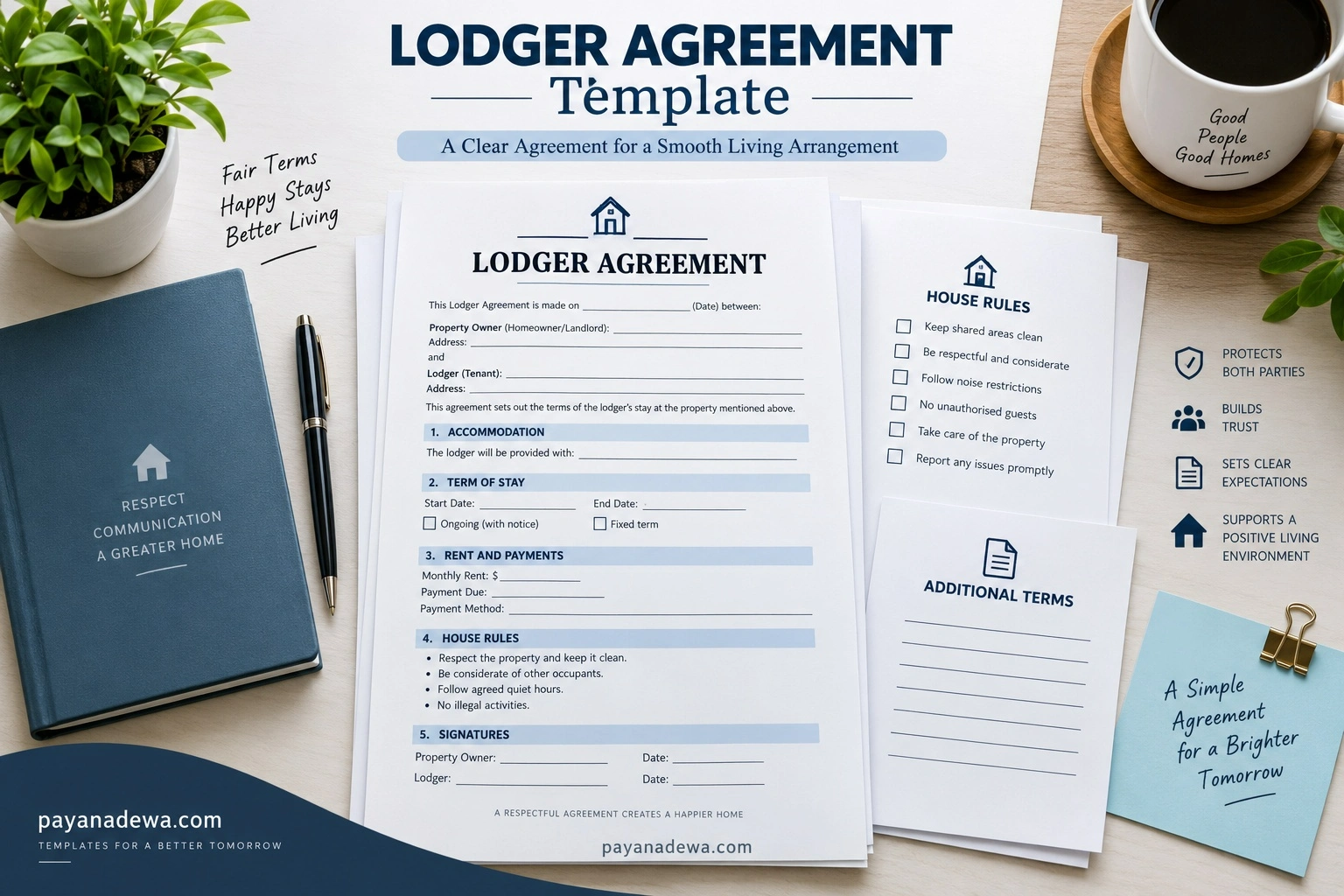
A lodger agreement helps property owners and lodgers understand their living arrangement. It puts important terms in writing before the lodger moves into the property. As a result, both parties know what to expect from the start.
A written agreement can cover rent, payment dates, shared rooms, house rules, cleaning, guests, and notice periods. It can also reduce confusion when questions arise during the stay.
Creating an agreement does not need to be difficult. A clear document can make the arrangement easier to manage. It can also support better communication between the property owner and lodger.
However, housing rules can differ between countries, states, and regions. Therefore, always check the local rules that apply to your situation before signing a document.
What Is a Lodger Agreement?
A lodger agreement is a written document between a person who provides accommodation and someone who lives in that property as a lodger.
The agreement explains the main terms of the living arrangement. For example, it may state how much the lodger pays, when rent is due, and which areas they can use.
In many situations, a lodger lives in the same home as the property owner. The lodger may share facilities such as a kitchen, bathroom, dining area, or living room.
However, the legal meaning of a lodger can vary. The actual living arrangement can also affect the rights and responsibilities of each party.
For this reason, do not rely only on the title of the document. Instead, make sure the agreement reflects the real arrangement and follows applicable local law.
Why Do You Need a Lodger Agreement?
A written agreement creates clear expectations. This can be useful even when the property owner and lodger already know each other.
Shared accommodation involves money, privacy, cleaning, guests, and household rules. Small misunderstandings can become bigger problems if nobody discusses them early.
It Clarifies Rent
The agreement can state the rent amount and payment schedule. It can also explain the payment method and whether bills are included.
Therefore, both parties have a clear record of the financial arrangement.
It Sets House Rules
Every home has different expectations. One household may allow guests frequently, while another may prefer quiet evenings.
A written agreement can cover noise, visitors, smoking, pets, cleaning, parking, and shared spaces.
It Protects Privacy
Privacy matters in a shared home. The agreement can explain which areas the lodger can access and which areas remain private.
Clear boundaries can make daily life more comfortable for everyone.
It Reduces Confusion
People can remember conversations differently. A written agreement provides one reference point for both parties.
As a result, it can help prevent avoidable disagreements about the original terms.
What Should a Lodger Agreement Include?
A useful lodger agreement template should cover the main parts of the living arrangement. Keep the wording simple and make every important term easy to understand.
Names and Property Details
Start with the full names of the property owner and lodger. Then add the property address.
If necessary, describe the bedroom or accommodation provided to the lodger. This detail can prevent confusion about the space included in the arrangement.
Start Date and Duration
Include the date when the lodger can move in. If the arrangement has a fixed end date, include that date as well.
For an ongoing arrangement, explain how either party can end the agreement. The notice terms should also comply with applicable law.
Rent and Payment Terms
The financial section should be clear and specific. Consider including:
- The amount of rent
- The payment frequency
- The payment due date
- The accepted payment method
- Whether utilities are included
- Any agreed additional household costs
Clear payment terms make it easier for both parties to manage the arrangement.
Shared Facilities
Explain which facilities the lodger can use. These may include the kitchen, bathroom, living room, laundry area, garden, or parking space.
Also explain any reasonable restrictions. For example, some households may have specific times for using shared facilities.
House Rules
House rules should be practical and easy to follow. They should also reflect the needs of the household.
Common rules may cover:
- Noise and quiet hours
- Guests and visitors
- Smoking
- Pets
- Cleaning
- Food storage
- Rubbish disposal
- Use of household appliances
- Parking
- Security and access
Responsibilities
The agreement should explain basic responsibilities. For example, the lodger may need to keep their room clean and respect shared areas.
The property owner may have separate responsibilities under local law. Therefore, avoid adding terms that conflict with legal requirements.
Notice and Ending the Agreement
Explain how either party can end the arrangement. Include any agreed notice period where legally permitted.
Notice requirements can differ depending on the location and circumstances. Therefore, check the relevant rules before finalizing this section.
Signatures
Both parties should read the agreement before signing it. Each person should understand the terms and receive a copy of the signed document.
How to Create a Lodger Agreement
Creating a lodger agreement becomes easier when you follow a simple process.
Discuss the Important Terms
First, talk about the practical details. Discuss rent, bills, cleaning, guests, noise, parking, shared rooms, and privacy.
This conversation gives both parties an opportunity to raise questions before the lodger moves in.
Write Down the Agreement
Next, record the agreed terms in writing. Use simple language whenever possible.
Avoid vague statements. Instead, explain specific expectations. For example, a clear quiet-hours rule is easier to understand than a general request to “keep noise down.”
Review Every Section
Read the complete document together. Check the names, address, dates, rent amount, payment schedule, and house rules.
Also make sure that both parties understand how the arrangement can end.
Keep a Signed Copy
After signing, each party should keep a copy. A digital copy can also provide a convenient backup.
Keeping the same final version helps avoid confusion later.
Lodger Agreement vs. Tenancy Agreement
A lodger agreement and a tenancy agreement can look similar. However, they can describe different types of housing arrangements.
A lodger commonly lives in a property where the owner also lives. The lodger may share facilities with the owner.
A tenancy agreement usually describes a landlord and tenant relationship. Depending on local law, the tenant may have different rights concerning possession and use of the property.
The distinction depends on the actual circumstances. Therefore, simply calling a document a “lodger agreement” does not always determine its legal status.
If you are unsure about the correct type of agreement, consider getting advice from a qualified local housing or legal professional.
Common Lodger Agreement Mistakes
A few simple mistakes can create confusion later. Fortunately, most of them are easy to avoid.
- Leaving the rent amount unclear
- Forgetting the payment date
- Not explaining which areas are shared
- Ignoring guest rules
- Leaving cleaning duties undefined
- Using vague wording
- Forgetting the start date
- Failing to explain notice terms
- Not giving both parties a copy
- Assuming a generic template follows local law
Before signing, review each section carefully. If a term is important, make sure it appears clearly in the document.
Tips for a Better Lodger Arrangement
A written agreement is useful. However, good communication is equally important.
Set Expectations Early
Discuss household expectations before the lodger moves in. This gives everyone time to ask questions and make reasonable adjustments.
Keep Communication Open
Small problems are often easier to solve when they are discussed early. Encourage respectful communication throughout the arrangement.
Respect Personal Space
A shared home still requires privacy. Both parties should respect bedrooms, personal belongings, and agreed private areas.
Keep Payment Records
Keep records of rent and other agreed payments. Clear records can make financial matters easier to manage.
Update Important Changes
Sometimes the living arrangement changes. For example, the rent, duration, or use of shared facilities may change.
If a significant change occurs, document the new terms and make sure both parties agree to them.
When Should You Use a Lodger Agreement Template?
A Lodger Agreement Template can be useful when a property owner wants to rent out a spare room. It can also help when preparing accommodation for a student, worker, or long-term lodger.
A template provides a useful starting structure. It can remind both parties to discuss important subjects before the arrangement begins.
However, every household is different. Therefore, customize the template to match the actual property and living arrangement.
Do not add terms simply because they appear in another agreement. Include terms that are relevant to your situation and legally permitted in your location.
Lodger Agreement Checklist
Before signing your agreement, use this quick checklist:
- Confirm both parties’ full names
- Check the property address
- Describe the accommodation provided
- Add the start date
- State the rent amount
- Confirm the payment schedule
- Explain utilities and additional costs
- Identify shared facilities
- List important house rules
- Discuss guests and visitors
- Explain cleaning responsibilities
- Review notice provisions
- Check that all terms are understood
- Sign and date the agreement
- Give each party a copy
Conclusion
A Lodger Agreement provides a simple way to document a shared living arrangement. It can explain rent, accommodation, shared facilities, house rules, responsibilities, privacy, and notice terms.
Most importantly, the agreement should reflect the real arrangement. Both parties should understand the terms before signing.
Use a Lodger Agreement Template as a starting point. Then customize it to fit the property and the people involved. Finally, check the local rules before relying on the document.
With clear terms and respectful communication, a written agreement can make shared accommodation easier to understand and manage.