A Farm Agreement helps people create clear farming arrangements. It explains the rights and duties of each party. It can also define how farmland, equipment, money, and resources will be used.
Farmers often work with landowners, tenants, partners, or agricultural businesses. Each relationship can have different needs. Therefore, a written agreement can make those expectations easier to understand.
A good agreement also reduces confusion. Everyone can check the same document when questions arise. As a result, the farming relationship can have a clear foundation.
A Farm Agreement Template can make the process easier. It provides a useful structure for important terms. You can then adjust each section to match your farming arrangement.
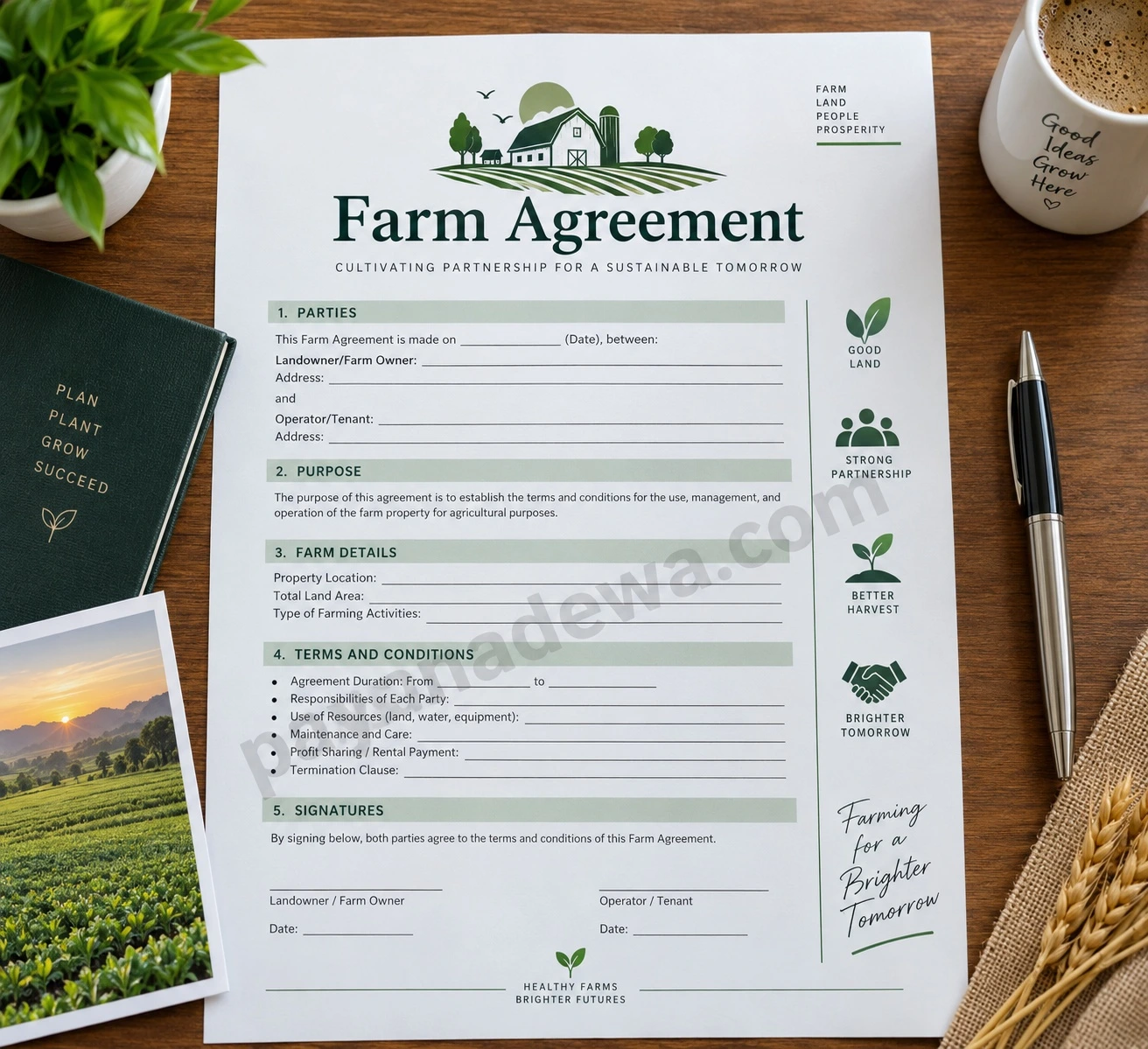
What Is a Farm Agreement?
A Farm Agreement is a written contract for a farming arrangement. It can cover agricultural land, farm facilities, equipment, livestock, crops, or other resources.
The agreement can serve several purposes. For example, a landowner may rent farmland to a farmer. Two farmers may also create a partnership agreement. In another case, a farm business may share production costs with another party.
The exact terms depend on the arrangement. However, most agreements should explain who is involved and what each person must do.
Why Use a Written Farm Agreement?
A verbal agreement may seem simple. However, memories can differ over time. People may also understand the same conversation in different ways.
A written farm contract creates a shared record. It gives each party something to review. Therefore, it can help prevent avoidable misunderstandings.
- Defines the responsibilities of each party
- Explains how the farm property may be used
- Documents rent or payment terms
- Sets the agreement start and end dates
- Explains equipment and resource responsibilities
- Provides a reference during disagreements
- Defines how the agreement can end
What Should a Farm Agreement Include?
A useful agricultural agreement should cover the most important parts of the farming relationship. Clear details can make the document easier to use.
1. Names of the Parties
Start by identifying everyone involved. Include the legal name of each individual or business.
You should also include relevant contact information. If a company signs the agreement, identify its authorized representative.
2. Farm Property Details
Next, describe the property covered by the agreement. Include enough information to identify the land without confusion.
You may include the following details:
- Farm address
- Property or parcel information
- Total acreage
- Fields included in the agreement
- Farm buildings
- Storage areas
- Irrigation facilities
- Other important farm resources
3. Purpose of the Agreement
Explain why the parties are entering into the agreement. This section should describe the intended farming activities.
For example, the agreement may allow crop production or livestock operations. It may also cover pasture use, greenhouse production, or agricultural storage.
Clear language can prevent disputes about permitted activities. If certain activities are not allowed, list them clearly.
4. Agreement Duration
Every Farm Agreement should state its duration. Include the start date and end date.
Some farming arrangements last for one season. Others may continue for several years. Therefore, choose dates that match the actual arrangement.
If renewal is possible, explain the renewal process. Also include any required notice period.
5. Payment Terms
Payment terms need clear wording. Avoid vague descriptions that could create confusion later.
Depending on the arrangement, payment may involve rent, crop shares, revenue sharing, or another form of compensation.
- Total payment amount
- Payment schedule
- Payment method
- Operating expenses
- Revenue sharing
- Crop or livestock income
- Applicable fees or taxes
Landowner and Farm Operator Responsibilities
Responsibilities form an important part of any farm contract. Each party should understand their duties before signing.
Landowner Responsibilities
The landowner may handle certain property-related duties. These duties can include structural repairs, property access, or existing infrastructure.
However, responsibilities can vary between agreements. Therefore, list each duty instead of relying on assumptions.
Farm Operator Responsibilities
The farm operator may manage daily agricultural activities. These activities can include planting, harvesting, livestock care, weed control, and routine maintenance.
The operator may also manage farm equipment and agricultural resources. The agreement should explain which tasks belong to the operator.
Equipment and Farm Resources
Farming often requires expensive equipment and shared resources. These resources may include tractors, irrigation systems, tools, vehicles, fences, wells, and storage buildings.
The agreement should explain how each resource may be used. It should also identify who handles maintenance and operating costs.
Equipment Rules
Consider adding rules for shared equipment. For example, the agreement can explain who may use a tractor and when.
It can also explain who pays for fuel, repairs, or routine servicing. Clear rules can help protect both parties.
Water and Irrigation
Water can play a major role in farm operations. Therefore, the agreement should address irrigation when relevant.
Explain who can use wells, pumps, irrigation systems, or other water resources. Also describe maintenance duties and related costs.
Farm Maintenance and Property Care
Good property care can protect the value and productivity of farmland. For this reason, maintenance terms deserve careful attention.
The agreement may cover fences, drainage, roads, buildings, irrigation systems, and waste management.
It can also address soil care and conservation practices. These terms should match the actual farming operation.
Crop Production Terms
A crop production agreement may need additional details. These terms can help define how farming activities will operate.
Consider addressing seed selection, fertilizer use, pest control, irrigation, planting, harvesting, and storage.
The parties may also define transportation responsibilities. In addition, they can establish rules for selling or distributing harvested crops.
Sustainable Farming Practices
Some farms use specific conservation or sustainability practices. If those practices matter to the agreement, include them in writing.
For example, the agreement may mention soil conservation or responsible water use. It may also address certification requirements or buyer standards.
How to Create a Farm Agreement Template
A Farm Agreement Template can provide a practical starting point. You do not need to build the entire document from scratch.
Step 1: Identify Everyone Involved
Write the complete names of all parties. Add their relevant contact information.
Step 2: Describe the Farm
Enter the farm location and property details. Include the land, buildings, equipment, and resources covered by the agreement.
Step 3: Define the Farming Purpose
Explain how the property will be used. Include the crops, livestock, or other approved activities.
Step 4: Add Financial Details
Explain rent, payments, expenses, and revenue sharing. Use specific amounts and dates whenever possible.
Step 5: Assign Responsibilities
List the duties of each party. Include farming operations, repairs, equipment use, and property maintenance.
Step 6: Review the Document
Read the complete agreement before signing. Check every date, amount, name, and responsibility.
Both parties should understand the final terms. Each party should also keep a signed copy.
Tips for Writing a Clear Farm Contract
A farm contract should be easy to understand. Simple language can make important terms easier to follow.
- Use clear language: Avoid unnecessary legal jargon.
- Be specific: Include dates, amounts, and measurable duties.
- Define payments: Explain when and how payments will occur.
- Assign responsibilities: Identify who handles each major task.
- Plan for changes: Explain how both parties can amend the agreement.
- Include termination terms: Explain how either party can end the arrangement.
- Address disputes: Define a process for handling disagreements.
- Keep signed copies: Store the final document in a secure location.
Common Farm Agreement Mistakes
Small omissions can create large problems. Therefore, review the agreement carefully before signing.
One common mistake is failing to describe the property clearly. Another mistake involves vague payment terms.
Some agreements also overlook equipment responsibilities. Others fail to explain how the parties can make future changes.
Another issue occurs when people use a generic template without customization. A template should provide structure. It should not replace careful review of the actual farming arrangement.
When Should You Update a Farm Agreement?
Review the agreement whenever the farming arrangement changes. Even a small change may require an update.
For example, the parties may add farmland or purchase new equipment. They may also change crops, payment terms, or operating responsibilities.
A review can also help when ownership changes. In addition, long-term agreements may benefit from periodic review.
Always document agreed changes in writing. Do not rely only on informal conversations.
Legal Considerations for Farm Agreements
Farm contracts can have important legal and financial effects. Laws can also vary between countries, states, provinces, and local areas.
Rules may cover agricultural leases, land use, livestock, water rights, taxes, insurance, employment, and environmental requirements.
Therefore, do not assume that one template works everywhere. Adapt the agreement to the applicable laws and circumstances.
For significant transactions, consider consulting a qualified legal professional. This step can be especially useful for long-term leases, major financial commitments, or complex ownership arrangements.
Frequently Asked Questions About Farm Agreements
What is the purpose of a Farm Agreement?
The purpose is to define the terms of a farming arrangement. It can explain property use, responsibilities, payments, resources, and other important conditions.
Can I use a Farm Agreement Template?
Yes. A template can provide a useful starting structure. However, you should customize it for your specific arrangement and location.
What should a farm lease agreement include?
A farm lease agreement can include property details, rental terms, lease dates, permitted activities, maintenance duties, resource use, and termination provisions.
Should both parties sign the agreement?
Yes. All relevant parties should review and sign the final agreement. Each party should keep a copy of the signed document.
Can a Farm Agreement be changed later?
It can often be changed when both parties agree. The agreement should explain how amendments must be made. Written amendments can provide a clearer record.
Conclusion
A Farm Agreement provides a clear framework for a farming relationship. It can define land use, payments, responsibilities, equipment, maintenance, and other important terms.
A clear agreement can also reduce confusion. Both parties can refer to the same written terms when questions arise.
A Farm Agreement Template makes the drafting process more convenient. It provides a structured starting point for creating an agricultural contract.
However, every farm arrangement is different. Review each section carefully and customize the document to match the actual agreement. Also consider applicable local laws when important legal or financial interests are involved.
With clear terms and careful review, a Farm Agreement can provide a practical foundation for managing farmland and building a well-defined farming relationship.