A Food Agreement provides a clear framework for people or organizations involved in supplying, purchasing, preparing, distributing, or using food products and services. Whether you operate a restaurant, catering business, food supplier, event service, school, workplace, or community program, a written agreement can help everyone understand their responsibilities from the beginning.
Food-related arrangements often involve important details such as product quality, delivery schedules, food safety, pricing, storage, payment, and cancellation policies. Without clear terms, even a simple arrangement can lead to misunderstandings. A well-prepared food agreement helps establish expectations and provides a useful reference when questions arise.
This guide explains what a Food Agreement is, what it should contain, how to create one, and how a food agreement template can make the process easier. The goal is to help you create a practical document that is clear, organized, and suitable for your specific food-related arrangement.
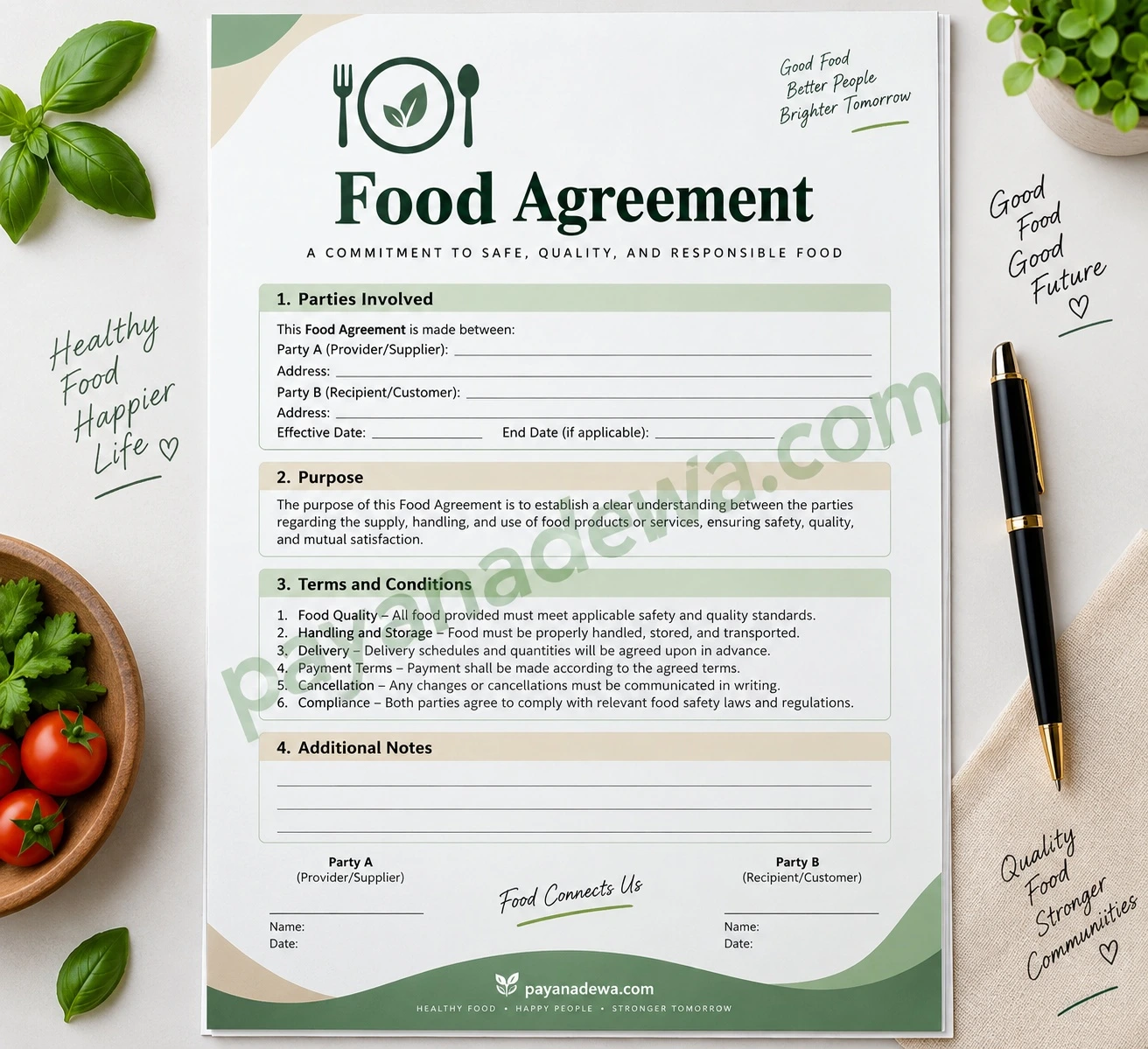
What Is a Food Agreement?
A Food Agreement is a written document that establishes the terms between two or more parties involved in a food-related transaction or service. The parties may include a food supplier and customer, caterer and client, restaurant and vendor, food producer and distributor, or other organizations.
The agreement can be simple or detailed depending on the nature of the relationship. For example, a small catering order may only require basic information about menu items, quantities, prices, delivery, and payment. A long-term supplier relationship may require additional provisions covering quality standards, food safety, inspections, storage, liability, confidentiality, and termination.
Why Is a Food Agreement Important?
A written agreement reduces uncertainty because important expectations are documented rather than relying only on conversations. It can also help both parties identify potential issues before the food service or transaction begins.
- Defines the responsibilities of each party
- Documents agreed food products or services
- Clarifies pricing and payment terms
- Establishes delivery and scheduling requirements
- Addresses food quality and safety expectations
- Creates a reference for resolving misunderstandings
- Provides a structured record of the business arrangement
Common Types of Food Agreements
The term Food Agreement can describe several different types of arrangements. The appropriate format depends on the people, businesses, products, and services involved.
Food Supplier Agreement
A food supplier agreement establishes terms between a supplier and a business that purchases food products. It may cover product specifications, minimum order quantities, delivery schedules, pricing, payment deadlines, packaging, and quality requirements.
Catering Agreement
A catering agreement is commonly used between a catering company and a client. It can specify the event date, number of guests, menu, service style, dietary requirements, total price, deposit, cancellation terms, and responsibilities for equipment or venue arrangements.
Food Service Agreement
A food service agreement may be used when one party provides ongoing meal preparation or food services to another organization. Schools, offices, events, facilities, and institutions may use this type of agreement to establish service expectations.
Food Distribution Agreement
A food distribution agreement can define the relationship between a food producer, distributor, retailer, or other commercial partner. It may contain provisions concerning territory, ordering, delivery, inventory, product handling, payment, and responsibilities.
Essential Elements of a Food Agreement
A useful Food Agreement should contain enough information to make the arrangement easy to understand. The exact clauses will vary, but several elements are commonly valuable.
1. Identify the Parties
Start by identifying everyone involved. Include legal names, business names where applicable, addresses, contact information, and the role of each party.
For example, one party may be identified as the food provider or supplier, while another may be identified as the customer, recipient, client, or purchasing organization.
2. Define the Purpose
Explain why the agreement exists. A short purpose statement can describe the food products or services being provided and the general objective of the relationship.
A clear purpose makes the document easier to interpret because readers can quickly understand what the agreement is intended to cover.
3. Describe Food Products or Services
Specify what will be supplied or provided. Depending on the arrangement, this section may include food names, quantities, portion sizes, packaging requirements, menus, ingredients, service levels, or delivery frequency.
- Product or menu description
- Quantity and portion information
- Packaging requirements
- Special dietary requirements
- Quality specifications
- Delivery or service frequency
4. Include Food Safety and Quality Requirements
Food safety should receive appropriate attention in any food-related agreement. The parties can state that food products must be handled, stored, prepared, packaged, and transported in accordance with applicable requirements.
Where the arrangement is commercial or regulated, the agreement should be reviewed against the food safety laws, regulations, permits, and industry requirements that apply to the specific location and business activity.
5. Set Delivery and Scheduling Terms
Delivery details should be specific enough to avoid confusion. Include delivery dates, expected times, locations, receiving procedures, and any requirements for notifying the other party about delays.
For recurring food deliveries, it can also be useful to explain ordering deadlines and procedures for changing quantities.
6. Establish Payment Terms
The agreement should explain how and when payment will be made. Depending on the arrangement, this may include the total price, deposit, invoice schedule, payment deadline, accepted payment methods, taxes, delivery charges, or other costs.
Clear payment terms help both parties understand their financial responsibilities before the arrangement begins.
How to Create a Food Agreement
Creating a Food Agreement does not have to be complicated. The key is to organize the information logically and make important terms easy to locate.
Start With the Basic Information
Write down the names of the parties, contact details, effective date, and purpose of the agreement. This creates a clear foundation for the document.
List the Specific Requirements
Next, document the food products or services involved. Avoid vague descriptions when specific information is available. Include quantities, schedules, prices, quality expectations, and other details that matter to the transaction.
Discuss Potential Problems in Advance
Consider what could happen if food is unavailable, a delivery is delayed, an order changes, products fail to meet agreed specifications, or an event is canceled. Addressing these situations in advance can make the agreement more practical.
Review Before Signing
Both parties should read the agreement carefully before signing. Check names, dates, quantities, prices, delivery requirements, payment terms, and other important details.
For agreements involving significant financial commitments, regulatory obligations, or complex legal terms, consider having the document reviewed by an appropriately qualified legal professional.
Benefits of Using a Food Agreement Template
A Food Agreement Template provides a starting structure that can save time when creating a new agreement. Instead of building every section from a blank page, users can begin with a logical framework and customize the details.
- Saves time during document preparation
- Provides a consistent structure
- Helps organize important information
- Makes missing details easier to identify
- Can be customized for different food arrangements
- Creates a professional-looking document
A template should be treated as a starting point rather than a universal legal document. Every food business or transaction may have different requirements, so the final agreement should reflect the actual arrangement.
Tips for Writing a Clear Food Agreement
Good agreements are usually specific, organized, and easy to read. You do not need complicated language to make the document useful.
- Use clear language: Write terms that the parties can easily understand.
- Be specific: Include exact dates, quantities, prices, and responsibilities where possible.
- Avoid unnecessary repetition: Keep related information together.
- Define important terms: Explain specialized terms when they could cause confusion.
- Document changes: Put significant changes or amendments in writing.
- Check local requirements: Make sure applicable food, business, tax, and contract requirements are considered.
- Keep signed copies: Each party should retain an accessible copy of the final agreement.
Food Agreement Checklist
Before finalizing your agreement, use a simple checklist to make sure the major details have been addressed.
- Names and contact information of all parties
- Purpose of the agreement
- Food products or services covered
- Quantities and specifications
- Food quality expectations
- Food handling and safety responsibilities
- Delivery location and schedule
- Pricing and payment terms
- Cancellation and modification procedures
- Additional responsibilities
- Effective date and duration
- Signature fields for the parties
When Should You Use a Food Agreement?
A Food Agreement can be useful whenever food products or services involve meaningful responsibilities between parties. It may be appropriate for one-time events as well as continuing business relationships.
For example, a caterer preparing food for a wedding can use an agreement to document the menu, guest count, service date, payment schedule, and cancellation terms. A restaurant working with a regular supplier can use an agreement to establish delivery expectations, product specifications, pricing procedures, and quality requirements.
Even when the relationship seems straightforward, documenting important terms can reduce uncertainty and provide both parties with a shared reference.
Final Thoughts on Food Agreements
A well-organized Food Agreement can make food-related transactions and services easier to manage. By clearly documenting the parties, purpose, products, quality requirements, delivery arrangements, payment terms, and responsibilities, both sides can begin their relationship with a clearer understanding of what has been agreed.
Using a Food Agreement Template can make preparation faster while providing a professional structure that can be customized to different situations. The most important step is to adapt the template to the actual arrangement and applicable requirements rather than relying on generic wording.
Whether you need a catering agreement, food supplier contract, food service agreement, or another food-related document, clarity is the foundation. Take time to define expectations, review the details, and keep a signed copy for your records.