Creating high-quality articles consistently is one of the biggest challenges in content marketing. Writers need to research topics, understand search intent, organize ideas, create engaging introductions, develop useful sections, and finish with a clear conclusion. Doing all of this from scratch for every article can consume significant time and make content production inconsistent. Content Marketing Templates For Articles provide a practical framework that helps writers and marketers organize the entire article creation process more efficiently.
A good template does not make every article identical. Instead, it provides a reliable structure while leaving enough flexibility for original ideas, different audiences, and different search queries. When used correctly, article templates can improve consistency, readability, productivity, and content quality while allowing marketers to spend more time developing valuable information for their readers.
What Are Content Marketing Templates For Articles?
Content marketing templates are reusable outlines or frameworks designed to guide the creation of articles and other written content. They typically define the major sections an article should contain, from the headline and introduction to supporting points, examples, calls to action, and conclusion.
The source material describes content marketing as a strategy centered on creating and distributing valuable, relevant, and consistent content for a defined audience. It also highlights article templates as a useful way to support that process.
Instead of asking, “Where should I start?” every time you write, a reusable article framework provides a clear starting point. You can then customize the structure according to the subject, audience, content goal, and keyword being targeted.
Why Use Article Templates in Content Marketing?
A consistent content creation process can make publishing easier to manage, especially when multiple articles are produced each month. Templates help establish a repeatable workflow without removing creativity from the writing process.
- Save time: Start with an established structure rather than building every outline from scratch.
- Improve consistency: Maintain a recognizable format across your content library.
- Strengthen readability: Organize information into logical sections that are easy to scan.
- Support SEO: Create space for keywords, relevant subtopics, internal links, and useful information.
- Reduce writer’s block: Give writers a clear sequence of sections to develop.
- Improve collaboration: Writers, editors, and marketers can work from the same framework.
Essential Elements of an Article Content Template
1. A Clear, Search-Friendly Headline
The headline should tell readers what the article offers while naturally incorporating the main topic when appropriate. Avoid headlines that are vague or overly complicated. A strong title establishes relevance and gives readers a reason to continue.
2. A Strong Introduction
The introduction should quickly establish the topic and explain why it matters. Identify the reader’s problem, question, or goal and make it clear that the article will provide useful information.
Keep the opening focused. Readers should understand the subject without having to work through several paragraphs before discovering the article’s purpose.
3. Organized H2 and H3 Sections
Long-form articles benefit from clear headings and subheadings. Break the subject into logical sections so readers can scan the page and quickly find the information they need.

How to Build an Effective Article Template
Start With the Audience
Before creating an outline, determine who the article is intended to help. Consider the reader’s knowledge level, problems, questions, and desired outcome.
An article aimed at beginners may need definitions, examples, and step-by-step instructions. An article for experienced professionals can spend less time explaining basic concepts and focus more heavily on advanced strategies, comparisons, and practical insights.
Define the Content Objective
Every article should have a purpose. Your objective might be to educate readers, answer a specific question, attract organic search traffic, generate leads, build authority, support a product, or move readers toward another resource.
Once the objective is defined, the template becomes easier to customize. Every major section should contribute to that purpose rather than simply filling space.
Research the Topic Before Writing
Research provides the foundation for useful content. Identify important concepts, related questions, industry terminology, examples, and areas where readers need clarification.
Research should also help you understand what information is missing from competing content. The goal is not to reproduce existing articles but to create something more useful, clearer, or more complete.
SEO Benefits of Content Marketing Templates
A structured writing template can support search engine optimization by encouraging writers to consider important elements before drafting the article. SEO should not be treated as inserting the same keyword repeatedly. Instead, the article should demonstrate topical relevance and satisfy the reader’s search intent.
- Primary keyword: Identify the central search phrase the article targets.
- Semantic keywords: Include naturally related terms and concepts.
- Search intent: Make sure the content answers what the reader actually wants to know.
- Headings: Use descriptive H2 and H3 headings to organize major topics.
- Internal linking: Connect readers to relevant pages and supporting articles.
- Readable structure: Use short paragraphs, lists, and clear explanations.
A template can make these considerations part of the normal writing workflow rather than an afterthought.
Different Types of Article Templates
Not every article should use the same structure. Creating several reusable formats can make a content strategy more flexible.
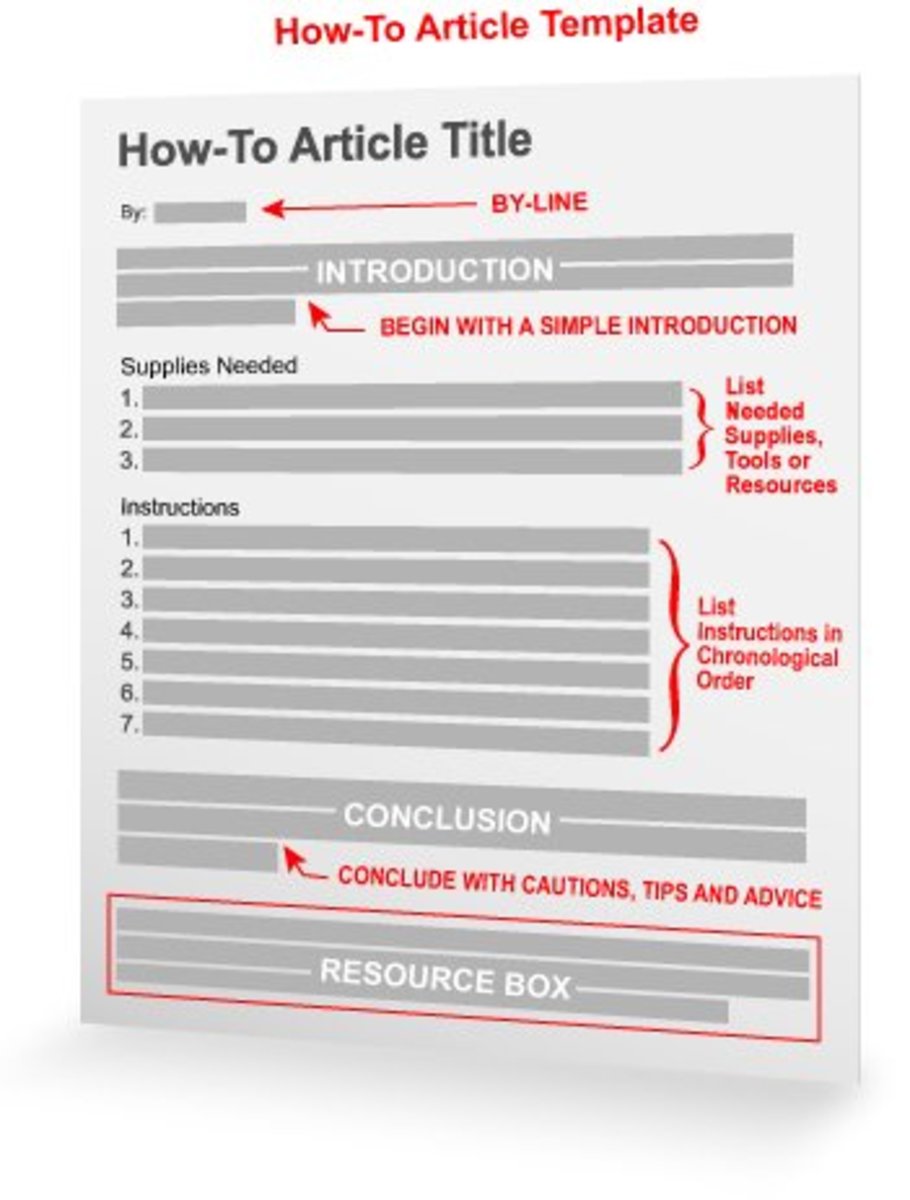
How-To Article Template
This format works well for instructional searches. Start with the problem or desired outcome, explain the necessary preparation, and provide clear steps. Finish with troubleshooting advice, practical tips, or a concise summary.
List-Based Article Template
List articles organize information into a numbered or categorized series of ideas. They work particularly well for recommendations, strategies, tools, mistakes, examples, and checklists.
Educational Guide Template
A comprehensive guide can begin with a definition or overview, followed by important concepts, benefits, processes, examples, best practices, and frequently encountered challenges.

How to Make Templates More Useful for Writers
The best article templates provide guidance without becoming restrictive. Instead of prescribing every sentence, define what each section needs to accomplish.
- Describe the purpose of each section.
- Include prompts for important information.
- Specify where examples or statistics may be useful.
- Include reminders for SEO and internal links.
- Leave room for original insights and storytelling.
- Provide a final editing and quality-control checklist.
This approach allows writers to follow a consistent process while still producing articles that feel natural and original.
Practical Workflow for Creating Articles
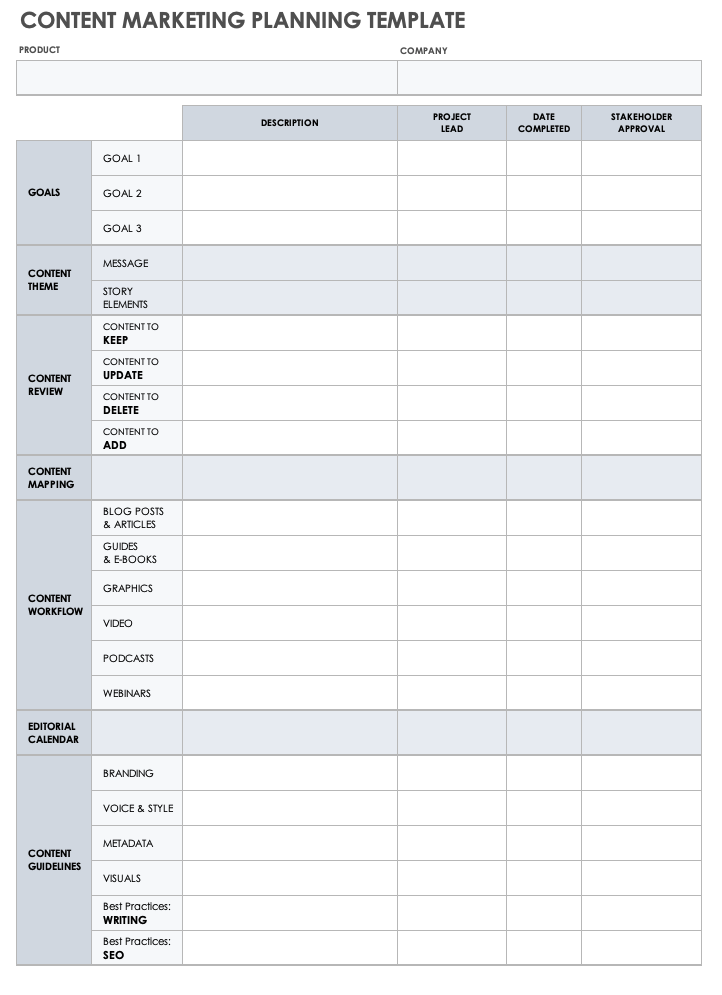
Once your template is established, use it as part of a repeatable content workflow. Start by selecting a topic that aligns with your audience and overall content strategy. Define the primary keyword and search intent, then develop supporting topics that answer related questions.
Next, create the outline using the appropriate article template. Research each major section before drafting so that the final article contains useful information rather than repetitive filler.
After writing the first draft, edit for clarity, accuracy, flow, and usefulness. Check that the introduction matches the article’s promise, each heading serves a purpose, and the conclusion provides a meaningful summary rather than simply repeating the introduction.
Use Visuals and Examples Strategically
Articles can become difficult to follow when they contain nothing but long blocks of text. Relevant images, diagrams, examples, screenshots, and lists can make complex information easier to understand.
However, visuals should support the content rather than act as decoration. Choose images that clarify an idea or provide useful context. If an article explains a process, for example, a relevant visual can help readers understand the workflow more quickly.
Common Mistakes When Using Article Templates
Templates are helpful, but they can become counterproductive when used mechanically. One common mistake is forcing every topic into exactly the same structure. A technical tutorial, opinion article, product comparison, and beginner’s guide may require very different approaches.
Another mistake is allowing the template to replace research and original thinking. A template should organize knowledge, not create it. Writers still need to understand the audience, investigate the topic, verify information, and provide genuine value.
- Do not copy templates word for word. Adapt the framework to the topic.
- Do not prioritize keywords over readers. Natural language and useful information should come first.
- Do not add unnecessary sections. Every heading should contribute to the reader’s goal.
- Do not rely entirely on generic introductions. Address the specific problem or search intent.
- Do not skip editing. A template does not guarantee quality.
How to Improve Your Templates Over Time
Your content templates should evolve as you learn what works. Review published articles and identify which structures produce strong engagement, organic traffic, conversions, or other meaningful results.
Ask writers and editors which parts of the workflow are helpful and which create unnecessary friction. You can then refine section prompts, add quality checks, remove redundant steps, and create specialized templates for different content formats.
The original source emphasizes consistency as one of the advantages of using content marketing templates. A well-maintained template library can therefore become an important part of a scalable content production system.
Conclusion
Content Marketing Templates For Articles give writers and marketers a practical framework for producing organized, readable, and purposeful content more efficiently. They can improve consistency, reduce the time required to create outlines, support SEO planning, and make collaboration easier.
The key is to use templates as flexible frameworks rather than rigid formulas. Start with the audience and content objective, research the topic thoroughly, organize information into useful sections, incorporate relevant search terms naturally, and edit the final article carefully. When templates are combined with original research, strong writing, and a genuine focus on reader needs, they can help turn content marketing into a more consistent and scalable strategy.