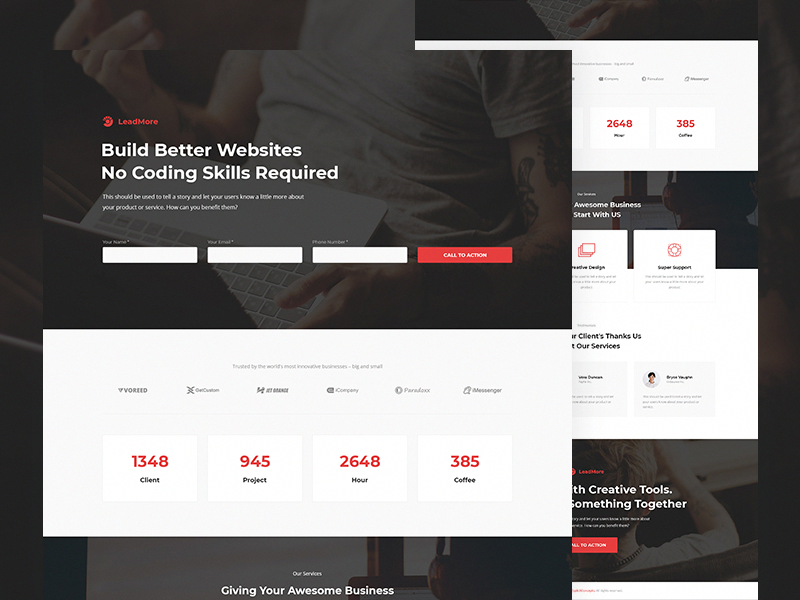
Generating qualified leads is one of the most important goals of digital marketing. Whether a business wants more newsletter subscribers, demo requests, consultation bookings, product inquiries, or downloads, the landing page often plays a central role in turning interested visitors into potential customers. However, building an effective landing page from scratch can take considerable time. Marketing Landing Page Templates For Lead Generation offer a practical starting point for creating focused pages that are designed around conversion.
A well-designed template provides more than an attractive layout. It can help organize the value proposition, supporting content, visuals, forms, and call-to-action elements so visitors can understand the offer and decide what to do next. The key is to customize the template around a specific audience and campaign objective rather than treating it as a finished page.
What Are Marketing Landing Page Templates For Lead Generation?
Marketing landing page templates are pre-designed web page layouts created to support specific marketing goals. Lead generation templates are particularly focused on capturing visitor information through actions such as subscribing to an email list, requesting a quote, downloading an ebook, registering for an event, or scheduling a product demonstration.
The uploaded source describes these templates as customizable pages designed around lead capture, with elements such as focused messaging and clear calls to action.
Because the basic structure is already established, marketers can spend more time improving the offer, writing persuasive copy, selecting relevant imagery, and connecting the page to their marketing systems.
Why Landing Pages Are Important for Lead Generation
A landing page gives a campaign a focused destination. Instead of sending visitors to a general homepage containing many navigation options, marketers can create a page built around one specific offer and one desired action.
This focused approach can reduce distractions and make the conversion path easier to understand. A visitor who clicks an advertisement for a free guide, for example, should quickly see the same offer on the landing page, understand its value, and know exactly how to receive it.
- Focused messaging: Communicate one primary benefit or offer.
- Clear conversion goal: Encourage a specific action from the visitor.
- Relevant information: Answer the questions that could prevent conversion.
- Lead capture: Collect useful prospect information through a form or other mechanism.
- Campaign alignment: Match the page with the advertisement, email, or content that brought visitors there.
Essential Elements of a High-Converting Landing Page
1. A Strong Value Proposition
The value proposition should immediately explain what the visitor can gain. Avoid vague statements that could apply to almost any business. Instead, focus on the specific result, benefit, or solution being offered.
For example, rather than simply saying “Improve Your Marketing,” a business could communicate a more specific benefit such as “Create a More Effective Lead Generation Process in Less Time.”
2. A Compelling Headline
The headline is often one of the first elements visitors notice. It should be concise, relevant to the traffic source, and connected directly to the offer.
3. Supporting Copy
Use the supporting content to explain why the offer matters. Focus on customer benefits rather than filling the page with unnecessary company information.
4. A Clear Call to Action
The call to action should tell visitors exactly what happens next. Examples include “Get the Free Guide,” “Request a Demo,” “Start Your Free Trial,” or “Book a Consultation.”

How to Customize a Landing Page Template
One of the biggest advantages of a template is that it can be adapted to match your business. Customization should include both visual branding and strategic content.
Match Your Brand Identity
Update the colors, typography, logo, imagery, and other visual elements so the landing page feels like a natural part of your brand. Consistency can create a more trustworthy experience and prevent visitors from feeling that they have been redirected to an unrelated website.
Adapt the Message to Your Audience
Different audiences respond to different benefits and communication styles. A B2B software landing page might emphasize efficiency, integration, and business outcomes, while an ecommerce campaign may focus more heavily on product benefits, convenience, pricing, and offers.
The source specifically notes that customization allows businesses to align landing pages with their branding, content, and overall marketing strategy.
Mobile Optimization Is Essential
Many potential customers will encounter a landing page on a smartphone. A page that works well only on desktop devices can create unnecessary friction and reduce the likelihood of conversion.
Choose responsive Marketing Landing Page Templates For Lead Generation that adapt to different screen sizes. Test headings, forms, buttons, images, and spacing on mobile devices before launching a campaign.
- Make buttons easy to tap.
- Keep forms simple and easy to complete.
- Use readable font sizes.
- Avoid oversized images that slow down the page.
- Check that important information appears clearly on smaller screens.

Use Forms Strategically
The lead capture form is often the point where interest becomes an actual lead. However, asking for too much information can make the conversion process feel burdensome.
Only request information that is genuinely useful at the stage of the customer journey. A newsletter subscription may need only an email address, while a sales consultation might reasonably require a name, company, and business email.
Explain what visitors will receive after submitting the form. Clear expectations can make the exchange feel more valuable and transparent.
Connect Your Landing Page to Marketing Tools
A landing page becomes more useful when captured leads automatically flow into the systems used by your marketing and sales teams. The uploaded source notes that landing page templates can integrate with email marketing software, CRM systems, and analytics platforms.
These integrations can help businesses follow up with prospects, segment leads, measure campaign performance, and understand what happens after a visitor submits a form.

A/B Testing for Better Conversion Rates
Even a well-designed landing page can be improved. A/B testing allows marketers to compare different versions and identify which elements produce stronger results.
What Should You Test?
- Headlines: Compare different value propositions.
- CTA wording: Test action-oriented phrases.
- Images: Compare different visual approaches.
- Form length: Determine whether fewer fields improve completion rates.
- Page layout: Test different arrangements of copy and conversion elements.
- Offers: Compare incentives or lead magnets.
The uploaded material specifically highlights A/B testing as a way to compare landing page variations and use performance data to improve lead generation and conversion rates.
Track the Right Landing Page Metrics
Design alone does not determine whether a landing page is successful. Analytics can reveal how visitors interact with the page and where improvements may be needed.
- Conversion rate: The percentage of visitors who complete the desired action.
- Bounce rate: A useful indicator of whether visitors leave without meaningful interaction.
- Traffic sources: Shows which channels are sending visitors.
- Form completion: Helps identify whether the lead capture process creates friction.
- Cost per lead: Particularly useful when paid advertising is involved.
- Lead quality: Measures whether generated leads are actually valuable to the business.

Common Landing Page Mistakes to Avoid
Using a template does not guarantee strong performance. Poor customization or unclear strategy can undermine an otherwise professional layout.
- Too many CTAs: Multiple competing actions can distract visitors from the primary goal.
- Weak headlines: A vague headline may fail to communicate the offer quickly.
- Long forms: Excessive fields can discourage submissions.
- Unrelated visuals: Images should support the offer rather than distract from it.
- Poor mobile experience: Difficult navigation or tiny buttons can create friction.
- No testing: Without performance data, it is difficult to know what should be improved.
- Generic copy: Visitors need a clear reason to exchange their information for the offered resource or service.
How to Choose the Right Template
When selecting a template, start with the campaign objective rather than appearance alone. A template designed for webinar registration may not be ideal for a complex software demo, and a product-focused ecommerce layout may not suit a professional consultation offer.
Look for a structure that supports your conversion goal, provides enough space for the necessary information, works well on mobile devices, and can be customized to match your brand.
Also consider whether the template supports analytics, marketing integrations, flexible forms, and experimentation. The source material notes that templates can be used across different industries and campaigns when their content and branding are customized appropriately.
Practical Landing Page Launch Checklist
Before publishing, review the page from the perspective of a first-time visitor. Make sure the promise made by the traffic source matches what appears on the landing page.
- Confirm the headline clearly communicates the offer.
- Check that the primary CTA is easy to find.
- Test every form and button.
- Verify thank-you pages and automated follow-up messages.
- Review the page on smartphones and desktop screens.
- Check spelling, grammar, links, and contact information.
- Confirm analytics and conversion tracking are working.
- Remove unnecessary distractions.
- Establish a baseline before beginning A/B tests.
Conclusion
Marketing Landing Page Templates For Lead Generation can make it significantly easier to build focused campaign pages without starting from a blank screen. Their real value comes from combining a proven structure with relevant messaging, strong calls to action, responsive design, useful forms, appropriate integrations, and continuous testing.
The best landing page is not necessarily the most visually elaborate one. It is the page that makes the offer easy to understand, builds enough confidence to encourage action, and creates a smooth path from visitor to lead. By choosing the right template, customizing it for the audience, tracking meaningful metrics, and continually testing improvements, businesses can create landing pages that support a more effective and measurable lead generation strategy.