Cash plays an important role in everyday life. People use it to buy groceries, pay bills, cover transportation costs, and handle unexpected expenses. Although digital payments are becoming more popular, physical money and cash equivalents remain essential parts of personal finance and business operations.
Understanding cash can help you make better financial decisions. Whether you want to manage your household budget, improve your savings habits, or understand how businesses handle money, learning the basics is a valuable first step.
In this guide, you will discover what cash means, the different types of cash, its advantages and disadvantages, and practical ways to manage your money more effectively.
What Is Cash?
Cash generally refers to money that is immediately available for spending. It commonly includes physical currency, such as banknotes and coins. In accounting and financial management, the term can also include money held in bank accounts that is available on demand.
Cash is one of the most liquid forms of financial assets. Liquidity describes how easily an asset can be used to make payments or converted into spendable money without significant loss of value.
For example, money in your wallet can be used to purchase everyday necessities. Similarly, an available balance in a checking account can usually be accessed through a debit card, bank transfer, or cash withdrawal.
Why Is Cash Important?
Cash helps people meet immediate financial needs. It also allows businesses to pay employees, purchase supplies, and cover operating expenses.
For individuals, maintaining enough available money can provide financial flexibility. For businesses, effective cash management helps ensure that bills and other obligations can be paid on time.
Types of Cash
Cash can take several forms depending on how it is stored and used. Understanding these differences makes it easier to choose suitable payment methods and organize your finances.
1. Physical Cash
Physical cash consists of banknotes and coins issued by an authorized monetary authority. It is widely used for small purchases, local transactions, tips, and payments in places where electronic payment options are limited.
One advantage of physical money is its simplicity. You can pay directly without needing an internet connection or an electronic payment device. However, physical cash can be lost, stolen, or damaged.
2. Cash in Bank Accounts
Money held in checking or transaction accounts is another common way to keep funds available. Depending on your bank and account terms, you may access this money through debit cards, transfers, online banking, or withdrawals.
Bank accounts can make it easier to track spending because many transactions appear in account statements. Nevertheless, account access may depend on banking services, transaction limits, and system availability.
3. Cash Equivalents
Cash equivalents are short-term, highly liquid investments that can be converted into known amounts of cash with insignificant risk of changes in value. Depending on the applicable accounting rules and circumstances, examples may include qualifying short-term Treasury bills and money market instruments.
Not every investment or savings product qualifies as a cash equivalent. Stocks, long-term bonds, and assets with substantial price fluctuations generally do not meet the definition simply because they can be sold.
Benefits of Using Cash
Although payment technology continues to evolve, cash offers several practical advantages. Its usefulness depends on your circumstances, spending habits, and access to financial services.
- Easy to understand: Physical money makes the amount available for spending easy to see.
- Useful for budgeting: Setting aside cash for specific categories can help limit discretionary spending.
- No internet required: Physical transactions can work without a mobile connection or electronic payment system.
- Widely accepted: Cash remains useful in many shops, markets, and local businesses.
- Helpful during disruptions: A modest cash reserve can provide an alternative when electronic payment services are temporarily unavailable.
- Immediate settlement: Physical cash payments are generally completed at the point of exchange.
However, these benefits do not mean that cash is always the best option. Digital payments may provide better transaction records, convenience, and security in certain situations.
Disadvantages of Keeping Cash
Cash also has limitations that are worth considering. Understanding the risks can help you decide how much money to carry and where to store your savings.
Risk of Loss or Theft
Physical money can be difficult to recover if it is lost or stolen. Unlike some unauthorized electronic transactions, a cash loss may have no practical recovery process.
For this reason, avoid carrying large amounts of money unless necessary. Keep emergency cash in a secure location and limit access to it.
Limited Transaction Records
Cash purchases do not automatically create a digital transaction history. Without receipts or written records, it can be difficult to remember where your money went.
You can solve this problem by recording purchases in a notebook, spreadsheet, or budgeting application. Even a simple daily record can reveal spending patterns.
Inflation Can Reduce Purchasing Power
Inflation occurs when the general price level of goods and services rises over time. As prices increase, the same amount of cash may buy fewer items than before.
Cash is useful for short-term needs, but holding all your long-term savings as physical money may not be suitable. Consider your financial goals, emergency needs, and risk tolerance when deciding how to divide your money between cash, savings, and other financial assets.
What Is Cash Management?
Cash management is the process of tracking, organizing, and controlling available money. It helps individuals and businesses understand how much money they have, what they need to pay, and how much they can save.
Good cash management does not require complicated financial software. A clear budget, consistent tracking, and realistic spending limits can make a meaningful difference.
Track Your Income and Expenses
Start by identifying the money you receive and the money you spend. Income may include wages, business revenue, freelance payments, or other legitimate sources. Expenses include rent, groceries, transportation, utilities, subscriptions, and debt payments.
Record your transactions regularly. This makes it easier to identify unnecessary costs and understand whether your spending matches your priorities.
Create a Cash Budget
A cash budget estimates how much money will come in and go out during a specific period. You can prepare one weekly or monthly, depending on your needs.
Follow these steps to create a simple budget:
- Calculate your expected income after taxes and required deductions.
- List essential expenses, including housing, food, utilities, and transportation.
- Include debt payments and other financial obligations.
- Set a realistic amount for savings and emergency funds.
- Establish a limit for entertainment and nonessential purchases.
- Review your actual spending and adjust the budget when necessary.
A useful budget reflects your real financial situation. If your expenses exceed your income, prioritize essential needs and identify costs you can reduce safely.
How to Manage Cash More Effectively
Managing money well is easier when you follow a consistent routine. Small improvements can help you gain control over daily spending and prepare for future expenses.
1. Set Clear Financial Goals
Choose specific goals that fit your circumstances. You might want to build an emergency fund, pay off expensive debt, save for education, or prepare for a planned purchase.
Estimate the amount you need and establish a target date. Then calculate how much you must set aside each week or month to make progress.
2. Separate Needs From Wants
Essential expenses support your basic living needs, while discretionary purchases are generally optional. Separating these categories can help you make better spending decisions.
Before buying something nonessential, ask whether it fits your budget and whether the purchase supports your current priorities. Waiting a day before making an unplanned purchase can also reduce impulse spending.
3. Build an Emergency Fund
An emergency fund provides money for unexpected expenses, such as urgent repairs, medical bills, or a temporary loss of income. It can reduce the need to rely on high-interest borrowing when something goes wrong.
Start with a small, achievable target if you cannot save much right now. Over time, work toward an amount that could cover several months of essential expenses, based on your income stability and personal circumstances.
For most people, emergency savings are more practical in a secure, accessible account than as a large amount of physical cash at home. Keeping a modest amount of physical cash for short-term disruptions may also be useful.
4. Review Your Spending Weekly
Set aside a few minutes each week to review purchases, upcoming bills, and your remaining budget. Look for recurring charges you no longer need and categories where spending regularly exceeds your plan.
Regular reviews help you identify problems early. They also make it easier to adjust your spending before a small budget issue becomes a larger financial challenge.
5. Use a Cash Tracking Template
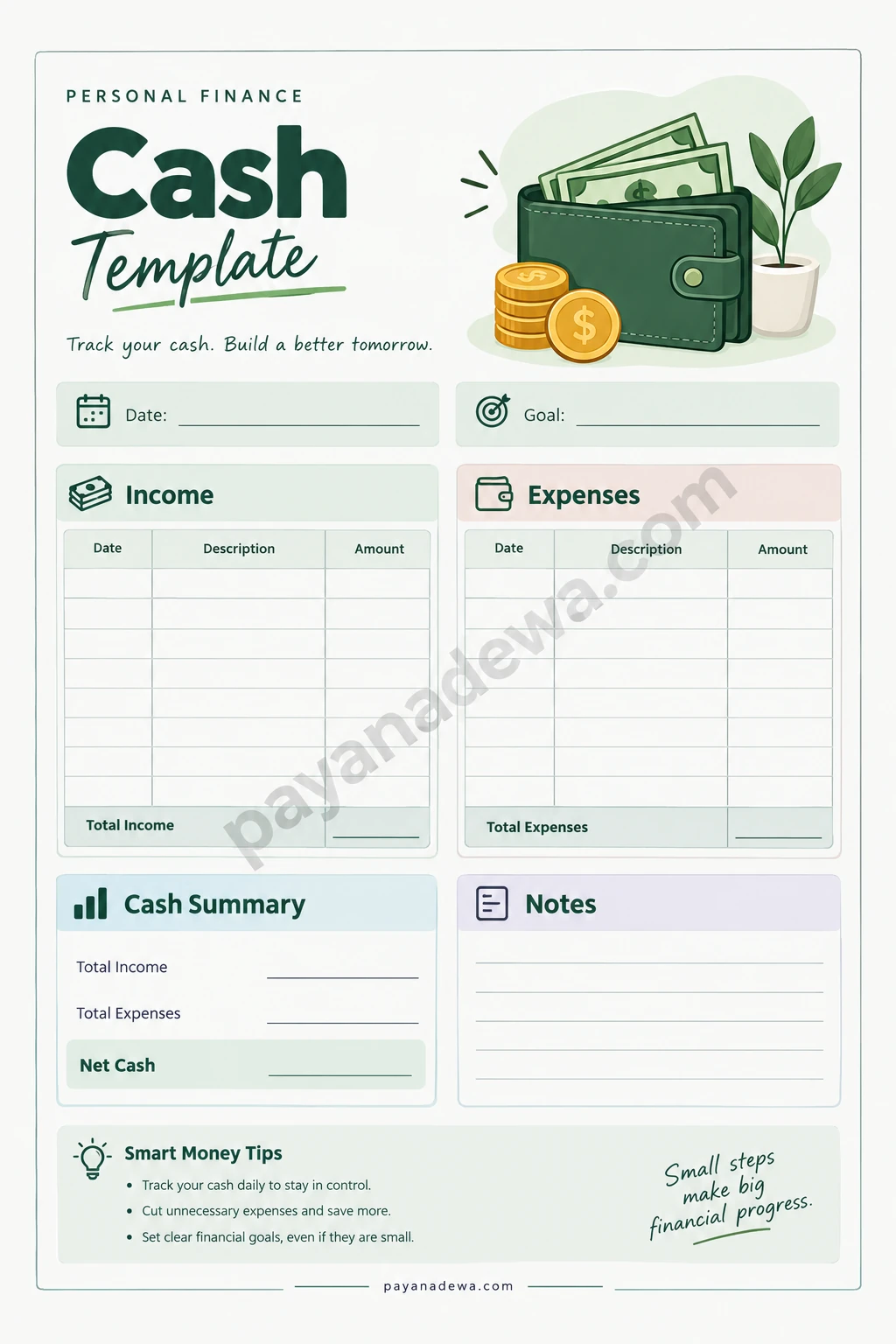
A cash tracking template provides a simple way to record income, expenses, and your remaining balance. You can use a printable worksheet, spreadsheet, or budgeting app.
For each transaction, record the date, description, category, and amount. At the end of the period, compare total income with total expenses to understand your cash position.
A printable cash template can be particularly helpful if you prefer writing down transactions instead of using a phone or computer. Keep the completed worksheet in a secure place because financial records may contain sensitive information.
Understanding Cash Flow
Cash flow refers to the movement of money into and out of a person’s finances or a business. Positive cash flow means more money comes in than goes out during a given period. Negative cash flow means outflows exceed inflows.
Understanding cash flow is important because having income does not automatically mean you have enough money available to pay immediate bills. The timing of income and expenses matters, too.
Simple Cash Flow Example
Imagine that you receive $2,500 in monthly income and spend $2,000 on living costs, debt payments, and other expenses. Your remaining cash flow for the month is $500.
The calculation is straightforward:
Net Cash Flow = Total Cash Inflows − Total Cash Outflows
In this example, the result is $500. You could allocate part of that amount to emergency savings, planned purchases, or additional debt repayment, depending on your priorities.
If your expenses are higher than your income, review your budget to identify realistic changes. You may need to reduce discretionary spending, adjust financial commitments, or explore ways to increase your income.
Cash vs. Digital Payments
Physical cash and digital payments serve similar purposes, but each has different strengths. The best option depends on the transaction, the available services, and your personal preferences.
- Cash: Useful for small purchases, direct payments, and situations where electronic systems are unavailable.
- Debit cards: Allow payments using funds available in a linked bank account and often provide transaction records.
- Bank transfers: Useful for paying bills and sending money directly between accounts.
- Digital wallets: Offer convenient electronic payments through supported devices and services.
Digital payments can make transactions easier to track, but they may involve fees, technical problems, or security risks. Physical cash avoids some technology-related issues but requires careful handling.
Using a combination of payment methods can provide flexibility. Keep physical cash for situations where it is useful, and use secure electronic services when they better suit your needs.
Cash Management Tips for Small Businesses
Businesses need effective cash management to pay suppliers, employees, rent, taxes, and other operating costs. Even a profitable business can experience financial difficulties if cash arrives too late to cover immediate obligations.
Business owners can improve cash control with a few practical habits:
- Prepare regular cash flow forecasts based on expected receipts and payments.
- Send invoices promptly and follow up on overdue payments.
- Review operating costs and identify avoidable expenses.
- Maintain a reserve for unexpected costs and seasonal changes.
- Keep business and personal finances separate.
- Reconcile bank statements and transaction records regularly.
- Plan for taxes and other predictable financial obligations.
Businesses should also monitor the timing of customer payments and supplier bills. Better visibility into these transactions can help owners identify cash shortages before they become urgent.
Frequently Asked Questions About Cash
What is the simplest definition of cash?
Cash is money that is readily available for spending or making payments. It commonly refers to physical banknotes and coins, while financial reporting may also include qualifying demand deposits and cash equivalents.
Is cash better than keeping money in a bank?
Neither option is always better. Physical cash can be useful for everyday purchases and emergencies, while bank accounts generally provide convenient access, transaction records, and additional security features. The right balance depends on your needs and circumstances.
How much cash should I keep at home?
The appropriate amount depends on your household expenses, local conditions, and access to banking services. Consider keeping a modest amount for short-term emergencies while storing most of your emergency savings in a secure, accessible account.
What is the difference between cash and cash flow?
Cash is the money available to spend. Cash flow describes how money moves into and out of your finances over time. Tracking both helps you understand your current balance and whether your income can cover your expenses.
How can I start saving cash with a low income?
Begin with a small amount that you can save consistently. Track essential expenses, review discretionary spending, and set a realistic savings target. Increasing your savings gradually is often more sustainable than setting a target that leaves you unable to cover basic needs.
Conclusion
Cash remains an important part of personal finance and business management. It supports everyday transactions, provides flexibility, and can help people prepare for unexpected expenses. However, cash also has limitations, including the risk of theft and the potential loss of purchasing power over time.
The key is to manage your money with a clear plan. Track income and expenses, create a realistic budget, build emergency savings, and review your cash flow regularly. A printable cash template can make these habits easier to maintain by keeping your financial information organized.
With consistent planning and thoughtful spending decisions, you can use cash more effectively and work toward stronger financial stability.