Understanding what competitors are doing is one of the most valuable parts of building an effective marketing strategy. Businesses can learn from competing brands, identify gaps in the market, improve their positioning, and discover opportunities that may otherwise be overlooked. However, competitor research can quickly become confusing when information is collected across websites, advertisements, social media profiles, pricing pages, and customer reviews without a consistent structure. A Marketing Competitor Analysis Template provides an organized framework for turning that research into useful strategic insights.
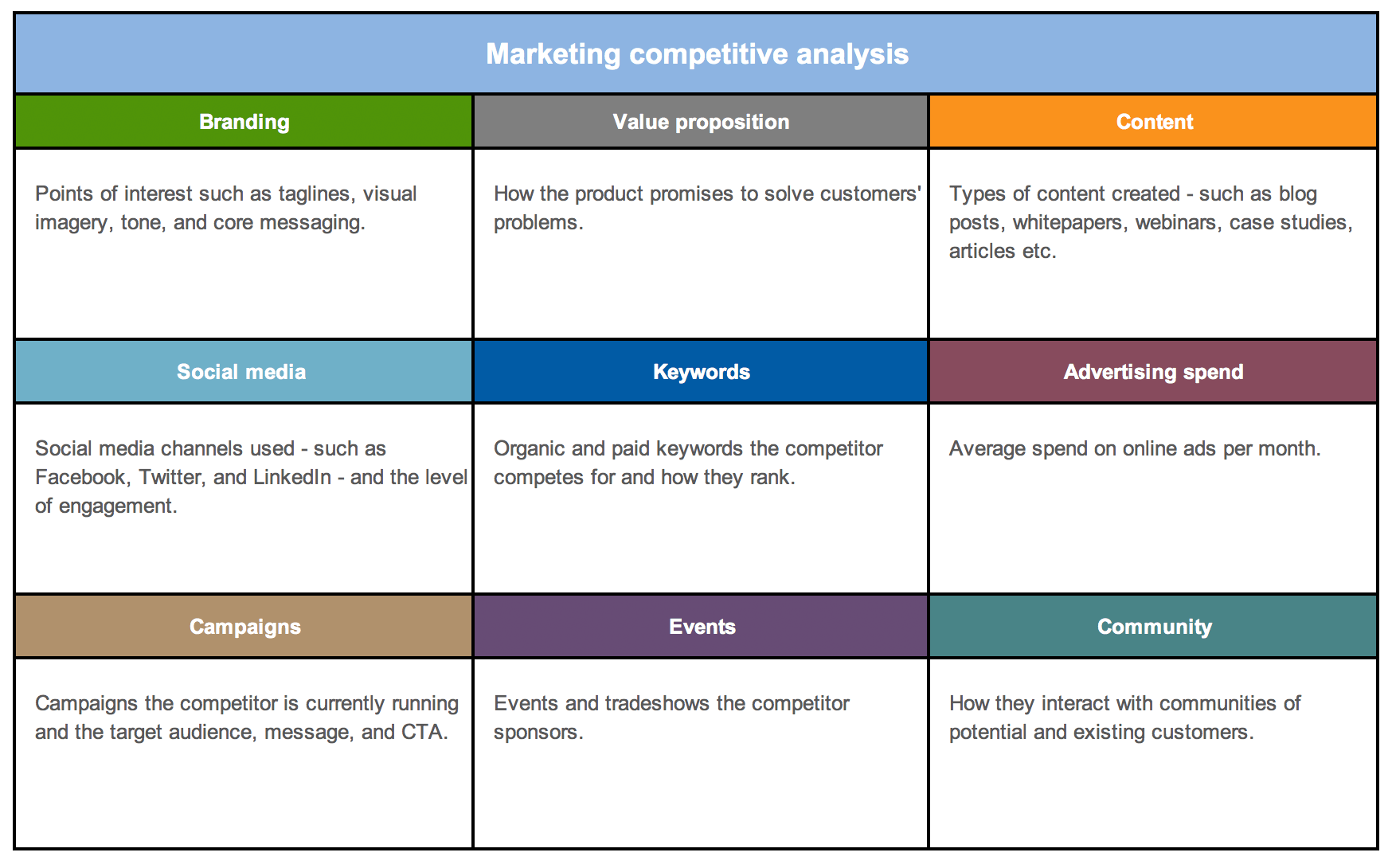
Rather than simply listing competing businesses, a strong competitor analysis compares products, pricing, target audiences, messaging, marketing channels, strengths, weaknesses, opportunities, and threats. The goal is not to copy competitors. It is to understand the competitive landscape well enough to make better decisions and create a stronger market position.
What Is a Marketing Competitor Analysis Template?
A Marketing Competitor Analysis Template is a pre-designed framework for collecting, organizing, comparing, and evaluating information about competing businesses. It gives marketers a consistent set of categories to investigate so important details are less likely to be missed.
A useful competitive analysis framework can include information about a competitor’s products or services, pricing model, target audience, promotional channels, brand messaging, strengths, weaknesses, opportunities, and threats. Organizing these elements in one place makes comparisons much easier than keeping disconnected notes.
The template can also be adapted for different industries. A software company, ecommerce store, consulting business, restaurant, or agency may need different data points, but the underlying research process remains similar.
Why Competitor Analysis Matters in Marketing
Competitor analysis helps businesses understand how they fit into the market. Instead of making strategic decisions based entirely on assumptions, marketers can examine observable evidence about other companies and use those findings to refine their own approach.
- Identify market gaps: Discover customer needs competitors may not be addressing effectively.
- Understand positioning: See how competing brands communicate their value.
- Compare pricing: Understand the range of prices and offers available to customers.
- Improve marketing strategy: Identify channels and tactics worth investigating.
- Recognize competitive strengths: Understand what makes certain competitors attractive to customers.
- Find areas for differentiation: Discover opportunities to create a distinctive brand position.

What Information Should You Include?
A detailed competitor analysis becomes more useful when every competitor is evaluated using the same core criteria. This creates a consistent basis for comparison.
Competitor Name and Business Overview
Begin with the competitor’s name and a brief description of its business. Identify what it sells, who it serves, and the market category in which it operates. This basic context helps prevent confusion when researching several companies at once.
Products or Services
Record the competitor’s major products, services, packages, features, and differentiators. Look beyond the basic product description and consider what customers appear to value most about the offering.
Pricing
Pricing can reveal important information about market positioning. Record publicly available prices, subscription options, packages, discounts, free trials, guarantees, and other relevant offers.
Do not assume that the cheapest competitor is automatically the strongest threat. A premium competitor may appeal to customers through quality, specialization, service, reputation, or additional features.
Target Audience
Identify the customers each competitor appears to target. Consider demographics, business size, customer needs, purchasing behavior, interests, and the problems the competitor’s product is designed to solve.

Analyze Competitor Marketing Channels
Marketing channels show where competitors are investing their attention and resources. Examine their presence across relevant digital and traditional channels rather than focusing on only one platform.
- Search engines: Review organic search visibility and the topics competitors appear to target.
- Social media: Examine platforms, posting frequency, content formats, and engagement.
- Email marketing: Look at newsletters, promotions, lead magnets, and customer communication.
- Paid advertising: Study visible advertisements, offers, headlines, and landing-page approaches.
- Content marketing: Review blogs, guides, videos, case studies, and educational resources.
- Partnerships: Identify influencers, affiliates, events, or strategic partnerships where visible.
The purpose is not to imitate every tactic. Instead, look for patterns. If several competitors are investing heavily in one channel while another customer need receives little attention, that may reveal either an opportunity or a warning worth investigating.
Evaluate Competitor Messaging and Positioning
Messaging explains how competitors want customers to perceive their brands. Review their headlines, value propositions, product descriptions, advertising language, calls to action, and recurring themes.
Questions to Ask
- What primary benefit does the competitor emphasize?
- What customer problem does its messaging address?
- Does it compete on price, quality, speed, convenience, expertise, or specialization?
- What language appears repeatedly across its marketing materials?
- What makes the brand appear different from alternatives?
Comparing messaging can help you find positioning opportunities. If every major competitor emphasizes the same benefit, there may be room to communicate a different and meaningful advantage.
Use SWOT Analysis to Interpret the Data
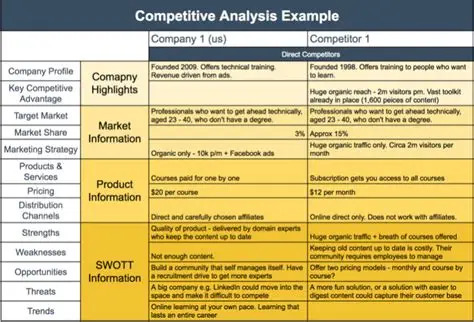
After collecting competitor information, use a SWOT-style framework to organize your conclusions. This moves the process beyond data collection and toward strategic thinking.
Strengths
Identify areas where a competitor appears particularly strong. These could include brand recognition, product quality, pricing, customer service, distribution, content, technology, or community engagement.
Weaknesses
Look for limitations that may create opportunities. Examples could include poor customer support, confusing pricing, limited product choices, weak content, outdated messaging, or gaps in the customer experience.
Opportunities
Opportunities are areas where your business could potentially differentiate itself. These might involve underserved audiences, missing features, overlooked content topics, new distribution channels, or unmet customer needs.
Threats
Threats include competitive actions or market conditions that could affect your business. New competitors, aggressive pricing, stronger brand awareness, changing customer preferences, or emerging alternatives may all deserve attention.

How to Use a Marketing Competitor Analysis Template
Using a template is straightforward when the process is systematic. Start by identifying the competitors that matter most to your market. Include direct competitors offering similar solutions as well as relevant indirect competitors that solve the same customer problem differently.
Next, gather information from reliable and publicly available sources. Review competitor websites, product pages, pricing information, social media, advertisements, content, customer reviews, industry publications, and other relevant sources.
Enter findings consistently into the template. Avoid writing vague observations such as “good marketing.” Instead, record specific evidence, such as the channels used, type of content published, primary offer promoted, or positioning emphasized.
Once the information is collected, compare competitors side by side. Look for recurring patterns, meaningful differences, market gaps, and areas where your business has a realistic opportunity to compete.
How Often Should You Conduct Competitor Analysis?
Competitor research should not necessarily be a daily activity, but it should be updated when meaningful changes occur. A broader review at least annually can provide a useful strategic snapshot, while faster-moving industries may benefit from more frequent monitoring.
Consider revisiting your analysis when a major competitor launches a new product, changes pricing, enters a new market, significantly changes its positioning, or adopts a new marketing channel. Major changes in your own business or industry can also justify a new review.
Common Mistakes to Avoid
One of the biggest mistakes is collecting too much information without identifying what actually matters. A competitor analysis should support decision-making rather than become an enormous archive of unrelated observations.
Another mistake is assuming that competitor behavior automatically represents best practice. A competitor may have a large social media following but weak conversions, or a high search presence without strong customer loyalty. Treat observations as evidence to investigate rather than instructions to copy.
- Do not copy competitors blindly. Use research to develop your own strategy.
- Do not rely on assumptions. Record observable evidence wherever possible.
- Do not compare unrelated competitors. Focus on businesses competing for similar customers or needs.
- Do not analyze only strengths. Weaknesses and gaps can be equally valuable.
- Do not let the template become static. Update important information as the market changes.
Turn Competitive Research Into Action
The final step is converting research into practical marketing decisions. A completed template has little value if the findings never influence your strategy.
Review the strongest insights and prioritize the opportunities that are realistic for your business. You might decide to improve your value proposition, target a neglected audience segment, create content around an underserved topic, revise an offer, improve customer experience, or test a new marketing channel.
Document the actions that result from your analysis. This creates a connection between research and implementation and makes it easier to evaluate whether your competitive insights produced meaningful improvements.
Conclusion
A Marketing Competitor Analysis Template provides a practical way to organize competitive research and transform scattered information into strategic insight. By evaluating competitor products, pricing, target audiences, marketing channels, messaging, strengths, weaknesses, opportunities, and threats, businesses can develop a clearer understanding of their market position.
The most effective competitor analysis is not about copying what other businesses do. It is about understanding the market well enough to make smarter decisions, identify genuine opportunities, recognize potential threats, and create a differentiated strategy. With a consistent template and a regular review process, competitive research can become an ongoing source of ideas for stronger marketing campaigns and better business decisions.