DIY, short for Do It Yourself, is a fun and practical way to create, repair, decorate, and improve things without always relying on professional services. From handmade home decorations and simple furniture upgrades to creative crafts and everyday repairs, DIY projects allow you to turn ordinary materials into something useful and unique.
Whether you want to save money, explore a new hobby, personalize your living space, or learn practical skills, DIY offers endless possibilities. The best part is that you do not need to be an expert to get started. With a little creativity, basic tools, and a clear plan, almost anyone can complete a satisfying DIY project.
In this guide, you will discover what DIY means, its benefits, popular project ideas, essential tools, and practical tips to help you start creating with confidence.
What Does DIY Mean?
DIY stands for Do It Yourself. It describes the process of completing a task, making an item, or improving something independently rather than hiring someone else to do it.
The DIY concept covers many activities, including home improvement, woodworking, sewing, gardening, crafting, furniture restoration, and decorative projects. Some projects require only a few inexpensive supplies, while others involve specialized equipment and more advanced skills.
DIY has become increasingly popular because people enjoy creating personalized products and finding practical solutions to everyday problems. Online tutorials, printable templates, and instructional videos have also made learning new techniques easier than ever.
Why Are DIY Projects So Popular?
There are several reasons why people enjoy DIY activities. Beyond creating attractive items, these projects provide practical benefits that can improve everyday life.
1. Save Money
One of the biggest advantages of DIY is the opportunity to reduce expenses. Instead of purchasing expensive decorations or paying for simple services, you can often complete the work yourself using affordable materials.
For example, repainting an old shelf, creating handmade wall art, or upgrading storage containers can refresh your home without requiring a large budget.
2. Express Your Creativity
DIY gives you the freedom to experiment with colors, textures, materials, and designs. You can create something that reflects your personality rather than choosing from standard store-bought products.
From handmade gifts to customized furniture, every project offers an opportunity to explore new creative ideas.
3. Learn Useful Skills
Every DIY project can teach you something valuable. You may learn how to measure materials, use basic tools, repair household items, sew fabric, or understand simple construction techniques.
These practical skills can become useful in many situations and may inspire you to try more challenging projects in the future.
4. Enjoy a Sense of Achievement
Completing something with your own hands can be incredibly rewarding. Seeing an idea develop into a finished product provides a sense of accomplishment and encourages you to continue learning.
Popular DIY Project Ideas for Beginners
If you are new to DIY, start with simple projects that require minimal tools and affordable supplies. Here are some creative ideas worth trying.
DIY Home Decoration
Home decoration is an excellent starting point because small changes can make a noticeable difference in your living space.
- Create personalized photo frames using recycled cardboard or wood.
- Decorate glass jars and transform them into attractive storage containers.
- Make handmade wall art using canvas, paint, or colored paper.
- Design decorative cushions using fabric and simple sewing techniques.
- Create seasonal decorations for holidays and special occasions.
DIY Furniture Makeovers
Old furniture does not always need to be replaced. A little creativity can give existing pieces a completely different appearance.
- Repaint an old wooden chair.
- Upgrade cabinet handles for a fresh look.
- Restore a small table with sanding and a new finish.
- Turn wooden crates into practical storage shelves.
Always check the condition of furniture before starting. Repair loose joints and use suitable protective equipment when sanding or painting.
DIY Paper Crafts
Paper crafts are affordable, accessible, and suitable for people of different ages. They are also ideal for school activities, home decoration, and handmade presents.
- Make greeting cards for birthdays and celebrations.
- Create paper flowers and decorative garlands.
- Design personalized bookmarks.
- Make gift boxes using printable templates.
- Create scrapbook pages to preserve special memories.
DIY Gardening Projects
Gardening projects combine creativity with practical outdoor activities. You can make attractive planters, organize gardening supplies, or create a small indoor garden.
- Reuse containers as plant pots.
- Build a simple herb garden.
- Create plant labels from recycled materials.
- Decorate pots with paint and simple patterns.
Essential DIY Tools and Materials
You do not need an expensive workshop to begin. A small collection of versatile tools can help you complete many beginner-friendly projects.
Basic DIY Tools
- Measuring tape: Helps you measure materials accurately.
- Scissors: Useful for cutting paper, fabric, and lightweight materials.
- Craft knife: Provides precise cuts for suitable craft materials. Always use a cutting mat and handle it carefully.
- Screwdriver set: Useful for assembling furniture and completing basic repairs.
- Hammer: Helps with simple woodworking and household tasks.
- Paintbrushes: Essential for painting and decorative projects.
- Glue and adhesive: Suitable for joining materials when the product is designed for that purpose.
- Ruler: Helps create straight lines and accurate measurements.
Common DIY Materials
Depending on your project, you may need cardboard, paper, wood, fabric, paint, recycled containers, decorative accessories, or adhesive materials.
Before buying supplies, check what you already have at home. Reusing available materials can reduce costs and make your project more environmentally friendly.
How to Start Your First DIY Project
Starting your first DIY project can feel overwhelming, especially when you have many ideas. Following a simple process makes the experience easier and more enjoyable.
Step 1: Choose a Simple Project
Pick something that matches your interests and current skill level. A handmade greeting card, decorated storage jar, or small wall decoration is a good starting point.
Step 2: Prepare Your Materials
Write down everything you need before beginning. Check your supplies and purchase only the missing items. Preparing everything in advance helps prevent unnecessary interruptions.
Step 3: Create a Project Plan
Break your project into smaller steps. Decide what you will do first, which materials you will use, and how you want the finished product to look.
A printable DIY planning template can make this process easier. Use it to organize your materials, record instructions, sketch your design, and write down useful reminders.
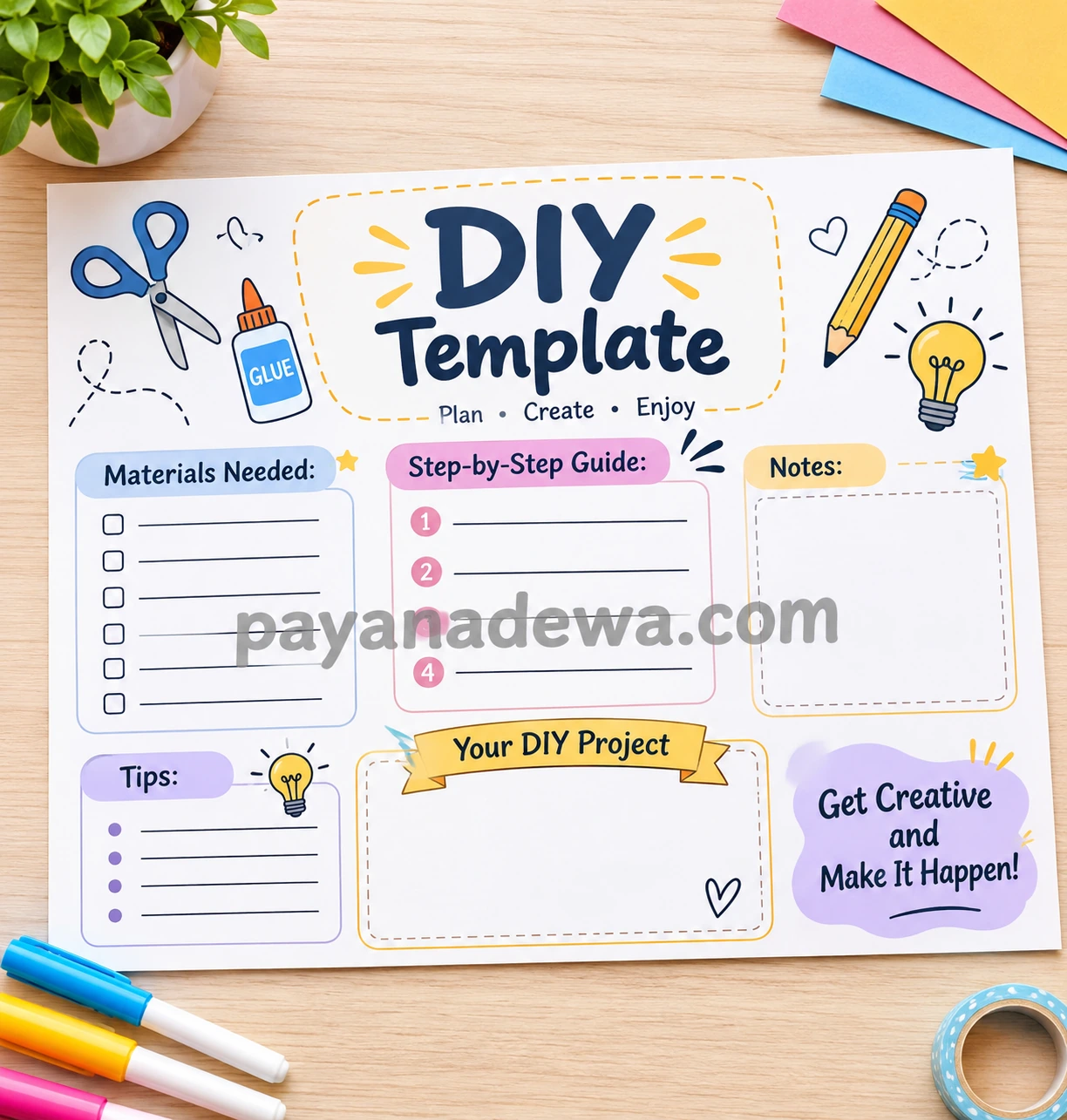
Step 4: Follow the Instructions
Work through each step carefully. Take your time with measurements, cutting, assembling, and finishing. If you are following a tutorial, read the complete instructions before starting.
Step 5: Review Your Finished Project
Once the project is complete, check the final result. Make any necessary adjustments, clean your workspace, and take pictures of your creation. You can also write down lessons learned for your next project.
Important DIY Safety Tips
Creativity should always go together with safety. Even simple projects can involve sharp tools, adhesives, paints, or equipment that requires careful handling.
- Read product labels and follow the manufacturer’s instructions.
- Wear safety glasses and suitable gloves when necessary.
- Keep sharp tools away from children and store them safely.
- Work in a well-ventilated area when using paint, solvents, or adhesives.
- Use appropriate protective equipment when sanding or cutting materials.
- Keep your workspace clean, organized, and free from unnecessary obstacles.
- Turn off and unplug power tools before changing accessories or performing maintenance.
- Ask a qualified professional for electrical, gas, structural, or other potentially dangerous repairs.
Remember that knowing your limitations is an important part of successful DIY. Some projects are better handled by trained professionals.
Tips for Making DIY Projects More Successful
Good planning can make a significant difference in the quality of your results. Keep these practical suggestions in mind as you develop your DIY skills.
Start Small and Build Confidence
Do not rush into complicated projects. Complete a few simple activities first, then gradually explore more advanced techniques. Each successful project will help you build confidence.
Use Printable Templates
Templates are useful for organizing project details, creating consistent shapes, and reducing mistakes. Printable checklists and planning sheets can also help you track materials and instructions.
Reuse and Recycle Materials
Look for opportunities to repurpose items you already own. Cardboard boxes, glass jars, leftover fabric, and unused wooden pieces can become useful materials for creative projects.
Learn from Tutorials
Explore reliable DIY guides, instructional videos, and step-by-step demonstrations. Compare different techniques and choose the method that best suits your available tools and experience.
Be Patient with the Process
Not every project will turn out perfectly on the first attempt. Mistakes are part of learning. Take your time, identify what went wrong, and use the experience to improve your next creation.
Is DIY Suitable for Everyone?
Yes, DIY activities can be adapted to different interests, ages, budgets, and skill levels. Beginners can enjoy paper crafts and simple decorations, while experienced hobbyists may prefer woodworking, furniture restoration, or more advanced home improvement projects.
The key is choosing activities that match your abilities and working within appropriate safety limits. You can also involve family members in age-appropriate creative activities, making DIY a fun way to spend time together.
Conclusion: Start Creating with DIY
DIY is more than just making things yourself. It is an opportunity to develop practical skills, explore creativity, save money, and transform everyday materials into something meaningful.
Whether you are interested in home decoration, paper crafts, furniture makeovers, gardening, or simple household improvements, there is always a DIY project worth exploring.
Start with a manageable idea, prepare your materials, follow a clear plan, and remember to prioritize safety. With practice and patience, you can turn your creative ideas into useful and beautiful results.
Ready to begin? Choose your first DIY project, gather your supplies, and let your creativity lead the way. Visit payanadewa.com for more creative inspiration and helpful printable resources.