Finding and hiring the right employees is one of the most important responsibilities of any business. However, recruitment involves more than simply publishing a job advertisement and interviewing applicants. A successful hiring process requires careful planning, consistent communication, effective candidate evaluation, and proper onboarding.
A well-organized Recruitment Checklist helps employers, HR professionals, and hiring managers manage every stage of recruitment without overlooking important tasks. It also makes the hiring process more efficient, transparent, and consistent.
Whether you are recruiting your first employee or managing multiple vacancies in a growing organization, having a structured recruitment process can save time and improve hiring decisions. In this guide, you will discover the essential recruitment steps, practical hiring tips, and a useful checklist template to help your organization attract and select qualified candidates.
What Is a Recruitment Checklist?
A recruitment checklist is a practical document that outlines the tasks involved in finding, evaluating, selecting, and onboarding new employees. It serves as a step-by-step guide for everyone involved in the hiring process.
Instead of relying on memory or scattered notes, HR teams can use this document to track recruitment progress and ensure that important responsibilities are completed on time.
A typical employee recruitment checklist covers several stages, including:
- Identifying staffing requirements and defining the job role.
- Preparing and publishing job descriptions.
- Finding and attracting qualified candidates.
- Reviewing applications and screening resumes.
- Conducting interviews and evaluating applicants.
- Completing background and reference checks.
- Preparing and sending employment offers.
- Organizing employee onboarding and follow-up activities.
By following these steps, businesses can create a repeatable hiring workflow that supports better decisions and a more positive candidate experience.
Why Is a Recruitment Checklist Important?
Recruitment can become complicated when several candidates, departments, and hiring managers are involved. Without a clear process, important tasks may be delayed or forgotten. A structured checklist helps prevent these problems.
1. Keeps the Hiring Process Organized
A recruitment checklist gives HR professionals a clear overview of outstanding tasks and completed activities. Consequently, everyone involved understands what needs to happen next.
2. Saves Time and Improves Efficiency
When recruitment activities follow a consistent workflow, hiring teams spend less time managing confusion and repeating administrative tasks. They can focus more on finding suitable candidates and evaluating their qualifications.
3. Promotes Consistent Hiring Decisions
Using the same evaluation criteria for candidates applying for the same position helps create a fairer selection process. It also makes it easier to compare qualifications, experience, and relevant skills objectively.
4. Improves the Candidate Experience
Applicants appreciate clear communication and timely updates. A recruitment checklist helps hiring teams remember to acknowledge applications, schedule interviews, share feedback, and communicate hiring decisions.
5. Reduces the Risk of Missing Important Steps
Recruitment involves administrative, operational, and legal considerations. A checklist helps teams remember essential activities, such as obtaining approvals, verifying references, and preparing employment documents.
The Complete Recruitment Checklist: 6 Essential Stages
A successful recruitment process should cover everything from initial workforce planning to the first days of employment. The following six stages provide a practical framework for managing the entire hiring journey.
Stage 1: Plan and Prepare for Recruitment
Before advertising a vacancy, identify exactly what your organization needs. Good preparation helps prevent unsuitable applications and unnecessary hiring delays.
Use this recruitment planning checklist:
- Identify the position that needs to be filled.
- Define the responsibilities and expectations of the role.
- Determine the essential skills, qualifications, and experience.
- Separate must-have requirements from preferred qualifications.
- Prepare a clear and accurate job description.
- Confirm the recruitment budget and salary range.
- Obtain approval from the relevant department or hiring manager.
- Establish a realistic recruitment timeline.
Additionally, discuss the role with the hiring manager to clarify expectations. This early communication helps ensure that everyone agrees on the type of candidate the organization needs.
Stage 2: Source and Attract Qualified Candidates
Once the position is approved, the next step is to attract potential applicants. Choosing suitable recruitment channels can significantly influence the quality and number of applications received.
Follow these candidate sourcing activities:
- Publish the job advertisement on relevant job boards.
- Share the vacancy through professional social media networks.
- Advertise the position on your company career page.
- Encourage employee referrals when appropriate.
- Contact recruitment agencies if additional support is needed.
- Consider internal candidates and employee development opportunities.
- Track incoming applications using an applicant tracking system (ATS).
Furthermore, make sure the job advertisement clearly explains the position, required qualifications, responsibilities, salary information where appropriate, and application instructions.
Use inclusive language and avoid unnecessary requirements that could discourage qualified applicants from applying.
Stage 3: Screen Applications and Shortlist Candidates
After receiving applications, review each candidate’s qualifications against the requirements established during the planning stage.
A structured screening process makes it easier to identify applicants who meet the essential criteria.
Include these activities in your screening checklist:
- Confirm that applications are complete.
- Review resumes and relevant work experience.
- Check educational qualifications and certifications.
- Assess skills against the job requirements.
- Identify candidates who meet the essential criteria.
- Shortlist the most suitable applicants.
- Prepare interview questions for shortlisted candidates.
- Send interview invitations and provide scheduling details.
However, avoid making decisions based only on appearance, personal similarities, or unrelated background information. Focus on job-related qualifications and evidence of relevant abilities.
Stage 4: Conduct Interviews and Evaluate Candidates
The interview stage allows employers to understand candidates beyond their written applications. It also provides an opportunity to assess communication skills, technical knowledge, problem-solving abilities, and suitability for the position.
To maintain a consistent interview process, follow these steps:
- Schedule interviews with shortlisted applicants.
- Prepare structured and job-related interview questions.
- Conduct initial phone or video screening when necessary.
- Assess technical knowledge and practical skills.
- Evaluate communication and problem-solving abilities.
- Include relevant team members in the interview process.
- Record interview notes and candidate responses.
- Compare applicants using consistent evaluation criteria.
- Select the strongest candidate based on documented evidence.
Whenever possible, use a standardized interview scorecard. This approach helps hiring managers compare candidates fairly and reduces the influence of personal bias.
Remember that interviews should also give applicants an opportunity to learn about the organization, responsibilities, workplace expectations, and company culture.
Stage 5: Make an Employment Offer
After selecting the preferred candidate, move forward with the employment offer. Clear communication at this stage helps prevent misunderstandings and establishes positive expectations before the employee starts working.
Use the following job offer checklist:
- Obtain final approval from the authorized decision-maker.
- Complete required background and reference checks, where lawful and appropriate.
- Prepare the official employment offer letter.
- Confirm salary, benefits, and other employment terms.
- Discuss the proposed start date.
- Explain working hours, responsibilities, and reporting arrangements.
- Send the offer through an appropriate communication channel.
- Allow the candidate reasonable time to review the offer.
- Obtain written acceptance and complete required documentation.
Additionally, ensure that employment terms comply with applicable labor laws and organizational policies. Keep candidate information confidential and handle personal data responsibly.
Stage 6: Complete Onboarding and Follow Up
Recruitment does not end when a candidate accepts an offer. Effective onboarding helps new employees understand their responsibilities, become familiar with the organization, and settle into their new roles.
Use this new employee onboarding checklist:
- Prepare the employee’s workspace and necessary equipment.
- Arrange system access and required accounts.
- Prepare employment documents and administrative records.
- Share the onboarding schedule and training materials.
- Introduce the employee to colleagues and team members.
- Explain company policies, procedures, and workplace expectations.
- Provide role-specific training and resources.
- Assign a supervisor, mentor, or onboarding contact when appropriate.
- Schedule regular check-ins during the first 30, 60, and 90 days.
- Collect feedback and identify opportunities for improvement.
A thoughtful onboarding experience helps employees feel welcomed and supported. As a result, they can become productive team members more confidently.
Free Recruitment Checklist Template
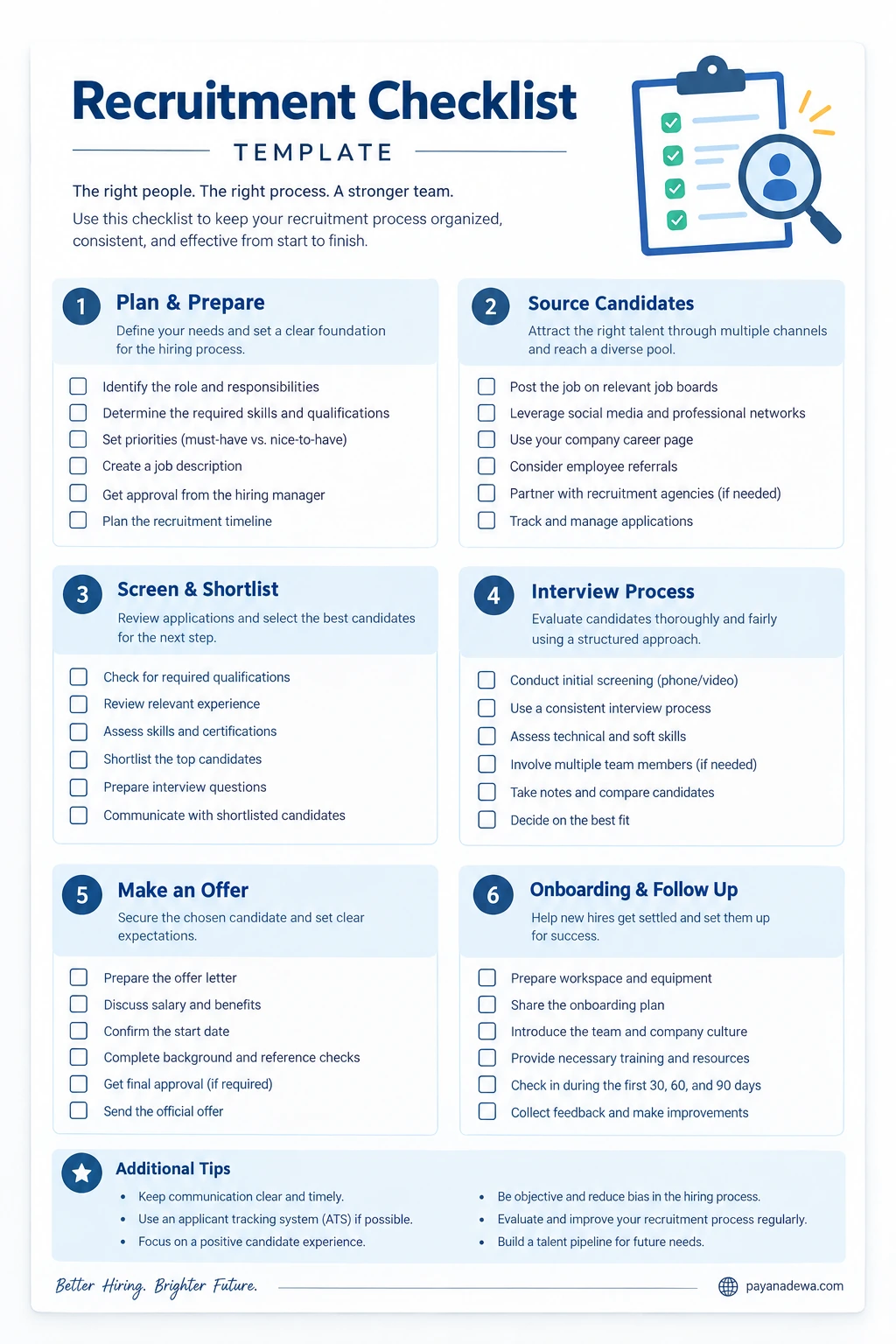
Using a printable recruitment checklist template makes it easier to organize hiring responsibilities and monitor progress. It can also serve as a shared reference for HR departments, business owners, and hiring managers.
The template below provides a convenient overview of the six main recruitment stages. You can print it, save it digitally, or adapt the tasks to match your organization’s hiring procedures.
Use the checklist as a starting point and add any additional requirements specific to your industry, company policies, or local employment regulations.
Practical Tips for Improving Your Recruitment Process
A checklist provides structure, but effective recruitment also requires good communication, thoughtful evaluation, and continuous improvement. Consider these practical tips to make your hiring process more successful.
Use Clear and Realistic Job Descriptions
Write job descriptions that accurately explain responsibilities, essential qualifications, and performance expectations. Avoid excessive requirements that are not genuinely necessary for the role.
Set a Recruitment Timeline
Establish target dates for advertising, screening, interviews, and final decisions. A realistic timeline helps everyone stay accountable and reduces unnecessary delays.
Maintain Regular Candidate Communication
Keep applicants informed about their application status and upcoming recruitment activities. Even when a candidate is unsuccessful, a professional and respectful response can strengthen your employer reputation.
Use Technology to Simplify Recruitment
Applicant tracking systems and digital recruitment tools can help organize resumes, schedule interviews, monitor candidate progress, and manage communication. Choose tools that match your organization’s size and hiring needs.
Make Fairness a Priority
Apply consistent selection criteria and ask job-related interview questions. Train hiring managers to recognize unconscious bias and make decisions based on relevant evidence rather than personal assumptions.
Measure Recruitment Performance
Track useful recruitment metrics to identify opportunities for improvement. For example, monitor time to hire, cost per hire, candidate conversion rates, offer acceptance rates, and new employee retention.
Review these results regularly. They can reveal bottlenecks, sourcing challenges, and areas where your recruitment strategy needs adjustment.
Common Recruitment Mistakes to Avoid
Even experienced hiring teams can encounter problems during recruitment. Fortunately, many common mistakes can be prevented through better planning and consistent procedures.
- Unclear job requirements: Vague expectations can attract unsuitable applicants and create confusion during interviews.
- Rushing hiring decisions: Choosing someone without adequate evaluation may lead to a poor hiring outcome.
- Inconsistent interviews: Different questions and evaluation standards can make candidate comparisons less reliable.
- Poor communication: Delayed responses can create a negative candidate experience and cause strong applicants to lose interest.
- Ignoring onboarding: Failing to prepare new employees can make their transition unnecessarily difficult.
- Neglecting recruitment data: Without performance measurements, it becomes harder to identify weaknesses and improve hiring strategies.
By addressing these issues early, organizations can build a more reliable recruitment system and improve the overall quality of their hiring decisions.
Conclusion
A well-designed Recruitment Checklist is a valuable tool for managing every stage of the hiring process. From workforce planning and candidate sourcing to interviews, employment offers, and onboarding, each step contributes to a successful recruitment outcome.
By following a structured hiring workflow, organizations can improve efficiency, maintain consistent evaluation standards, reduce administrative mistakes, and create a better experience for candidates and new employees.
Start with the recruitment checklist template provided in this guide and customize it to fit your organization’s needs. With clear responsibilities, effective communication, and regular process reviews, you can build a stronger recruitment strategy and find the right people to support your business growth.