Without a clear quality control process, small mistakes can easily turn into bigger problems. Important steps may be overlooked, documentation may become incomplete, and the final result may fail to meet expectations. Fortunately, a practical quality checklist makes these issues easier to prevent.
In this guide, you will learn what a quality checklist is, why it matters, what to include, and how to create one that supports better results. You will also discover practical tips for using a printable quality checklist template in different industries.
What Is a Quality Checklist?
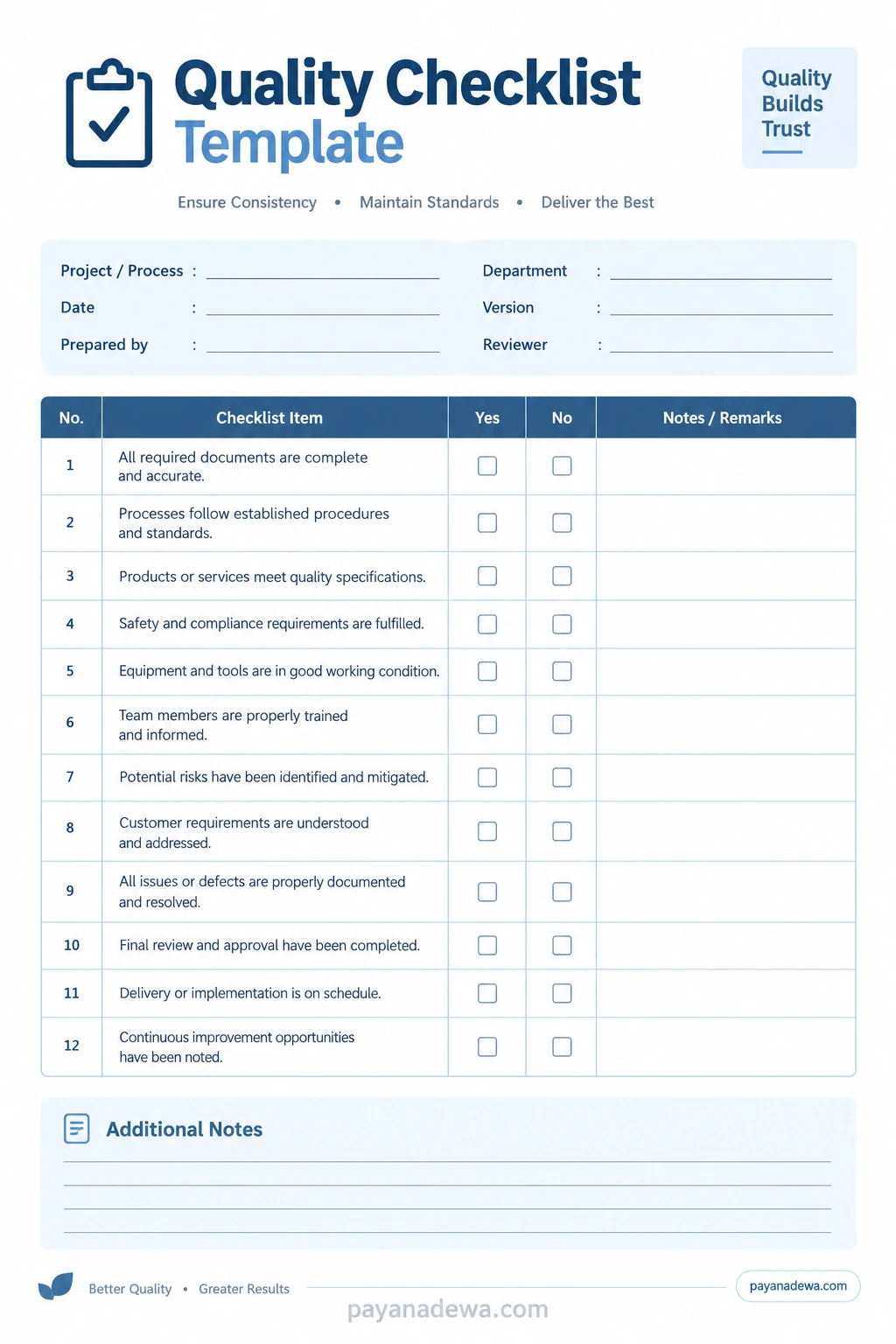
A quality checklist is a structured document used to verify that products, services, processes, or tasks meet specific quality requirements. It contains a series of questions or inspection points that help users evaluate whether important standards have been achieved.
Each checklist item represents something that needs to be checked. Depending on the purpose, users can mark each item as complete, incomplete, approved, or requiring further attention.
For example, a manufacturing company may use a quality inspection checklist to examine product dimensions, materials, safety requirements, and packaging. Meanwhile, a project manager may use a quality assurance checklist to confirm that documentation, deadlines, approvals, and deliverables meet expectations.
Although checklist formats can differ, their main purpose remains the same: making quality control easier, clearer, and more consistent.
Why Is a Quality Checklist Important?
Quality management requires attention to detail. However, relying only on memory or informal communication can lead to inconsistent results. A checklist provides a simple reference that helps everyone follow the same standards.
1. Reduces Human Errors
People can forget small but important tasks, especially when handling multiple responsibilities. A quality checklist provides clear reminders of what needs to be reviewed. As a result, teams can reduce avoidable mistakes and missed requirements.
2. Improves Work Consistency
Consistency is essential for delivering reliable products and services. When employees use the same inspection criteria, they are more likely to produce similar results. This also makes it easier for managers to compare performance across different teams or projects.
3. Saves Time and Resources
Finding mistakes early is usually easier than correcting them after completion. A checklist helps teams identify problems during the process. Therefore, businesses can reduce unnecessary rework, delays, and additional costs.
4. Supports Accountability
A documented checklist can show which items have been reviewed and who completed the inspection. It also provides space for notes, remarks, and corrective actions. This creates a clearer record of responsibility.
5. Encourages Continuous Improvement
Checklist results can reveal recurring problems and areas that need attention. By reviewing these findings, managers can improve procedures, update training materials, and strengthen quality standards over time.
Essential Elements of an Effective Quality Checklist
A useful quality checklist should be simple enough for everyday use while still covering the most important requirements. The following elements can help you create a practical document.
Project or Process Information
Start with basic identification details. These fields help users understand which activity or inspection the document belongs to.
Consider including:
- Project or process name
- Department or team
- Inspection date
- Document version
- Name of the person preparing the checklist
- Name of the reviewer or supervisor
Clear Inspection Criteria
Every checklist item should describe one specific requirement. Avoid vague statements that different people might interpret differently.
For example, instead of writing “Check product quality,” use a more specific statement such as “Verify that the product meets the approved dimensional specifications.”
Clear criteria make inspections more objective and easier to repeat.
Yes and No Checkboxes
Simple response options help users record inspection results quickly. Yes and No checkboxes work well when each item has a clear pass-or-fail condition.
However, some processes may need additional options, such as Not Applicable, In Progress, or Needs Review. Choose response options that match the actual inspection requirements.
Notes and Remarks Section
Not every inspection can be explained with a checkbox. A notes section allows users to describe defects, record observations, and explain why an item did not pass.
This information is especially useful when another team member needs to review the findings or complete corrective actions.
Approval and Follow-Up Information
For formal quality control activities, include an approval area. You can add reviewer signatures, completion dates, and corrective action references. These details help create a reliable inspection record.
How to Create a Quality Checklist Step by Step
Creating an effective checklist does not have to be complicated. Follow these steps to build a document that supports your daily workflow.
Step 1: Define Your Quality Objectives
First, identify what you want to evaluate. Are you checking product specifications, reviewing a service process, inspecting workplace safety, or monitoring project deliverables?
A clear objective helps you select relevant inspection criteria. It also prevents the checklist from becoming unnecessarily long.
Step 2: Identify the Critical Requirements
List the standards that must be achieved. These requirements may come from internal procedures, customer expectations, industry standards, or applicable regulations.
Focus on requirements that directly affect safety, performance, reliability, and customer satisfaction.
Step 3: Organize the Checklist Items
Arrange inspection points in a logical order. For example, a production checklist could follow the actual manufacturing process from material preparation to final packaging.
Grouping related items makes the document easier to understand. It also helps users complete inspections without repeatedly switching between sections.
Step 4: Choose the Right Format
Select a format that matches how your team works. A printable quality checklist is useful for physical inspections, while a digital checklist may be more convenient for remote teams or automated workflows.
Make sure the layout is readable, the response fields are clear, and there is enough space for additional comments.
Step 5: Test the Checklist
Before using the document across your organization, test it with a small group. Ask users to complete an inspection and identify confusing questions or missing requirements.
Use their feedback to improve the wording, structure, and overall usability.
Step 6: Review and Update Regularly
Quality requirements can change as products, processes, and customer expectations evolve. Review your checklist periodically to keep it accurate and relevant.
Update outdated items, remove unnecessary questions, and add new inspection points when needed. Remember to maintain document version information so everyone uses the correct template.
Quality Checklist Examples for Different Industries
A quality checklist can support many types of businesses and professional activities. Here are several practical examples.
Manufacturing Quality Checklist
Manufacturing teams can use a product quality checklist to verify that finished goods meet required specifications.
- Raw materials meet approved specifications.
- Production equipment is functioning correctly.
- Product dimensions meet quality requirements.
- Products are free from visible defects.
- Safety requirements are satisfied.
- Packaging and labels are correct.
Construction Quality Checklist
Construction projects require careful inspections to maintain safety and workmanship standards.
- Construction materials meet project specifications.
- Work areas follow safety procedures.
- Measurements match approved drawings.
- Installation work is properly completed.
- Inspection records are documented.
- Final work meets project requirements.
Office and Administrative Quality Checklist
Administrative teams can use a checklist to improve document accuracy and maintain organized workflows.
- Documents contain accurate information.
- Required approvals have been obtained.
- Files are stored in the correct locations.
- Deadlines are monitored.
- Records are updated regularly.
- Confidential information is handled appropriately.
Customer Service Quality Checklist
Service teams can evaluate interactions to maintain a positive customer experience.
- Customer inquiries receive timely responses.
- Communication is clear and professional.
- Customer concerns are properly documented.
- Solutions address the reported problem.
- Follow-up actions are completed.
Practical Tips for Using a Quality Checklist
A checklist is only useful when people understand how to apply it. These practical tips can help your team get better results.
- Keep it simple. Use clear language and avoid unnecessary technical terms.
- Focus on important details. Include requirements that directly affect quality and performance.
- Use consistent criteria. Make sure different reviewers understand each item in the same way.
- Provide employee training. Explain how to complete the checklist and report problems.
- Record actual findings. Avoid marking items as complete without checking them.
- Assign corrective actions. Give unresolved issues a responsible person and a target completion date.
- Track recurring issues. Review inspection records to identify patterns and opportunities for improvement.
Most importantly, treat the checklist as a quality management tool rather than just another administrative document. Its value comes from the actions taken after each inspection.
Common Mistakes to Avoid
Even a well-designed checklist can become ineffective when it is not used properly. Watch out for these common mistakes:
- Creating overly long checklists. Too many items can make inspections slow and difficult to complete.
- Using unclear questions. Ambiguous wording can lead to inconsistent evaluations.
- Ignoring failed items. Recording a problem is not enough. It must also be investigated and addressed.
- Using outdated documents. Old requirements may no longer reflect current procedures.
- Skipping follow-up reviews. Unresolved findings can create repeated quality problems.
- Failing to train users. Employees need to understand the purpose and correct use of the document.
Avoiding these mistakes will help your checklist remain practical, accurate, and valuable over time.
Conclusion
A quality checklist is a practical tool for improving consistency, reducing errors, and maintaining reliable standards. It gives teams a clear structure for reviewing requirements, documenting findings, and identifying areas that need improvement.
Whether you work in manufacturing, construction, administration, or customer service, a well-organized checklist can make quality control easier to manage. Start by defining your objectives, selecting clear inspection criteria, and creating a simple format that fits your workflow.
For a convenient starting point, use a printable quality checklist template to organize project details, review important requirements, and record inspection results. With regular updates and consistent use, your checklist can become an important part of a stronger quality management process.