A successful training program requires more than gathering participants and presenting information. It involves careful planning, proper preparation, effective delivery, and continuous evaluation. Without a clear process, important tasks can easily be overlooked. This is where a well-organized training checklist becomes essential.
Whether you are an HR professional, business owner, team leader, trainer, or educator, having a structured checklist helps you manage every stage of the training process. It ensures that nothing important is forgotten while keeping everyone focused on the desired learning outcomes.
In this guide, you will discover how to create and use a training checklist, what tasks to include, and how to improve the overall training experience. You will also find practical examples that you can adapt to different training programs.
What Is a Training Checklist?
A training checklist is a structured document that contains all the essential tasks and activities required to organize, conduct, and evaluate a training session. It serves as a practical reference for trainers, managers, and training coordinators.
Instead of relying on memory, you can use a checklist to track completed tasks and identify activities that still need attention. As a result, the training process becomes more organized, consistent, and efficient.
A typical training checklist includes several important areas:
- Training preparation: Defining objectives, identifying participants, and preparing materials.
- Training delivery: Managing the session, presenting content, and encouraging participation.
- Post-training follow-up: Sharing resources, collecting feedback, and providing additional support.
- Training evaluation: Measuring results and identifying opportunities for improvement.
Although every organization has different requirements, these four areas provide a reliable foundation for most training activities.
Why Is a Training Checklist Important?
Training programs involve many small but important responsibilities. Missing just one task can affect the participant experience or reduce the effectiveness of the entire session.
Using a training checklist offers several benefits that make the process easier to manage.
1. Keeps Training Activities Organized
A checklist provides a clear overview of what needs to be completed before, during, and after training. Trainers can follow a logical sequence instead of managing tasks randomly.
This structure also helps training coordinators manage multiple sessions without overlooking important details.
2. Improves Time Management
Every training session has a schedule. However, preparation tasks and unexpected situations can consume valuable time.
A checklist helps you prioritize responsibilities and complete important activities before the training begins. Consequently, you can spend more time focusing on participants and learning objectives.
3. Creates a Consistent Training Experience
Organizations often conduct the same training program for different teams or departments. A standardized checklist helps ensure that every group receives consistent information and support.
It also makes it easier for different trainers to follow the same procedures and maintain quality standards.
4. Reduces Mistakes and Forgotten Tasks
Even experienced trainers can forget small details when managing several responsibilities. For example, they might overlook equipment checks, participant confirmations, or follow-up materials.
A checklist reduces these risks by providing a simple way to review each responsibility before moving to the next stage.
Essential Training Checklist: Tasks to Complete Before Training
Preparation is one of the most important parts of any successful training program. Before participants arrive, you should confirm that the objectives, materials, schedule, and facilities are ready.
Use the following pre-training checklist to prepare your session.
1. Define Training Objectives
Start by identifying what participants should learn or accomplish by the end of the session. Clear objectives help you select appropriate materials and activities.
- Identify the main purpose of the training.
- Define specific learning outcomes.
- Determine the skills or knowledge participants need.
- Choose suitable methods for measuring progress.
2. Identify the Target Audience
Understanding your participants helps you design relevant and engaging content. Consider their experience levels, job responsibilities, and existing knowledge.
- Confirm the number of participants.
- Identify their roles and departments.
- Assess their current skill levels.
- Consider any special learning requirements.
3. Prepare Training Materials
Well-prepared materials make information easier to understand. They also help participants review important topics after the session.
Depending on your training format, prepare the following resources:
- Presentation slides and handouts.
- Training manuals and worksheets.
- Practical exercises and case studies.
- Videos and supporting resources.
- Assessment forms and evaluation sheets.
4. Arrange the Training Location
The training environment can influence participant engagement. Therefore, make sure the location is comfortable, accessible, and suitable for the planned activities.
- Book the training room or online meeting platform.
- Arrange seating and presentation equipment.
- Check lighting, ventilation, and internet access.
- Prepare necessary technical equipment.
- Confirm the venue is accessible to participants.
5. Confirm Trainers and Participants
Communication helps prevent confusion before the session begins. Send invitations early and provide participants with all essential information.
- Confirm trainer or facilitator availability.
- Send training invitations.
- Share the date, time, and location.
- Provide registration instructions.
- Send reminders before the scheduled session.
Training Checklist: Tasks to Complete During Training
Once preparation is complete, the next step is delivering the training effectively. A good trainer does more than explain information. They also create an environment where participants feel comfortable asking questions and practicing new skills.
Use these tasks to keep your training session on track.
1. Welcome Participants
Begin by welcoming everyone and introducing the trainer. Explain the purpose of the session and provide a brief overview of the agenda.
Make sure participants understand the expected outcomes and know how to take part in activities.
2. Explain the Training Agenda
Clearly communicate the topics, activities, and expected schedule. This helps participants understand what will happen throughout the session.
Also, establish basic ground rules for communication, participation, and questions.
3. Deliver Training Materials
Present information in a clear and engaging way. Use practical examples, demonstrations, and visual materials to make complex topics easier to understand.
Where possible, connect the training content to real workplace situations. This makes the learning experience more relevant.
4. Encourage Active Participation
Participants are more likely to remember information when they actively engage with the material.
Consider including these activities:
- Group discussions and brainstorming.
- Question-and-answer sessions.
- Individual exercises and practical demonstrations.
- Role-playing activities.
- Knowledge quizzes and short assessments.
5. Monitor Time and Address Questions
Follow the planned schedule while allowing enough time for discussions and practical exercises. If a topic takes longer than expected, adjust the session carefully without sacrificing important learning objectives.
Encourage participants to ask questions and provide clear explanations whenever necessary.
Post-Training Checklist: Important Follow-Up Activities
Training should not end when the session finishes. Follow-up activities help participants apply what they have learned and allow organizations to measure the value of their investment.
Here are some important post-training responsibilities.
1. Share Training Resources
Provide participants with presentation slides, worksheets, reference documents, and other relevant materials. These resources allow them to review important information whenever needed.
2. Collect Participant Feedback
Feedback helps you understand what worked well and what needs improvement. Use a short survey or evaluation form to collect honest responses.
Consider asking questions about:
- Training content and relevance.
- Trainer knowledge and communication.
- Training materials and activities.
- Session duration and organization.
- Overall participant satisfaction.
3. Provide Additional Support
Some participants may need extra guidance after completing the session. Offer additional resources, coaching, or mentoring when appropriate.
This support helps reinforce new knowledge and encourages participants to use their skills in real situations.
4. Document Training Results
Keep accurate records of attendance, completed assessments, participant feedback, and other relevant information.
These records help managers track employee development and plan future training programs more effectively.
How to Evaluate Training Effectiveness
A successful training program should produce measurable improvements. Therefore, evaluation is an essential part of the training management process.
Rather than relying only on participant satisfaction, consider several methods to determine whether the training achieved its objectives.
Measure Participant Knowledge
Use quizzes, tests, or practical assessments to determine whether participants understand the material. Comparing results before and after training can also reveal improvements in knowledge.
Observe Workplace Performance
For workplace training, observe whether employees apply their new skills in daily activities. Improved accuracy, productivity, communication, or task completion can indicate positive results.
Review Feedback and Training Reports
Analyze participant comments and assessment results to identify strengths and weaknesses. Look for recurring issues that may require changes to the training content or delivery method.
Plan Future Improvements
Use evaluation findings to improve future sessions. Update outdated materials, adjust activities, and provide additional support where necessary.
Tips for Creating an Effective Training Checklist
A useful checklist should be simple, practical, and easy to update. It should help users complete tasks rather than create additional administrative work.
Follow these tips when designing your own training checklist.
- Use clear language: Write short, specific tasks that are easy to understand.
- Organize tasks by stage: Separate preparation, delivery, follow-up, and evaluation activities.
- Include checkboxes: Make it easy to mark completed responsibilities.
- Assign responsibilities: Identify who is responsible for each important task.
- Add deadlines: Include due dates for activities that must be completed before training.
- Keep it flexible: Adjust the checklist according to the training type and organizational needs.
- Review it regularly: Update the document whenever procedures or requirements change.
Additionally, consider using a printable training checklist template. A ready-made template saves preparation time and provides a consistent format that can be reused for different training programs.
Free Printable Training Checklist Template
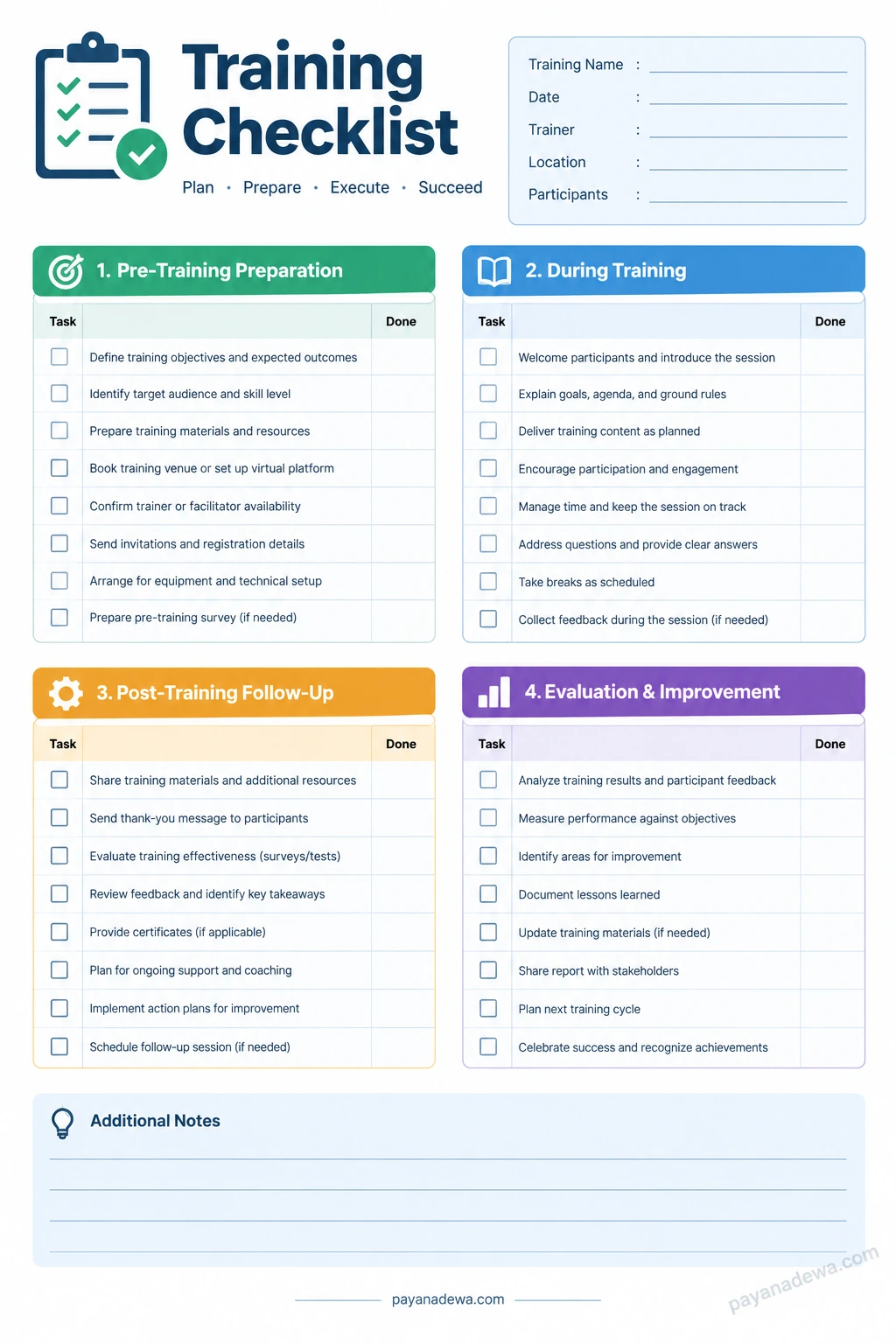
If you want to organize your training activities more easily, a printable training checklist template can be a practical solution. It provides a structured layout for recording important details and tracking completed tasks.
The template below is designed to cover four essential stages: pre-training preparation, activities during training, post-training follow-up, and evaluation.
You can use this template for employee onboarding, professional development, workplace safety training, technical skills development, and other educational programs.
Before using the template, consider customizing the task descriptions to match your organization’s training objectives. You can also add responsible team members, deadlines, and additional notes where necessary.
Who Should Use a Training Checklist?
A training checklist is useful for individuals and organizations that regularly organize learning and development activities. Its flexible structure makes it suitable for different industries and professional environments.
Human Resources Professionals
HR teams can use a checklist to organize employee onboarding, compliance training, and professional development programs. It also helps them maintain consistent training records.
Business Owners and Managers
Business owners can use training checklists to ensure employees understand company procedures, workplace expectations, and operational responsibilities.
Trainers and Instructors
Professional trainers can use checklists to prepare learning materials, manage session activities, and evaluate participant progress.
Educational Institutions
Schools, colleges, and training centers can adapt the checklist to manage workshops, seminars, practical lessons, and other educational activities.
Common Mistakes to Avoid When Using a Training Checklist
Although checklists are simple tools, using them incorrectly can reduce their effectiveness. Avoid these common mistakes to get better results.
- Creating too many tasks: An unnecessarily complicated checklist can make the process difficult to manage. Focus on essential responsibilities.
- Using unclear instructions: Each task should describe a specific action rather than a vague objective.
- Ignoring follow-up activities: Remember that learning continues after the training session ends.
- Failing to update the document: Review your checklist regularly to keep information accurate and relevant.
- Not evaluating results: Without evaluation, it becomes difficult to determine whether the training achieved its goals.
By avoiding these mistakes, you can turn a basic checklist into a valuable training management tool.
Conclusion
A well-designed training checklist makes it easier to plan, organize, deliver, and evaluate successful training programs. It provides a clear structure for managing responsibilities while reducing the risk of forgotten tasks and unnecessary delays.
From defining learning objectives and preparing materials to collecting feedback and measuring results, every stage plays an important role in the overall training experience.
Whether you are managing employee development, organizing professional workshops, or delivering educational sessions, a practical checklist can help you achieve better results.
Start by using a printable training checklist template, customize it to your needs, and review it regularly. With consistent planning and evaluation, you can create more effective training programs and support continuous learning and professional growth.