Planning a wedding, moving into a new home, or celebrating an important milestone is an exciting experience. However, organizing everything can quickly become overwhelming, especially when deciding what gifts you actually need. A well-organized Registry Checklist makes the process easier by helping you identify essential items, prioritize your needs, and create a thoughtful gift list that friends and family will appreciate.
Whether you are preparing a wedding registry, building a household gift registry, or creating a wish list for a special occasion, having a clear checklist ensures that nothing important gets overlooked. Instead of randomly adding products to your registry, you can organize items by category, compare options, and choose gifts that match your lifestyle and budget.
In this guide, you will discover everything you need to create a practical registry, including essential household items, kitchen supplies, bedroom necessities, bathroom accessories, and thoughtful extras. You will also find helpful planning tips to make your registry more useful, organized, and enjoyable.
What Is a Registry Checklist?
A registry checklist is an organized list of items you would like to receive as gifts for a particular occasion. It helps you keep track of everything you need while allowing guests to choose presents that are genuinely useful and meaningful.
Gift registries are commonly used for weddings, bridal showers, baby showers, housewarming celebrations, and other important life events. Instead of guessing what someone might want, guests can browse a prepared selection of items and choose something that suits their budget.
A good registry checklist should include a combination of practical necessities, personal preferences, and special items. It should also reflect your current lifestyle, living space, and future plans.
Why You Should Use a Registry Checklist
Creating a registry without a plan can result in missing essentials, duplicate gifts, or unnecessary purchases. A checklist provides a simple structure that makes the entire process more manageable.
1. Stay Organized Throughout the Planning Process
A categorized checklist helps you separate items according to their purpose. You can organize your registry into kitchen essentials, bedroom accessories, bathroom supplies, home decorations, and special gifts. This makes it easier to see what you already have and what you still need.
2. Avoid Forgetting Important Items
Small household necessities are often overlooked when people focus on larger gifts. Items such as kitchen utensils, storage containers, towels, cleaning supplies, and laundry baskets may seem simple, but they are essential for everyday living.
3. Make Shopping Easier for Guests
A thoughtful gift registry gives guests clear ideas about what you would appreciate. Including products at different price points also allows everyone to find something suitable without feeling pressured to spend more than they can afford.
4. Build a Home That Matches Your Lifestyle
Your registry should reflect how you actually live. If you enjoy cooking, prioritize quality cookware and kitchen appliances. If you love relaxing at home, consider comfortable bedding, soft blankets, and cozy living room accessories.
The Ultimate Registry Checklist: Essential Items to Include
Before creating your final gift list, consider the following categories. You can use them as a starting point and adjust the selections according to your personal needs.
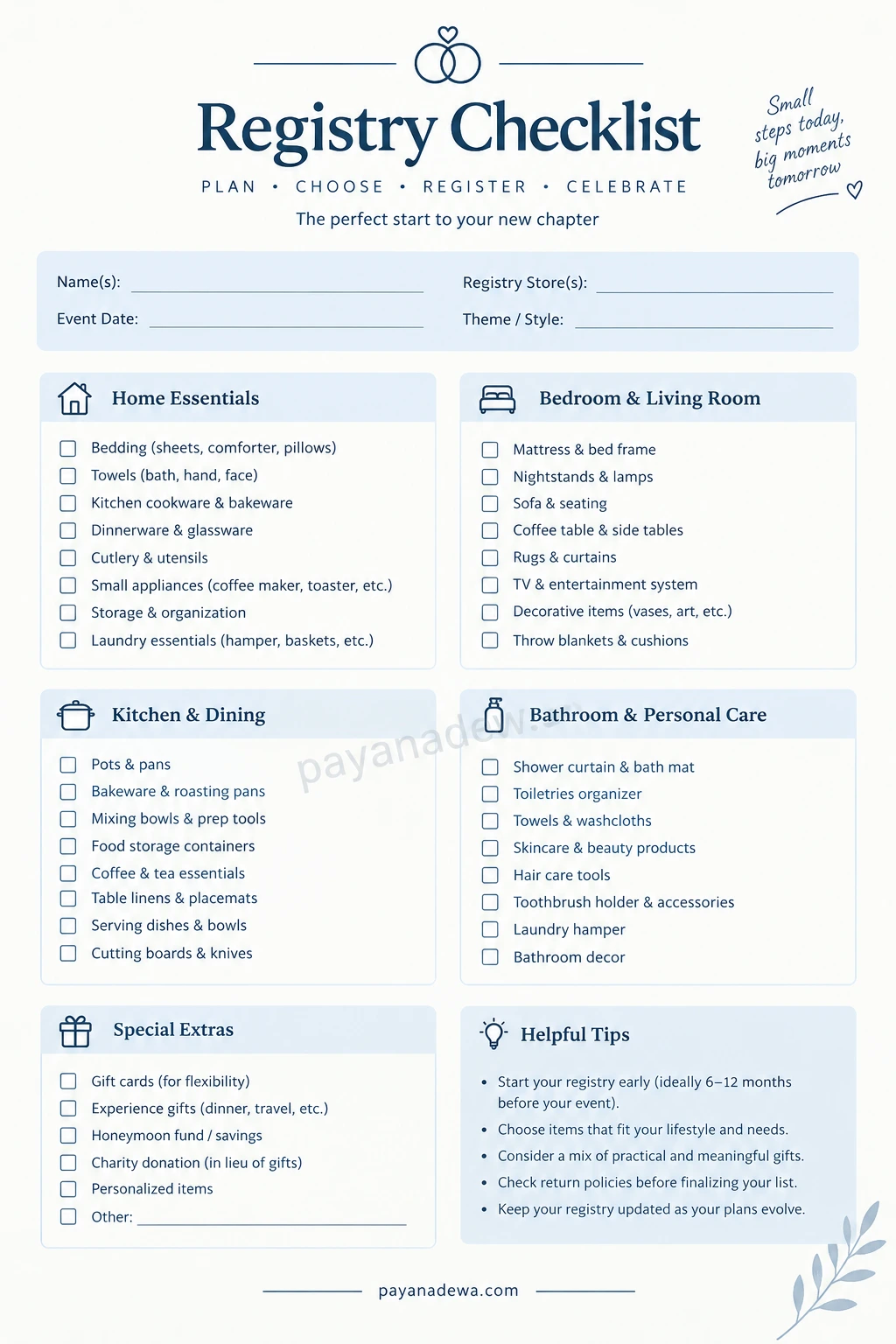
1. Home Essentials
Home essentials are the foundation of a comfortable and functional living space. These everyday items are particularly useful for couples starting a new household or individuals moving into their first home.
- Bedding sets, including sheets, pillowcases, and comforters.
- Bath towels, hand towels, and face towels.
- Kitchen cookware and basic bakeware.
- Dinnerware, plates, bowls, and glassware.
- Cutlery, cooking utensils, and serving tools.
- Coffee makers, toasters, and other small appliances.
- Storage baskets, organizers, and containers.
- Laundry hampers and basic laundry accessories.
Choose versatile products that are easy to maintain and suitable for everyday use. Neutral colors and timeless designs are often excellent choices because they can complement different interior styles.
2. Bedroom and Living Room
Your bedroom and living room should provide comfort, relaxation, and functionality. Consider adding items that improve the atmosphere of these spaces while supporting your daily routines.
- Mattress and bed frame.
- Nightstands and bedside lamps.
- Comfortable pillows and decorative cushions.
- Sofa or living room seating.
- Coffee table and side tables.
- Area rugs and window curtains.
- Television and entertainment accessories.
- Throw blankets and cozy home textiles.
- Decorative vases, artwork, and wall accessories.
When selecting bedroom and living room gifts, consider the size of your home. Measure available spaces before adding large furniture pieces to your registry to avoid purchasing items that do not fit.
3. Kitchen and Dining Essentials
The kitchen is one of the most important areas of any home. A carefully selected kitchen registry can help you prepare meals, entertain guests, and organize your cooking space more efficiently.
- Pots and pans in different sizes.
- Baking trays and roasting pans.
- Mixing bowls and food preparation tools.
- Food storage containers.
- Cutting boards and kitchen knives.
- Coffee and tea accessories.
- Measuring cups and measuring spoons.
- Serving dishes, bowls, and platters.
- Table linens, placemats, and napkins.
- Kitchen organizers and spice racks.
It is a good idea to prioritize durable cookware and versatile kitchen tools. Rather than selecting too many specialized gadgets, focus on products that you will use regularly.
4. Bathroom and Personal Care
A comfortable bathroom requires more than basic toiletries. Adding practical bathroom accessories to your registry can help create a clean, organized, and relaxing environment.
- Shower curtains and bath mats.
- Matching towel sets and washcloths.
- Toiletry organizers and storage baskets.
- Soap dispensers and toothbrush holders.
- Bathroom shelves and organizers.
- Hair dryers and styling accessories.
- Skincare and personal care organizers.
- Laundry hampers.
- Bathroom decorations and accessories.
Choose materials that are easy to clean and suitable for humid environments. Functional storage solutions can also help keep smaller bathrooms neat and clutter-free.
5. Special Gifts and Personal Extras
Not every registry item needs to be a household necessity. Including meaningful experiences and personalized gifts allows your registry to reflect your interests and create lasting memories.
- Gift cards for flexible shopping options.
- Restaurant or dining experiences.
- Travel and honeymoon contributions.
- Personalized home decorations.
- Cooking classes or creative workshops.
- Charitable donations.
- Hobby-related accessories.
- Special keepsakes and sentimental gifts.
These additional options are particularly helpful for couples or individuals who already own most everyday essentials but still want to give guests meaningful gift choices.
How to Create a Registry That Fits Your Needs
Once you understand which categories to include, the next step is building a registry that makes sense for your lifestyle. Follow these practical steps to create a well-balanced gift list.
Step 1: Determine Your Priorities
Start by identifying the items you need most. Separate your list into three groups: essential items, useful upgrades, and optional extras. This simple method helps you focus on necessities before adding decorative or luxury products.
Step 2: Check What You Already Own
Before adding new products, review your existing household belongings. You may already have cookware, towels, furniture, or small appliances that are perfectly suitable for your needs. Avoid adding unnecessary duplicates to your registry.
Step 3: Set a Realistic Budget
Although guests usually purchase registry gifts, it is still important to consider the value of the products you select. Include affordable everyday items alongside mid-range and premium options. A variety of price points creates a more welcoming experience for everyone.
Step 4: Choose Quality Over Quantity
A long registry is not necessarily a better registry. Focus on useful, durable, and versatile products rather than adding items simply to make the list look complete. Pay attention to materials, warranties, customer reviews, and product specifications.
Step 5: Select the Right Registry Platform
Choose a registry service that is convenient for both you and your guests. Look for features such as easy sharing, product descriptions, gift tracking, flexible price options, and straightforward purchasing processes.
Step 6: Review and Update Your List
Your needs may change as your event approaches. Review your registry regularly to remove unnecessary products, replace unavailable items, and add anything important that you may have forgotten.
Helpful Tips for a Successful Gift Registry
A little preparation can make your registry more practical and enjoyable. Keep these tips in mind when organizing your final list.
- Start early: Begin planning your registry approximately six to twelve months before a major event when possible.
- Think about your lifestyle: Select products that match your everyday habits, interests, and living arrangements.
- Include different price ranges: Give guests several options that fit different budgets.
- Choose timeless designs: Classic colors and simple styles are easier to coordinate with future home changes.
- Read product reviews: Compare quality, durability, and customer experiences before adding expensive products.
- Check return policies: Understand exchange procedures, warranties, and delivery conditions.
- Communicate clearly: Share your registry information politely and provide guests with enough time to choose gifts.
- Express appreciation: Remember to thank guests for their generosity and thoughtful contributions.
Common Registry Mistakes to Avoid
Even with a detailed checklist, it is easy to make a few mistakes during the planning process. Avoiding these common problems can help you create a better gift registry.
Adding Too Many Unnecessary Products
Adding products without considering their usefulness can make your registry confusing. Focus on items that serve a clear purpose and support your daily needs.
Forgetting About Storage Space
Large appliances, furniture, and decorative accessories require adequate space. Always consider your home layout before selecting oversized products.
Choosing Only Expensive Gifts
A registry filled exclusively with premium products may limit the choices available to guests. Include smaller, affordable options so everyone can participate comfortably.
Ignoring Practical Everyday Items
It is tempting to focus on beautiful decorations and luxury gifts, but practical essentials often provide the greatest long-term value. Make sure your registry includes everyday necessities.
Not Updating the Registry
Leaving unavailable or unwanted products on your list can create unnecessary confusion. Check your registry regularly and keep the information accurate.
When Should You Start Your Registry Checklist?
The ideal time depends on the occasion. For a wedding registry, starting six to twelve months before the wedding gives you enough time to compare products and organize your selections. For a housewarming registry, you can begin as soon as you know your new home’s layout and basic requirements.
For other celebrations, consider creating your list several weeks or months before the event. The earlier you prepare, the easier it becomes to identify missing essentials, compare prices, and communicate your preferences to guests.
Conclusion: Make Your Registry Planning Simple and Stress-Free
Creating a complete Registry Checklist is an effective way to organize your gift preferences, prioritize household essentials, and make special occasions more enjoyable. By dividing your list into practical categories such as home essentials, bedroom and living room, kitchen and dining, bathroom accessories, and special gifts, you can build a registry that reflects your real needs.
Remember that the best registry is not necessarily the longest or most expensive one. It is a thoughtfully planned collection of useful, meaningful, and practical items that suit your lifestyle and budget.
Use this Registry Checklist as your planning guide, customize it to match your preferences, and review it regularly as your needs evolve. With a little organization and preparation, you can create a gift registry that makes choosing presents easier for your guests and helps you prepare confidently for your next chapter.
Start planning today, check off your essentials, and enjoy every step of the journey!