Preparing for a trade show can be exciting, but it also involves many details that need careful attention. From booking your exhibition space to organizing promotional materials and training your team, every step contributes to the success of your event. Without proper preparation, important tasks can easily be overlooked.
A well-organized trade show checklist helps you stay on track, manage your budget, prepare your booth, and make the most of every networking opportunity. Whether you are attending your first industry exhibition or have years of experience, having a clear plan makes the entire process easier and more efficient.
In this guide, you will discover everything you need to prepare before, during, and after a trade show. Use the practical checklist and planning tips below to create a professional exhibition experience and achieve your business goals.
What Is a Trade Show Checklist?
A trade show checklist is a practical planning document that outlines all the tasks, materials, equipment, and responsibilities required for a successful exhibition. It helps businesses organize their activities, avoid last-minute problems, and ensure that nothing important is forgotten.
Trade shows provide valuable opportunities to introduce products, connect with potential customers, build brand awareness, and develop business relationships. However, achieving these benefits requires preparation and coordination.
A comprehensive checklist typically covers several important areas, including:
- Pre-event planning and registration.
- Budget management and travel arrangements.
- Exhibition booth design and equipment.
- Marketing materials and promotional activities.
- Staff training and team responsibilities.
- On-site supplies and event management.
- Lead collection and post-event follow-up.
By organizing these responsibilities in advance, your team can focus on engaging visitors and creating meaningful business opportunities.
Printable Trade Show Checklist Template
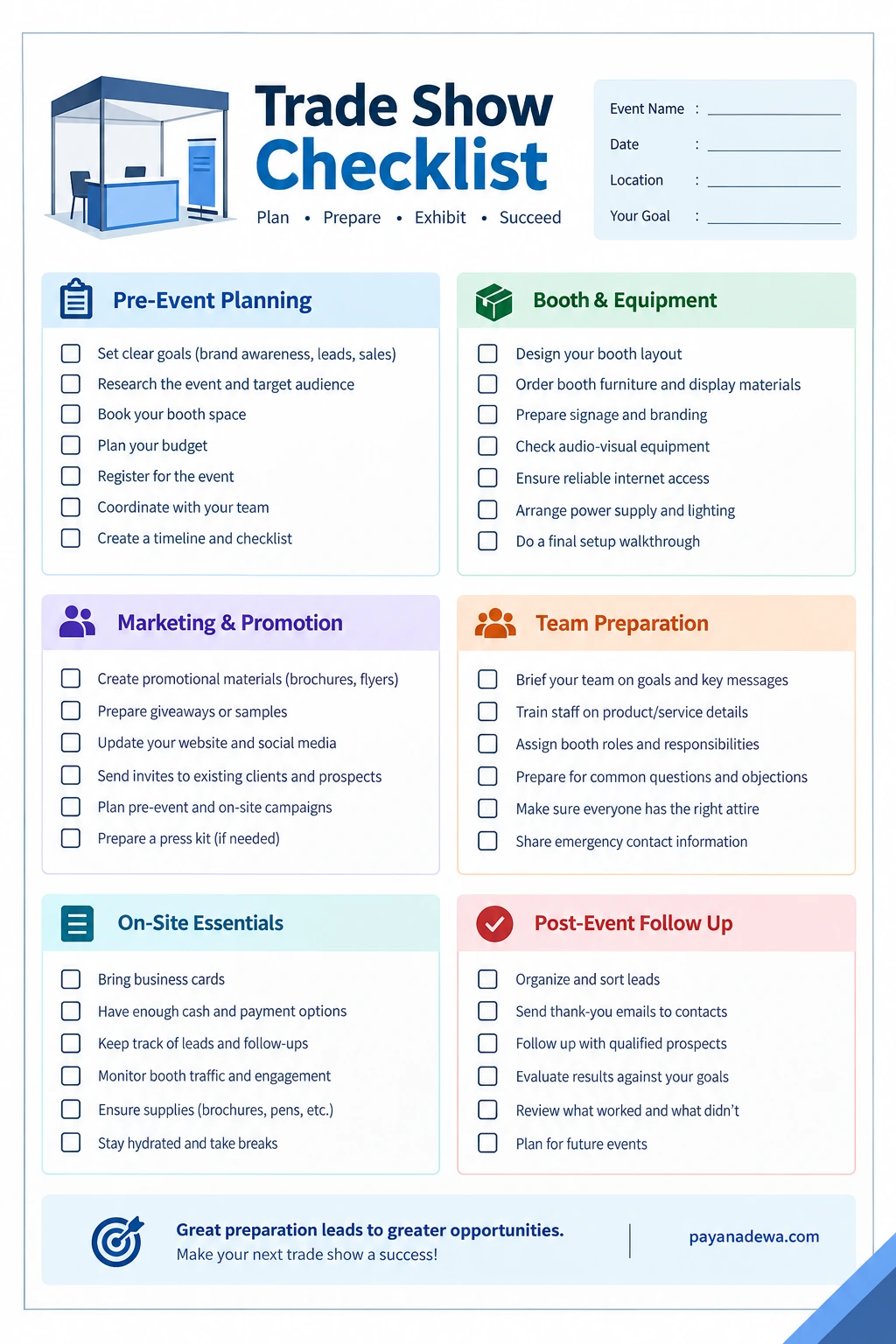
Using a printable trade show checklist template makes event preparation more manageable. You can print the document, assign tasks to team members, and mark each activity as it is completed.
The following template covers six essential preparation categories to help you organize your exhibition from start to finish.
1. Pre-Event Planning and Organization
Successful trade show preparation begins long before the exhibition opens. Establishing clear goals and organizing essential details early will help your business avoid unnecessary expenses and confusion.
Set Clear Exhibition Goals
Start by deciding what you want to accomplish. Your objectives will influence your booth design, marketing strategy, staffing requirements, and budget.
Common trade show objectives include:
- Increasing brand awareness among your target audience.
- Generating qualified sales leads.
- Introducing new products or services.
- Building relationships with industry professionals.
- Connecting with distributors and potential business partners.
Research and Register for the Event
Choose an exhibition that attracts the right audience for your business. Research the event organizer, expected attendance, exhibitor requirements, available booth locations, and registration deadlines.
Complete your registration early and confirm all important details. Keep copies of contracts, invoices, confirmation emails, and exhibitor guidelines in one accessible location.
Create a Realistic Budget
A detailed budget helps you control spending and avoid unexpected costs. Consider booth rental, transportation, accommodation, promotional materials, staff expenses, shipping, and additional event services.
It is also wise to reserve an emergency budget for unexpected expenses such as replacement equipment, additional supplies, or last-minute transportation changes.
2. Booth Design and Equipment Preparation
Your exhibition booth is often the first impression visitors have of your company. A professional, attractive, and organized display can encourage attendees to stop, explore your products, and start conversations with your team.
Plan Your Booth Layout
Before the event, create a booth layout that makes it easy for visitors to enter, explore, and interact with your displays. Consider traffic flow, product placement, seating, storage, and demonstration areas.
Make sure your branding is visible from a distance. Your company name, logo, and main message should be easy to recognize without overwhelming the space.
Prepare Essential Booth Equipment
Check that all equipment is ready before shipping or transporting it to the venue. Depending on your exhibition requirements, you may need:
- Display stands, tables, and chairs.
- Company banners and branded signage.
- Product samples and demonstration equipment.
- Laptops, tablets, and charging cables.
- Lighting and audiovisual equipment.
- Power strips and extension cords.
- Reliable internet connectivity.
- Storage containers and organizational supplies.
Test Everything Before the Event
Do not wait until the exhibition opens to test your equipment. Check screens, presentations, internet connections, product demonstrations, and electrical requirements in advance.
Prepare backup cables, chargers, presentation files, and other essential items in case something stops working during the event.
3. Marketing and Promotional Materials
Marketing is an important part of trade show success. Your promotional strategy should attract visitors, communicate your value, and encourage potential customers to learn more about your business.
Create Professional Marketing Materials
Prepare printed and digital materials that explain your products or services clearly. Keep your messaging simple, visually appealing, and consistent with your brand identity.
Consider bringing the following materials:
- Company brochures and product catalogs.
- Business cards and contact information.
- Product specification sheets.
- Promotional flyers and branded merchandise.
- QR codes linking to your website or product pages.
- Digital presentations and demonstration videos.
Promote Your Exhibition Attendance
Start promoting your participation before the event begins. Announce your attendance through your website, email newsletter, and social media channels.
Share the event date, booth number, product highlights, and reasons visitors should meet your team. You can also invite existing customers, business partners, and qualified prospects to schedule appointments.
Prepare Promotional Giveaways
Useful branded giveaways can help visitors remember your company after the exhibition. Choose items that are relevant to your audience and practical enough to be used regularly.
Examples include reusable bags, notebooks, pens, water bottles, and other branded merchandise. Make sure your giveaways fit your marketing budget and overall promotional strategy.
4. Team Preparation and Staff Training
Your exhibition staff play a major role in creating a positive visitor experience. Even an attractive booth may fail to generate meaningful results if team members are unprepared or unable to communicate effectively.
Assign Roles and Responsibilities
Every team member should understand their responsibilities before arriving at the venue. Clear assignments prevent confusion and ensure that important activities are covered throughout the exhibition.
Possible responsibilities include:
- Welcoming visitors and answering initial questions.
- Demonstrating products and explaining services.
- Collecting visitor information and qualifying leads.
- Managing presentations and product demonstrations.
- Maintaining booth cleanliness and organization.
- Coordinating appointments and business meetings.
Train Staff on Products and Services
Make sure everyone understands your products, pricing, benefits, and competitive advantages. Staff should be prepared to answer common questions and explain how your solutions address customer problems.
Practice short product presentations and role-play different visitor interactions. This preparation helps your team communicate confidently and professionally.
Establish a Professional Dress Code
Choose clothing that reflects your brand and creates a consistent appearance. Depending on your industry, this might include branded shirts, business casual outfits, or formal business attire.
Also, share important information such as event schedules, emergency contacts, meeting times, and break arrangements.
5. On-Site Trade Show Essentials
Once you arrive at the venue, the focus shifts from planning to execution. Having a separate on-site checklist helps your team manage daily activities and respond quickly to unexpected situations.
Complete Your Booth Setup
Arrive early enough to assemble your display, position promotional materials, test equipment, and organize your supplies. Walk around the booth to check its appearance from a visitor’s perspective.
Confirm that signage is visible, product displays are accessible, and there are no unnecessary obstacles blocking visitor movement.
Bring Important Personal and Business Supplies
Keep essential items within easy reach throughout the event. A practical on-site supply kit may include:
- Business cards and brochures.
- Pens, notebooks, and markers.
- Phone chargers and power banks.
- Cleaning wipes and tissues.
- Water bottles and snacks.
- First-aid supplies.
- Extra promotional materials.
- Contact lists and event schedules.
Engage Visitors and Record Leads
Encourage your team to greet visitors naturally and ask questions to understand their needs. Avoid giving every visitor the same sales presentation. Instead, focus on meaningful conversations and relevant product information.
Record contact details and useful notes for qualified prospects. Include information such as their interests, business requirements, purchasing timeline, and recommended next steps.
6. Post-Event Follow-Up and Evaluation
Your trade show responsibilities do not end when the exhibition closes. Following up with visitors and evaluating your performance are essential steps for turning event participation into measurable business results.
Organize and Prioritize Collected Leads
Review all collected contacts and organize them according to their potential value. Separate qualified prospects, existing customers, business partners, and general inquiries.
Prioritize contacts who expressed strong interest or requested additional information. This makes your follow-up process more efficient.
Send Personalized Follow-Up Messages
Contact promising leads while the exhibition is still fresh in their minds. Thank them for visiting your booth and refer to something specific from your conversation.
Depending on their interests, provide product information, pricing details, demonstrations, meeting invitations, or other relevant resources.
Measure Your Trade Show Performance
Compare your actual results with the objectives established before the event. Useful performance indicators include:
- Total visitors who interacted with your booth.
- Number of qualified leads collected.
- Product demonstrations completed.
- New business meetings scheduled.
- Sales opportunities generated.
- Total exhibition expenses.
- Revenue and potential return on investment.
Discuss the results with your team and identify what worked well and what could be improved. Document these insights so future exhibitions can benefit from your experience.
Practical Tips for a More Successful Trade Show
Following a checklist is an excellent starting point, but a few additional strategies can make your exhibition experience even more effective.
- Start early: Begin preparations several weeks or months in advance, depending on the size of the exhibition.
- Keep everything organized: Store contracts, schedules, shipping details, and contact information in one shared location.
- Focus on your audience: Design your booth and marketing messages around the needs of your ideal customers.
- Use digital tools: Consider lead capture applications, QR codes, and customer relationship management software.
- Prepare backup solutions: Bring spare equipment and alternative presentation materials.
- Monitor your progress: Review your goals during the exhibition and adjust your approach when necessary.
- Follow up promptly: Make lead management part of your event plan rather than an afterthought.
Common Trade Show Planning Mistakes to Avoid
Even experienced exhibitors can make mistakes that reduce the effectiveness of their participation. Being aware of common problems can help you prepare more confidently.
Starting Preparation Too Late
Last-minute planning can lead to missed deadlines, expensive shipping, incomplete promotional materials, and unnecessary stress. Create a preparation timeline and assign deadlines to every major task.
Ignoring Staff Preparation
Untrained staff may struggle to answer questions or communicate your company’s value. Invest time in product training, communication practice, and role assignments before the event.
Failing to Collect Visitor Information
Meeting potential customers is valuable, but those conversations become difficult to develop without accurate contact information. Use a consistent lead collection process and record relevant details immediately.
Neglecting Post-Event Follow-Up
Waiting too long to contact prospects can reduce engagement and cause valuable opportunities to disappear. Schedule follow-up activities before the exhibition ends.
Conclusion
A successful exhibition requires more than an attractive booth and promotional materials. It involves careful planning, effective teamwork, organized equipment, meaningful visitor engagement, and consistent follow-up.
Using a comprehensive trade show checklist helps you manage every stage of the process while reducing the risk of overlooking important details. From setting clear objectives and preparing marketing materials to collecting qualified leads and evaluating results, each step contributes to a more productive event.
Download and use the printable Trade Show Checklist Template to organize your next exhibition. With the right preparation and a clear strategy, you can create a professional experience, strengthen business relationships, and turn trade show participation into valuable opportunities for growth.