Staying organized can be challenging when you have multiple responsibilities, deadlines, and goals to manage. Whether you are working on a professional project, managing household responsibilities, studying, or running a business, keeping track of everything is essential. Without a clear system, important tasks can easily be forgotten or delayed.
A task checklist provides a simple yet effective way to organize daily responsibilities, monitor progress, and complete activities more efficiently. Instead of relying on memory, you can write down everything that needs to be accomplished and track each task as you finish it.
Moreover, using a structured checklist helps you understand your priorities. It allows you to focus on important activities while reducing unnecessary distractions. As a result, you can manage your time better and approach your responsibilities with greater confidence.
Whether you prefer a printable checklist, a digital task planner, or a simple handwritten list, the right approach can make everyday organization much easier. In this guide, you will discover how task checklists work, why they are useful, and how to create one that supports your personal and professional goals.
Let’s explore practical ways to build an effective task management system that helps you stay focused and accomplish more every day.
What Is a Task Checklist?
A task checklist is a structured list of activities, responsibilities, or steps that need to be completed. Each item includes a checkbox or another tracking method that allows you to monitor your progress.
Unlike an ordinary to-do list, a well-organized checklist can group activities according to categories, priorities, deadlines, or project stages. This structure makes complicated responsibilities easier to understand and manage.
How Does a Task Checklist Work?
The process is straightforward. First, identify everything you need to accomplish. Next, write each activity as a separate item. Then, arrange the items in a logical order and complete them one by one.
Whenever you finish an activity, mark it as completed. This small action provides a visual record of your progress and helps you recognize how much work you have accomplished.
Common Elements of a Checklist
A practical task checklist usually includes several important elements:
- Task description: A clear explanation of what needs to be done.
- Priority level: An indication of how important the activity is.
- Deadline: The expected completion date or time.
- Progress status: Information about whether the task is pending, ongoing, or completed.
- Notes: Additional information, instructions, or reminders.
These elements create a reliable overview of your responsibilities. Therefore, you can spend less time remembering what to do and more time completing meaningful work.
Why Is a Task Checklist Important?
Organization plays an important role in productivity. When responsibilities are clearly documented, it becomes easier to identify what deserves attention and what can wait.
A task checklist offers several advantages that support better time management and daily planning.
1. Improves Productivity
A checklist gives you a clear direction before starting your day. Rather than deciding what to do repeatedly, you can follow an existing plan and move from one activity to another.
Consequently, you can reduce unnecessary decision-making and maintain better concentration throughout the day.
2. Prevents Forgotten Tasks
Busy schedules often make it difficult to remember every responsibility. Important meetings, household activities, project deadlines, and personal commitments can easily be overlooked.
Writing everything down provides a reliable reminder system. Additionally, checking your list regularly helps ensure that important activities receive proper attention.
3. Helps Manage Time Effectively
Not every responsibility requires the same amount of time. A checklist allows you to estimate the time needed for each activity and organize your schedule accordingly.
For example, you can complete shorter activities between larger assignments. Meanwhile, important projects can receive dedicated time without unnecessary interruptions.
4. Makes Progress Easier to Measure
Seeing completed items provides a simple way to evaluate your progress. Each checked task represents a small achievement that contributes to a larger goal.
Furthermore, reviewing completed activities helps you identify productive habits and recognize areas that need improvement.
Different Types of Task Checklists
Task checklists can serve many purposes. The best format depends on your responsibilities, working environment, and personal preferences.
Daily Task Checklist
A daily checklist helps organize activities that need attention within a single day. It is particularly useful for employees, students, freelancers, and individuals managing busy routines.
Typical daily checklist items include:
- Review the day’s schedule.
- Check important emails and messages.
- Complete priority assignments.
- Attend scheduled meetings.
- Organize documents and workspace.
- Review unfinished activities.
Weekly Task Checklist
A weekly checklist provides a broader overview of responsibilities. Instead of focusing on individual days, it helps you organize activities across the entire week.
This format works well for project planning, household management, business operations, and personal development. It also helps distribute larger responsibilities into manageable steps.
Project Task Checklist
Project checklists organize activities required to complete a specific project. They are especially helpful when several people work together or when a project involves multiple stages.
For example, a project checklist might include planning, resource preparation, task assignments, development, quality checks, and final delivery.
Personal Task Checklist
Personal checklists help organize activities outside professional responsibilities. These may include exercise routines, shopping, financial planning, home maintenance, and personal goals.
By keeping these responsibilities organized, you can maintain a healthier balance between work and everyday life.
How to Create an Effective Task Checklist
Creating a useful checklist does not require complicated software or advanced planning skills. However, following a consistent method can make your list more practical and easier to maintain.
Step 1: Identify Everything You Need to Do
Start by writing down all the activities you need to complete. Include professional responsibilities, personal commitments, deadlines, and smaller administrative tasks.
At this stage, focus on capturing everything rather than organizing the list perfectly. You can arrange the activities afterward.
Step 2: Break Large Tasks Into Smaller Activities
Large responsibilities can feel overwhelming when they appear as a single checklist item. Breaking them into smaller actions makes the workload easier to understand.
For instance, instead of writing “Prepare a business report,” create smaller steps such as collecting information, reviewing data, writing the report, checking accuracy, and submitting the final document.
Step 3: Set Priorities
After identifying your activities, determine which ones require immediate attention. Consider deadlines, importance, and the consequences of delaying each responsibility.
A simple priority system can include:
- High priority: Important activities that require immediate attention.
- Medium priority: Necessary activities that should be completed soon.
- Low priority: Activities that can be scheduled when time allows.
This approach helps you focus on meaningful work instead of spending your time on less important activities.
Step 4: Add Realistic Deadlines
Assigning deadlines encourages accountability and makes your schedule easier to manage. However, avoid creating unrealistic expectations.
Consider the time required for each activity, your existing commitments, and possible interruptions. Whenever possible, leave some flexibility for unexpected responsibilities.
Step 5: Track Your Progress
Use checkboxes to identify completed activities. Update your checklist throughout the day instead of waiting until the end of the week.
Regular updates help you recognize unfinished responsibilities and adjust your schedule when necessary.
Step 6: Review and Improve Your Checklist
At the end of each day or week, review your checklist. Identify completed activities, unfinished responsibilities, and tasks that need to be rescheduled.
Over time, this simple review process helps you develop a more realistic and effective organization system.
Printable Task Checklist Template for Everyday Use
A printable task checklist template is an excellent option for people who prefer writing down their responsibilities on paper. It provides a simple visual structure without requiring an application, internet connection, or complicated setup.
You can print a template and place it on your desk, keep it inside a planner, or attach it to a workspace noticeboard. This makes your responsibilities visible throughout the day.
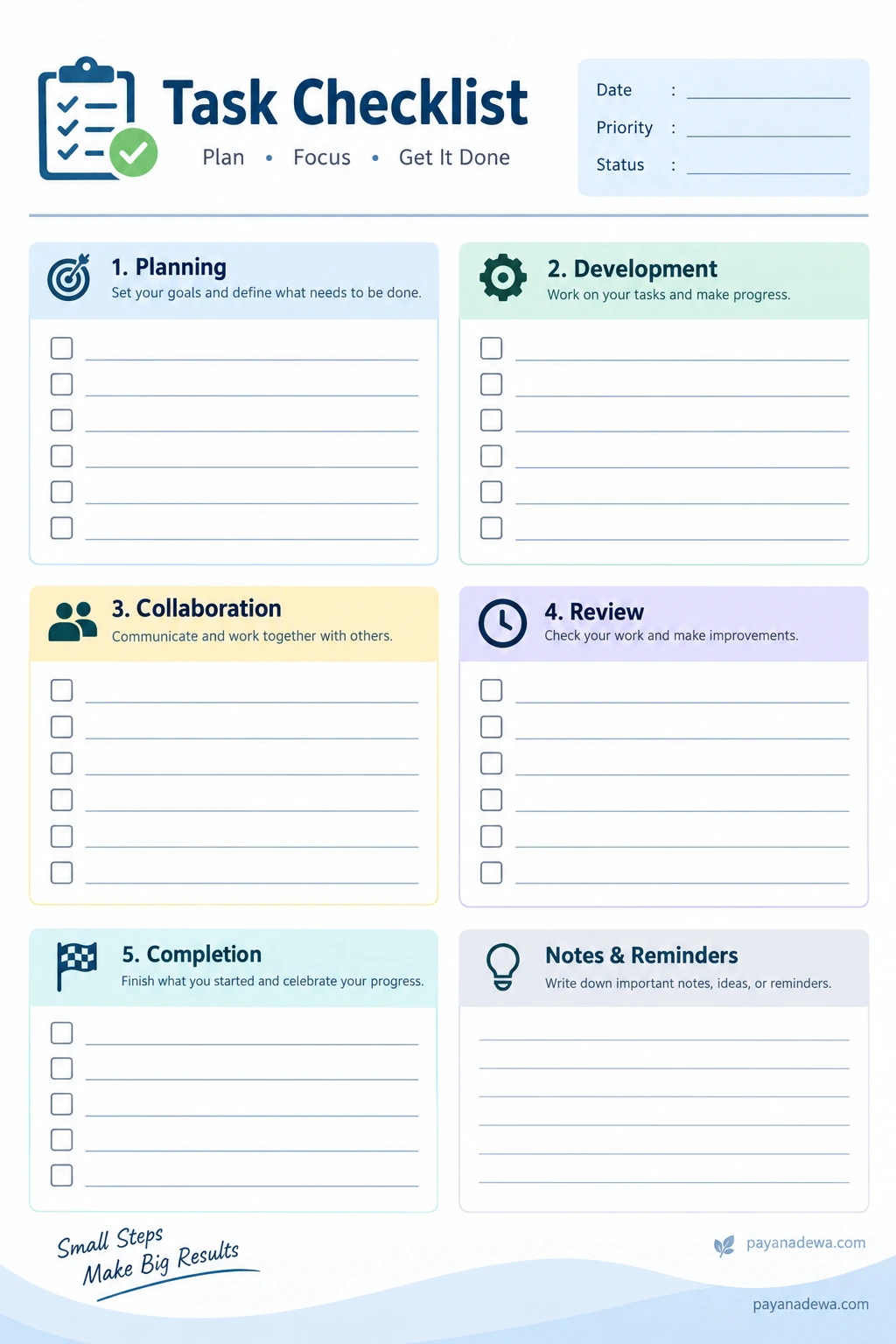
For better organization, consider using separate sections for planning, development, collaboration, review, and completion. You can also include a notes section for additional reminders.
Here is an example of how to organize your daily checklist:
- Planning: Identify goals, review priorities, and prepare your schedule.
- Development: Complete important assignments and make progress on projects.
- Collaboration: Communicate with colleagues and coordinate shared responsibilities.
- Review: Check completed work and identify necessary improvements.
- Completion: Finish remaining activities and prepare for the next day.
A structured template makes it easier to follow your routine. In addition, you can customize the sections according to your specific needs.
Best Practices for Using a Task Checklist
Having a checklist is only the beginning. To get the best results, you need to use it consistently and keep its structure simple.
Keep Your List Simple and Clear
A checklist should make your responsibilities easier to understand. Avoid adding unnecessary details or creating too many categories.
Use short, action-oriented descriptions. For example, write “Review project proposal” instead of “Work on the proposal when there is enough time.”
Focus on Important Tasks First
Begin with activities that have the greatest impact on your goals. Completing important responsibilities early can reduce pressure and provide more flexibility later.
Avoid Adding Too Many Tasks
Creating an extremely long checklist can make your schedule difficult to manage. Instead, choose a realistic number of activities based on your available time.
If additional responsibilities appear, review your priorities before adding them to your schedule.
Use One Main Checklist
Keeping responsibilities scattered across multiple notebooks, applications, and documents can create confusion. Whenever possible, maintain one main checklist that provides an overview of your important activities.
You can still use separate lists for individual projects, but make sure they remain connected to your overall planning system.
Celebrate Small Achievements
Completing small activities is part of making meaningful progress. Recognizing these achievements can help maintain motivation and encourage consistent habits.
Remember that productivity is not simply about completing as many tasks as possible. It is also about making steady progress toward the things that matter most.
Common Task Checklist Mistakes to Avoid
Even a simple organization system can become ineffective when it is used incorrectly. Understanding common mistakes can help you maintain a more productive routine.
- Writing unclear tasks: Vague descriptions make it difficult to understand what needs to happen next.
- Ignoring priorities: Treating every activity as equally important can waste valuable time.
- Creating unrealistic schedules: Too many activities can lead to frustration and unfinished work.
- Forgetting to update progress: An outdated checklist cannot provide an accurate picture of your responsibilities.
- Never reviewing completed tasks: Without regular evaluation, it becomes harder to improve your planning habits.
Avoiding these mistakes will help you build a checklist that supports your daily activities instead of becoming another responsibility to manage.
Digital vs Printable Task Checklist: Which Is Better?
Both digital and printable checklists offer practical advantages. The right choice depends on how you prefer to organize your responsibilities.
Advantages of Digital Checklists
Digital checklists are useful for people who frequently work with computers or smartphones. They make it easy to update tasks, organize categories, and access information across supported devices.
Some applications also provide notifications, reminders, collaboration features, and automatic synchronization.
Advantages of Printable Checklists
Printable checklists provide a simple alternative for people who prefer physical documents. They allow you to write notes, mark completed activities, and view your schedule without opening an application.
Additionally, printed templates can be customized for personal routines, office activities, school assignments, or project management.
Ultimately, neither option is universally better. Choose the format that fits your working habits and makes it easier to maintain consistency.
Conclusion: Make Every Task Count With a Better Checklist
A well-designed task checklist can transform the way you organize responsibilities, manage time, and approach everyday goals. By writing down activities, setting priorities, and tracking progress, you can create a clearer path toward completing important work.
Whether you choose a daily planner, a weekly organizer, a project checklist, or a printable template, consistency is the key to achieving better results.
Start with a simple list, divide larger responsibilities into manageable steps, and review your progress regularly. As your routine develops, you can adjust the checklist to match your changing needs.
Remember, productivity does not happen overnight. Small improvements, repeated consistently, can create meaningful results over time.
Are you already using a task checklist to organize your daily activities? Share your favorite planning methods and experiences with others. Your ideas might help someone discover a simpler and more effective way to stay organized!