Staying organized as a student can make a significant difference in academic performance, personal growth, and everyday school life. With homework, assignments, exams, extracurricular activities, and personal responsibilities competing for attention, it is easy to forget important tasks. A well-organized Student Checklist can help you manage your responsibilities, stay focused, and make steady progress toward your academic goals.
Whether you are in elementary school, middle school, high school, or college, having a simple checklist makes daily planning easier. Instead of trying to remember everything, you can write down your priorities, track completed assignments, and identify what still needs attention.
In this guide, you will discover how to create an effective student checklist, what tasks to include, and how to use a printable checklist to develop better study habits. These practical strategies can help you become a more confident, independent, and productive student.
What Is a Student Checklist?
A student checklist is a simple organizational tool that helps learners keep track of academic responsibilities, study activities, school projects, and personal goals. It provides a clear list of tasks that need to be completed within a specific period, such as a day, week, or semester.
Students can use a checklist in a notebook, digital planner, spreadsheet, or printable template. The main purpose is to make responsibilities easier to manage while reducing the possibility of missing important deadlines.
A useful student checklist may include:
- Daily homework and assignments.
- Upcoming tests, quizzes, and examinations.
- Study schedules and revision activities.
- School projects and presentations.
- Extracurricular activities and school events.
- Personal goals and healthy daily routines.
- Important reminders and deadlines.
By organizing these activities in one place, students can better understand their priorities and use their time more effectively.
Why Every Student Needs a Checklist
Good organization is an important part of academic success. A checklist does not automatically improve grades, but it can create a more structured learning routine and make everyday responsibilities easier to handle.
1. Helps Manage Time Effectively
Students often have several responsibilities throughout the day. A checklist helps divide large tasks into smaller activities that are easier to complete. By identifying priorities, students can allocate enough time for studying, homework, relaxation, and other activities.
2. Prevents Forgotten Assignments
Remembering multiple deadlines can be challenging, especially during busy school weeks. Writing assignments and important dates on a checklist provides a reliable reminder of what needs to be completed.
3. Builds Better Study Habits
Consistent routines make studying more manageable. Checking off activities such as reviewing notes, reading textbooks, and completing practice questions encourages students to develop productive learning habits.
4. Reduces Academic Stress
Unfinished assignments and approaching deadlines can create unnecessary stress. Having a clear overview of responsibilities makes it easier to plan ahead and avoid leaving everything until the last minute.
5. Encourages Responsibility and Independence
Using a student planner teaches learners to take responsibility for their education. Students become more aware of their commitments and learn how to organize their work without depending entirely on reminders from parents or teachers.
Essential Sections to Include in a Student Checklist
A practical checklist should cover the most important areas of student life. The following sections can help you create a balanced and useful organizational system.
1. Academic Tasks
Academic responsibilities should be one of the main sections of your checklist. This area helps you monitor assignments, schoolwork, and upcoming assessments.
- Complete daily homework.
- Review classroom notes.
- Finish unfinished assignments.
- Prepare for upcoming tests.
- Work on group projects.
- Submit assignments before deadlines.
- Organize textbooks and learning materials.
2. Study Habits
Developing consistent study habits can improve concentration and make learning more effective. Use this section to track activities that support your academic development.
- Follow a regular study schedule.
- Study in a quiet and comfortable environment.
- Take short breaks between study sessions.
- Practice difficult subjects regularly.
- Review previous lessons.
- Keep study materials organized.
- Ask teachers questions when something is unclear.
3. School Activities
School life involves more than classroom learning. Students may participate in clubs, sports, competitions, group activities, and special events.
- Check the school calendar.
- Prepare materials for school activities.
- Attend scheduled meetings.
- Complete extracurricular responsibilities.
- Prepare for presentations and performances.
- Remember important school announcements.
4. Personal Goals
Personal development is another important part of becoming a successful student. Setting realistic goals can help you stay motivated and recognize your progress.
- Improve performance in a challenging subject.
- Read a certain number of pages every day.
- Improve communication skills.
- Participate more actively in class.
- Learn a new skill.
- Build confidence and independence.
5. Daily Reminders
Daily reminders help students remember small but important responsibilities that support a productive school routine.
- Pack school supplies before leaving home.
- Bring necessary books and notebooks.
- Check homework deadlines.
- Prepare school clothes and equipment.
- Drink enough water throughout the day.
- Get sufficient sleep.
- Prepare tomorrow’s schedule.
6. Notes and Important Information
Leave some space for additional notes, teacher instructions, upcoming events, and ideas. This section is particularly helpful when unexpected tasks arise or schedules change.
How to Use a Student Checklist Effectively
Having a checklist is only the first step. The real benefits come from using it consistently. Follow these simple strategies to make your checklist part of your everyday routine.
Start With Your Most Important Tasks
Write down everything you need to accomplish, then identify the most important responsibilities. Prioritize assignments with approaching deadlines, difficult subjects, and tasks that require additional preparation.
Break Large Projects Into Smaller Steps
Large assignments can feel overwhelming when viewed as a single task. Divide them into smaller activities, such as researching information, creating an outline, writing a draft, and reviewing the final work.
Set Realistic Deadlines
Avoid filling your schedule with too many activities. Consider how much time each task requires and leave enough room for unexpected responsibilities. Realistic planning makes it easier to maintain consistency.
Review Your Checklist Every Day
Spend a few minutes each morning reviewing your priorities. At the end of the day, check completed activities and move unfinished tasks to an appropriate date.
Celebrate Small Achievements
Completing even a small task is progress. Checking off finished activities provides a sense of accomplishment and can encourage you to continue working toward your goals.
Printable Student Checklist: A Simple Way to Stay Organized
A printable student checklist is a convenient option for learners who prefer writing things down rather than using digital applications. You can print the template, keep it in a school binder, place it on your study desk, or attach it to a wall where you can easily see it.
Our Student Checklist Template is designed with clearly organized sections, writing spaces, and checkboxes to make everyday planning simple and enjoyable.
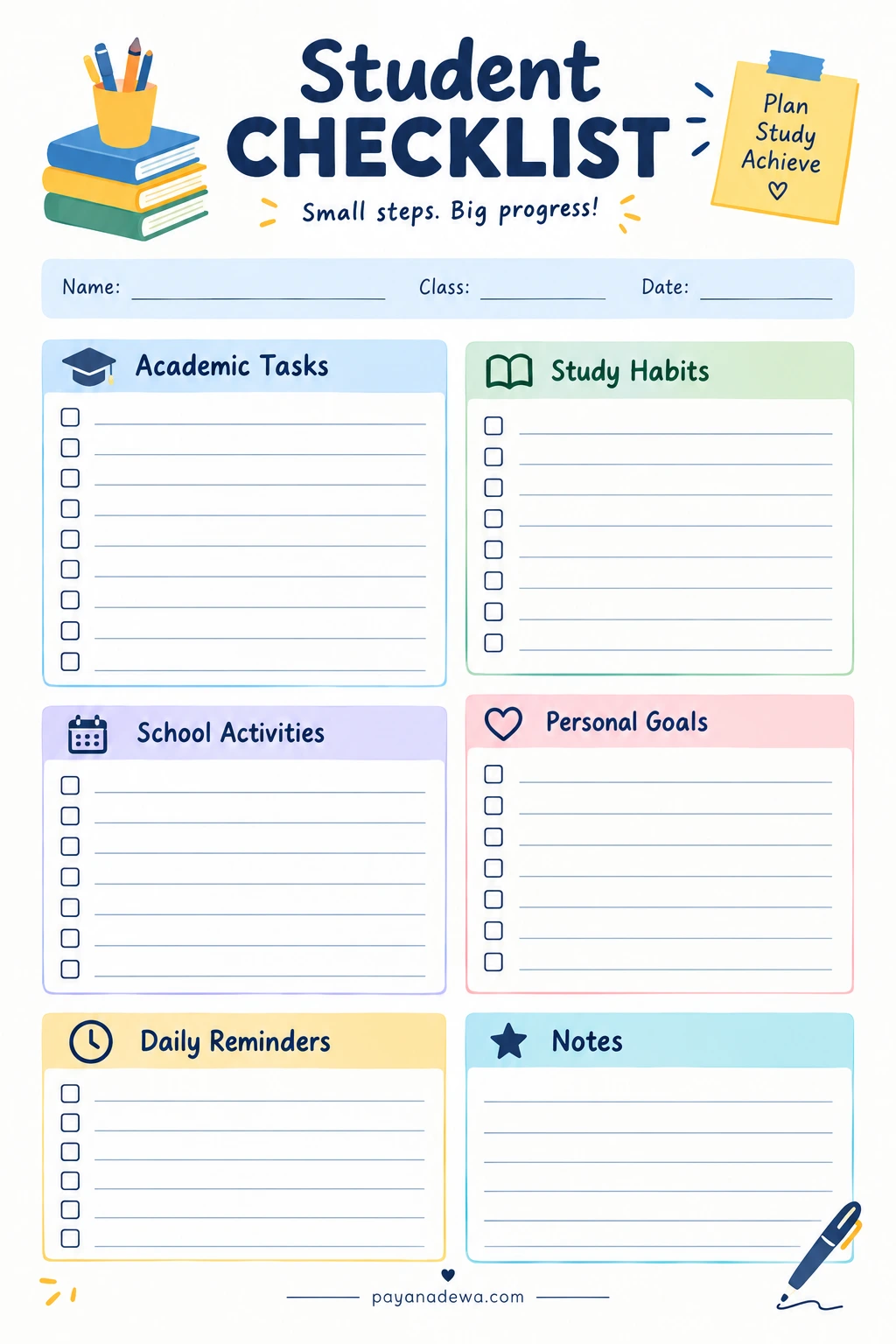
You can use this template to organize your daily responsibilities, monitor your progress, and remember important school activities. Simply print a fresh copy whenever you need a new planning sheet.
Student Checklist Tips for Different Education Levels
Every student has different responsibilities depending on their age, education level, and learning environment. Adjusting your checklist to match your needs makes it more practical.
Elementary School Students
Younger learners benefit from simple checklists with short instructions and easy-to-understand activities.
- Pack school bags.
- Complete homework.
- Read for a few minutes every day.
- Prepare pencils, books, and notebooks.
- Keep school supplies organized.
Middle and High School Students
Older students often manage multiple subjects, projects, examinations, and extracurricular activities. Their checklists should include more detailed scheduling and deadline tracking.
- Track assignments for each subject.
- Prepare for weekly quizzes and exams.
- Organize long-term projects.
- Schedule revision sessions.
- Balance schoolwork with extracurricular activities.
College and University Students
College students generally have greater independence and more complex academic responsibilities. A detailed checklist can help manage lectures, research, examinations, and personal commitments.
- Track lecture schedules and attendance.
- Record assignment and project deadlines.
- Plan research and study sessions.
- Prepare for presentations and examinations.
- Manage group assignments.
- Balance academic responsibilities with personal activities.
Common Student Organization Mistakes to Avoid
Even with a good planning system, certain mistakes can make it difficult to stay organized. Understanding these problems can help you use your checklist more effectively.
- Writing too many tasks: An overloaded checklist can become difficult to manage. Focus on realistic priorities instead.
- Ignoring deadlines: Always include due dates for important assignments and projects.
- Not reviewing progress: Check your list regularly to identify unfinished responsibilities.
- Forgetting personal time: Include breaks, hobbies, exercise, and rest in your schedule.
- Giving up after missing a day: A missed task does not mean your planning system has failed. Simply reorganize your schedule and continue.
Frequently Asked Questions About Student Checklists
What should be included in a student checklist?
A student checklist should include homework, assignments, study schedules, exam preparation, school activities, personal goals, daily reminders, and important notes. You can customize the sections according to your academic needs.
How often should students use a checklist?
Students can use their checklists every day. Reviewing tasks in the morning and updating progress in the evening helps maintain an organized routine.
Are printable student checklists useful?
Yes. Printable checklists provide a simple way to track responsibilities without needing a digital device. They are easy to customize, print, and keep in a notebook or study area.
Can college students use a student checklist?
Absolutely. College and university students can use checklists to manage lectures, assignments, research projects, examination schedules, and personal responsibilities.
How can I make my student checklist more effective?
Keep it simple, prioritize important tasks, set realistic deadlines, and review your progress regularly. Update your checklist whenever your schedule or responsibilities change.
Conclusion: Make Every School Day More Organized
Staying organized does not have to be complicated. A well-designed Student Checklist can help you manage assignments, develop productive study habits, remember important activities, and work toward meaningful academic goals.
Start with a simple list of daily responsibilities and gradually customize it as your needs change. Remember to prioritize important tasks, set realistic deadlines, and make time for rest and personal development.
Download and use a printable student checklist to make your school routine easier to manage. With consistent planning and small daily improvements, you can build better habits and make every step of your educational journey more productive.
Visit payanadewa.com for more useful printable templates and resources to support your everyday organization and productivity.